
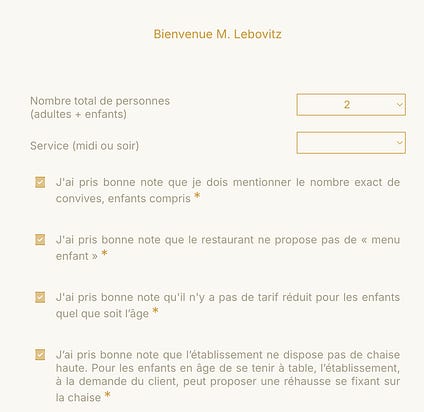
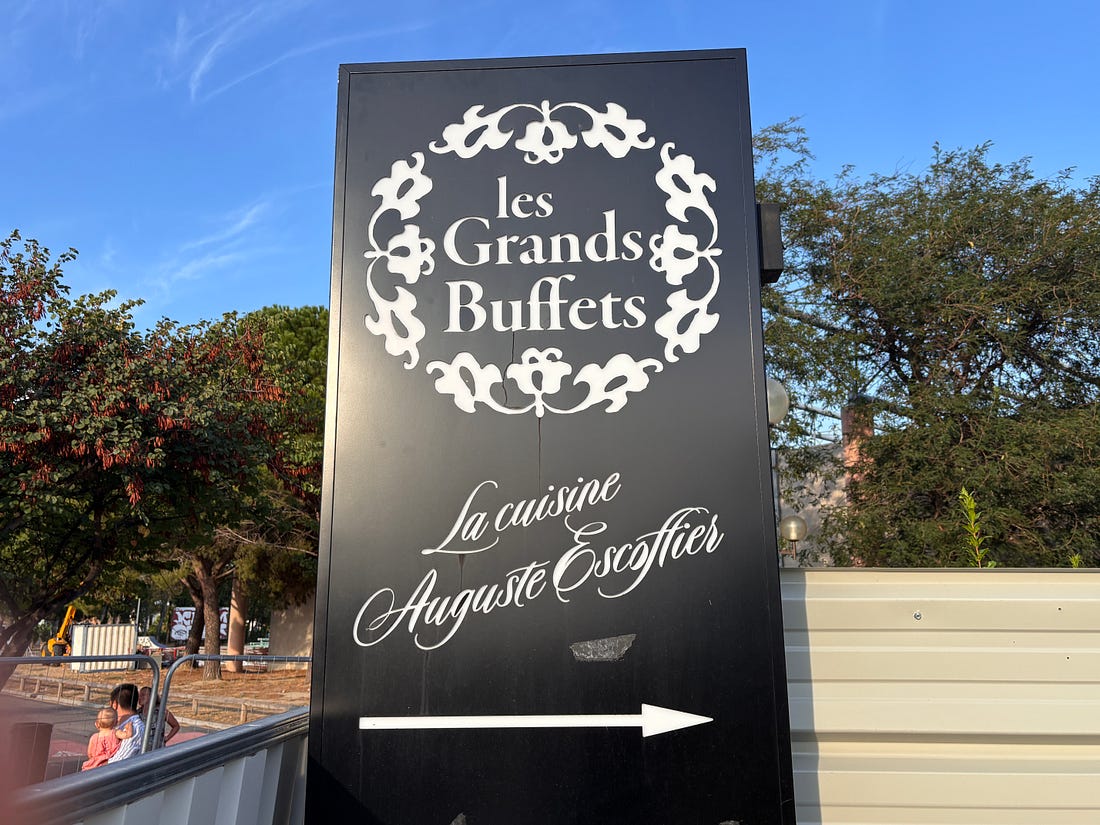
Perhaps you’ve heard about les Grands Buffets, the buffet in the south of France that’s à volonté. The all-you-can-eat restaurant is so popular, tables are booked months and months in advance. Like a number of things in France, what’s generally a straightforward process can become…a process. When booking your table, there are multiple screens to pass through, with a lot of boxes to check, making sure that you agree to everything…
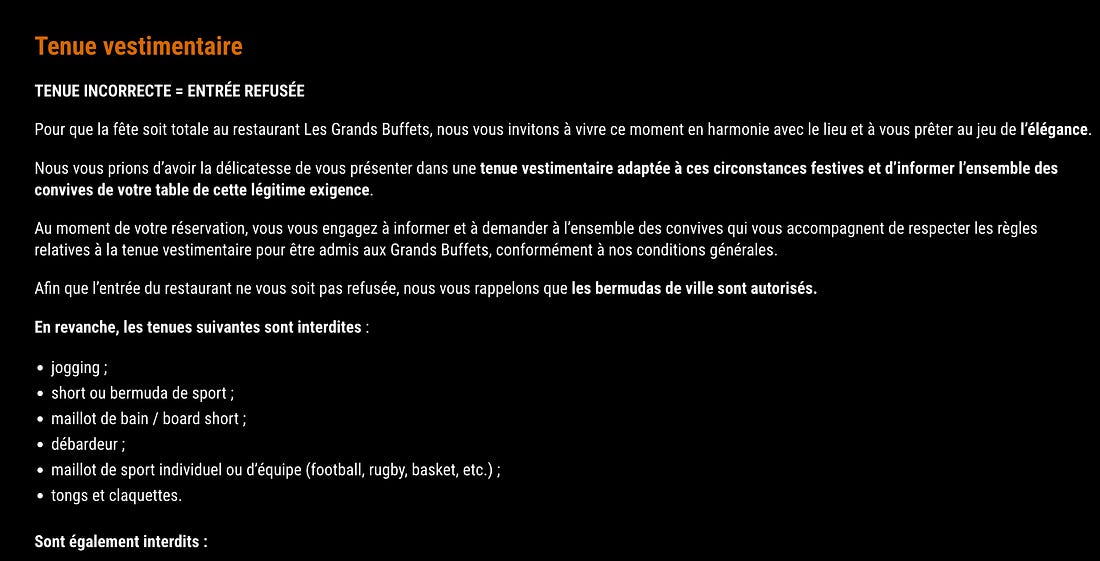
… including a strict schedule of deposits and payments. As someone who loves rules, and who lives in a country where rules are often considered for other people but not for you, I understand why. So they make everything very clear, including the dress code, with entrée refusée if wear athletic clothes, tank tops, flip-flops, or baseball caps:
For men, les bermudas de ville (chino-style shorts) are authorized, since this is, after all, the south of France where people are generally more relaxed. But just to be on the safe side, I wore linen pants. I didn’t want to get there and be refusé at the door. French towns have started regulating how people dress on the street, including Narbonne, where les Grands Buffets is located. Everyone was pretty well dressed at les Grands Buffets the night we went, except for one guy who wore a tank top (débardeur). I don’t think they want to police people, but in France you’re often sized-up on how you present yourself. Romain once got into a verbal tussle with a waiter at a restaurant in the French Alps because he was wearing a baseball cap and didn’t want to take it off. The idea, I think, is that they realize les Grands Buffets is a special experience (the night we went, a few women were wearing evening gowns), and they want people to be respectful of that. As long as I don’t have to wear a tie and jacket, I’m fine with whatever.
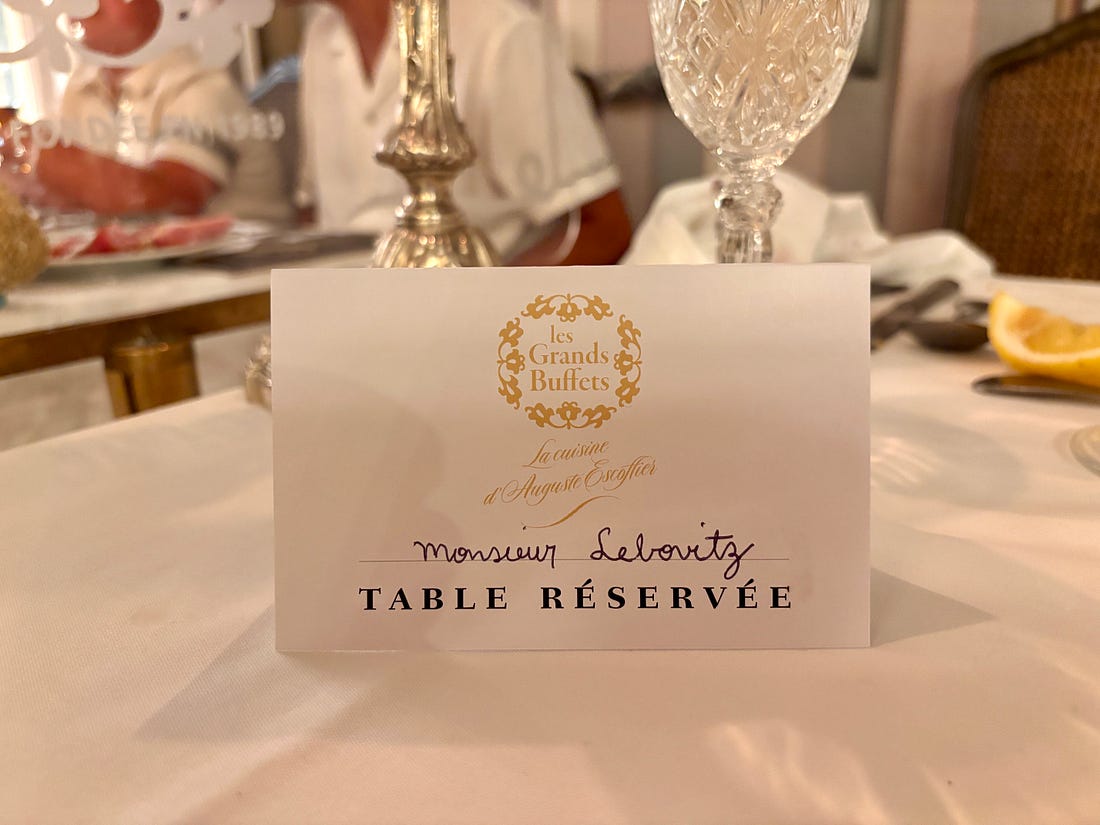
They’re also strict about seating times, and guests are booked and seated at 15-minute intervals, so everyone isn’t seated (or hits the buffets) all at the same time. Les Grands Buffets isn’t in the center of town, but is part of a public building adjacent to the zone industrielle of Narbonne.
Recently I had Lauren Collins on my podcast, and we had a great chat that included talking about her excellent article in the New Yorker, The Hottest Restaurant in France is an All-You-Can-Eat Buffet (possible paywall), which put the place on the map for many people who didn’t know about it. The restaurant was founded in 1989. The city of Narbonne was looking for someone to open a restaurant in a municipal sports center, which Louis Privat did. Currently the restaurant feeds over a thousand people a day at lunch and dinner. There are hundreds of dishes presented, prepared, and served by close to two hundred employees, and the price is €65,90 per person.
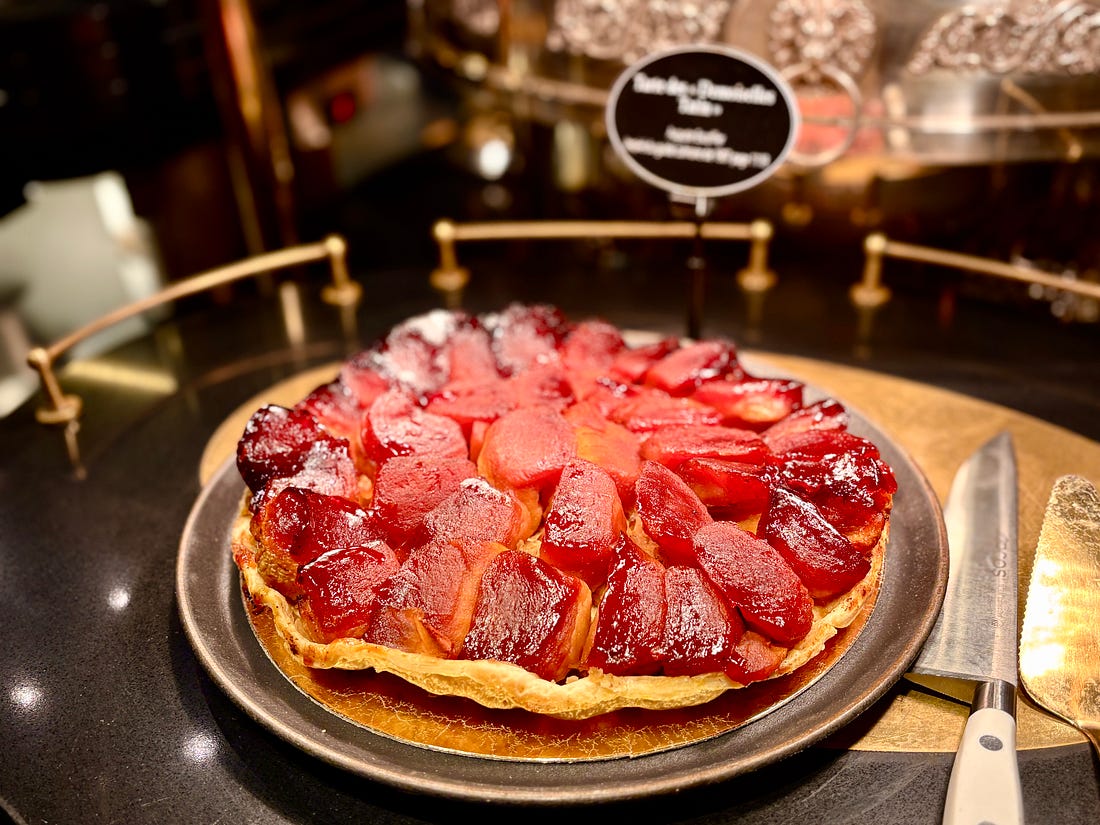
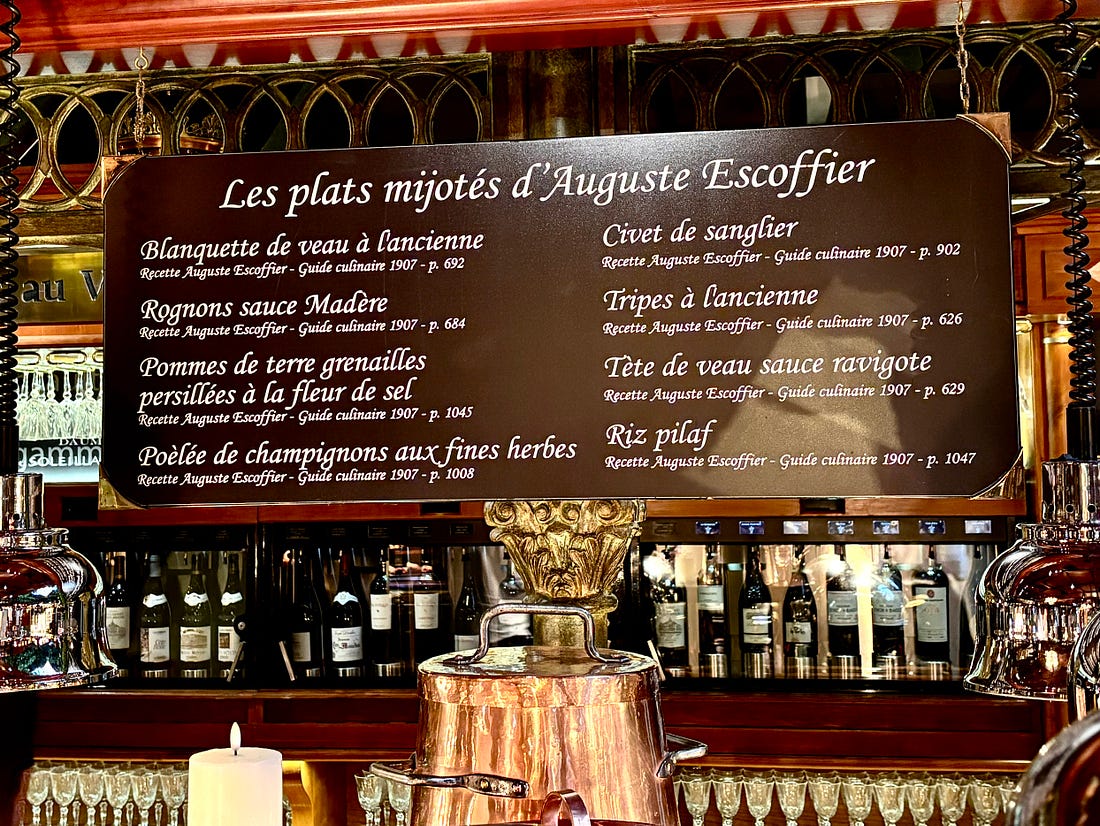
According to the BBC, the restaurant grosses €30 million ($35 million) and is the highest-grossing restaurant in France, and 86% of the customers are French. A lot of guests are Spanish since Narbonne is close to the Spanish border…and Spanish people like to eat. Privat has resisted opening another restaurant, even though he frequently is presented with opportunities in other cities. (And likely, in other countries.) The main mission of the restaurant (aside from being a business) is to preserve French cuisine and traditions, set forth by Chef Auguste Escoffier, who wrote what’s considered the seminal book on French cuisine, Le Guide Culinaire, with instructions for preparing over five thousand French dishes. In it, you’ll find recipes for frog’s legs, snails, and tripe, which have fallen out of favor but are offered at the restaurant to keep those foods, as well as others, alive. My favorite quote from Privat was in Lauren’s article, “Why would you put a tarte Tatin in a shot glass?” True to his word, thankfully, they don’t.
My own experience with Escoffier was when I was a line cook in San Francisco and ran across the street to the store to get an ingredient that we were out of. When I came back, the head chef wasn’t amused that I wore my chef’s coat to run the errand. “What would Escoffier say?” he admonished me. “I don’t know,” smart aleck me replied. “He’s dead.”
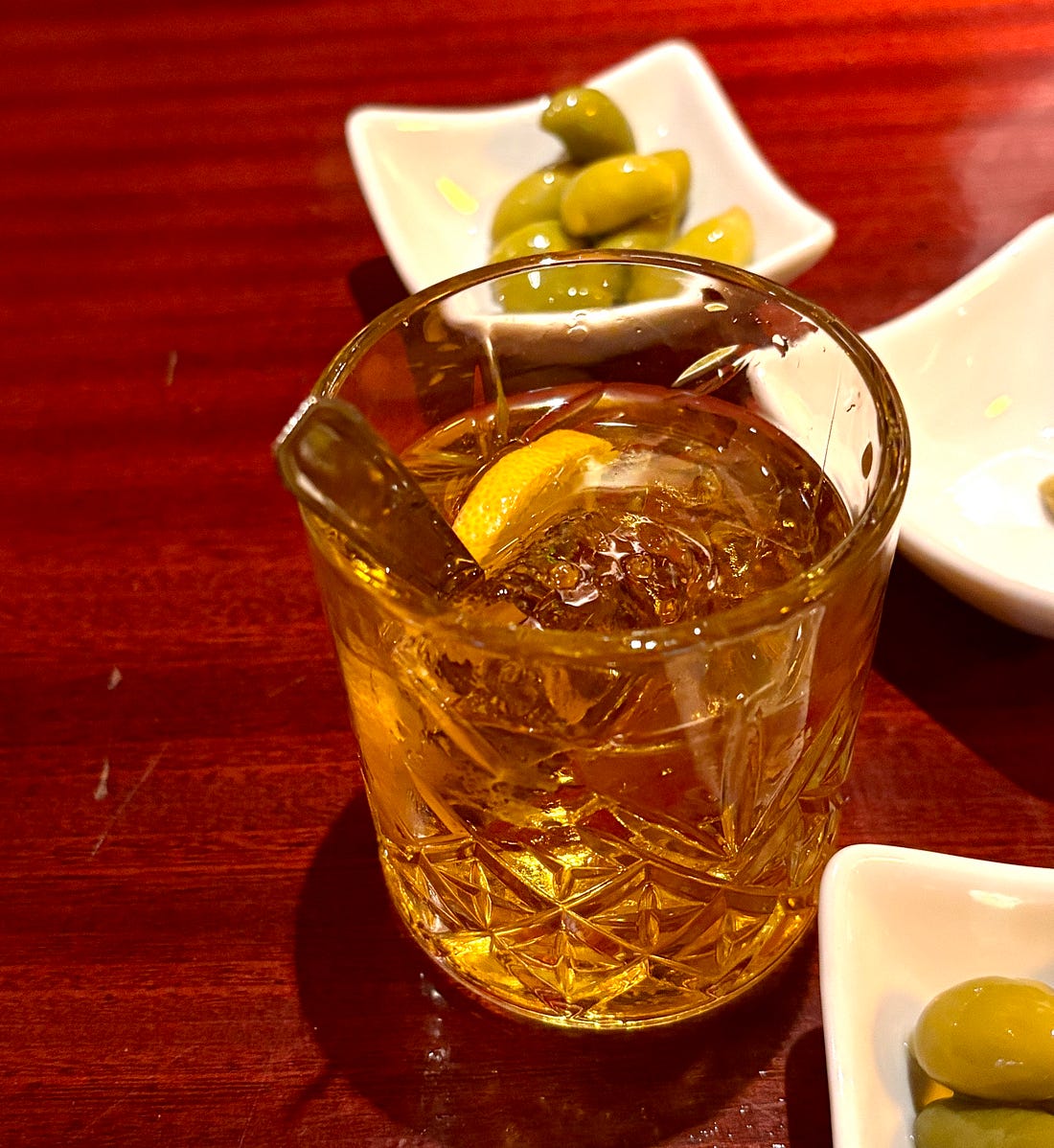
I didn’t see any staff members in chef’s coats running out the door, but a very nice woman named Elodie greeted us as we walked towards the door fifteen minutes early. In a very organized fashion, she made a note that we were there and directed us to their bar, which was next door, by the bowling alley. Knowing how rules about lines in France can be one of those things that are “for other people,” she said that when we came back, if there’s a line, just head to the front of it and ask for her. The bar that looked out over the bowling alley was hopping, and I had a glass of Suze, a bitter French apéritif that’s particularly appealing in the summer. To accompany your drinks, there are help-yourself appetizers, such as this DIY Tête de moine cheese machine, which produces perfectly scraped ruffles of cheese with a push of a lever: 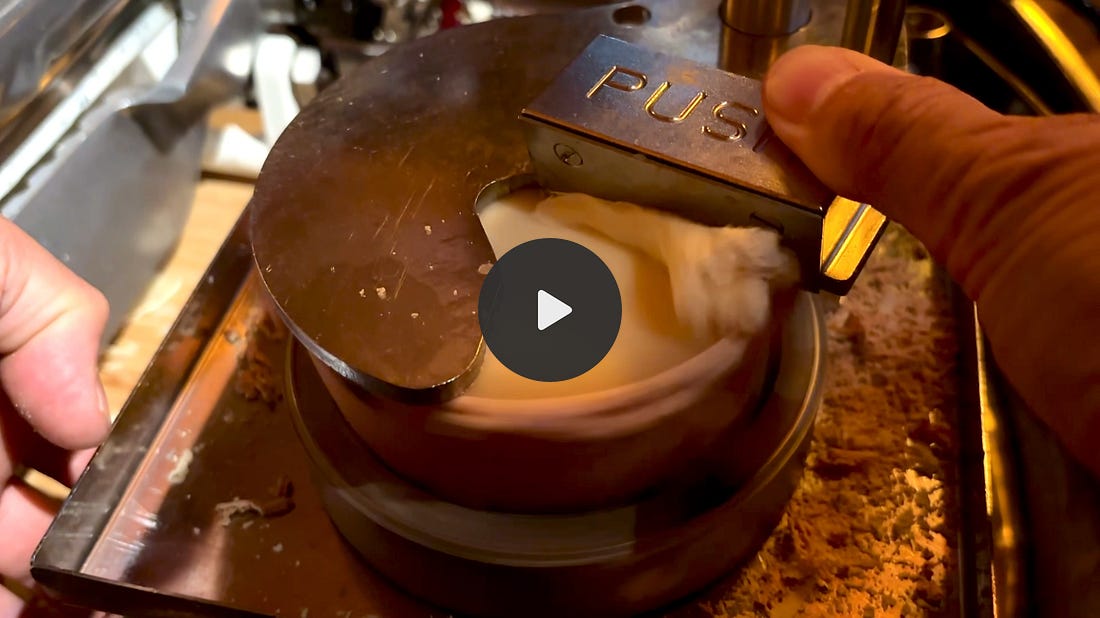
The cheese is named after a monk’s tête (head) and one theory goes that it was a symbolic way to get revenge on the monks, who people had to pay rent to hundreds of years ago, for using the land. A few other theories are out there, but as the head of Chartreuse told me when I asked him to fact-check what I wrote in Drinking French about the Carthusian monks, who now make Chartreuse, whose history dates back a thousand years, he replied, “It’s hard to know what happened then…we weren’t there.”
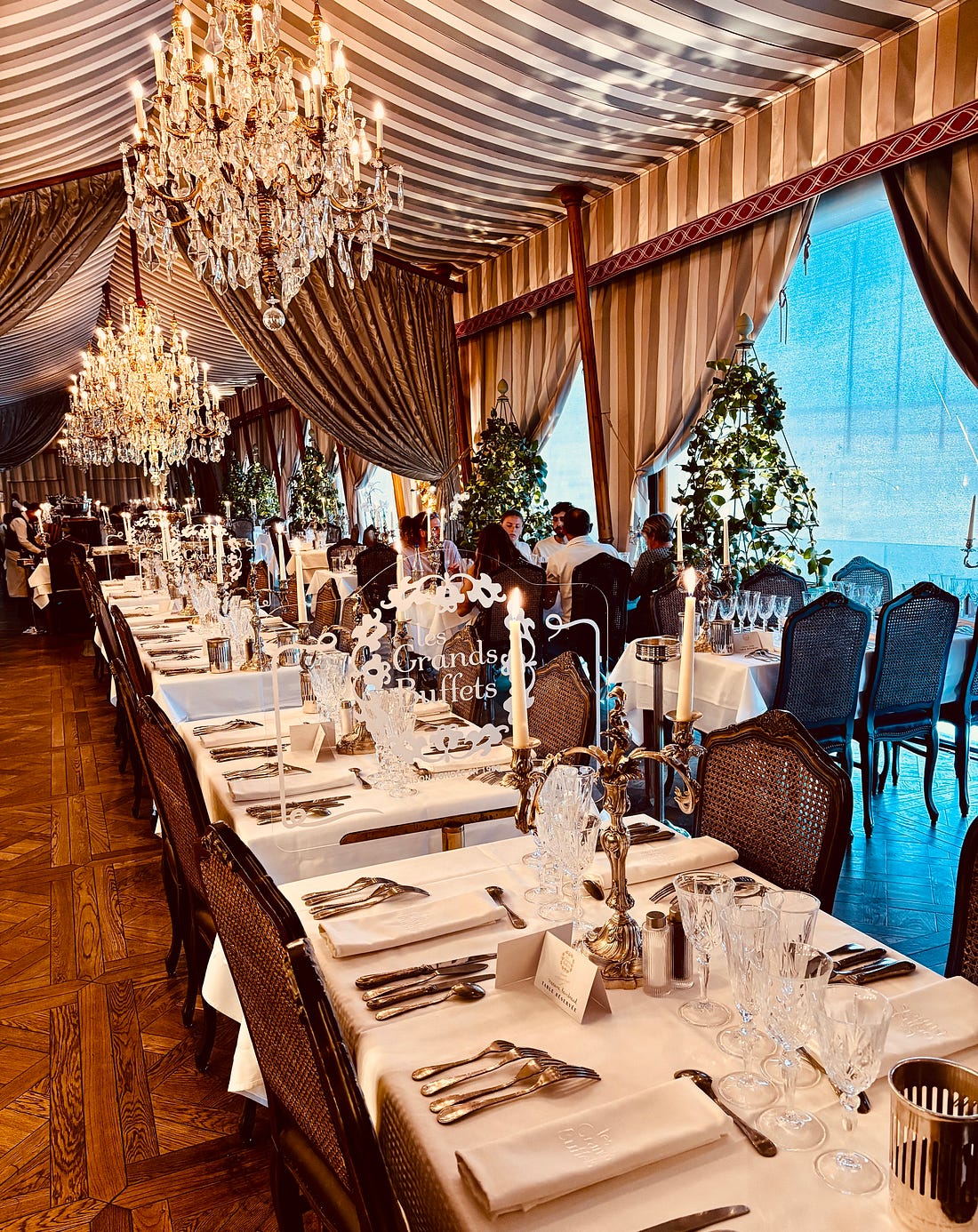
The dining room of les Grands Buffets is a surprisingly elegant affair, and you might feel like you’re attending a wedding or a gala event when you enter the room.
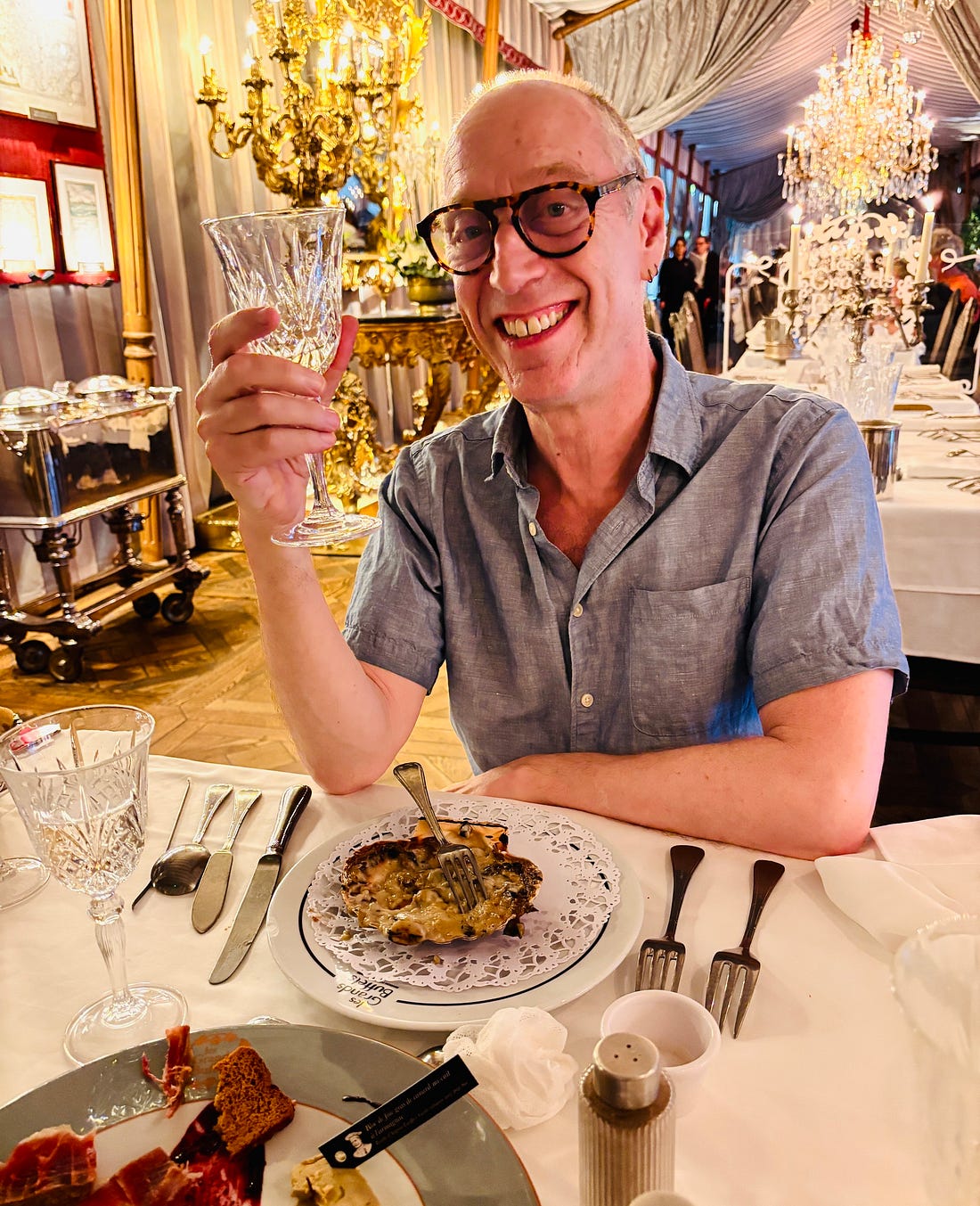
We kicked things off with a bottle of Heidsieck & Co Monopole champagne. Part of the restaurant’s philosophy is to charge close to retail prices for wines, rather than jacking them up. So the wine list is remarkably affordable and many producers from the region are featured in a section marked “Autour de Narbonne” — wines from around Narbonne. A majority of the wines are in the €20-25 ($23-29) per bottle range, which included that champagne.
There are various strategies for tackling les Grands Buffets. Unlike Las Vegas buffets, which a friend noted was likely the inspiration for this restaurant, there wasn’t any shoving or elbowing others out of the way, which also was because the restaurant is in the south of France, not in Paris. Diners lined up politely and waited their turn for their food.
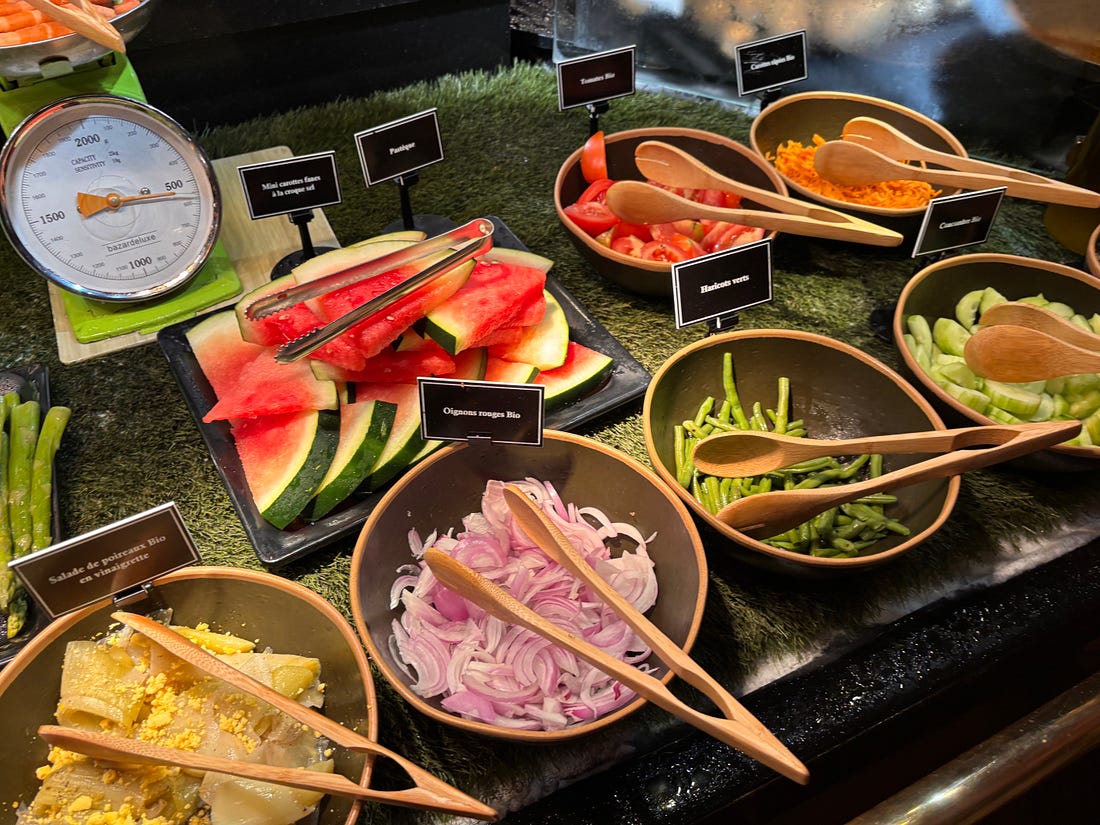
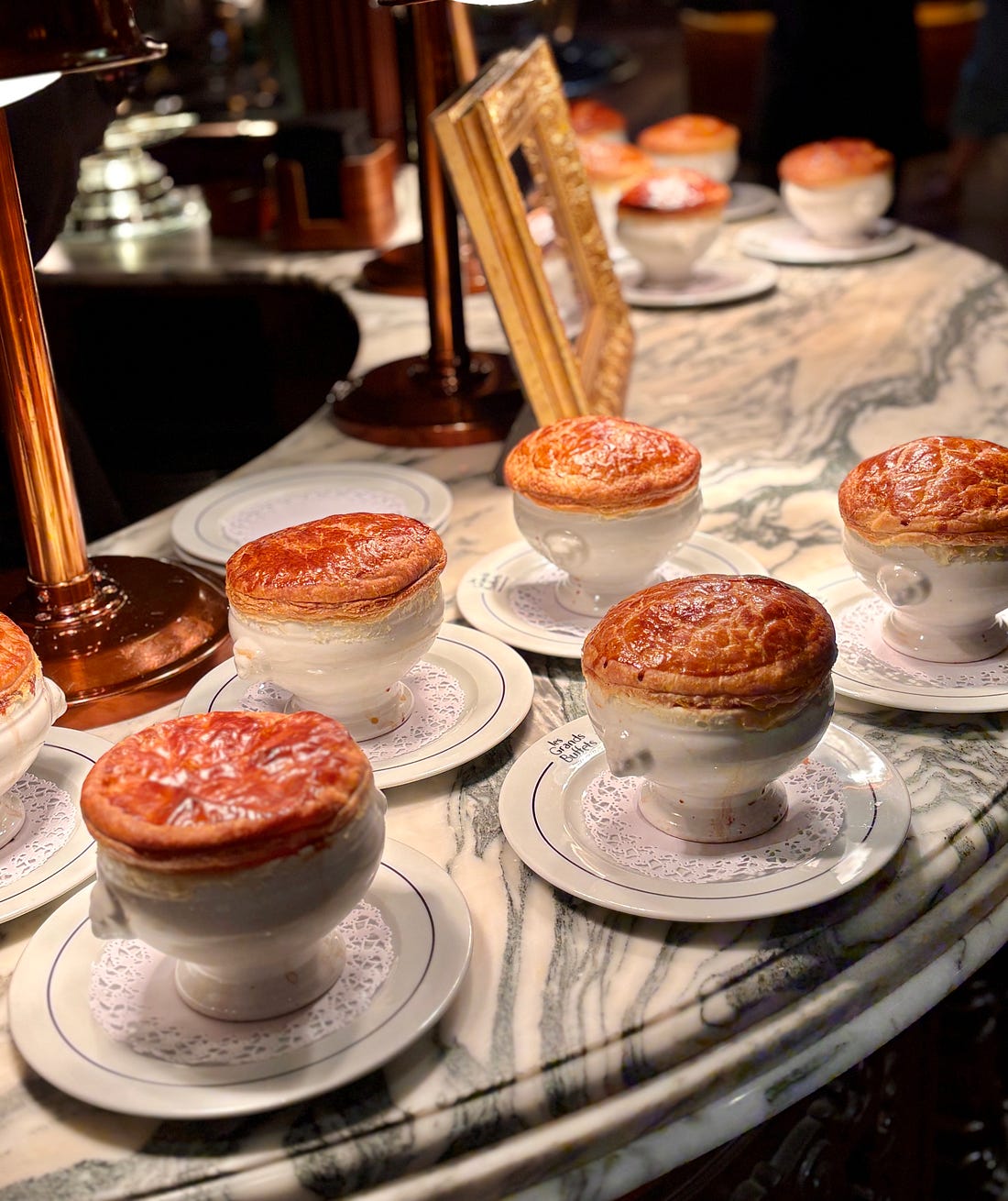
It’s best not to fill up on bread or vegetables, and I noticed most of them went untouched. Another strategy that I read was not to skip lunch if you were going there for dinner, since you’re going to be starving upon arrival and probably fill up on carbs. I made the truffle station my first stop, where they don’t skimp on truffles. And yes, they’re the real ones. Not “summer” truffles. There wasn’t a whiff of phony truffle oil in sight, nor a smell. One offering was a soup made with black truffles and foie gras under a cap of feuilletage, buttery puff pastry.
Since I was skipping carbs, I skipped that, but the woman seated at the neighboring table took the soup, lifted the cap off, and ate it like a cookie. I admired her creativity. I went for the brouillade, a mound of freshly made scrambled eggs, which were scrambled with a lot of minced truffles inside and topped with shaved black truffles. 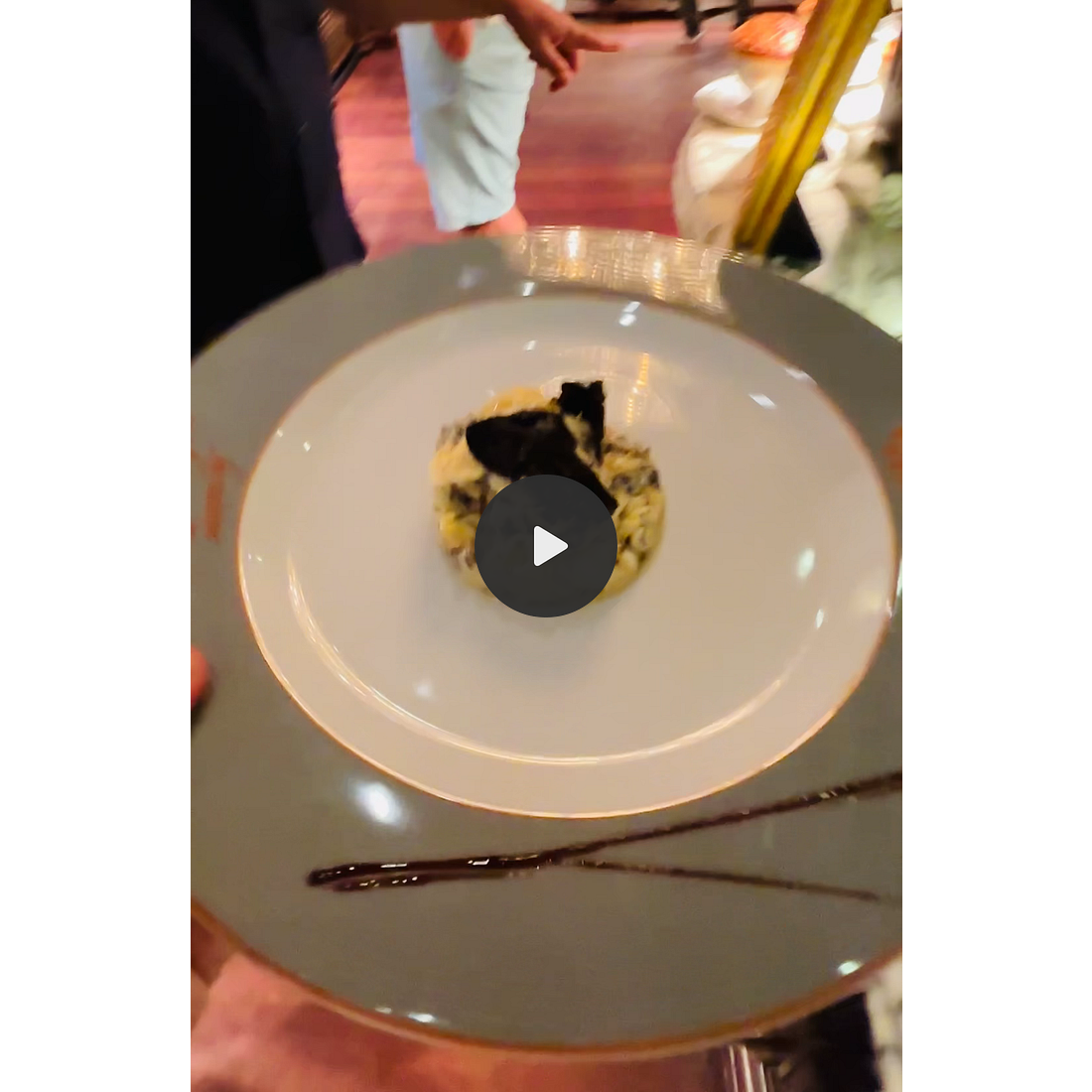
I was never a big truffle fan. When I worked in restaurants, I would occasionally get to eat them for free (ditto with caviar), so it’s hard for me to pay for truffles and I was never gaga for them. However, years ago, I went on a truffle hunt in France and was in a room with hundreds and hundreds of truffles. Every course at dinner that night was loaded with truffles, and I was hooked. Still, I didn’t go back for the soup but moved on to the charcuterie.
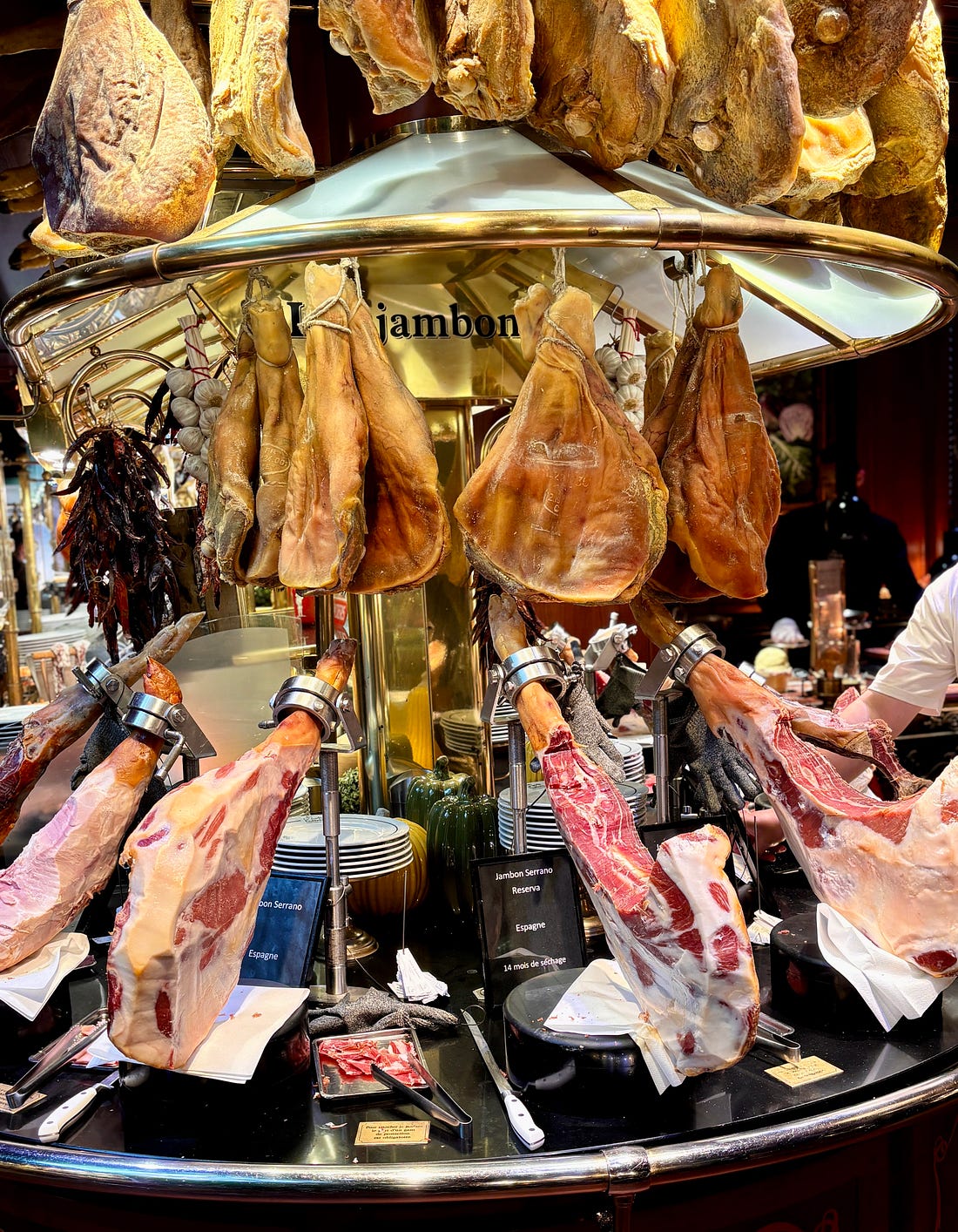
The pièce de résistance in that department was a station of hams, sliced to order. Each one listed its provenance and in France, they tend to slice ham thicker than they do in Spain and Italy, which makes it a little tougher to eat. Romain once told me to tell the person at the charcuterie that I wanted my ham “as thin as cigarette paper.” I tried that and the guy deadpanned back to me, “Monsieur…je ne fume pas…” 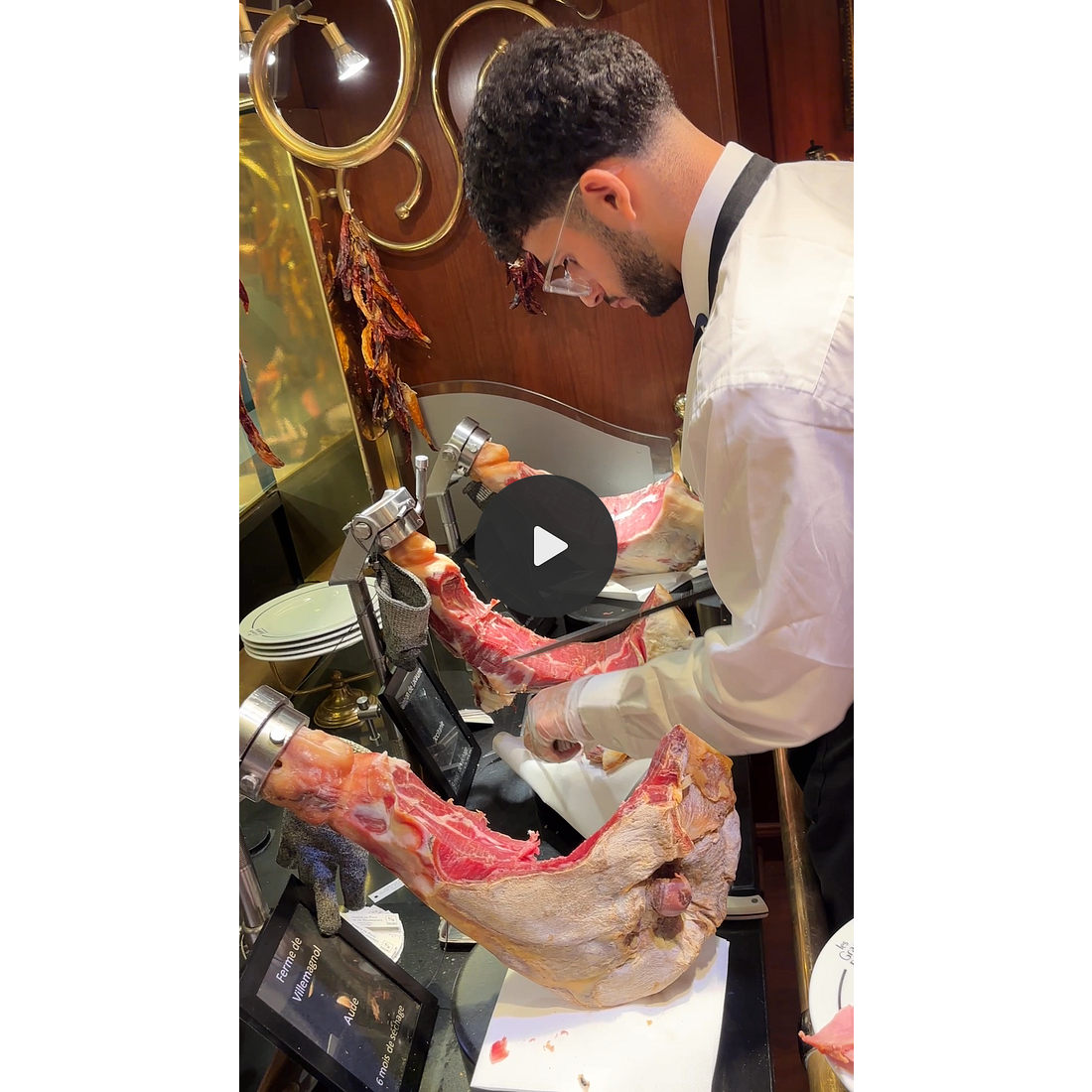
Personally, I think it’s a strategy to sell more ham since when something’s sold by weight, ten thick slices weigh a lot more than ten cigarette paper-thin slices. The lone slicer at les Grands Buffets was doing his best to keep up with all the customers, and the hams. So it was hard to fault him for the thickness of the slices. But maybe he wasn’t a smoker either. While I was on vacation, I posted a few pictures from the restaurant. Someone made a comment wondering aloud how there could be so much food, when others have so little? It’s definitely true that most of us have access to food that’s sadly, not available to everyone. Narbonne is not a wealthy city and most people earn less than the national average. Unemployment is around 18%, which is over double the national average (8%) in France. While researching her article, Lauren Collins told me that some people save up all year just to have dinner at les Grands Buffets, that it’s their special night out. After thirty years, the restaurant has figured out how much food they’ll go through each night so there’s very little food waste, and whatever is left over is served at the staff meal. Being in a municipal building, the restaurant is a strong supporter of the local community, which also includes winemakers and other producers, in addition to supporting a staff of hundreds of people. It’s hard to size up people by how they look and are dressed, but the people eating at les Grands Buffets seemed to be “everyday” people. (I didn’t see any fancy cars in the parking lot.) Judging from their accents, it sounded like there were many locals. Folks in this part of France have what’s referred to as an accent du midi and pronounce certain words, such as wine (vin), as ving, with a bit of a nasal twang on the final “g.” And unlike the buffets of Las Vegas, this restaurant isn’t a palace of gluttony. People weren’t loading their plates up as full as possible, overindulging in whatever they could. It was all quite civilized. I suppose you can criticize people eating at restaurants when others can’t. But not sure how one draws the line. At least the price point here is not too far from the price of a 3-course dinner at a mid-range restaurant in Paris.
It’s true that the lobster tower could be considered a little over the top, but as a winemaker in the region told me once, “People who live here know how to cook, so they don’t go out for the food. They go out for the experience.” And the lobster tower is giving it to them. 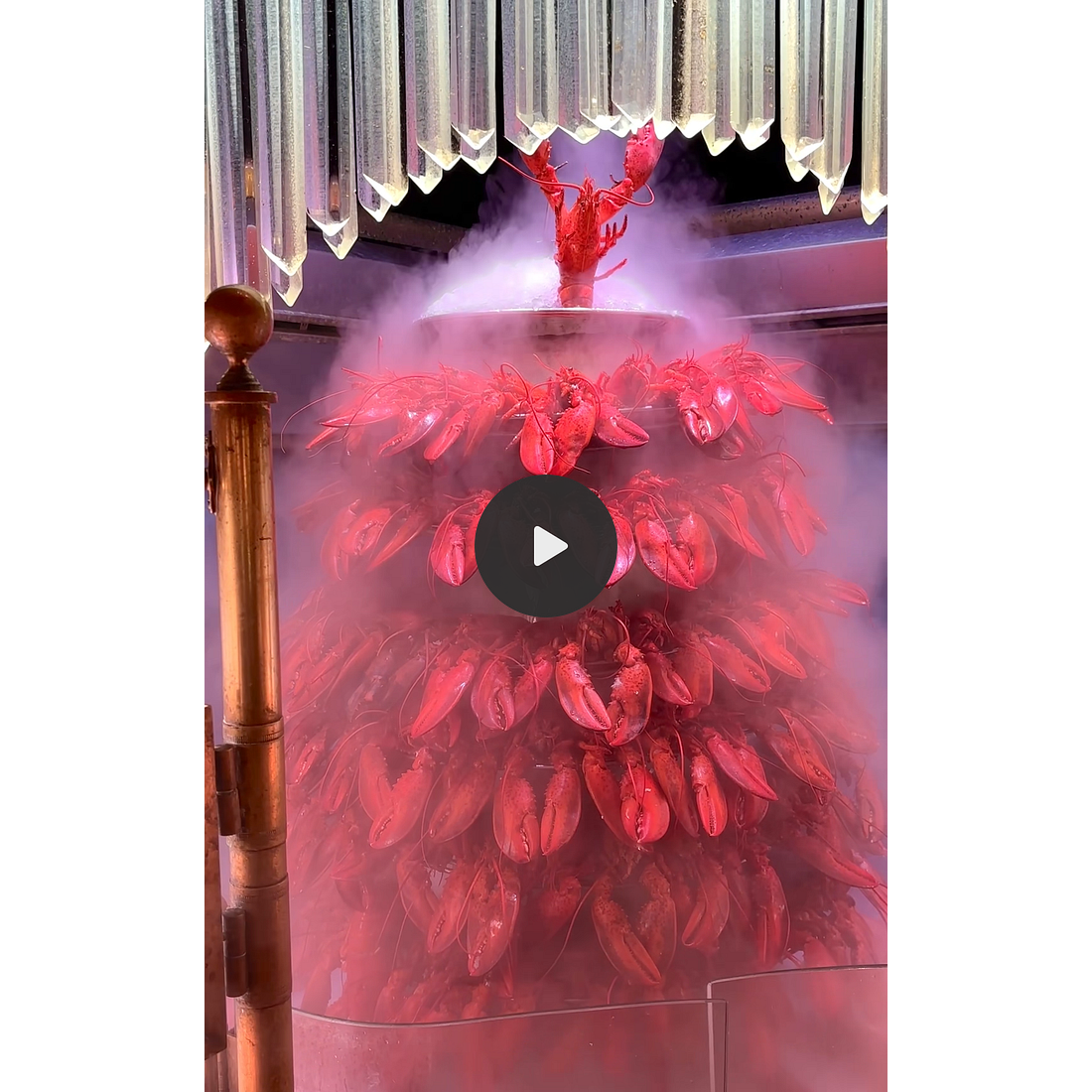
As mentioned, one objective of the restaurant is to guard the heritage of Auguste Escoffier and la cuisine française. They adhere so closely to his recipes that the page numbers from his book, Le Guide Culinaire, are listed on the menus.
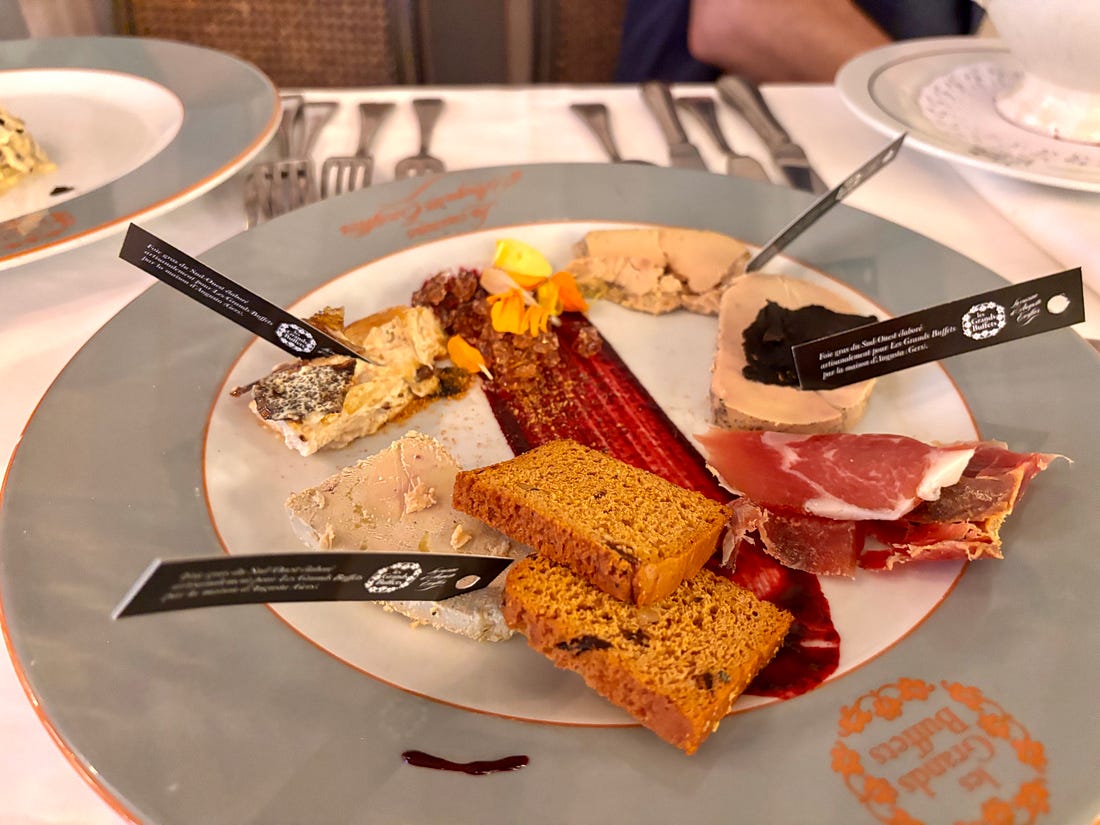
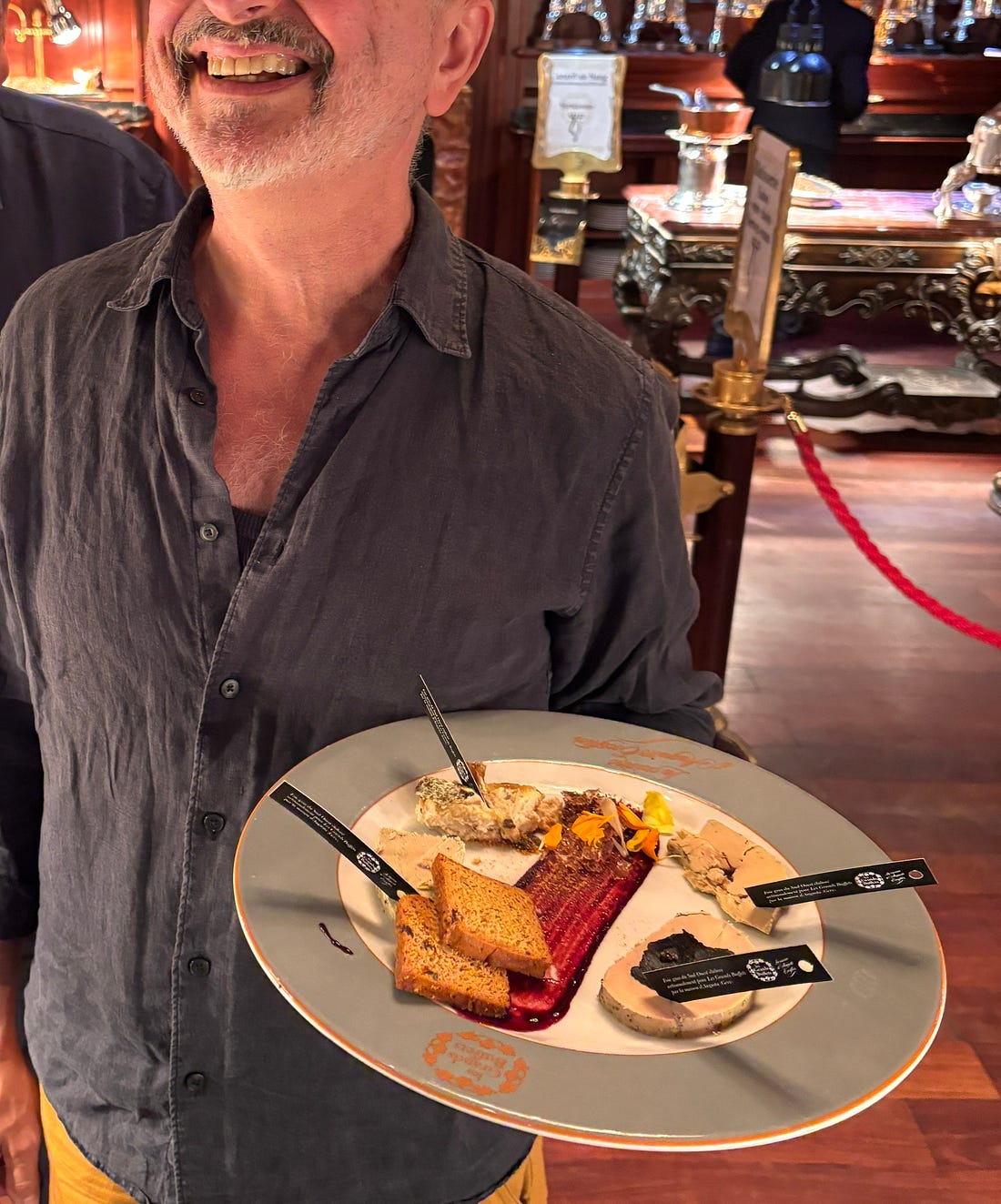
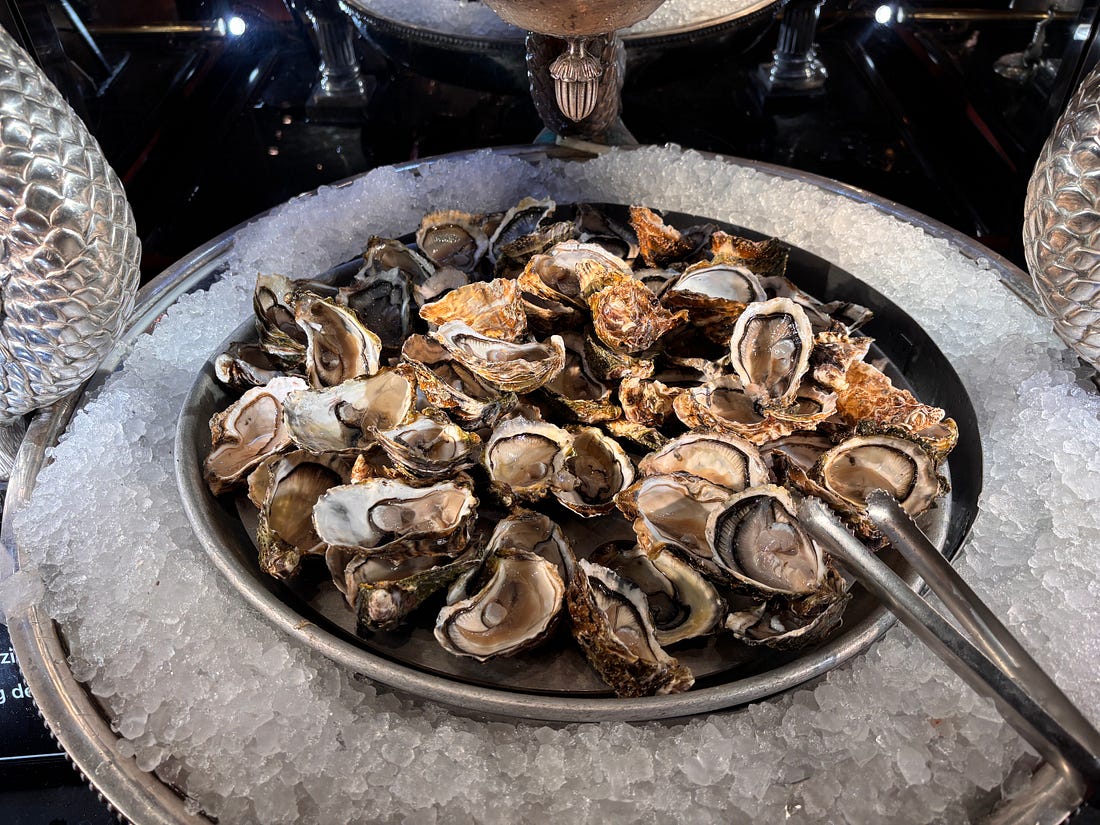
An undeniable part of French culinary heritage is foie gras. It’s a controversial ingredient, even in France, and is not something we eat often. When we do, I try to make sure that it’s produced in France, not just “packaged” or “transformed” in France, as some jars and cans say, which means the foie gras can be produced elsewhere. After nibbling around that plate of richness, we headed to the seafood section and loaded up on oysters. They also had mussels, bulots (sea whelks), and smoked salmon, heaped up on ice, all for the taking.
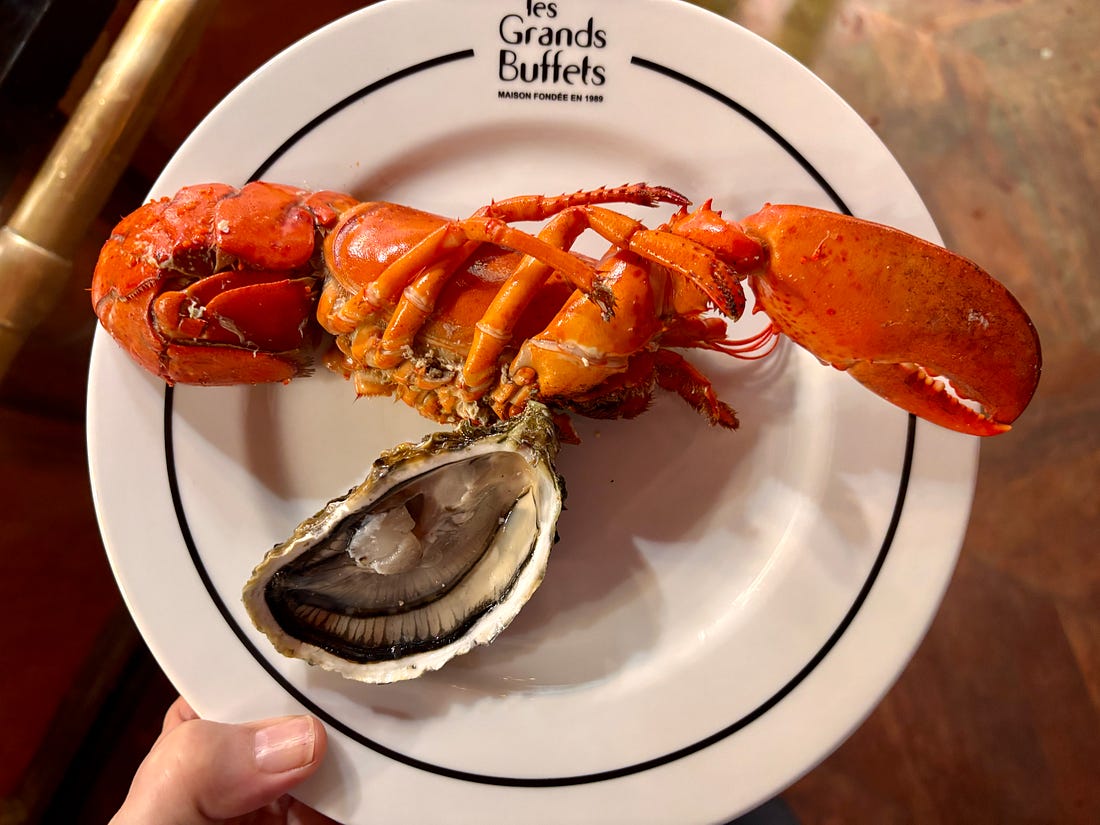
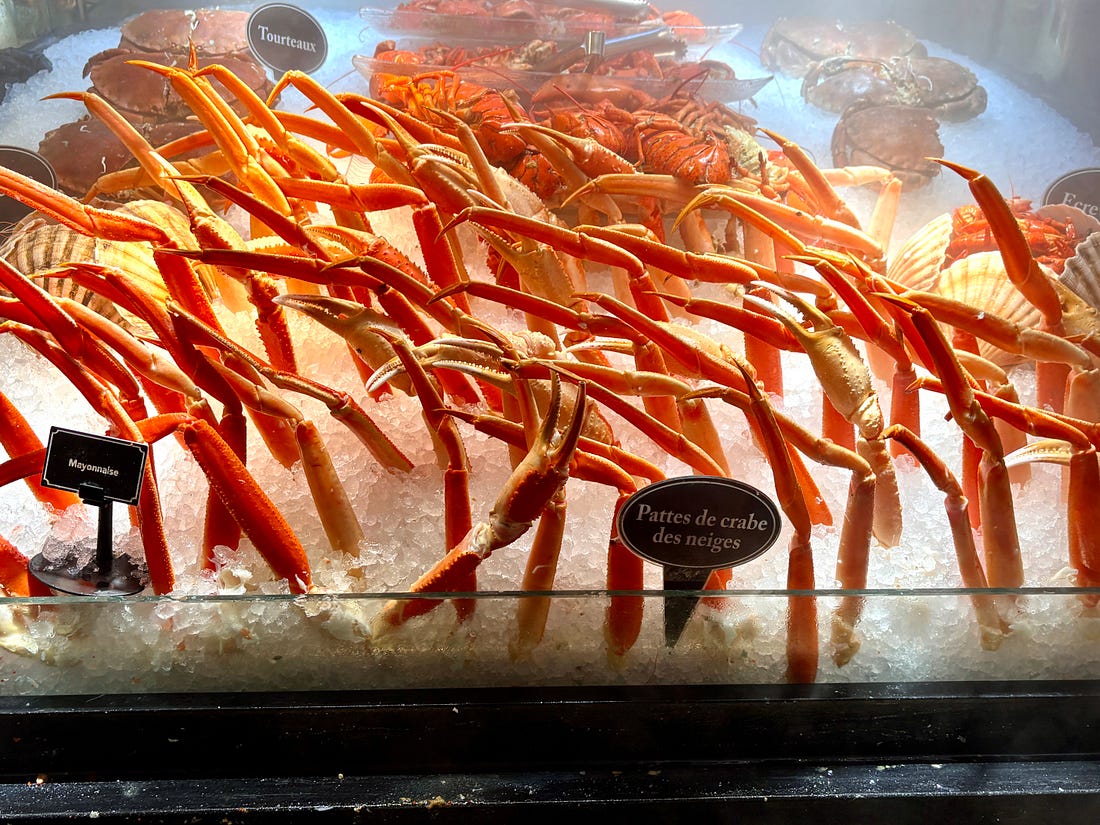
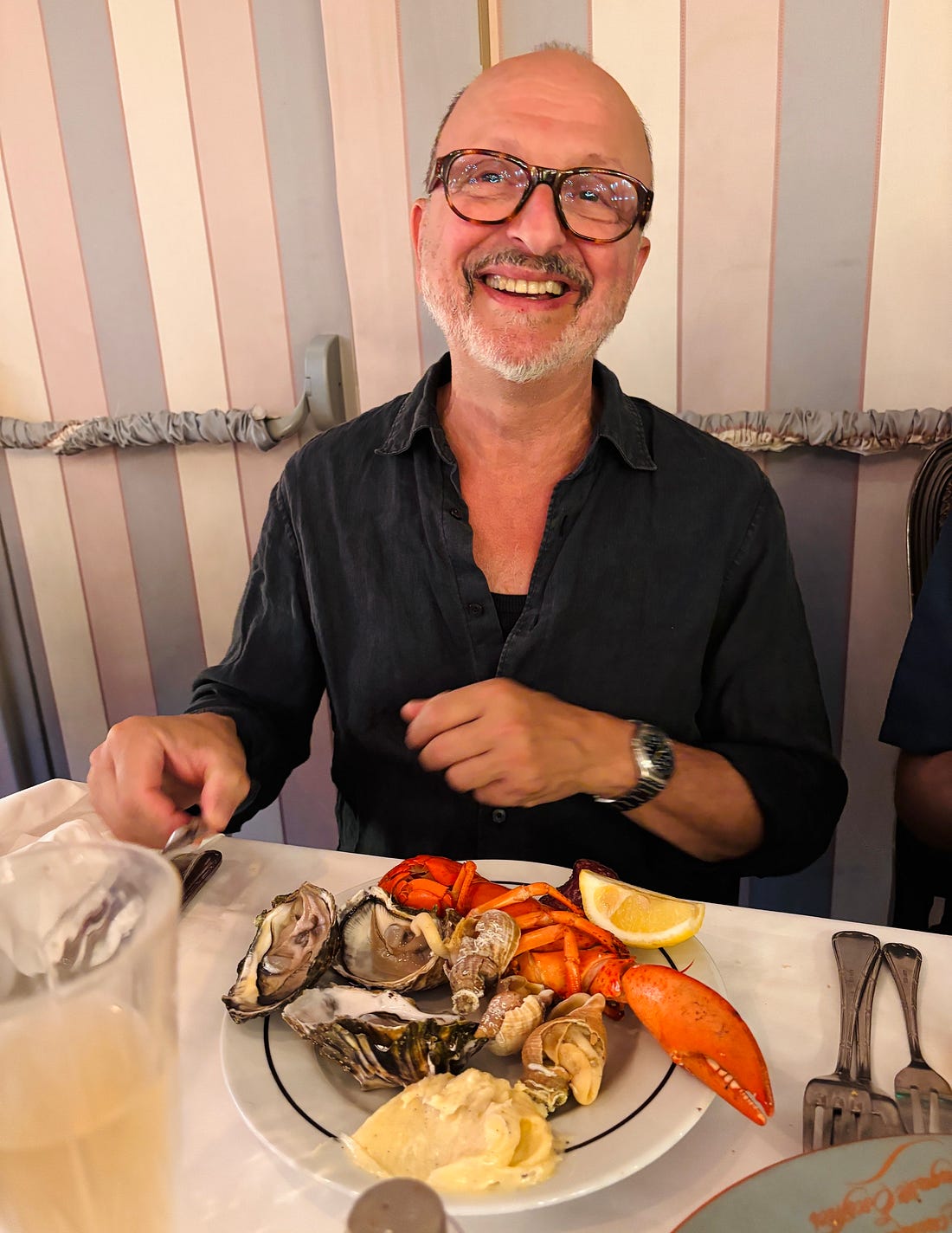
I didn’t try the crab claws, below, which a reader told me was better than the lobsters. As a New Englander, I’m pretty partial to Maine and Canadian lobster. Lobsters from France are twice as expensive are they are in the States, and a pricey indulgence.
I was wondering if the restaurant would have French lobsters, which they didn’t. I guess they blow their budget on black truffles. So if you go, grab a claw or two, or three, and let me know what you think.
Stay tuned for part 2 — main courses, the cheese course from the largest selection of cheeses in the world, and, of course, dessert(s). To be continued… You're currently a free subscriber to David Lebovitz Newsletter. For the full experience, upgrade your subscription.
|









No comments:
Post a Comment