| Better Health Through Better Understanding with Dietary Guidelines for Americans resources April is National Minority Health Month and this year's theme, Better Health Through Better Understanding, emphasizes the importance of health literacy, culturally competent care, and improved access to information for patients with limited English proficiency. Resources from the Dietary Guidelines for Americans, 2020-2025 (Dietary Guidelines) can help you better serve the diverse patients, clients, and communities you serve. The Dietary Guidelines purposely provides a framework intended to be customized to individual needs and preferences, as well as the foodways of the diverse cultures in the United States. The Dietary Guidelines provides recommendations by food groups and subgroups—not specific foods and beverages—to avoid being prescriptive. This empowers individuals and communities to select and prepare nutrient-dense, culturally relevant foods that are delicious and honor their heritage. This month, explore how you can use Dietary Guidelines resources to:
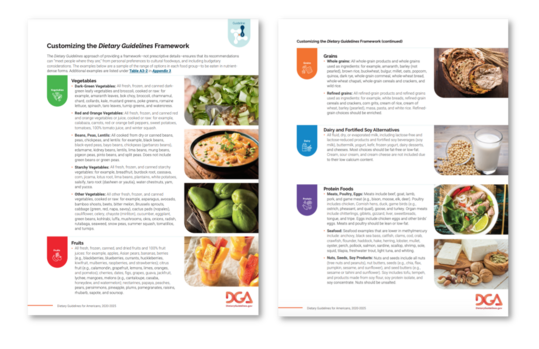
1. Help individuals and communities identify culturally relevant foods that help meet food group and nutrient goals - Use or adapt the Customizing the Dietary Guidelines Framework (available in English and Spanish) to identify nutrient-dense foods and beverages in every food group that reflect specific cultures and traditions. This is an important strategy to help communities across the country eat and enjoy a healthy dietary pattern.
 | | - The Food Sources of Select Nutrients lists can help you identify food and beverage sources of dietary components of public health concern—including calcium, potassium, dietary fiber, vitamin D, and iron—encompassing examples important to various cultural foodways.
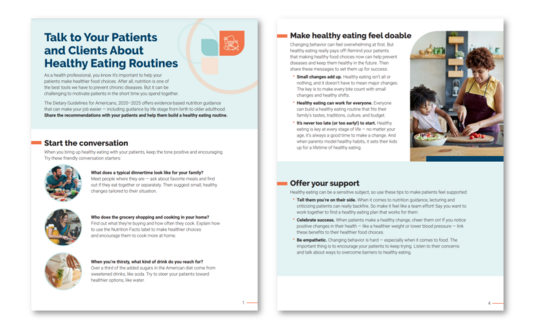
| | | 2. Build connection and communicate effectively about healthy eating with people from a variety of diverse cultures - Use our Nutrition Conversation Starters (available in English and Spanish) or share it with other health professionals to start meaningful conversations, address barriers, and help make healthy eating achievable.
3. Provide evidence-based resources in Spanish to improve access to information
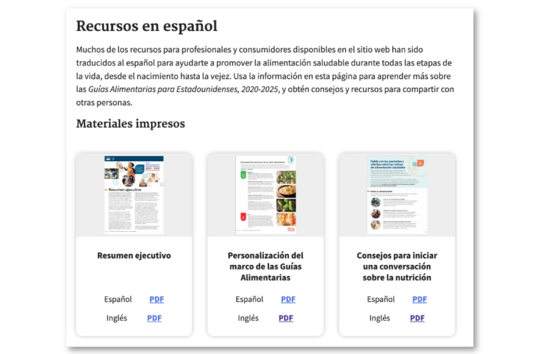
- Visit our Recursos en español page to access all our Spanish language resources in one place. Share these with your community.
 | | | |








No comments:
Post a Comment