Updates Guidance Documents - Request for Comment Risk Management Plans to Mitigate the Potential for Drug Shortages
This guidance is intended to help stakeholders develop, maintain, and implement risk management plans (RMPs) to proactively assist in the prevention of human drug product and biological product shortages. RMPs can provide stakeholders with a framework to proactively identify, prioritize, and implement strategies to mitigate hazards that can cause a supply disruption. Such a supply disruption may lead to a drug shortage. Safety Considerations for Container Labels and Carton Labeling Design to Minimize Medication Errors
The purpose of this guidance is to help human prescription drug and biological product sponsors, application holders, and applicants minimize medication errors associated with their products. This guidance focuses on safety aspects of the application holder's container label and carton labeling design. It provides a set of principles and recommendations for ensuring that critical elements of a product's container label and carton labeling are designed to promote safe dispensing, administration, and use of the product. Assessing User Fees Under the Generic Drug User Fee Amendments of 2017 This guidance provides stakeholders information regarding FDA's implementation of the Generic Drug User Fee Amendments of 2017 (GDUFA II) under Title III of the FDA Reauthorization Act of 2017. Because GDUFA II created changes to the user fee program, this guidance serves to provide an explanation about the new fee structure and types of fees for which entities are responsible. Infant Formula Enforcement Discretion Policy
We are issuing this guidance document to help increase the supply of infant formula in the United States. FDA intends to temporarily exercise enforcement discretion with respect to certain requirements for infant formulas that may not comply with certain statutory and regulatory requirements and is seeking information from manufacturers regarding the safety and nutritional adequacy of their products. Cybersecurity in Medical Devices: Quality System Considerations and Content of Premarket Submissions
This guidance is intended to provide recommendations to industry regarding cybersecurity device design, labeling, and the documentation that FDA recommends be included in premarket submissions for devices with cybersecurity risk. These recommendations can facilitate an efficient premarket review process and help ensure that marketed medical devices are sufficiently resilient to cybersecurity threats. FDA Voices FDA's "All-in" Approach to Enterprise Transformation  By: Janet Woodcock, M.D., Principal Deputy Commissioner, and Meredith Chuk, M.D., Senior Medical Advisor, Director, Enterprise Transformation Operation The FDA's responsibilities to protect the public health are broad, complex, and necessary because the products we regulate are in every home and used every day across the U.S. As we witnessed during the pandemic, the FDA plays a critical role in enabling access to safe and effective medical products, such as vaccines, therapeutics, and accurate diagnostic testing. The agency also monitors and supports the supply chains for critical components of these products, while continuing to ensure the safety of our food supply, all in an increasingly complex and interconnected environment. FDA Seeks to Engage Stakeholders on Key Considerations for a Drug Quality Management Maturity Program  By: Michael Kopcha, PhD, RPh, Director of the Office of Pharmaceutical Quality, Center for Drug Evaluation and Research (CDER) and Patrizia Cavazzoni, MD, Director of CDER (pictured below)  Part of the FDA's mission is to protect and promote public health by helping to ensure that safe, effective, quality drugs are available to patients. Drugs are not available to patients if they are in shortage. The 2019 report Drug Shortages: Root Causes and Potential Solutions found that a root cause of past drug shortages is that the market does not recognize and reward drug manufacturers that have invested in achieving quality management maturity (QMM). QMM is the state attained when drug manufacturers have consistent, reliable, and robust business processes in place to achieve quality objectives and promote continual improvement. Such business processes reduce the likelihood of supply disruptions and shortages. | Consumer Updates Know Your Treatment Options for COVID-19  Patients today have more treatment options in the battle against coronavirus disease. The FDA has approved two drug treatments for COVID-19 and has authorized others for emergency use during this public health emergency. In addition, many more therapies are being tested in clinical trials to evaluate whether they are safe and effective in combating COVID-19. Here's a closer look at some of the available COVID-19 treatments and how to get more information about them and others. Talk to your health care provider about available treatment options if you have COVID-19. Your provider will know the best option for you, based on your symptoms, risks, and health history. FDA Pharmacists Help You Use Medicines Safely  How often has this happened to you: You pick up a prescription at the pharmacy and later realize you have questions about something in the directions or warnings. Or you buy an over-the-counter (OTC) drug but aren't sure about the correct dosage after reading the label. That's where pharmacists come in. Whether at your local pharmacy or the FDA, pharmacists help patients achieve the best possible outcome when taking drugs. ICYMI! Is It Really 'FDA Approved'?  "FDA approved!" Maybe you saw those words on a company's website or in a commercial promoting a product or treatment. Some marketers may say their products are "FDA approved." But how can you know for sure what the FDA has approved? The FDA is responsible for protecting public health by regulating human drugs and biological products, animal drugs, medical devices, tobacco products, food (including animal food), cosmetics, and electronic products that emit radiation. Webinars and Virtual Workshops Annual Patient Engagement & Regenerative Medicine Meeting 2022: An FDA CBER Workshop for Patient Advocates May 24, 2022; 11:00 AM - 3:00 PM ET This meeting will bring together patients, caregivers, advocates, and other important stakeholders to discuss the purpose and importance of natural history studies. FDA staff and panelists will explore how natural history studies contribute to improved understanding of diseases and drug development, including regenerative medicine treatments such as gene and cell therapies. FDA and Duke-Margolis Virtual Public Workshop - Translational Science in Drug Development: Surrogate Endpoints, Biomarkers, and More May 24 - 25, 2022; 12:00 PM - 4:00 PM ET The FDA and the Duke-Margolis Center for Health Policy will convene a virtual public workshop to present best practices and use cases for successfully bringing forward evidence generated through translational science for regulatory submissions. Stakeholders will discuss potential barriers to using translational science to support therapeutic development and strategies to overcome those barriers. Quality Management Maturity Workshop May 24 - 25, 2022; 1:00 PM - 4:00 PM ET The FDA is developing a program to assess and rate the quality management maturity (QMM) of facilities manufacturing drug products and active pharmaceutical ingredients. A successful QMM rating program will improve supply chain transparency, inform purchasing decisions, reduce drug shortages, and increase medicine availability. Regulatory Education for Industry (REdI) Annual Conference 2022 June 6 - 10, 2022; 8:30 AM - 4:50 PM ET Learn directly from the FDA's regulatory experts in medical product centers: drugs, devices, and biologics. This course is designed to provide participants with a strong, basic foundation in the FDA's regulatory requirements, and also create awareness of current activities. The FDA will review the use of the emergency use authorization (EUA) authority that advanced the timely availability of a wide range of medical products such as vaccines, drugs, diagnostics, and personal protective equipment. 2022 Financial Transparency and Efficiency of the Prescription Drug User Fee Act, Biosimilar User Fee Act, and Generic Drug User Fee Amendments June 7, 2022; 9:30 AM - 10:50 AM ET This public meeting is intended to meet performance commitments included in PDUFA VI, BsUFA II, and GDUFA II. These user fee programs were reauthorized as part of the Food and Drug Administration Reauthorization Act of 2017 (FDARA) signed by the President on August 18, 2017. Virtual Public Workshop - Building Medical Device Supply Chain Resilience: A Healthcare and Public Health Ecosystem-Wide Collaboration June 7 - 9, 2022; 1:00 PM - 4:00 PM ET The purpose of the public workshop is to discuss ways to foster resiliency in the medical device supply chain and to seek input on the new Resilient Supply Chain Program (RSCP). The RSCP aims to build upon a foundation of strong partnerships to improve supply chain resiliency through proactive communication, collaboration, and engagement with patient advocates, health care providers, distributors, group purchasing organizations, manufacturers, as well as key component and material suppliers. Meeting of the Pharmacy Compounding Advisory Committee Meeting Announcement June 8, 2022; 9:30 AM - 5:15 PM ET The committee will discuss the following four bulk drug substances nominated for inclusion on the 503A Bulks List: Ammonium tetrathiomolybdate, enclomiphene citrate, ferric subsulfate, and glutathione. The chart below identifies the use(s) FDA reviewed for each of the four bulk drug substances being discussed at this advisory committee meeting. The nominators of these substances or another interested party will be invited to make a short presentation supporting the nomination. Conversations on Cancer: "National Black Family Cancer Awareness Week: Engaging the Generations" June 16, 2022; 1:00 PM - 2:30 PM ET 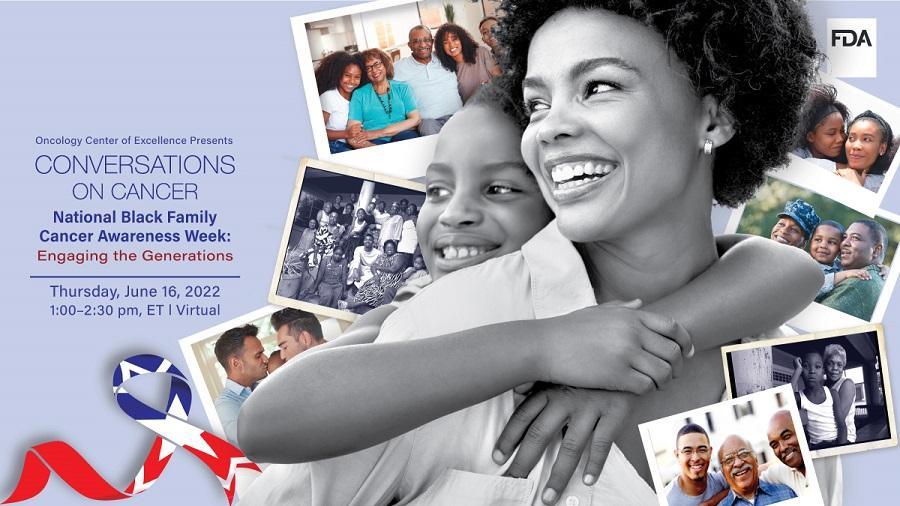 The 2022 Conversations on Cancer: National Black Family Cancer Awareness Week public panel discussion is also in keeping with the Cancer Moonshot 2.0 which established goals to reduce cancer death rates by at least 50% over the next 25 years and improve the experience of living with and surviving cancer. OCE is engaging NCI-designated Cancer Centers, cancer advocacy groups, patients, social and community organizers, Historically Black Colleges and Universities, families and friends. OCE's Project Community is keenly interested in including members of all US communities in this dialogue. About Us The Stakeholder Engagement Staff resides within the Office of the Commissioner and falls under the Office of External Affairs. We aim to build stronger relationships with health professional organizations, consumer groups, trade associations, patient advocacy organizations, think tanks/academia, and other stakeholders, in order to better inform our policy making process, identify policy hurdles or stakeholder misconceptions, and create strategic collaborations. Did someone forward you this email? Sign up below! | 



No comments:
Post a Comment