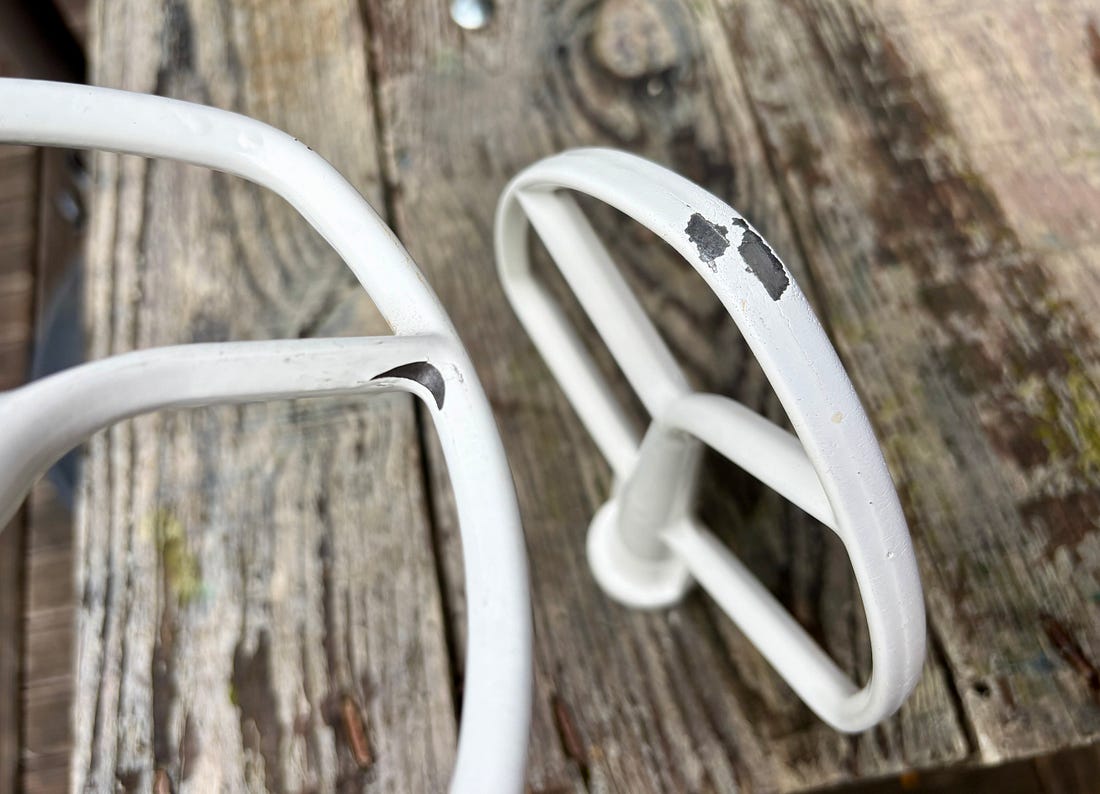
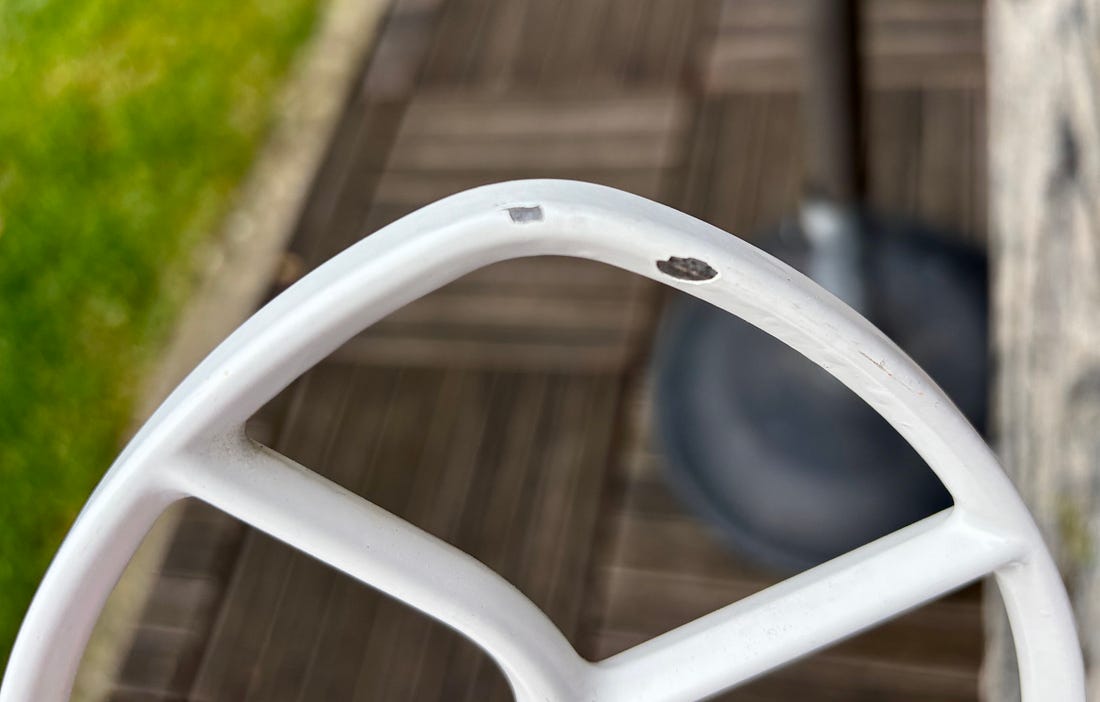
Don’t get me wrong. I am a fan of my KitchenAid mixer. I’ve been using one professionally since the 1980s when I baked in restaurants. At home, I tried to live without one when I moved into my first Parisian apartment (which barely had room for me in the kitchen, let alone a stand mixer…), but I finally succumbed. I was the first layperson they let inside the KitchenAid factory in Ohio, where they make the mixers, which was what we might nowadays call a “viral” moment, since there were only about a dozen blogs in those days, and it brought a lot of attention to mine. So I was perplexed one day when I noticed that my beloved mixer paddle had some chips in it. Fortunately, I had a second one here in Paris, since I like to have two paddles and two whip attachments on hand. I stopped using the first paddle, and pretty soon, the second paddle developed chips on it as well.
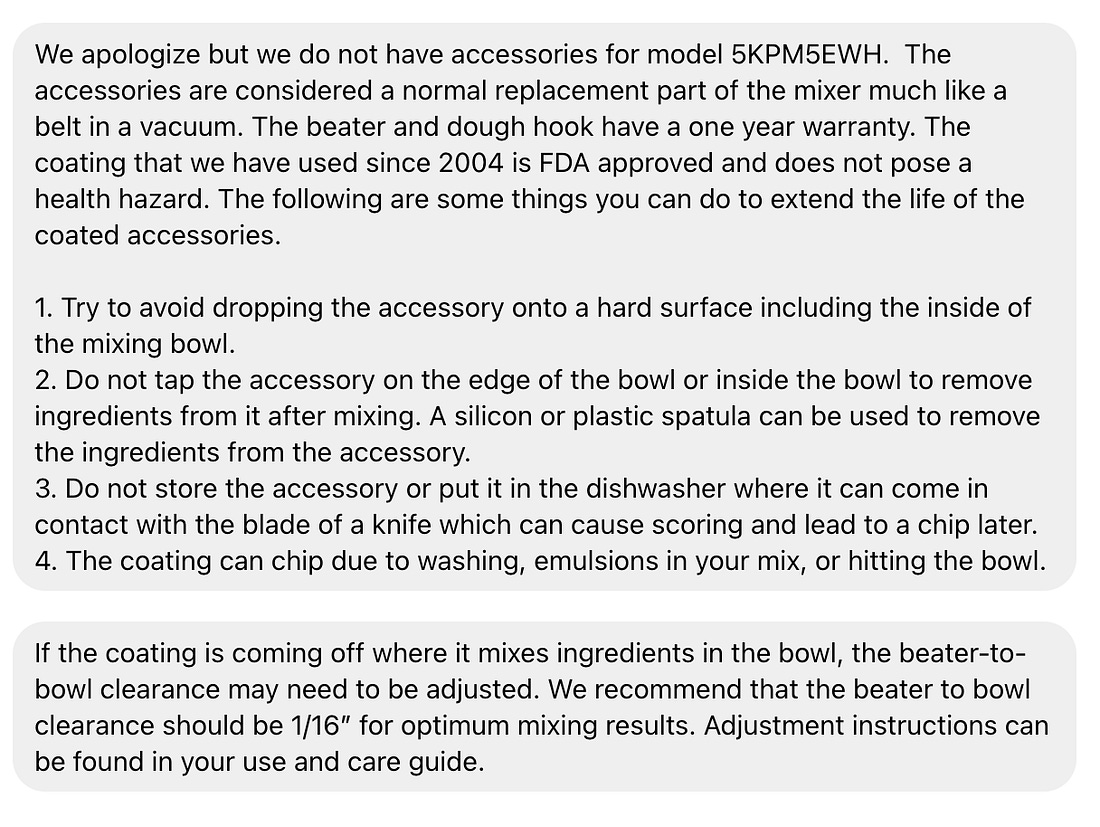
Since I’ve always had a good experience with KitchenAid products, although as you may have read in L’Appart, I did find their customer service in France quite different than it is in the U.S., I thought I’d reach out to them to find out what happened. I was hoping for, “Sorry to hear that, David. We’d like to replace it for you.” Instead, there was this:
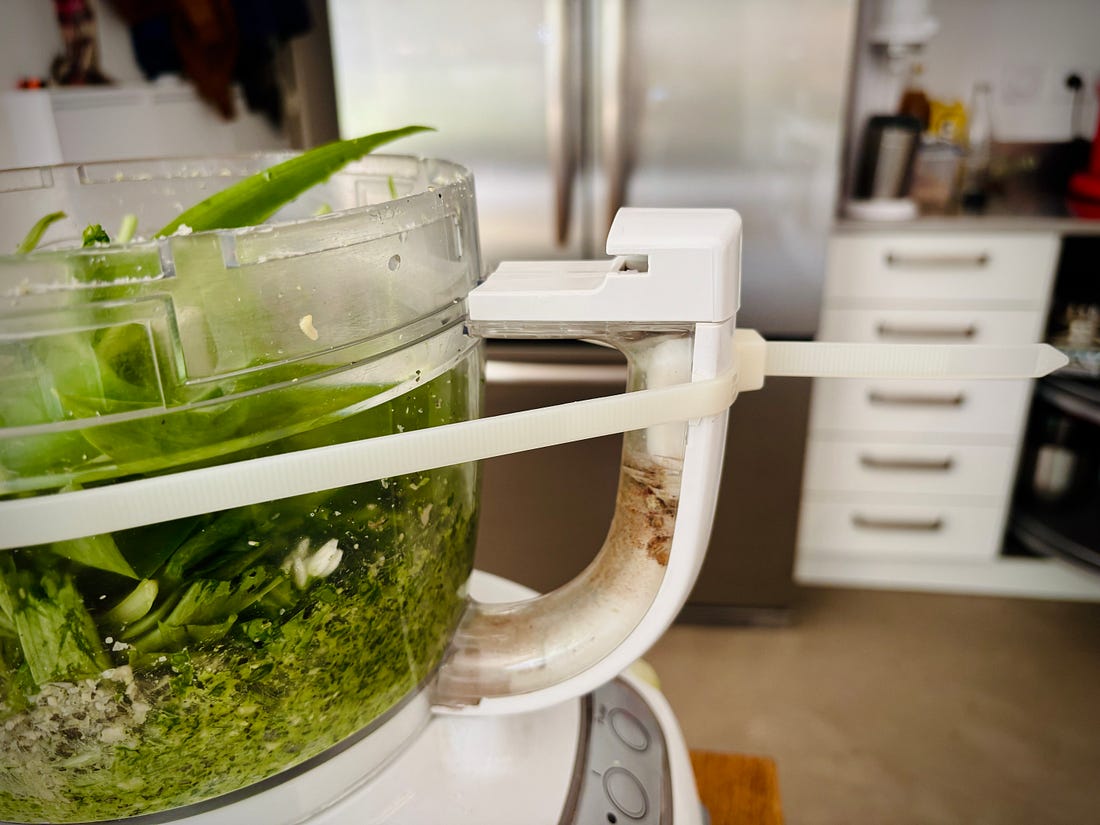
I probably should not have been surprised. Their French counterparts here weren’t keen to replace my food processor when the bowl fell apart, which is now held together by a plastic zip-tie and the handle is filled with unappealing gunk.
In response to their advice, yes, I do run the paddle through the dishwasher since it’s coated (unlike the whip, which is not dishwasher safe), because I’ve got a thing about hygiene. But I don’t run any of my knives through the dishwasher, and anyone who does is on the receiving end of my wrath. I am also aware of adjusting the bowl so it doesn’t hit the paddle using the little screw underneath the mixer head, which they call the dime test. Mine wasn’t hitting the bottom of the bowl. What surprised me even more is that they said the coating used since 2004 is “FDA approved and does not pose a health hazard.” That may be the case, but not sure I want pieces of it in my cake. The replacement paddles are selling on their website here in France for around €80 ($93) each.
Rather than repeat the same problem with the same beater, I tried ordering a stainless steel beater online from the U.S. (I couldn’t find one here), and the one that arrived was the wrong size, even though the description said it would fit my mixer. It was onnly €20 so not worth shipping back to the U.S. I’ve since learned that a lot of people have the same problem with the paddle attachment — it’s a known issue — so not sure why they don’t just make them in uncoated metal, since other companies do, or powder coat them. But I have a problem with no one listening to me
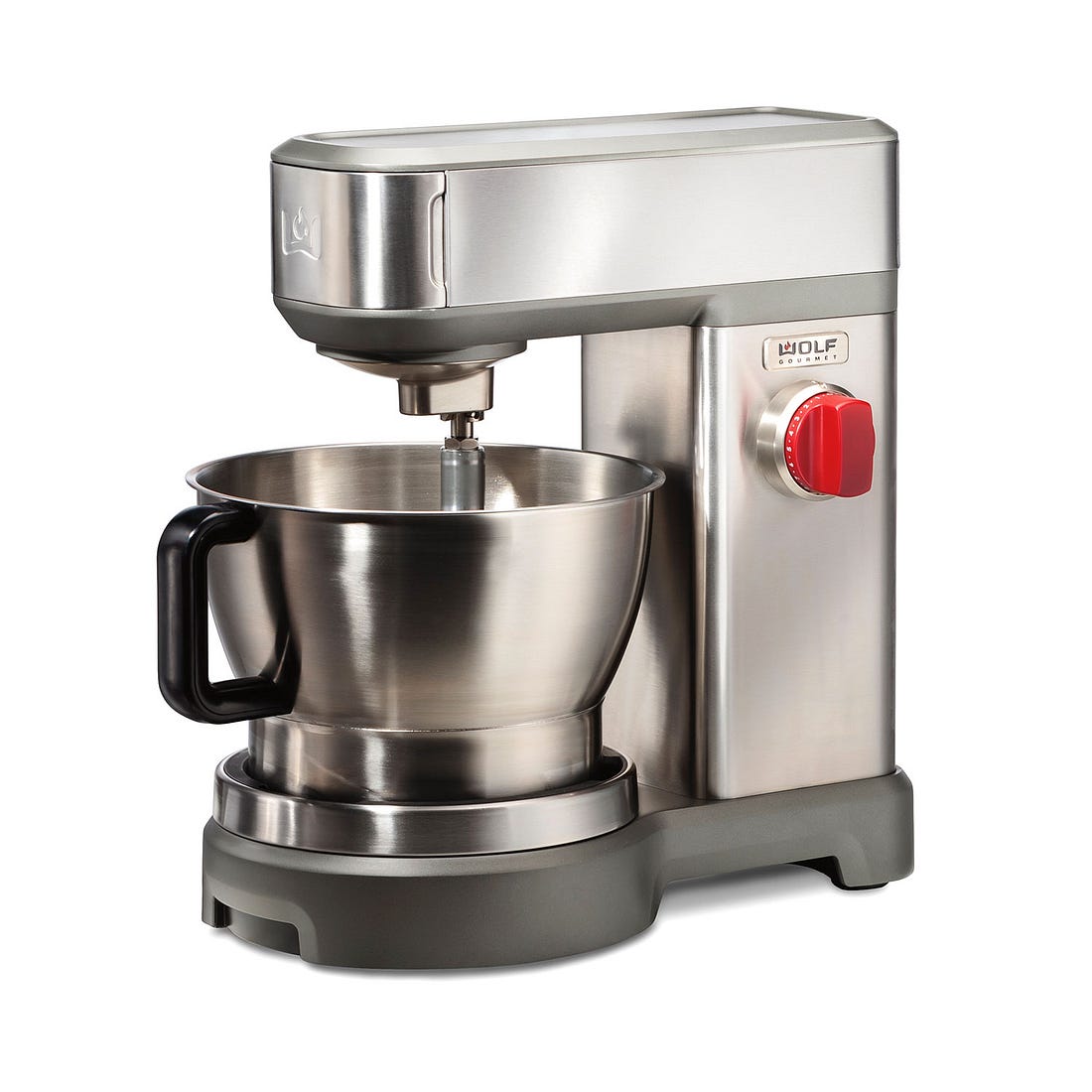
While I’m very happy with my KitchenAid mixer, I know there are other mixers out there. One notable baking author told me to try the Cuisinart mixer, which isn’t available in France. There’s the Breville, which has a built-in timer and a light, but is also not available here. Although a light would be really helpful here, especially during the dark winter months, when baking is the only thing that keeps me going. I dream of having a Wolf stand mixer, but when they available in France they were around €2200 ($2,500) vs. $800 in the U.S., which may explain why they don’t sell them anymore in France.
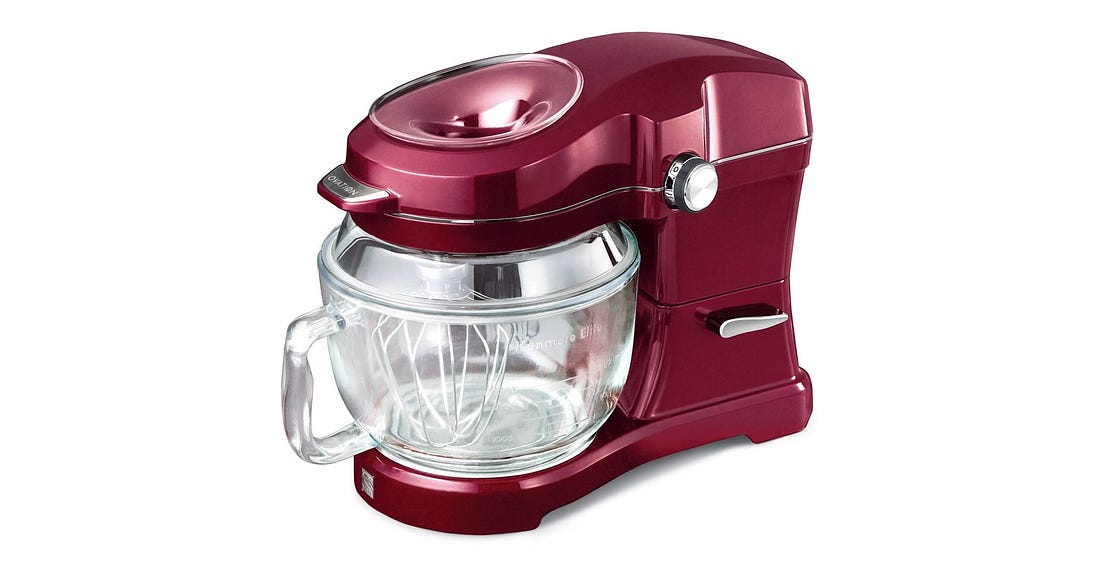
The Kenwood stand mixer incorporates a scale and a warming feature, and the Kenmore, although not available in Europe, has a pour-through opening in the top, which is a feature that every mixer manufacturer should consider incorporating.
The spendy Ankarsrum is large and more powerful than the other mixers, but friends who have them tell me they’re better for making bread than for baking, similar to the limitations of the new Ooni mixer. Living in France, there’s little reason to make your own bread since the bakeries do it better than most of us can. Apollonia Poilâne, owner of the iconic Poilâne bakery, told me, “Bread likes to be baked together.” And who am I to break up bread? Despite the tepid, and curious, responses I’ve gotten from the company, I’m hopelessly attached to my KitchenAid mixer and I’m not ready to break up with it. (Unless they bring those Wolf mixers back to France, and drop the price.) I’d remembered that quite a few years ago, an innovation in stand mixers was introduced for the KitchenAid mixer, which wasn’t made by KitchenAid. It had plastic blades attached to it and was said to be so efficient at mixing that you didn’t need to stop the mixer to scrape down the sides while things up. As a born skeptic, it seemed like a gimmick at the time, but eventually, KitchenAid introduced one to go with their 600 model mixers. So there must be something to it — right? And then I saw Mr. Mixer demo one on his social media page:  So I looked at his website, found the one for my KitchenAid mixer, wrote (and sent pictures) to confirm it was the right size for my mixer, and ordered one. A friend brought it over from the U.S., and I’ve been using it, and…it works!
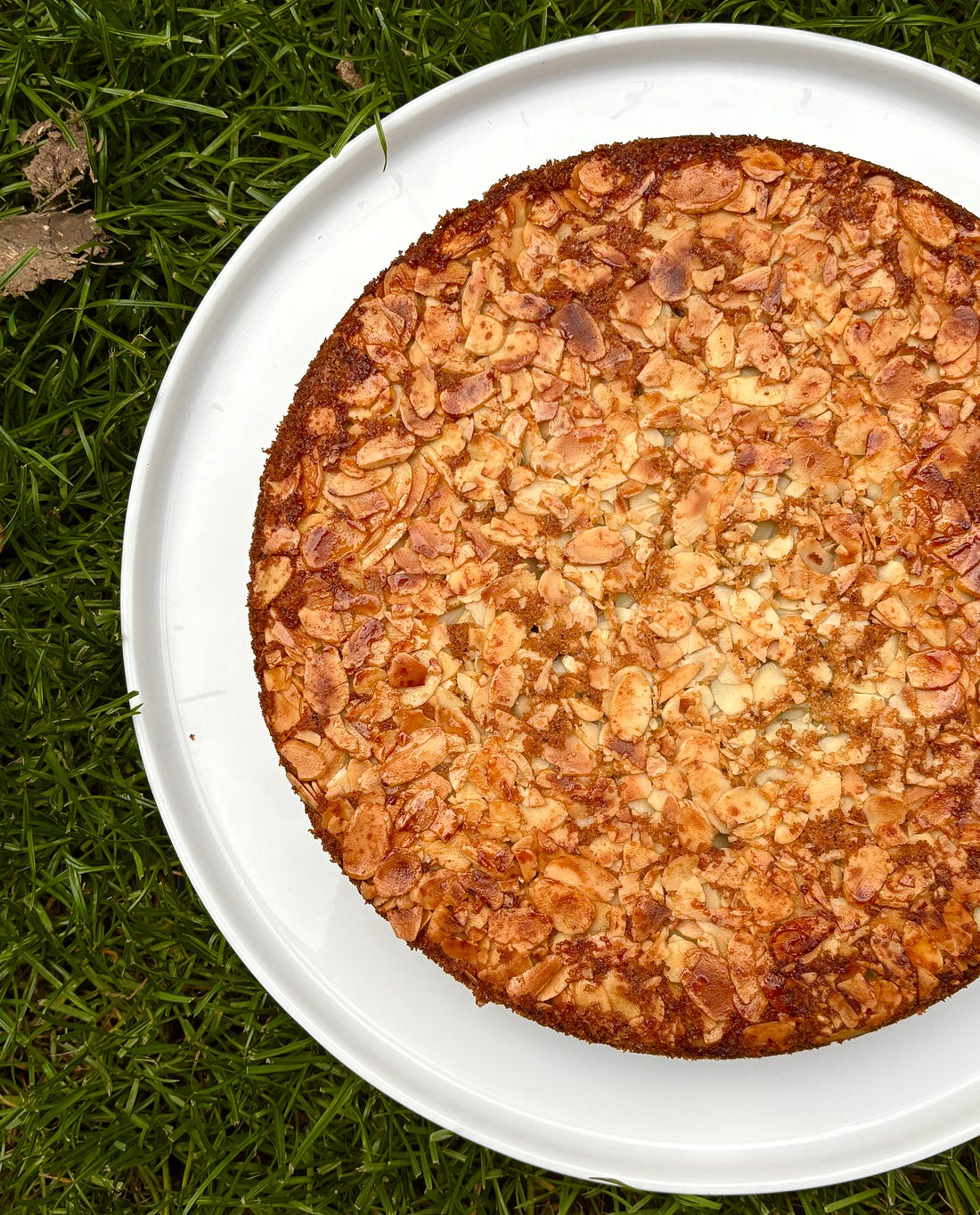
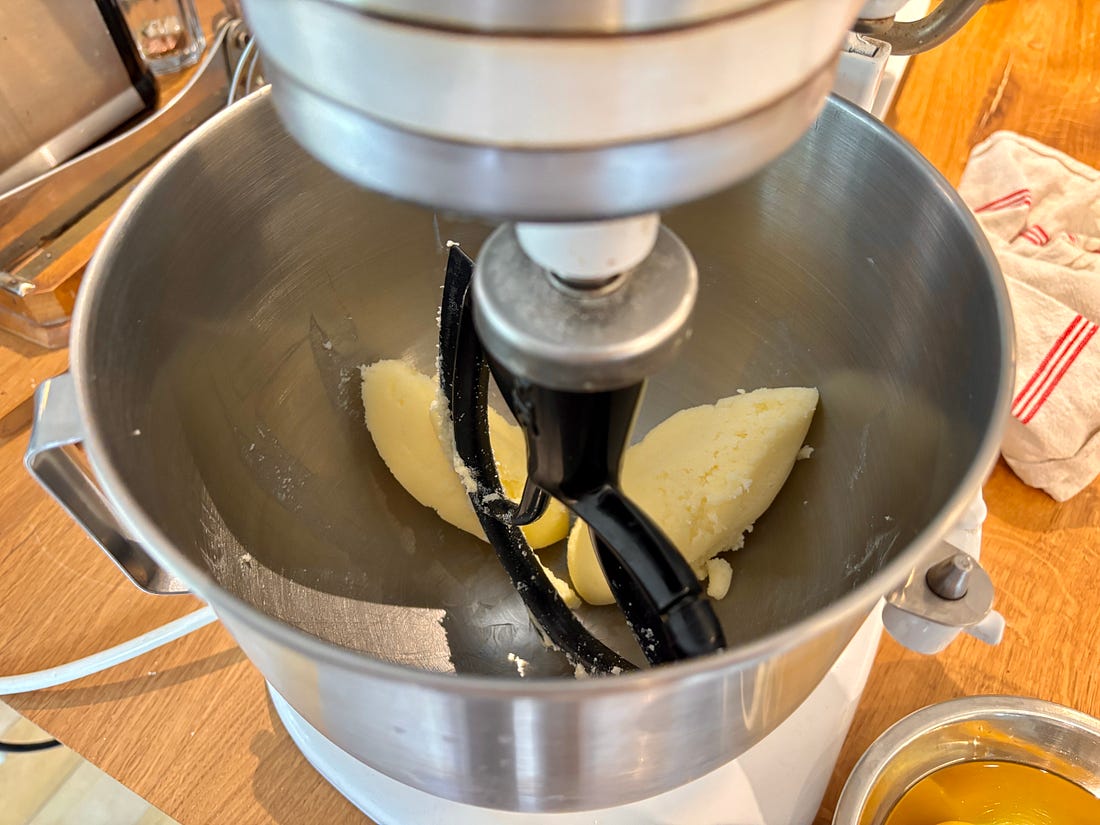
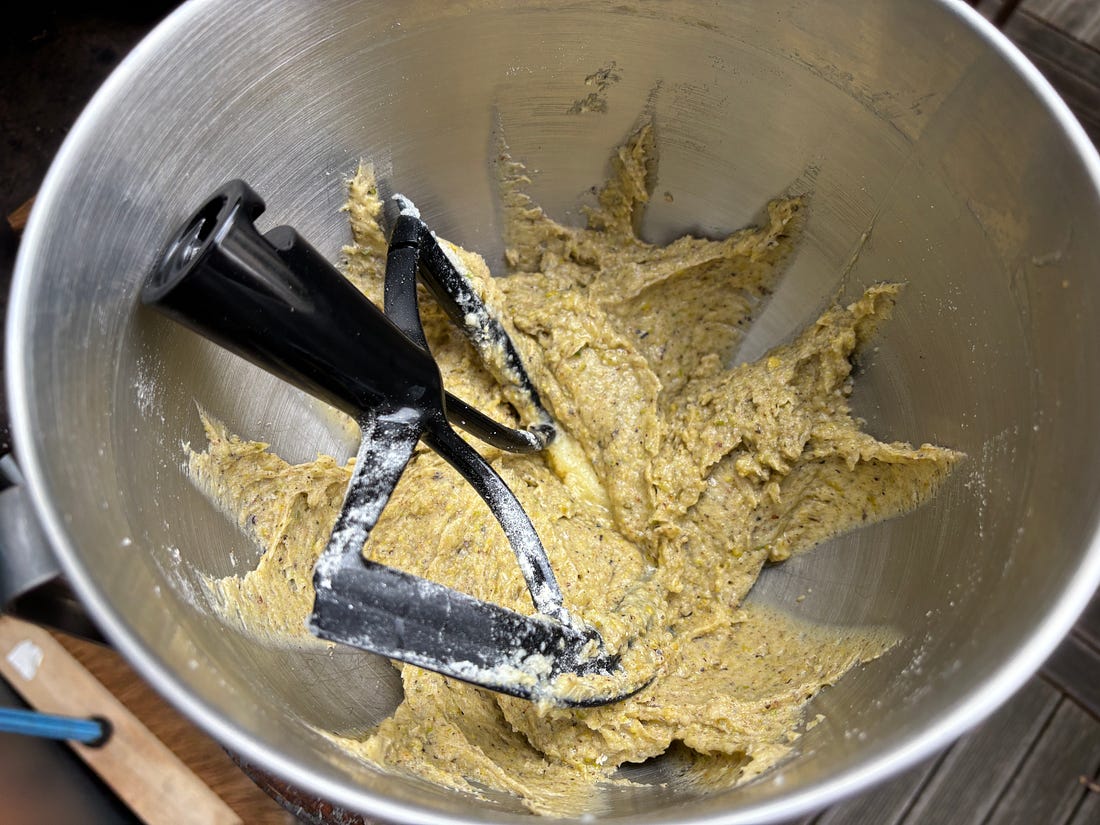
I made the Pistachio-cardamom cake from my book Ready for Dessert (shown at the top of the post), softening up the butter. Unlike the KA paddle, it shaped the butter and sugar into quenelles, which isn’t so ideal because the whole idea of beating the butter and sugar is to make them light and fluffy, so that’s a downside of the Beater Blade. But as I kept going, things got better.
I noticed the Beater Blade also has a gentle curve to it that helps move the contents of the bowl around so they mix evenly, and keeps them lower in the bowl without pushing them upward. I later read on the Beater Blade website that mixing is up to 50% faster with their blades, which I found to be true.
After I added the eggs, the batter whipped up nicely and the rest of the mixing went smoothly, and the cake turned out great. Then I made pie dough in it (pâte brisée) and I liked how the machine scraped the dough, rather than kneading it. The mixer paddle that comes with the KitchenAid smooshes the dough against the sides, where the Beater Blade scrapes it. The dough came together very efficiently. 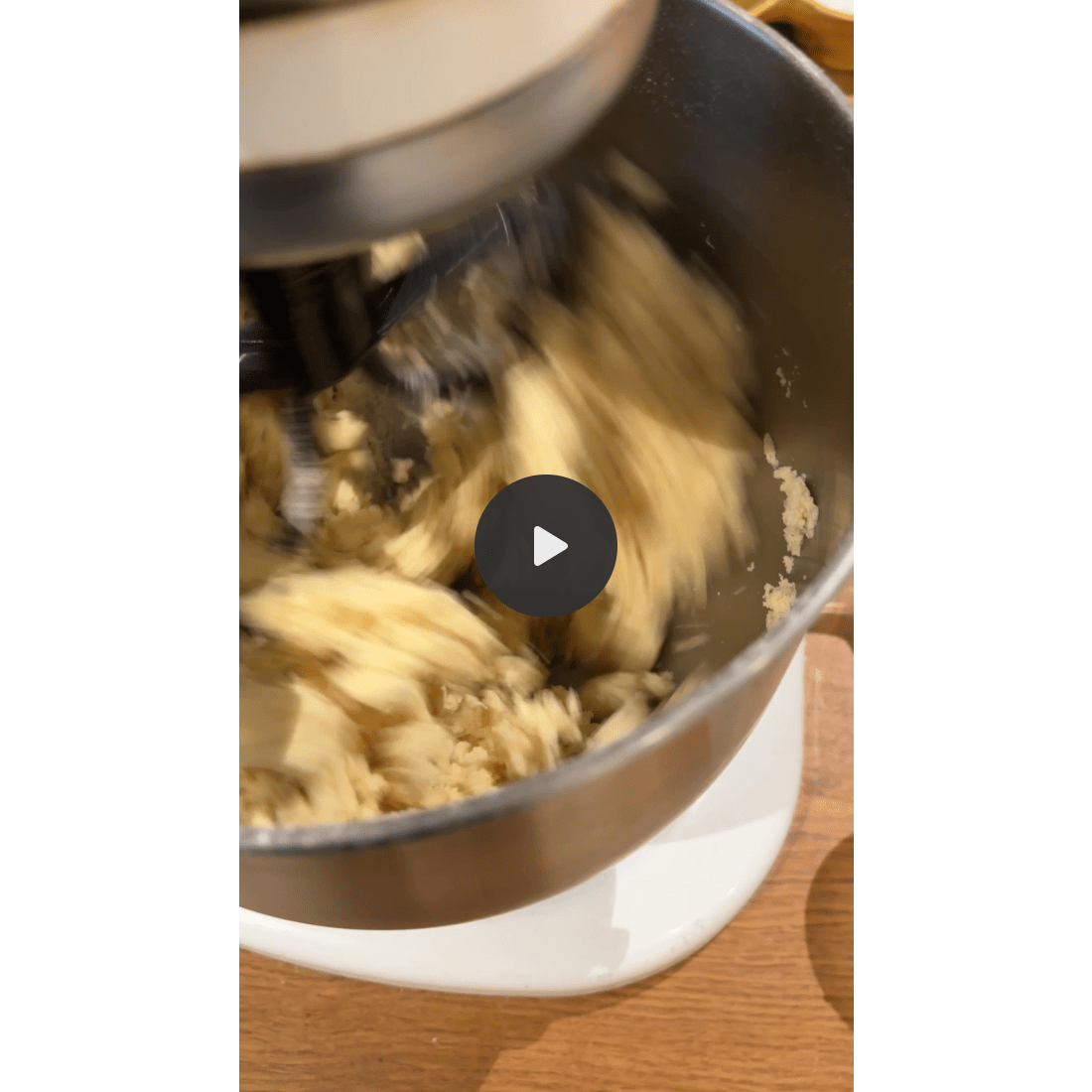 Usually when I make dough in my KitchenAid, I stop the machine before it’s completely come together, and finish it by hand to avoid overmixing. The Beater Blade mixed the dough perfectly, and I didn’t have to manipulate it any further. One downside of the Beater Blade is that it takes a bit of practice to attach the paddle to the mixer whereas the KitchenAid paddle easy snaps up, and on. This morning I made Craquelin dough and it took me longer to attach the blade than it did to mix the dough, but I’m sure I’ll get the hang of it. If you do want to get a Beater Blade for your KitchenAid mixer, Mr. Mixer, who I bought mine from, shared a promo code that you can use to get $5 off: MIXER5 You can also buy them from directly from the company, or other retailers.
[I don’t have any affiliation with either company, and this isn’t an ad or paid placement for them.] Invite your friends and earn rewardsIf you enjoy David Lebovitz Newsletter, share it with your friends and earn rewards when they subscribe.
|
Thursday, July 3, 2025
The Beater Blade








Subscribe to:
Post Comments (Atom)
No comments:
Post a Comment