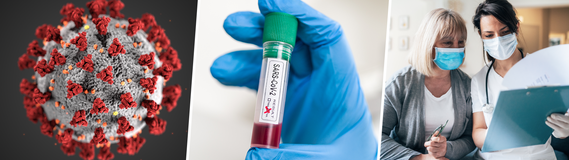
 The FDA is working to address the coronavirus disease 2019 (COVID-19) outbreak and keep you and your family informed on the latest developments. Here are answers to some frequently asked questions from consumers about vaccines, medicines and treatments. Q: Are there any vaccines or other medical products to prevent COVID-19? A: At this time, there is no vaccine to prevent coronavirus disease 2019 (COVID-19). The FDA is working with vaccine developers and other researchers and manufacturers to help expedite the development and availability of medical products such as vaccines, antibodies, and drugs to prevent COVID-19. Read more about what the FDA is doing to mitigate the effects of COVID-19. For information about vaccine clinical trials for COVID-19 visit clinicaltrials.gov and the COVID-19 Prevention Network. (The information on clinicaltrials.gov is provided by the sponsor or principal investigator of a clinical trial. The listing of a study on the site does not reflect evaluation or endorsement of the trial by the federal government.) Learn how to help stop the spread of COVID-19 and protect your family and the importance of getting your flu vaccine. Q: Are there any FDA-approved drugs (medicines) for COVID-19? A: Yes. The FDA has approved Veklury (remdesivir) for certain COVID-19 patients. Read more about the approval below. Additionally, during public health emergencies, the FDA may in certain circumstances authorize use of unapproved drugs or unapproved uses of approved drugs for life-threatening conditions when there are no adequate, approved, and available options and other conditions are met. This is called an Emergency Use Authorization (EUA). Researchers are studying new drugs, and medicines that are already approved for other health conditions, as possible treatments for COVID-19. The FDA created the Coronavirus Treatment Acceleration Program (CTAP) to use every available method to move new treatments to patients. The FDA also is working with the National Institutes of Health, drug manufacturers, researchers, and other partners to accelerate the development process for COVID-19 treatments. FDA's Sentinel System is being used to monitor the use of drugs, describe the course of illness among hospitalized patients, and evaluate the treatment impact of therapies actively being used under real-world conditions. For information about clinical trials for COVID-19 treatments visit clinicaltrials.gov and the COVID-19 Prevention Network. (The information on clinicaltrials.gov is provided by the sponsor or principal investigator of a clinical trial. The listing of a study on the site does not reflect evaluation or endorsement of the trial by the federal government.) Q: What treatments are available for COVID-19? A: On Oct. 22, the FDA approved the antiviral drug Veklury (remdesivir) for use in adults and pediatric patients (ages 12 and older and weighing at least 40 kg) for the treatment of COVID-19 requiring hospitalization. Veklury should only be administered in a hospital or in a health care setting capable of providing acute care comparable to inpatient hospital care. This approval does not include the entire population that had been authorized to use Veklury under an Emergency Use Authorization (EUA) originally issued on May 1. To ensure continued access to the pediatric population previously covered under the EUA, the FDA revised the EUA for Veklury to permit the drug's use by licensed health care providers for the treatment of suspected or laboratory-confirmed COVID-19 in hospitalized pediatric patients 3.5 kg to less than 40 kg or hospitalized pediatric patients younger than 12 weighing at least 3.5 kg. For more information on the authorized use of Veklury under the EUA, refer to the Fact Sheet for Healthcare Providers. Clinical trials are ongoing to assess the safety and efficacy of Veklury in this pediatric patient population. The National Institutes of Health provide more information about treatment options.
People with COVID-19 should receive supportive care to help relieve symptoms. People with mild symptoms are able to recover at home. If you experience a medical emergency such as trouble breathing, call 911 and let the operator know you may have COVID-19. Never take a prescription medicine or drug if it is not prescribed for you by your doctor for your health condition. | 





No comments:
Post a Comment