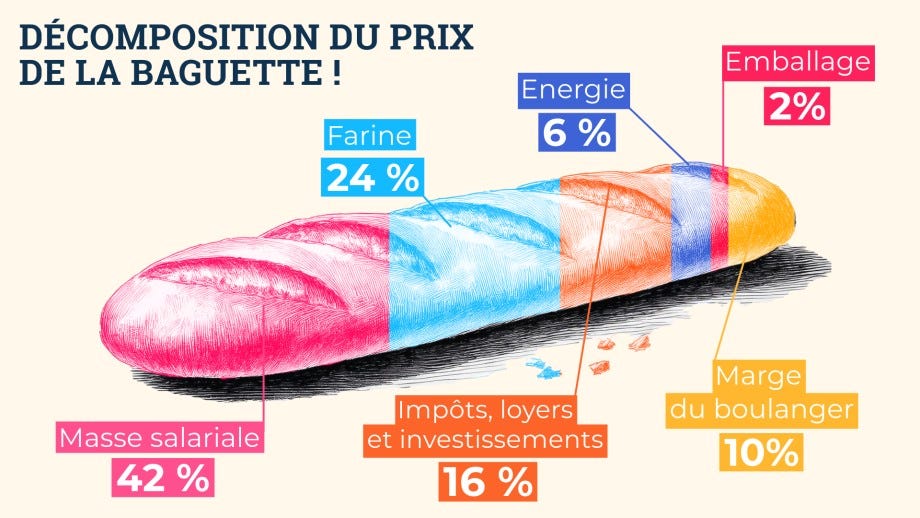
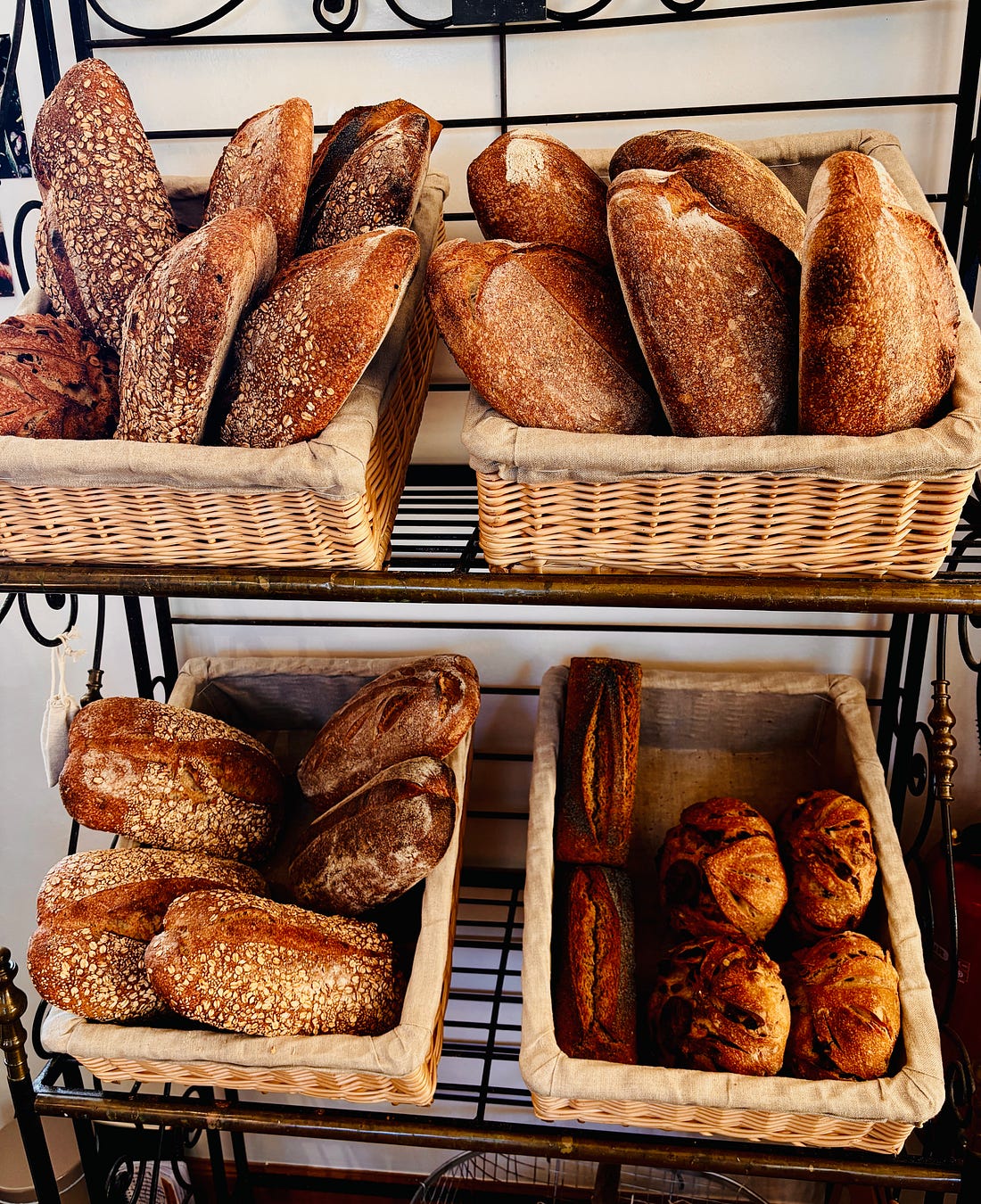
For a country with a reputation for being slow to change, France has certainly been changing in several ways. The restaurants have gotten a lot better, and more diverse, since the days of gloom and doom, when French cuisine was in decline, coffee was referred to, in French, as jus de chausette (sock juice), and chain bakeries (yuck) were being pitted against artisan boulangeries. People who don’t live in France often don’t like to hear that France is changing, but change isn’t bad, especially when things change for the better. Sure, no one has figured out how to keep the electronic kiosks at customs at Charles de Gaulle airport in working order, which makes you miss the few humans who worked at the kiosks before. (Even though that never seemed enough, either.) Nor has the repairman come to fix our heat; only two of the eight radiators in our apartment are working right now. (This week the temperatures dropped below freezing.) And rather than a Joyeux Noël message from my accountant, she sent me a request for loads of paperwork…on Christmas Eve. Bah humbug, or however you say that in French. (They do have Père Fouettard, who punishes children who are bad with a whip. But no word if they have someone like that for heating repairmen who don’t show up.) On the other hand, we do have over 1000 kilometers (620 miles) of bike lanes in Paris, which is credited for cutting pollution in half. There’s a new wave of chocolate boutiques in Paris, and we’re in the middle of a bread renaissance, with more and more boulangeries baking great-quality bread, often with heritage grains and slow fermentation methods. Almost a decade ago, in “Challenging the way the French think about bread,” baker Alice Quillet of Ten Belles bread remarked that when they opened, French people were outraged they didn’t make baguettes. But with the marge (profit margin) on a baguette averaging 8 to 10 centimes, it’s no wonder that some bakeries aren’t keen on making or selling them.
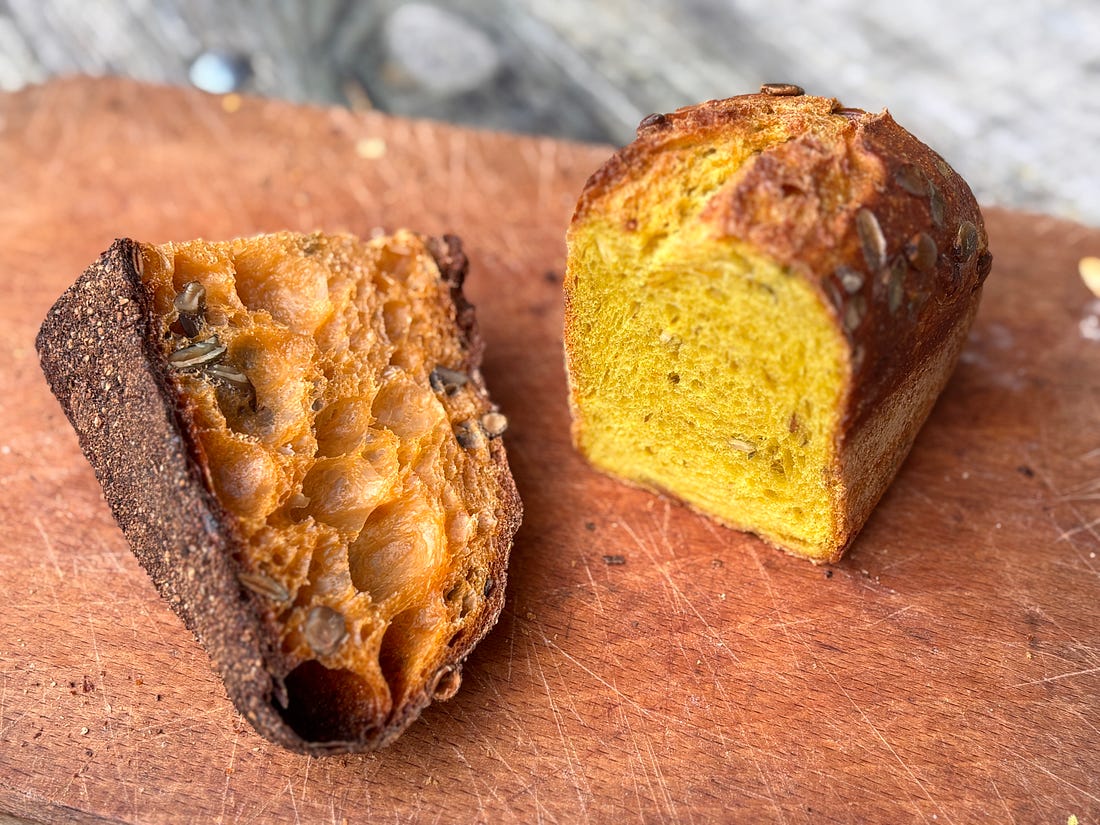
While I love a good baguette, I’m really excited about what bread bakers are baking up in Paris right now. As bakery owner Benoît Castel recently said, “We’ve never eaten such good bread as we are right now”…and I agree. Bakeries in France are considered a vital part of life in France and during the Covid lockdowns, bakeries were exempt, as they were considered “essential” businesses. (As were tobacco stores.) Bread is considered a right in France, hence the low prices for baguettes, which range from about €1 - €1,60 ($1.20 - $1.90), although the owner of Du Pain et des Idées shocked people by charging €4 for a croissant and €4,30 for a chocolatine (pain au chocolat), around three times what other bakeries charge, arguing that the price of the ingredients and the labor justified the price.
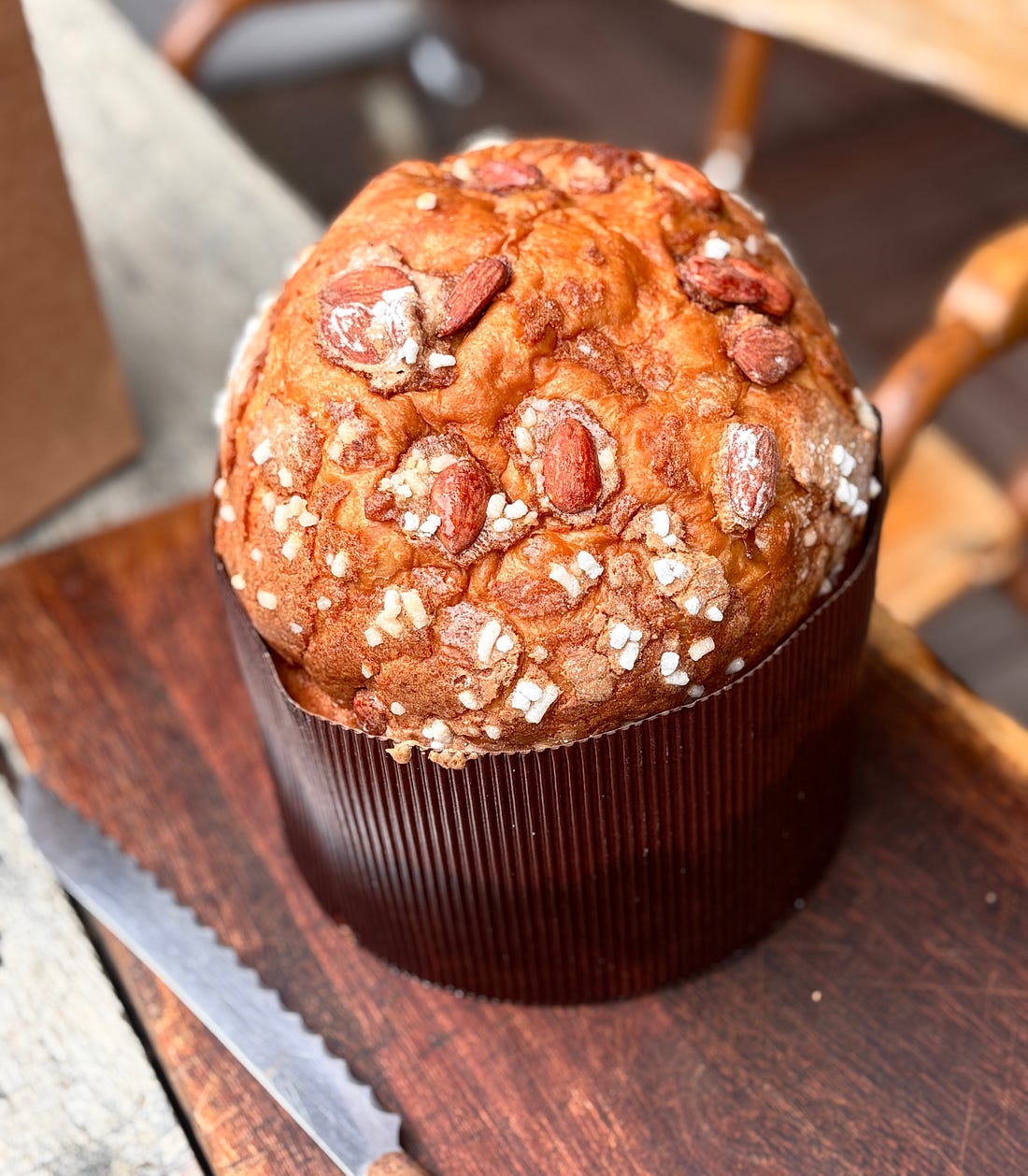
I feel spoiled and it’s easy to get blasé about having access to good bread. Some favorite bakeries I frequent: Landemaine, Poilâne, Terroirs d’Avenir, Brigat’, Sain, Ten Belles, Archibald, and Mamiche, which is the only place in Paris that I’ll wait in a line that long. And no, I don’t have any clout or get any special favors — like getting to jump the queue — around here. As another example, I put my name on the waiting list in early December for a panettone from Christophe Louie. I’ve been a fan since he started making them and visited his private workshop, which he kindly gave me a tour of, before he opened his own bakery in the Marais. I put my name on the waiting list to be notified when more would be available but didn’t get any notifications. I was in the neighborhood and stopped by to see if my charms could move me up a few notches.
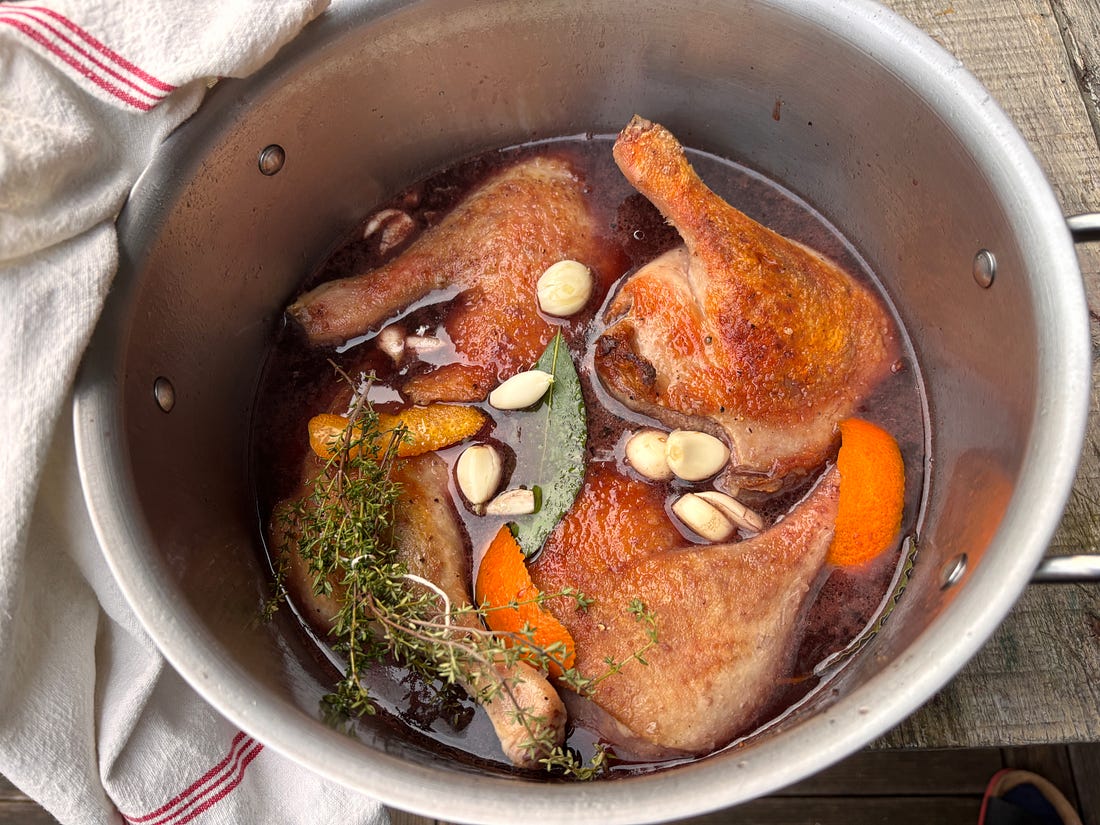
No dice. (Although I don’t wish a visit from Père Fouettard on him.) So I got a panettone from Brigat’, which was excellent, even though a Debbie Downer online tried to dampen my excitement, saying there shouldn’t be any almonds on a panettone. I couldn’t bring myself to pick them off and throw them away. In spite of it being a little chilly around here, we’re also doing our best to make it through winter and Romain keeps reminding me that, as of last month, the days are now (supposedly) getting longer. I’m not packing up my gloves, scarves, and down comforter quite yet, but am enjoying winter cooking. One of my favorite things to make when it’s cold out is braised duck. A lot of French cooking involves braising, cooking foods at a gentle simmer until they’re tender and succulent, like this one.
There’s nothing more foolproof than braised duck legs, which are actually thighs…as Debbie D. might point out. But if someone wants to take on the English language, and all the quirky translations, be my guest. Like, why is an entrée in French a starter, whereas in English, it’s the main course? I also once tried explaining to Romain that in English, green beans cut on the diagonal are called “French-cut.” I got a perplexed look, similar to when I offered him a pretzel filled with peanut butter from a bag a friend brought me over from the States. The most challenging part may be finding the duck thighs. But if you can’t find them, you could use chicken and swap out white wine for the red, which would probably work better with the milder-flavored chicken. You’d also want to reduce the amount of time since chicken cooks faster than duck. I have a braised duck with prunes recipe here that I braise in the oven… …but this time around, I cooked them on the stovetop. I seasoned the duck thighs with salt and pepper, and browned them in a bit of oil, skin side down. If you’re thinking ahead, salting the duck a day or two in advance improves its flavor. Once browned, remove the thighs from the pot, add a splash of decent red wine from a bottle, scrape the delicious bits off the bottom of the pan, then add the duck back, along with the rest of the bottle of wine. I like to add thyme, bay leaves, garlic, and orange peel, but you can use whatever you’d like. Add enough water to cover the duck thighs (if cooking chicken, add enough water to cover them halfway). Bring the liquid to a boil, then reduce it to a very low simmer and cook gently, covered, until the thigh meat is very tender. Figure about three hours. I did add some peeled pearl onions and cubes of rutabaga an hour before the duck was done. The duck can be cooked the day before, then cooled and refrigerated, which allows you to skim off excess fat before rewarming it. But it can be enjoyed right away, or kept in the braising liquid for an hour or so, until you’re ready for dinner. It’s good with mashed potatoes, if you’re not adding root vegetables to the pot, or wide noodles.
January is the most challenging month in Paris, with the cold weather keeping most of us inside, and everyone is missing the days when we could sit on a café terrace and have a glass of wine. Smoking must make people hardier than I thought since les fumeurs remain steadfastly outside in sub-zero temperatures, puffing away.
We did get to warm ourselves by a fire for my birthday, which came at the end of December. A lot of businesses close in Paris that week so people can take a break, which is nice, although our favorite places are also closed, which makes going out for dinner a little challenging. So we headed out of town. You can read a bit more about where we went, below… - David
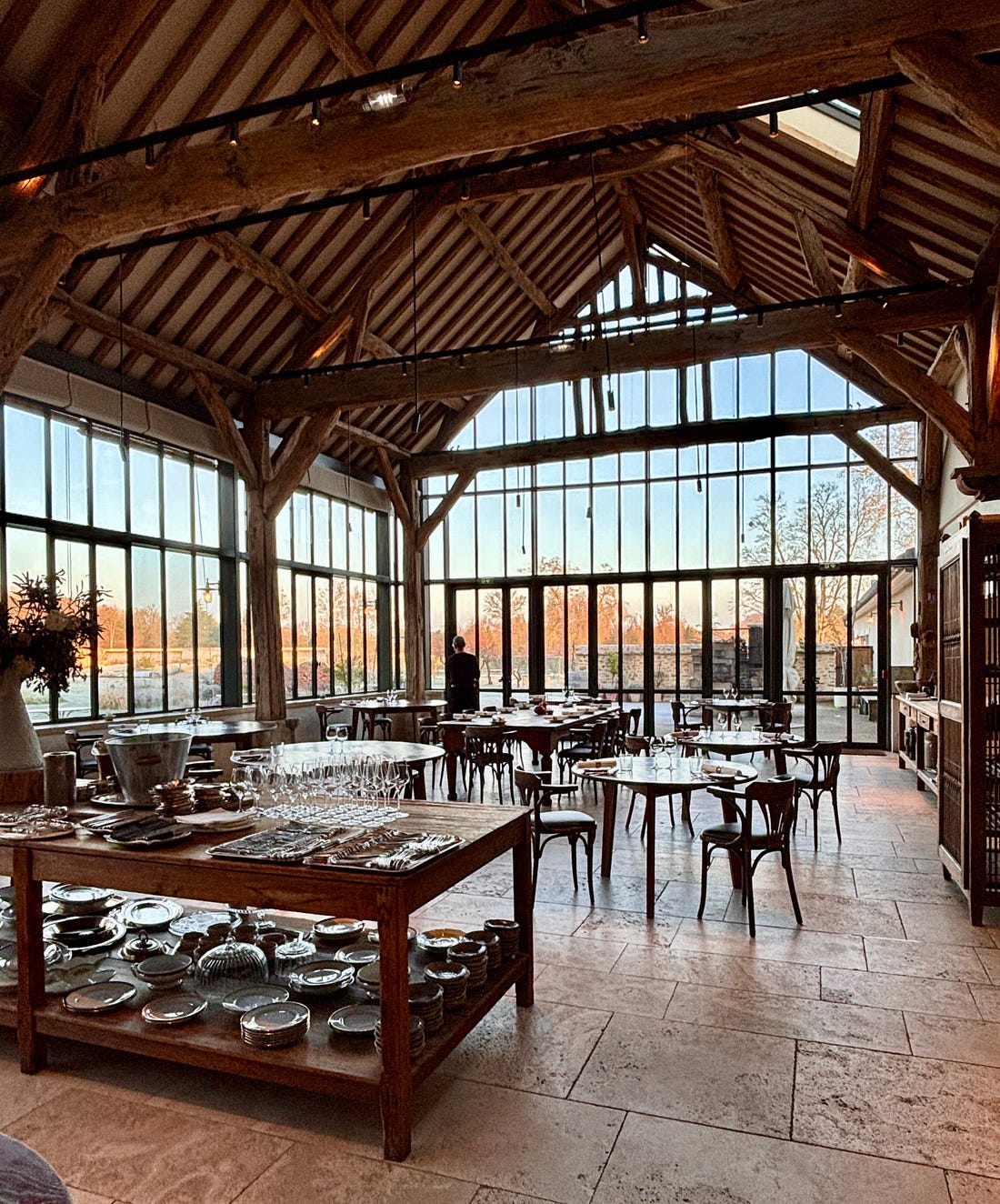
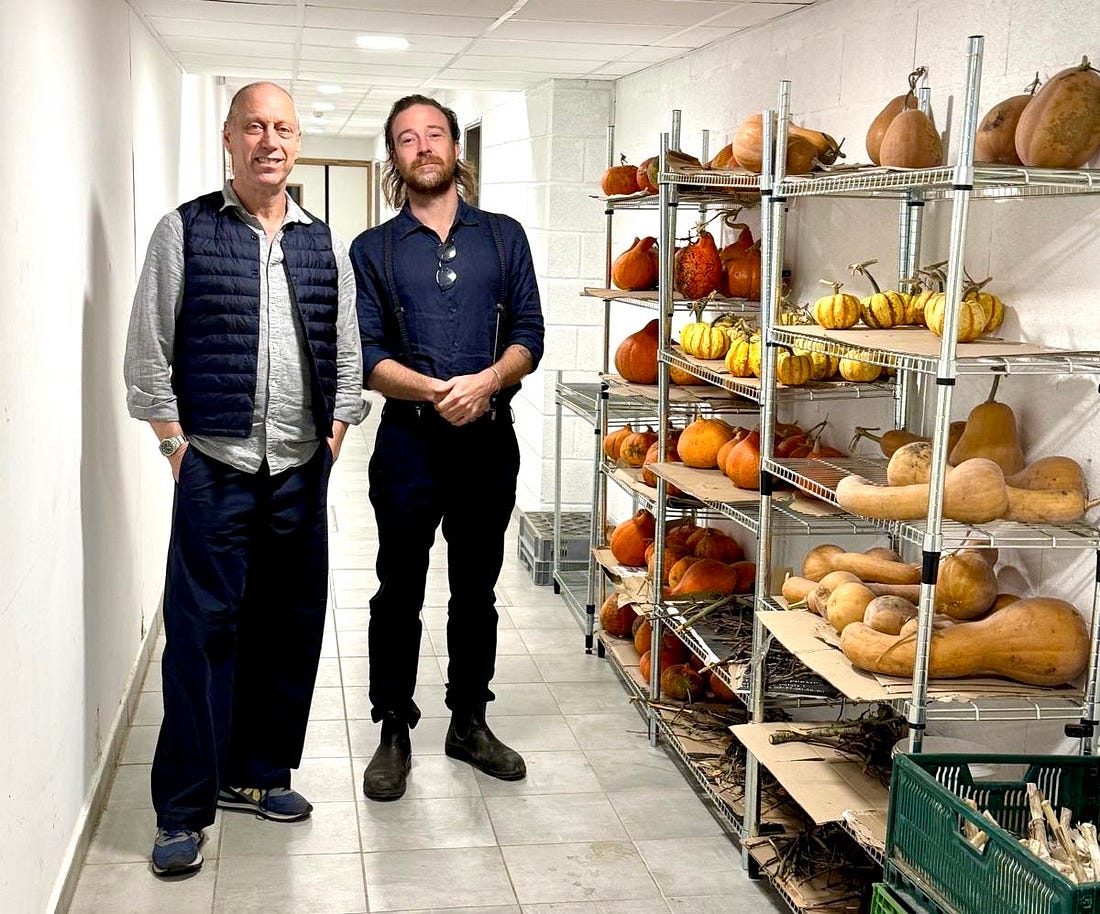
Le DoyennéTo end the year, we celebrated my birthday at Le Doyenné, the beautiful restaurant and guesthouse owned and run by chef James Henry and chef Shaun Kelly, who’s in charge of the potager (garden), located about 45 minutes from Paris. I’ve been meaning to go since they opened, but somehow never found the right time or date to have dinner there. But when I noticed a room available on my birthday, I booked it, along with a table for dinner. 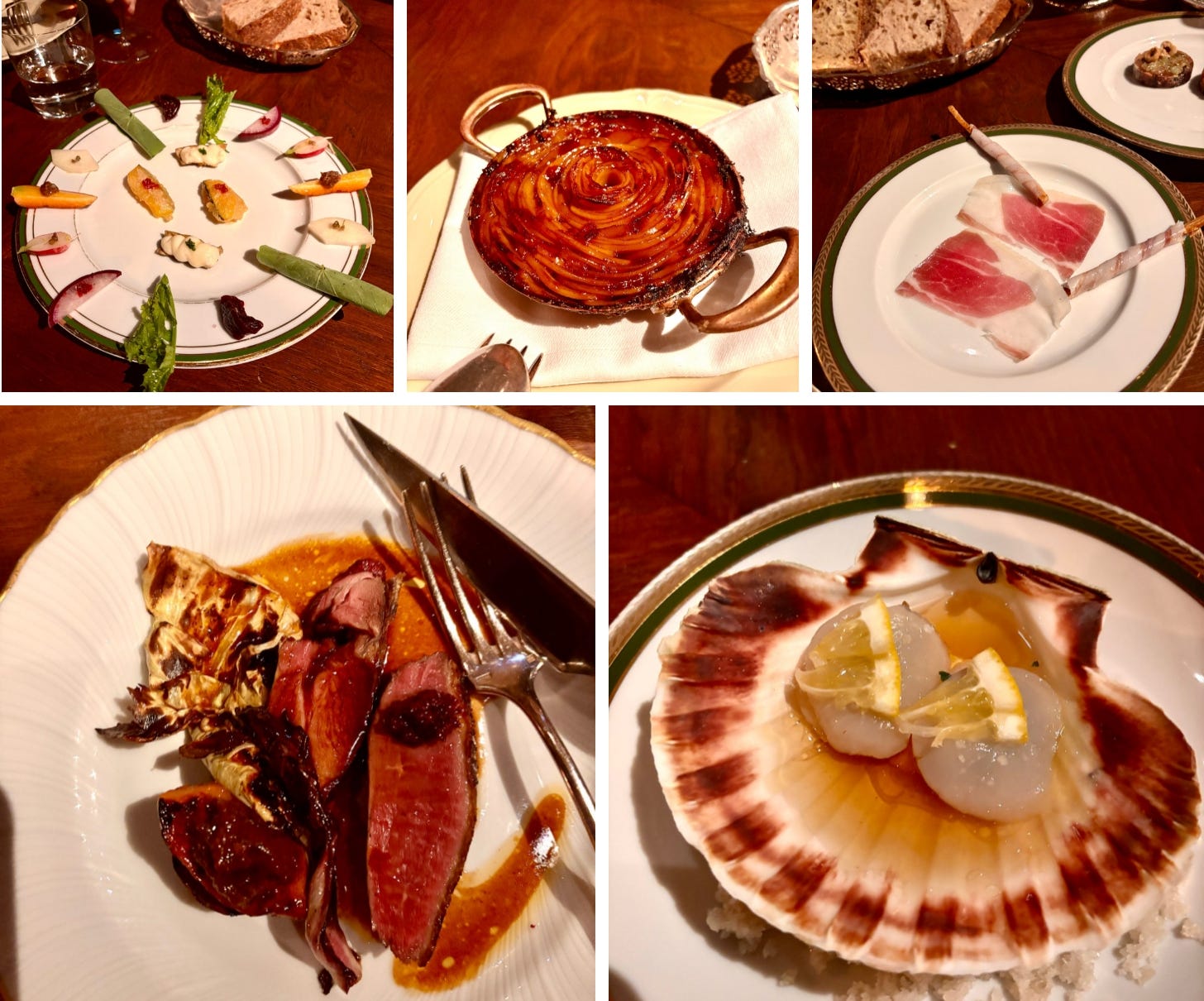 We arrived by car in the late afternoon, just as night was getting ready to fall, and took a walk through the gardens before dinner. Most of the garden was in repose, with hardy vegetables like mâche, kale, cabbage, and Brussels sprouts holding their own in the cold. Shaun gave me a tour of the various rooms and cold chambers in the kitchens where winter squash were stored; berries, seaweeds, and other fermentations were doing their things in glass jars; charcuterie was drying; and bread was rising for the restaurant. (James worked at Tartine in San Francisco and Ten Belles in Paris, and is known for his breads.)
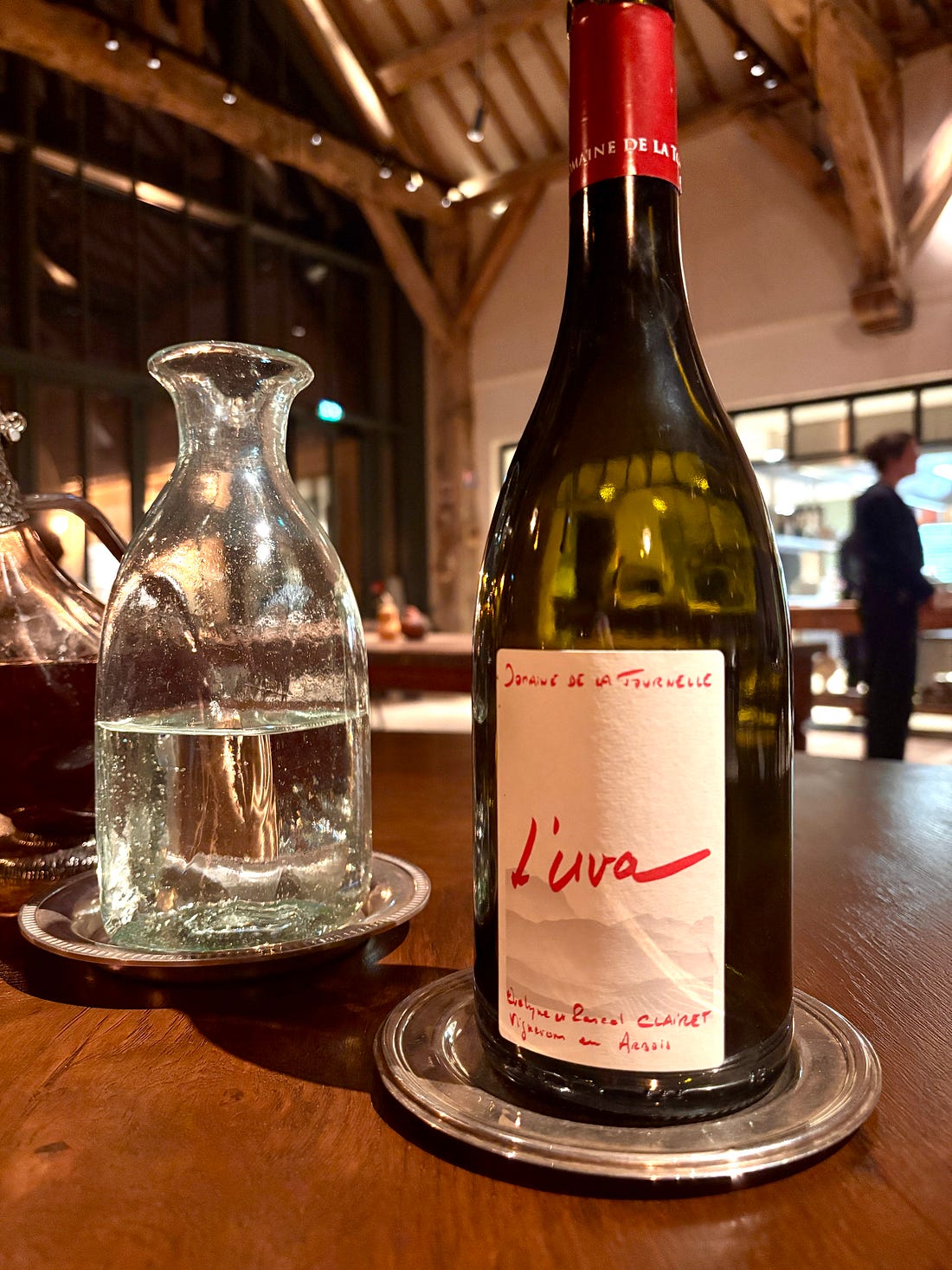
After our walk we curled up on the sofa with glasses of wine by the fireplace, until the sommelier stopped by with the wine list to ask us what we wanted to drink with dinner. We mostly drink white wines these days, but for a change, she helped us pick a nice red wine that was from a favorite producer in the Jura. It was great to see a wine list with good wines at a range of prices, from €39 to several hundred, and the list leans heavily into low-intervention (or natural) wines.
Then we moved to the cathedral-like, glassed-in dining room, which was a bit chilly when the sun went down (I would have taken my dinner by the fire!). Dinner began with a parade of hors d’œuvres, which included two thin slices of incredibly good charcuterie; fresh scallops sitting on a dab of raw cream, with pickled wild mushroom juice and bits of Meyer lemon on top; as well as an array of crudités, raw vegetables that had been picked that day from their garden. We loved everything.
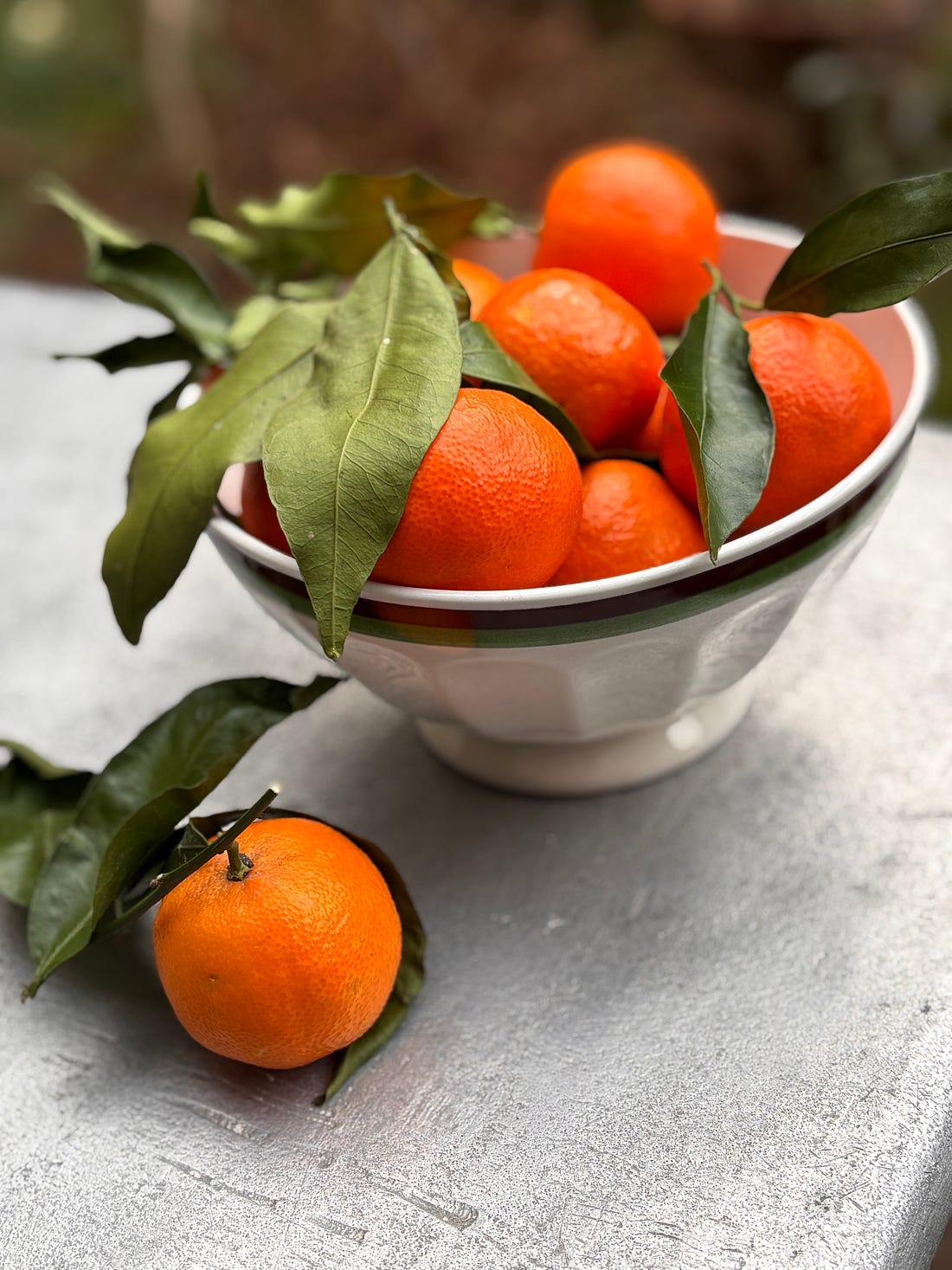
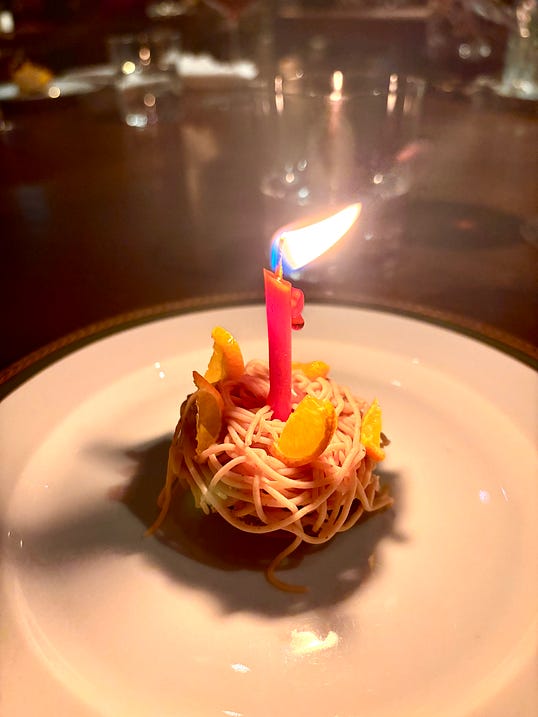
The next course was an onion tart made with pink onions from Roscoff, in Brittany, and wild mushrooms, held in place by a little ricotta, with a sauce spiked with the lightly oxidized wine from the Jura, vin jaune. Following that were a few slices of barely cooked dorade with seaweed, spinach, and pomelo. (Their citrus comes from a producer in the south of France.) Then we had a flavorful plate of duck (yes, duck is popular in France in the winter…), which came with radicchio and squash from the garden, and a gratin dish of pommes boulangère, slow-cooked, well-bronzed potato slices. We skipped the optional cheese course since it was a lot of food and went right to dessert, which was a chestnut tart - and included a candle - as well as Jerusalem artichoke ice cream, made with topinambours from the garden, and ruby grapefruit sorbet.
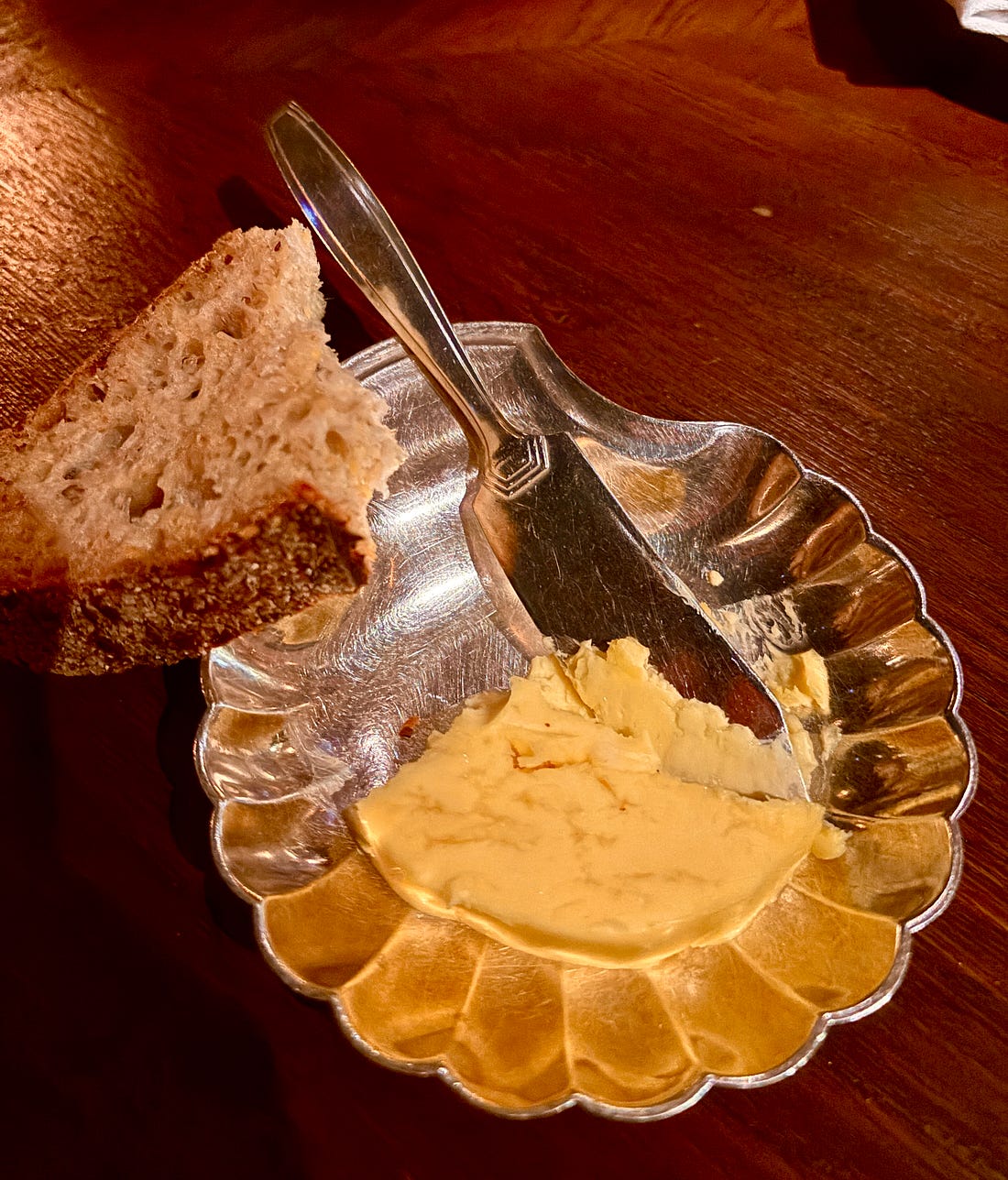
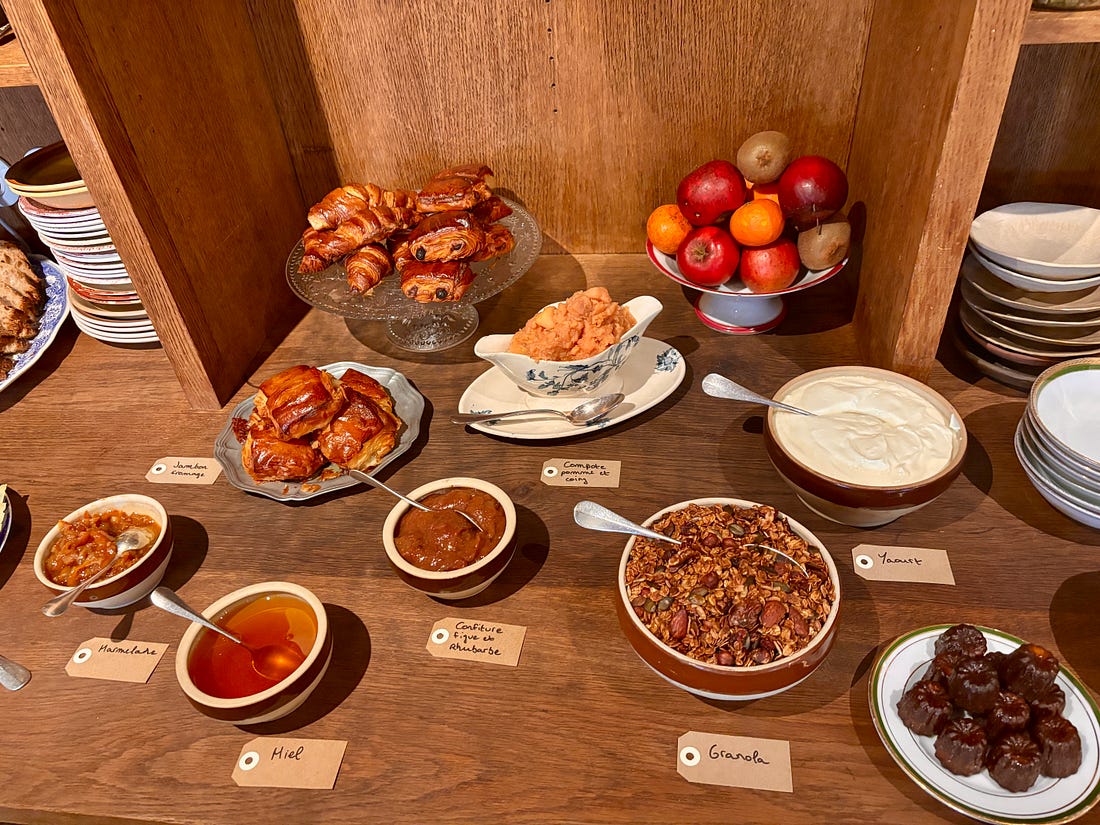
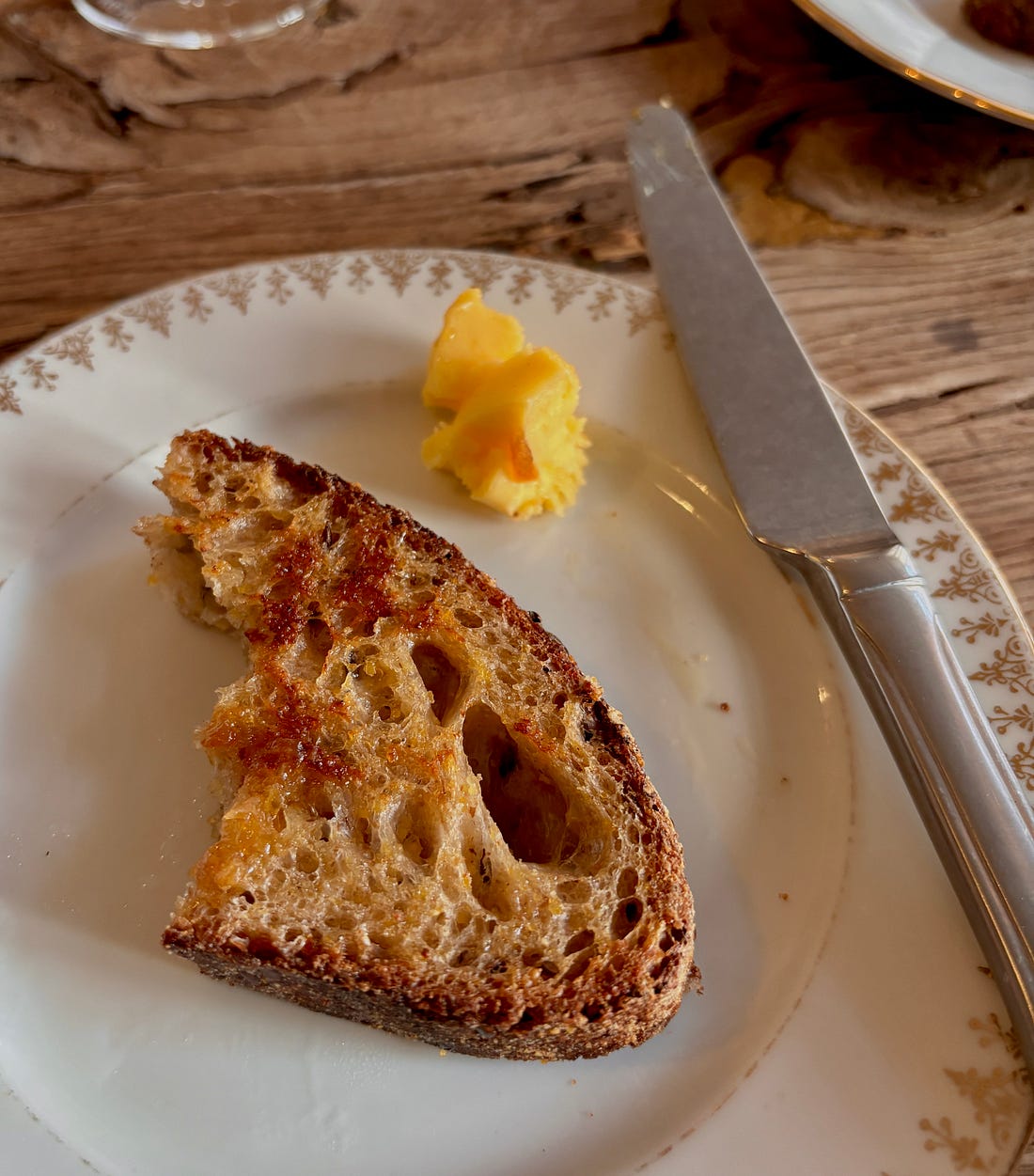
After herbal tisane by the fire, we headed to bed, and woke up to a spectacular breakfast buffet that featured everything from housemade croissants and ham and cheese pastries, mini canelés, apple-quince sauce, yogurt and granola, to thin sliced ham from their cellar, smoky grilled bread with some of the best butter I’ve ever tasted, along with homemade bitter orange marmalade, fresh carrot juice, and lots of dark coffee.
It was quite an experience and I was sorry that I had waited so long to go. Le Doyenné is quite a special place and while so many places are boasting about their farm-to-table fare, it was reassuring to be somewhere where the connection and commitment were direct and immediate, and real.
After hitting the boutique, where they wrapped up a loaf of bread for us to take home — the butter, unfortunately, wasn’t for sale — we headed back to Paris. If you want to go, you can get to Le Doyenné from Paris by taking the RER C, then a taxi or Uber for the short trip (about 5 minutes, they said) to the restaurant. Or you can get a taxi or Uber for making the trip from Paris if you don’t have a car. (I checked the Uber app while we were there to see the price, which was €45 one-way on a Sunday afternoon, but prices fluctuate.) They have detailed instructions for getting there here. If you go for dinner, which lasts around 2 1/2 to 3 hours, it’s probably best to either stay the night or get a ride back to Paris. It’s possible to do lunch as a day trip. Rooms run between €265 and €340 per night, which includes a fantastic breakfast. It’s a bit of a splurge, but if it’s your birthday, maybe you can justify it? ☺️
Lastly…Maybe I’ve saved the best for last? (Or buried the lede…) But I’ve got a new book coming out this spring, a completely revised version of The Great Book of Chocolate. When I first wrote TGBOC in 2004, there were maybe three bean-to-bar chocolate makers in the United States, and now there are over two hundred. So much has changed! You can now get high-quality chocolate chips and cocoa powders at supermarkets, and there’s a huge variety of chocolates available at every price point. And some companies are even experimenting with non-cacao chocolate substitutes, which I tested and wrote about in the book, along with my results baking with them. As an added bonus, I include a beautifully photographed chapter and guide on where to find the best chocolates in Paris. The information about chocolate has been completely brought up-to-date, and I added lots of new recipes to the book. They include a rich dark Chocolate olive oil spread with flaky sea salt, Individual warm chocolate cakes with runny, salted butter caramel centers, Triple (or quadruple) chocolate cookies, Vegan chocolate marshmallows (don’t turn your nose up - they were approved, and loved, by a French policeman!), Turkey mole, and a sophisticated Chocolate Negroni from the world’s best cocktail bar. I recast and revised the other recipes, such as the Chocolate-cherry buttermilk scones and a decidedly French Gâteau au chocolate, as well as the Homemade rocky road and the ultra-dark Mocha pudding cake. What was once a slender volume on chocolate has grown into a full-size book with beautiful new photographs from award-winning photographer Ed Anderson with food styling by George Dolese and Elisabet der Nederlanden. You can pre-order The Great Book of Chocolate at your favorite independent local bookstore 😍 or online at Bookshop, Barnes & Noble, and Amazon. You're currently a free subscriber to David Lebovitz Newsletter. For the full experience, upgrade your subscription.
|
Thursday, January 1, 2026
January 2026 Newsletter












Subscribe to:
Post Comments (Atom)
No comments:
Post a Comment