I returned to France earlier this week after almost a month in Japan. Since I was going to be gone for a while, I decided that I was going pack light because I wasn’t going to buy anything. However, I brought along a folding duffle bag, just in case I did. Well, it just so happens that I did, but I didn’t go overboard. I stuck mostly to things that were edible, save for a trip to a clothing store, which blew the budget. But coming home with extra currency from another country just adds to the clutter, so I had to blow it somewhere. Right?
I’d been to Japan once before, about ten years ago. I was there working so was inside all day and didn’t see much. But this trip — which I’ll write more about in my December newsletter — was mostly a culinary trip, where I got to see everything, from how fresh wasabi is grown and tasting fugu sushi (puffer fish is lethal if not properly prepared), to learning how to make soba (thin buckwheat noodles) and visiting artisan sake, pickle, and soy sauce producers. But I’m not above prowling supermarkets and konbini, convenience stores, which Japan is famous for… 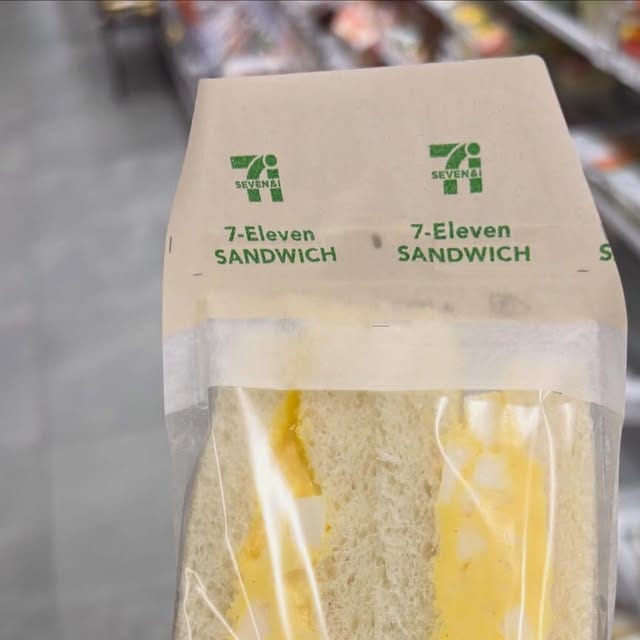 I also developed a fondness for the pon de ring (mochi) doughnuts at Mister Donut, which are on the less-sweet side and have a gentle chewiness that somehow becomes addictive. Romain couldn’t understand why every time I saw a Mister Donut sign, I had to go in. He also didn’t get the appeal of the egg salad sandwiches at the konbini. But he didn’t grow up on egg salad sandwiches, like I did. 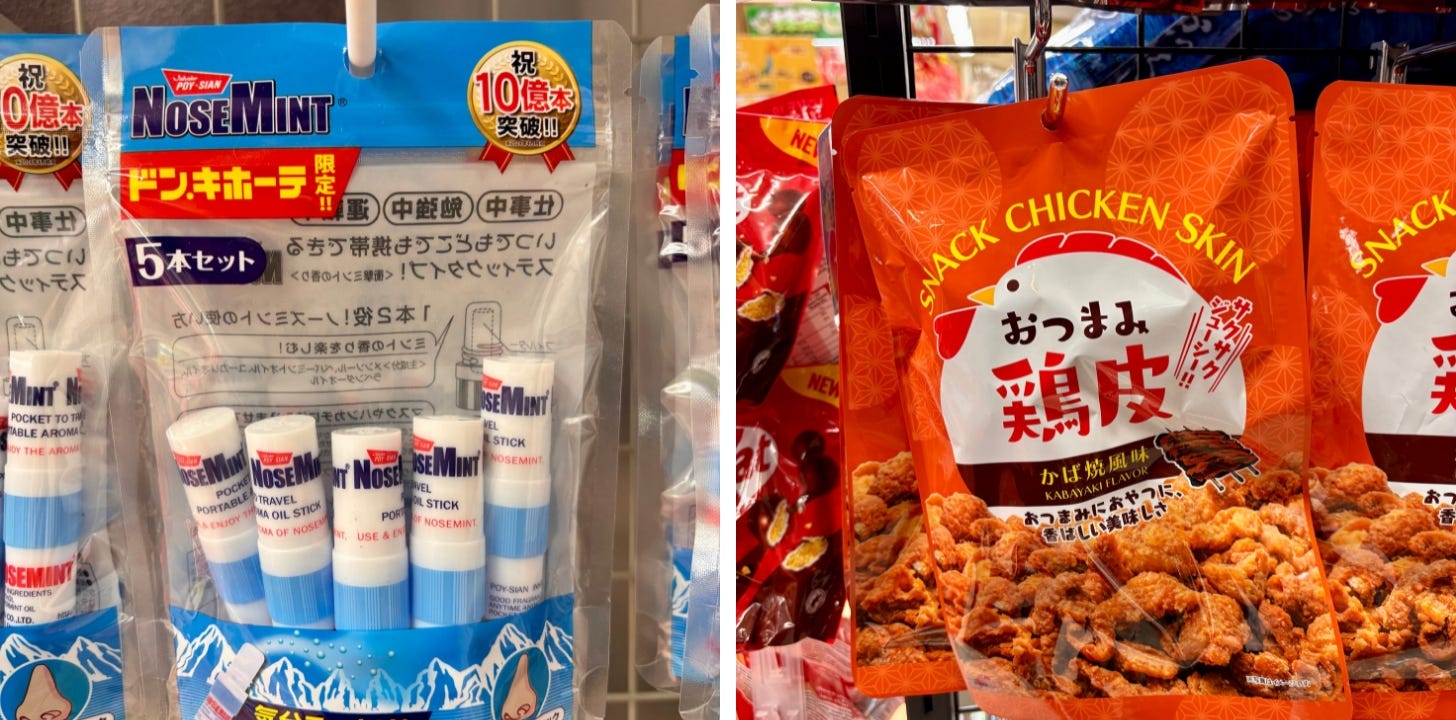 Nose mints and snack chicken skin at a Don Quijote store, which are quirky and crazy, and not for the faint of heart. You’ll find some rather kooky stuff in Japan, such as wasabi-flavored KitKats and packages of crisp chicken skin. But I’m already missing having soba and tempura restaurants and sushi bars on every block. And those konbini are great, whether you need a snack, a fresh pair of socks, a charger, a cup of coffee when you’re jet-lagged and wake up at 4am, or need a restroom when you’re out-and-about, which features a sparkling clean Japanese toilet with a heated seat.
My friend Nick Malgieri once advised, “When you get home from a trip, unpack everything immediately,” and I try to follow his advice. So here’s what I unpacked…
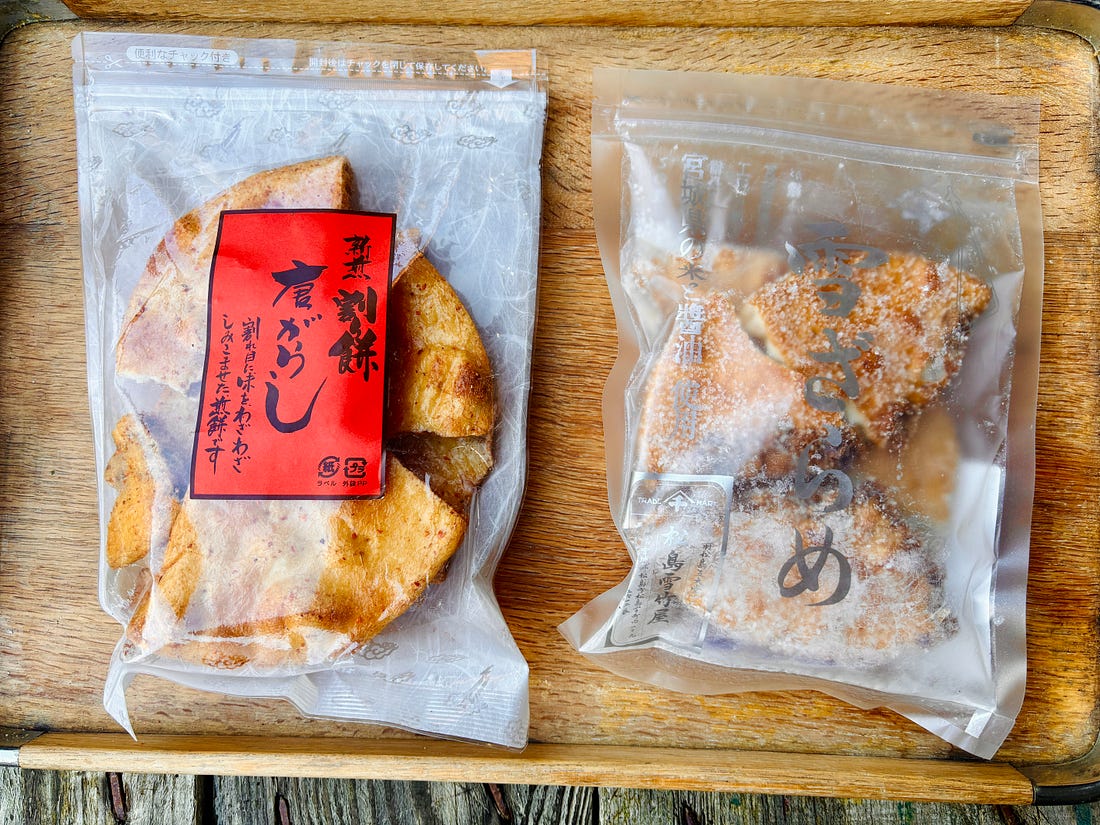
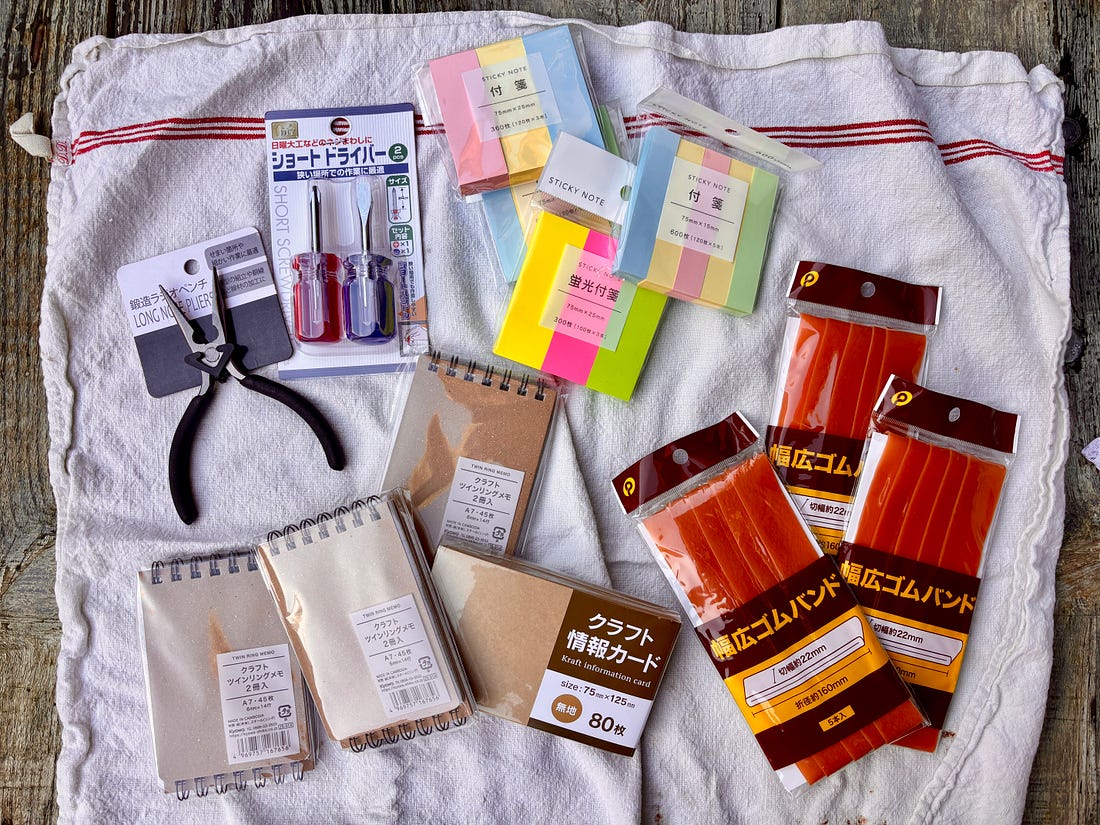
I didn’t mean to bring them home, but once I tasted the rice crackers (above), I bought five packages of them. We’d spent a day in Matsushima. When I posted a picture of visiting the nearby oyster farms, I got a text from Ivan Orkin about what was apparently an amazing tarte Tatin at Cafe le Roman, located up on the mountain, overlooking the city and the sea. Unfortunately, our time was limited, so I couldn’t make it there. 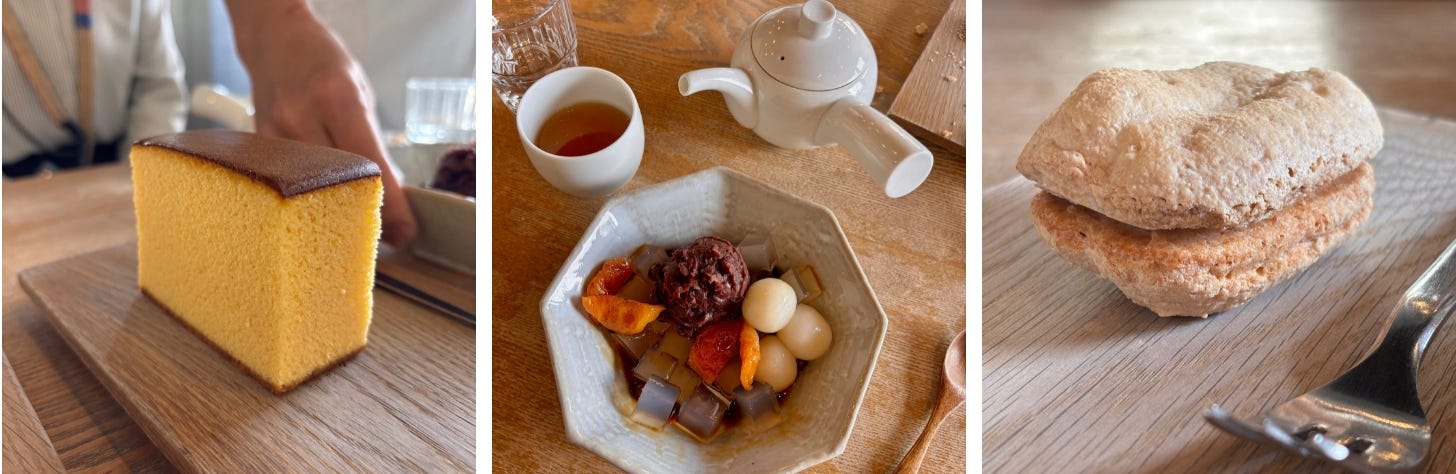 But we had delicious pastries in the café above Yukitakeya, where I got those excellent rice crackers that come in flavors such as togarashi, a Japanese spice mixture. They let you try them all and I also loved the ones with umami-rich Worcestershire sauce, and their sweet/savory crackers dusted with crunchy sugar crystals. Thankfully the crackers were pretty sturdy, so I picked up five bags, and four of them made it home. The café desserts were wonderful: a towering block of moist chiffon cake; a flavorful bowl of mochi with a scoop of red bean paste, cubes of almond jelly, and pieces of dried fruit; and a tasty dacquoise (meringue) flavored with kinako, roasted soybean powder. A fun place to pick up things in Japan are at the 100 yen shops, where everything costs 100 yen, about 75¢ when you add the tax. I got a few packages of small notepads for jotting down notes. I picked up some tools since mine keep disappearing at home, and I can never find a screwdriver when I need one. I grabbed some large elastic bands for keeping bags closed and lots of sticky notes, which are pricey in France and are great for booksignings, for guests to write their names down so I don’t misspell them. (I try to avoid that!)
On a cozy note, I fell hard for the Japanese pajamas at my hotel in Tokyo. When I asked at the front desk about buying them, they said, “Go to the website.” So rather than swipe them, I went on the website.
Japanese websites are notoriously difficult to navigate. Theirs was no different and I never found the pajamas. For such an organized country, it’s surprising that quite a few websites appear to have been designed in 1993 and not updated since. On Tabelog, a heavily used website for finding places to eat in Japan, every time I tapped on the map to find out what was close to me, it zoomed out to show me the entire planet. I had to zoom in from the moon to find somewhere to eat on the block where I was. Aaargh. Although I never found the pajamas on the Dormy hotel website, the hotel gives you free ice cream after you use the onsen (hot springs), and you could have breakfast in your pajamas and tabi socks that they give you. The socks have a separate place for your big toe, which made my feet look like camel toes. But many of the other hotel guests just walked around barefoot. For those worried about cooties, you check your shoes at the door, and they cleaned the wheels of my luggage just as I entered the hotel.
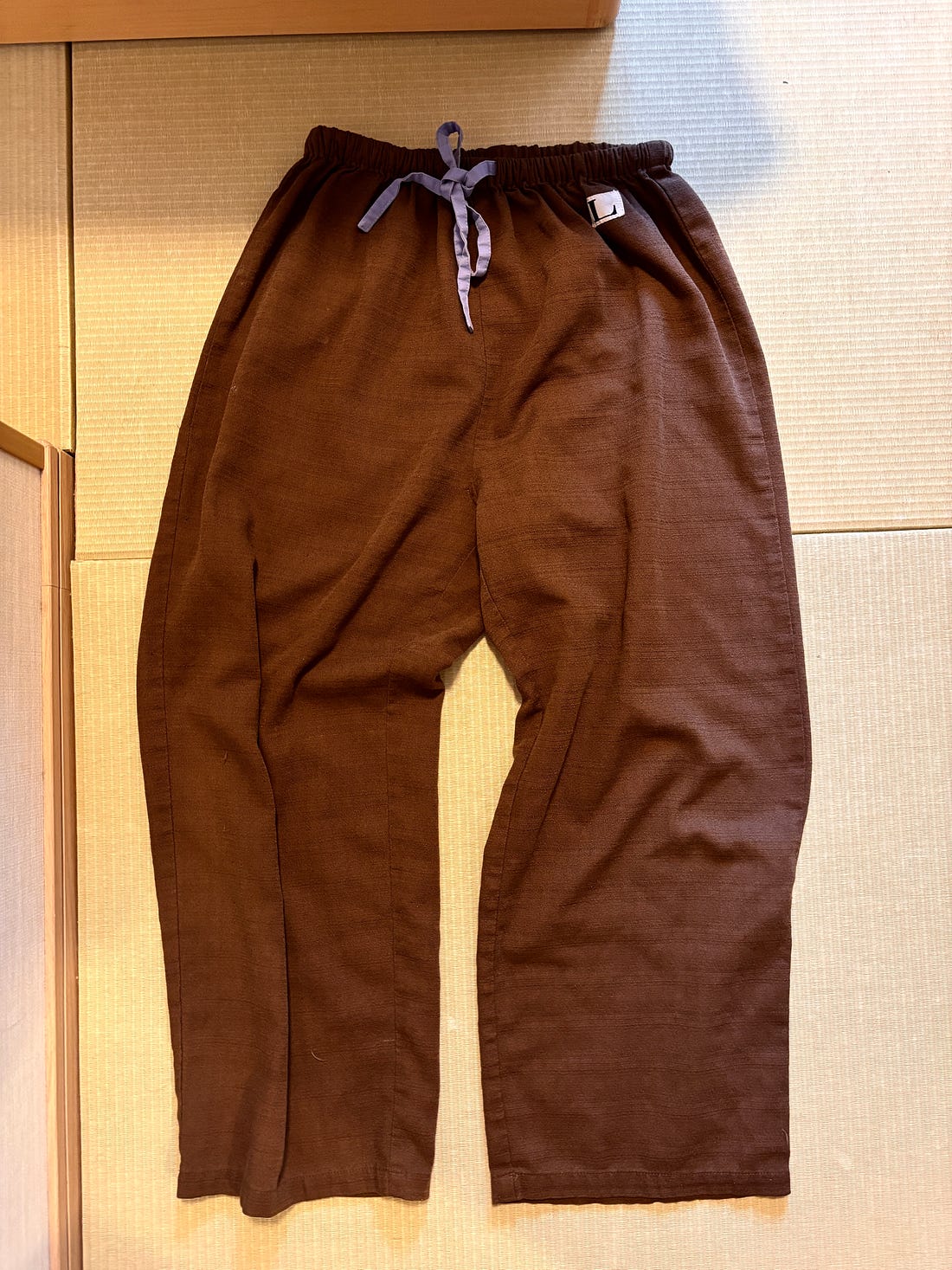
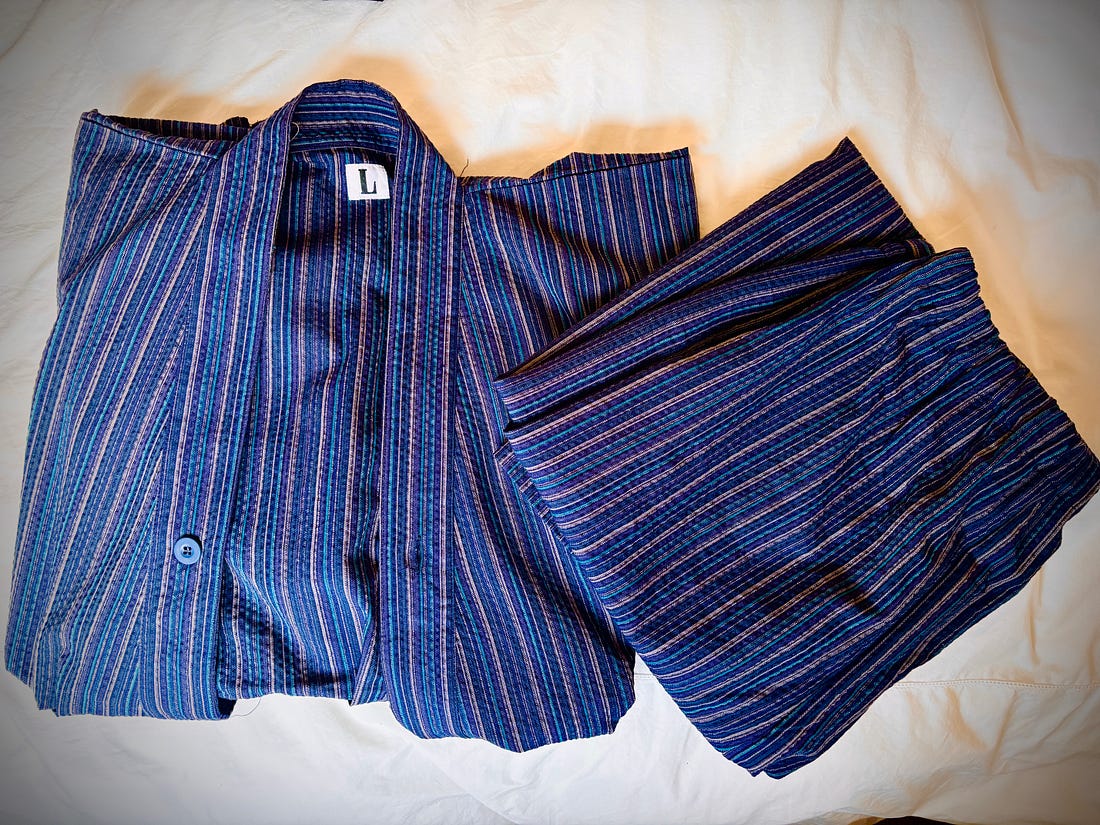
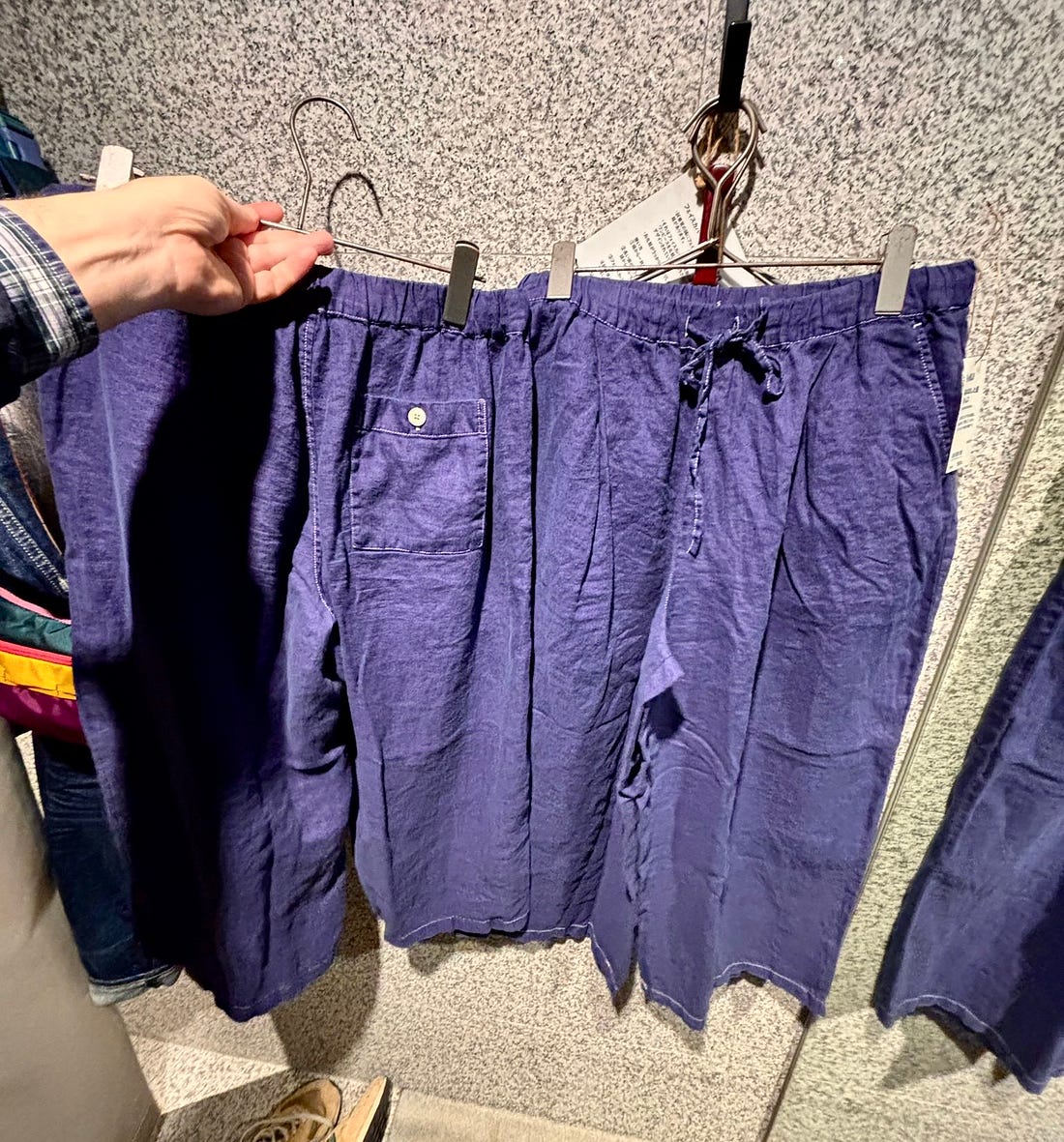
But when I was walking down the street in Kyoto, I passed a little shop with stacks of fabric and a sewing machine in the corner (with piles of fabric around it) and found this nice pajama set. While the pants weren’t as cropped as the Dormy pajama pants, the set wasn’t very expensive, so I bought them. I did come across a Found Muji store in Tokyo, an offshoot from the Muji chain of stores that repurposes and rehabilitates “found” items. I picked up two pairs of calf-length pants for the equivalent of about $12 each.
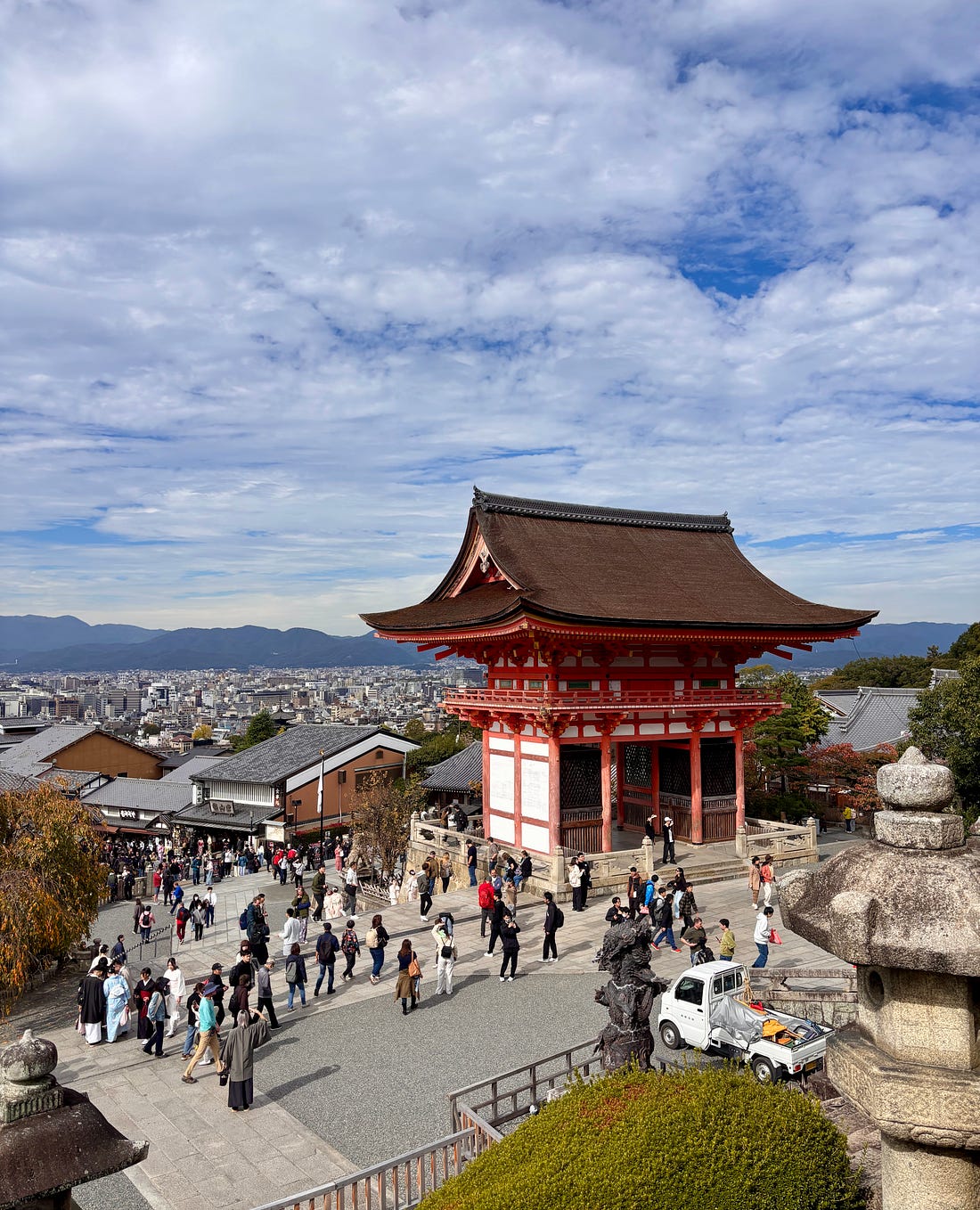
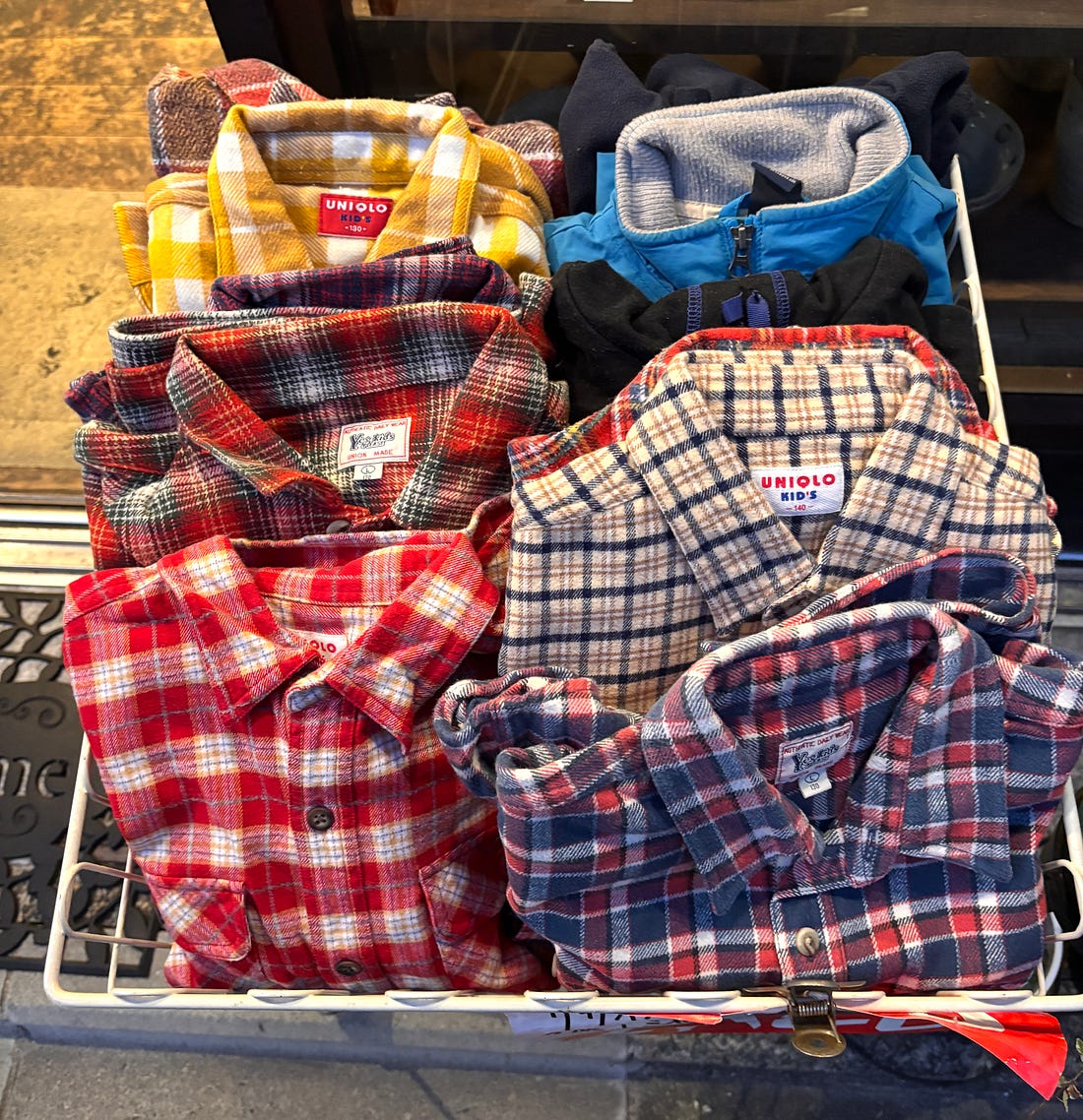
Not sure I can wear them around Paris, but I will certainly be wearing them at home. Another shop that we came across in Kyoto sold paintbrushes and pigments for artists. I would have loved to have shared a picture of the woman in the shop, who had seated herself on the rough wooden floor and was surrounded by glass cabinets of colorful pigment powders and beautiful brushes. But she seemed timid and I didn’t want to ask. Kyoto, as you may have heard, is experiencing a surge in tourists and I didn’t want to be a looki-loo, or the guy who came in just to snap a picture. So I bought this lovely ceramic divided dish as a souvenir, which I think we’ll use for storing our shaving razors in. I love the shape and heft and the Japanese newspaper she wrapped it up in as well. 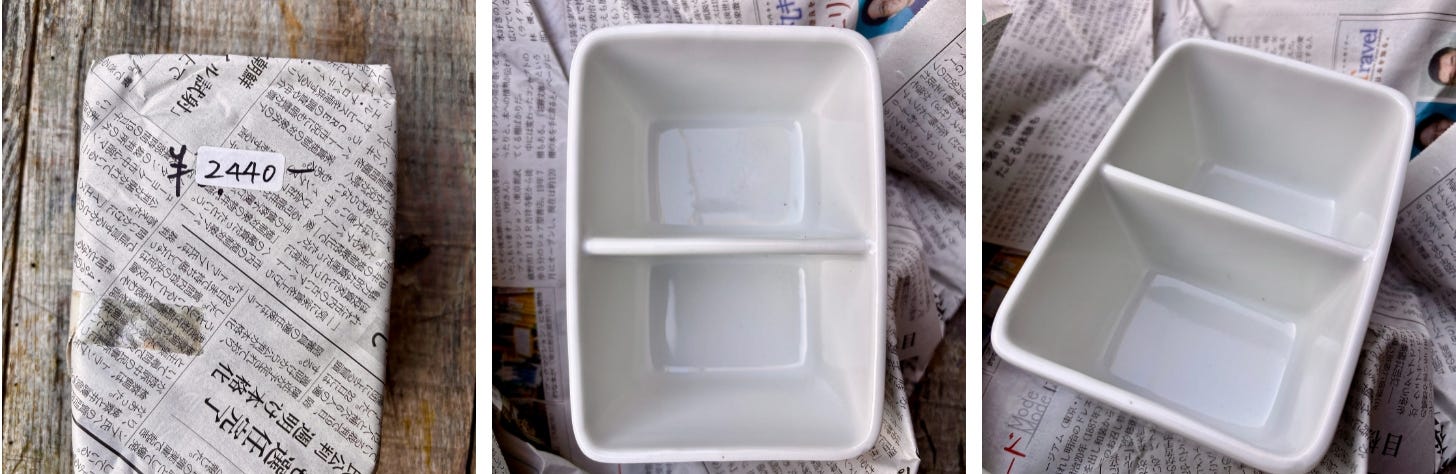 Another shop in Kyoto that we passed had the most beautiful vintage children’s Uniqlo shirts. If they were in my size, I would have bought them all. I just love them.
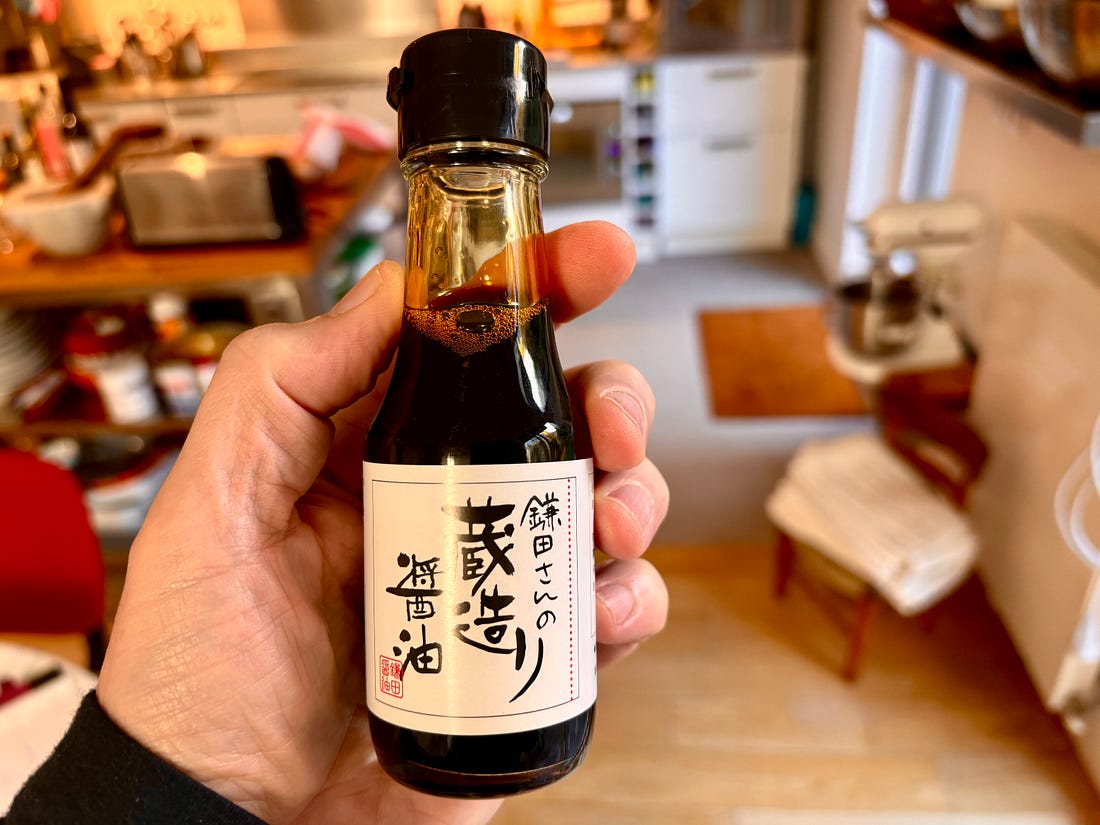
What I did buy, however, was soy sauce while visiting Kamada (鎌田醤油) Shoyu in Misato. It’s made from local soybeans and wheat and is fermented and aged for at least a year. The flavor is much (much) more refined than the soy sauce you get at the supermarket, which often contains additives and colorants. Serious Eats has a good, in-depth article about soy sauces and what makes them different, here.
Made from whole soybeans, this was the best soy sauce I’ve ever tasted. There was no way I was going home without several bottles. Fortunately, Japan has an amazing network of delivery services; you can have your luggage sent to your next address/hotel, or directly to the airport to pick up before your flight, all for around $15. They were happy to send me the bottles of soy sauce to our hotel in Osaka, my last destination, so I didn’t have to schlep them around with me for a few weeks. (The rice crackers were easier, although they did take up quite a bit of space but were worth it. Once Romain joined me midway through my trip, he was hooked too.)
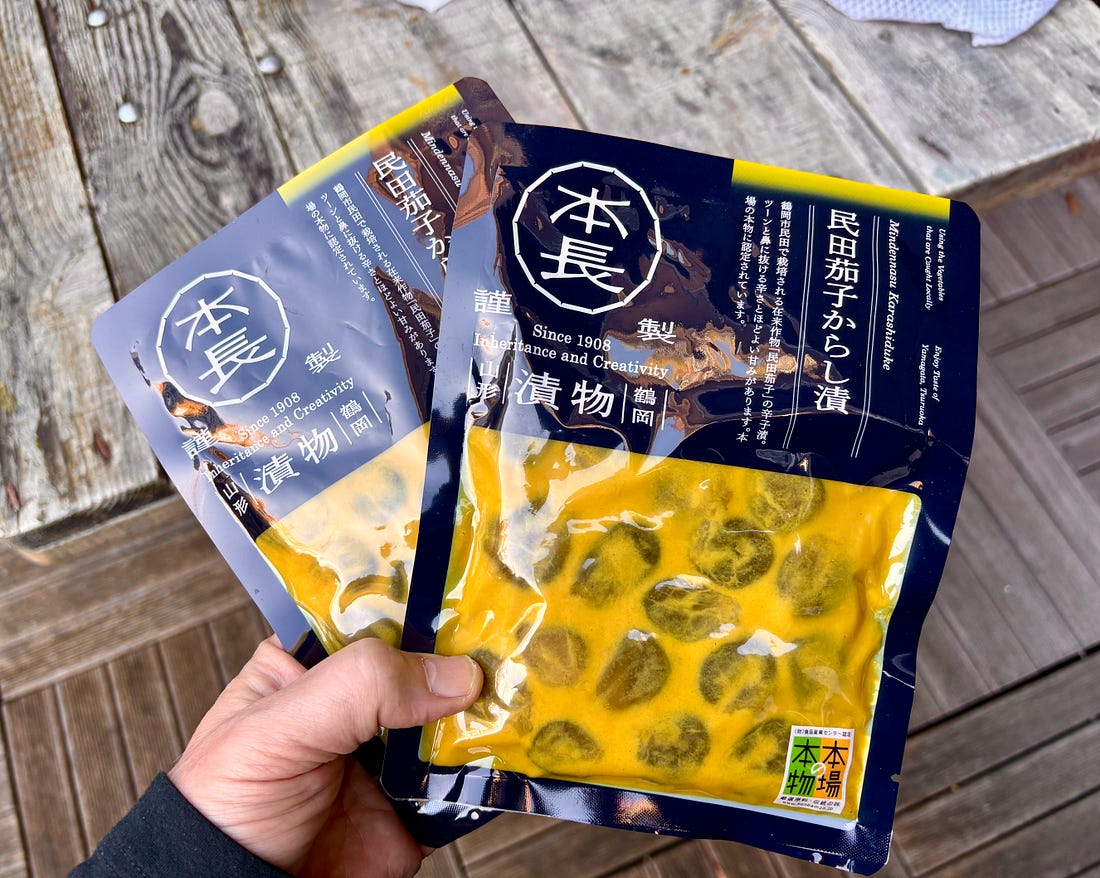
I also visited a company that’s been making Japanese pickles and preserved vegetables for over 100 years. Someone in the food world who’s mostly focused on China and Southeast Asian food once described Japan to me as “a big rock,” which is also an island, and pickle-making is a way to preserve the harvest. If you’re traveling through Japan, you won’t find lots of fresh vegetables on menus (needless to say, several of us at the beginning of our trip went searching for prunes…), but you can find the most beautiful pickles in Japan. 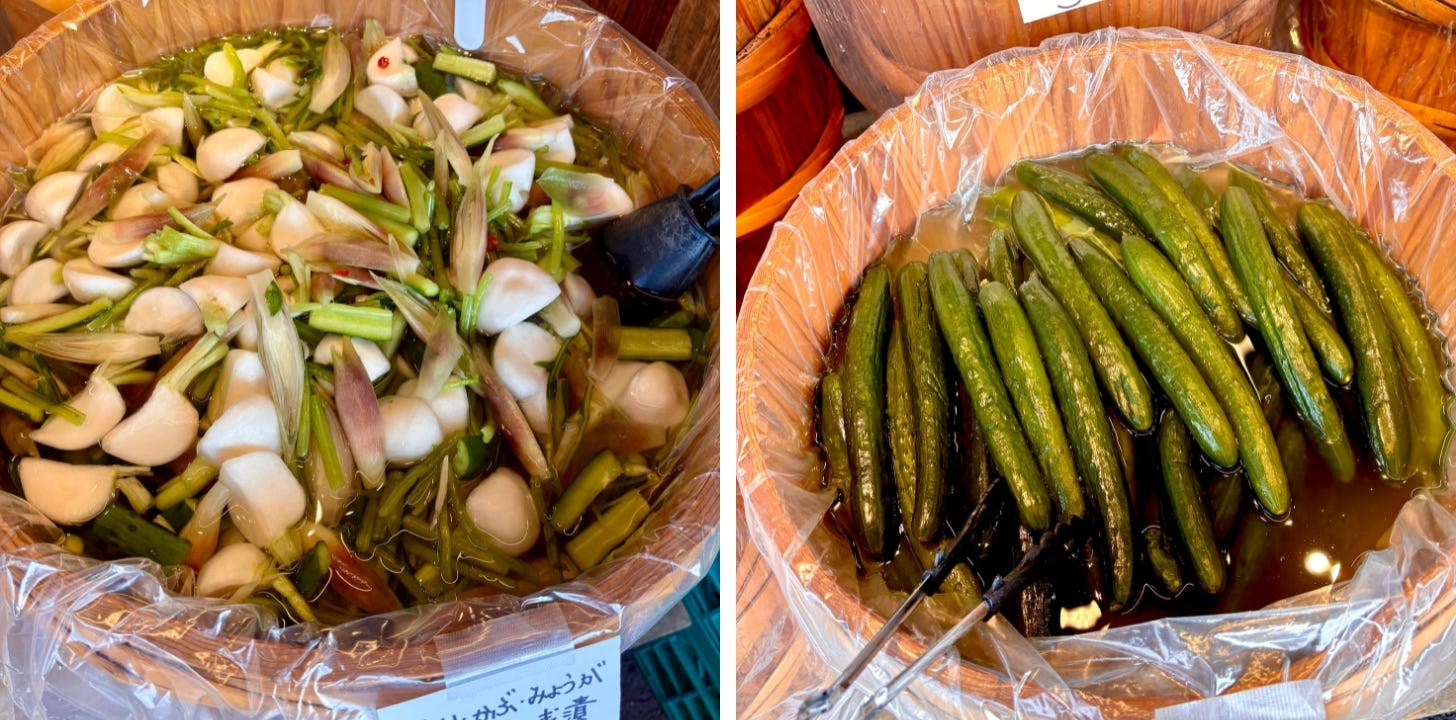 The pickles above wouldn’t make it home, but I was happy to find some that would. The pickled eggplant I got were quite zippy due to lots of mustard in the brine. One thing I definitely wasn’t able to bring back was the fresh wasabi that I picked. 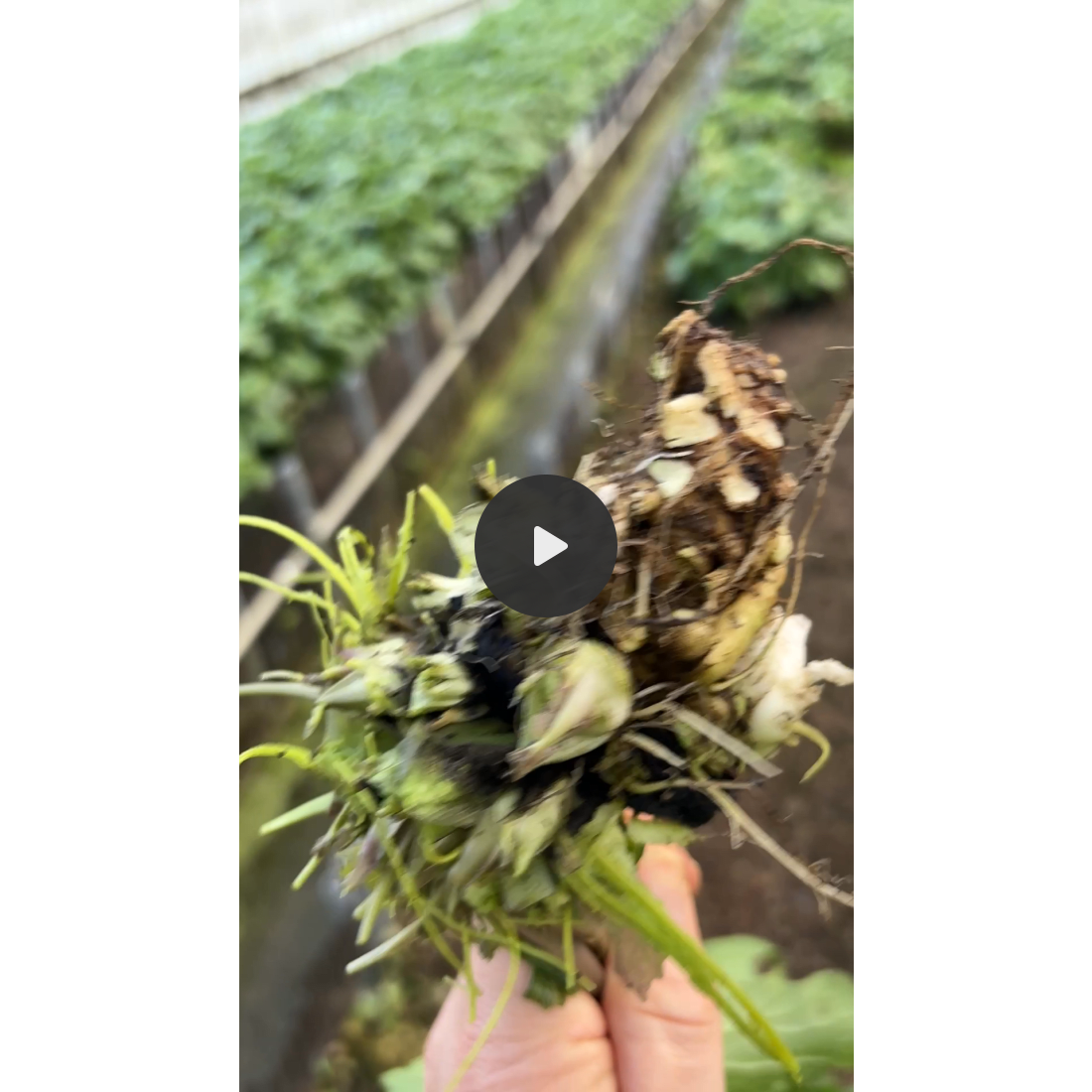 The wasabi you get at most sushi bars isn’t real wasabi. It’s horseradish with green coloring added. There is nothing like fresh wasabi, whose flavor starts to wane fifteen minutes after grating. They did sell crushed, jarred wasabi and wasabi pickles at the farm I visited, but they told me that it needed to remain refrigerated. After a few days of traveling with it, searching for refrigerators to put it in…and remembering to take it out before traveling to the next place, I finally gave mine to a Japanese friend to lighten my load and my stress level.
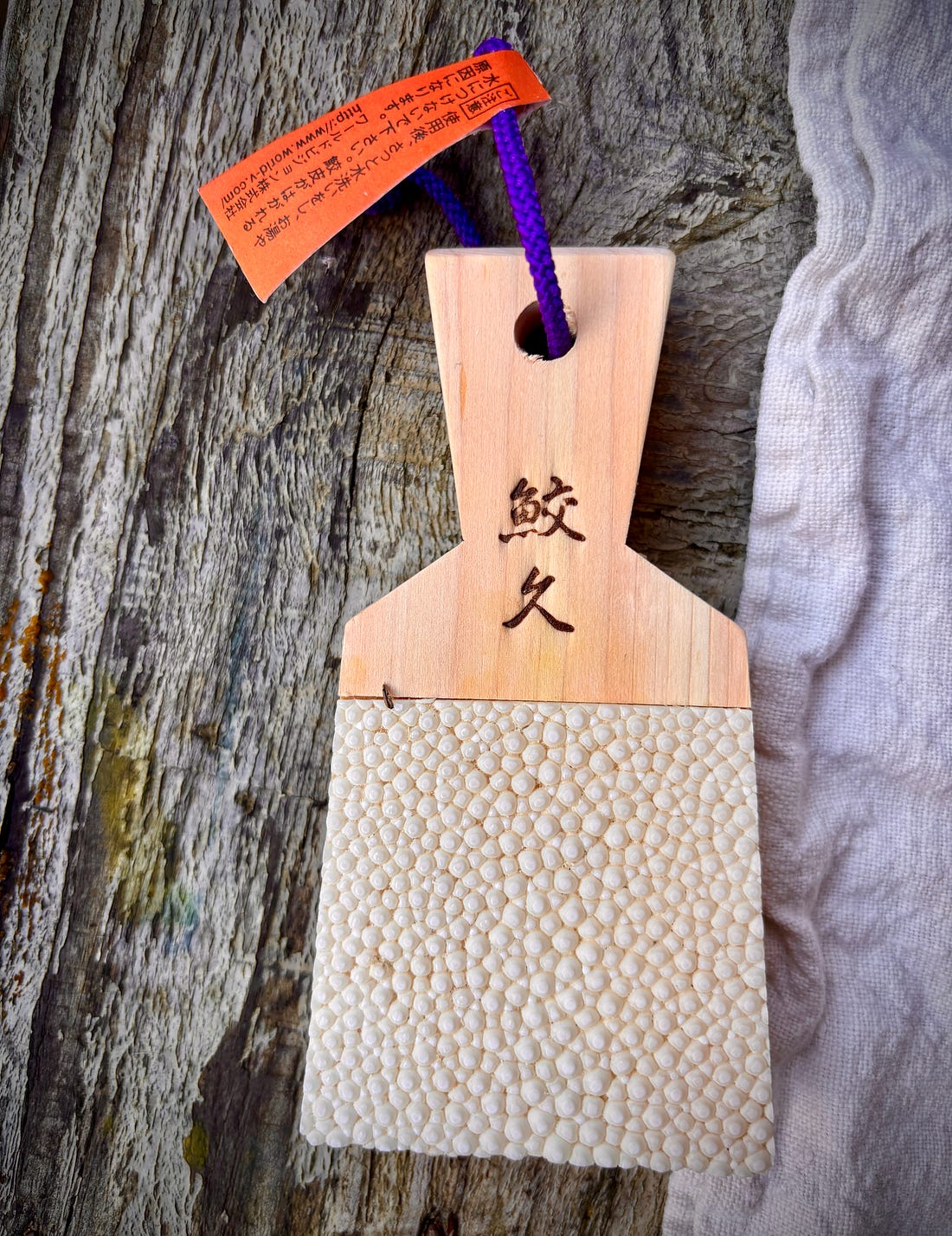
I did bring home a wasabi grater made from sharkskin, though. I don’t know where I’ll be able to find fresh wasabi in France, so I’ll likely be using it for grating ginger. However, I just did a Google search and found a place that sells the plants, so perhaps I’ll try growing some in our garden for next year, which hopefully won’t be as stressful.
Most people, especially bakers, have an uneasy relationship to plastic wrap. It causes a lot of anguish and I hope everyone can install one of the Japanese-style washlet toilets to reduce their use of toilet paper, which is especially wasteful and often wrapped in plastic. (The average European uses 20 kilos, 45 pounds of toilet paper a year.) So the Japanese are ahead of us in the ‘personal hygiene’ department, but there’s still quite a bit of plastic in Japan.
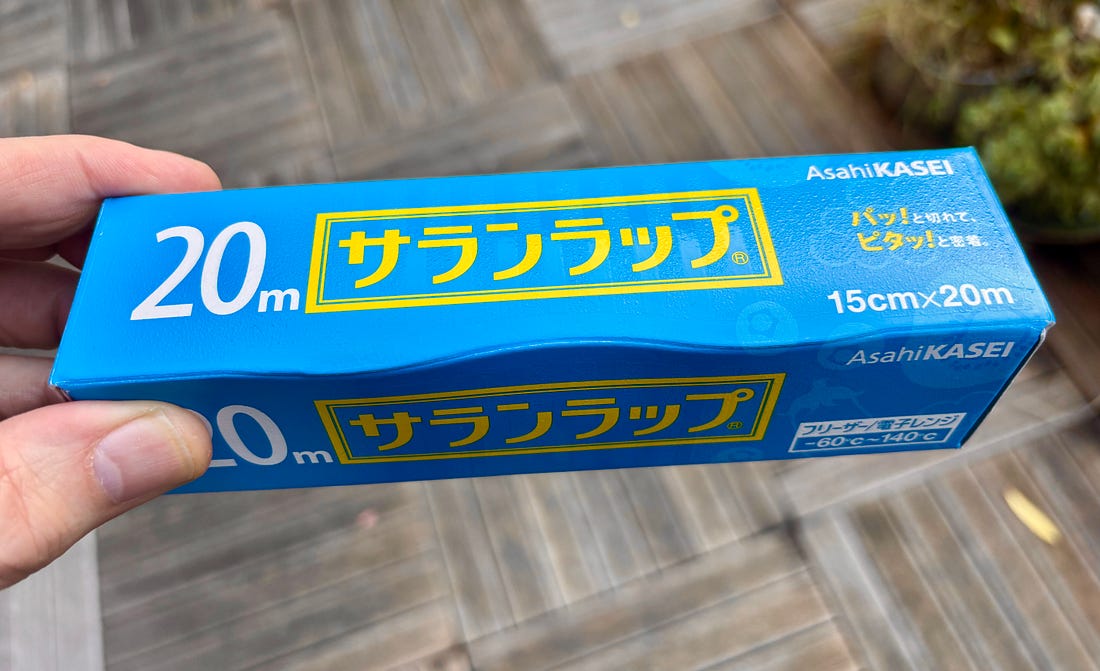
Like many people who return from Japan, we’re trying to figure out how to put Japanese toilets in our bathrooms at home. (Those heated seats!) We have douchettes, which are very ecological, but when I found these mini-rolls of plastic wrap, that were just so darned cute, I couldn’t resist. 🤷♂️
A reader told me about them years ago, and I thought that maybe it was an urban myth…until I found a stash of them at an all-night supermarket in Kyoto. Score!
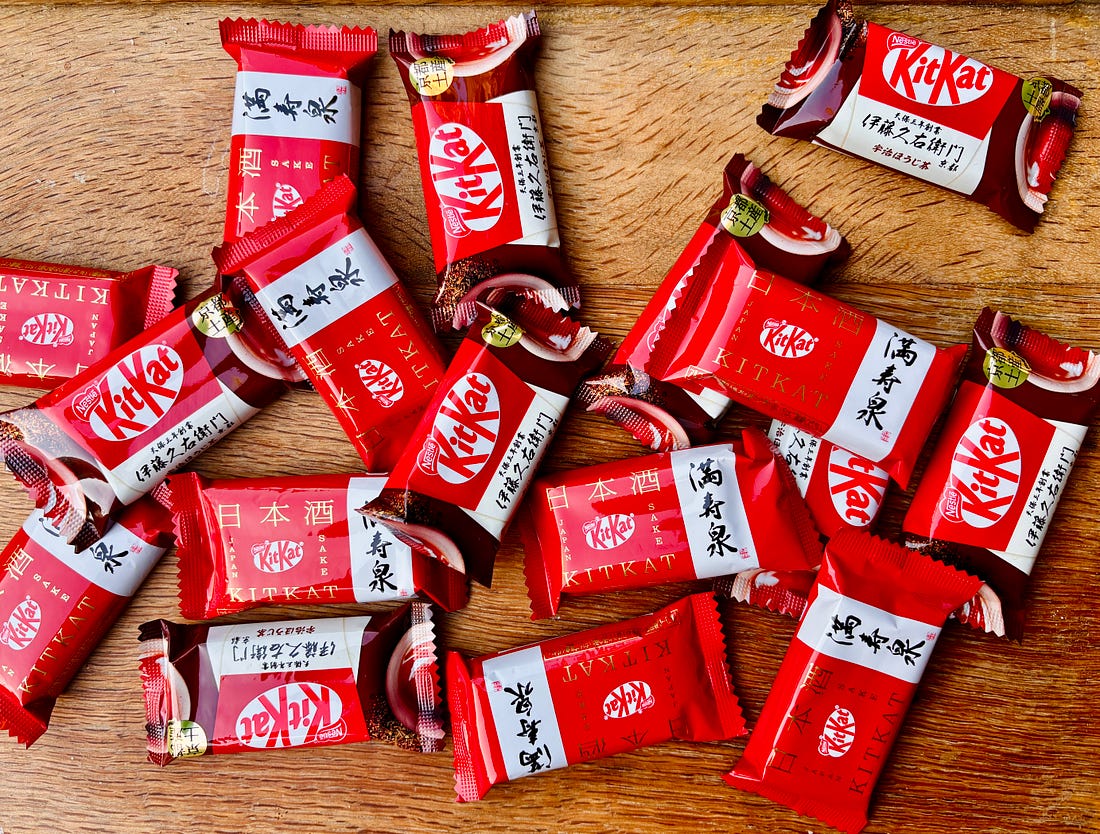
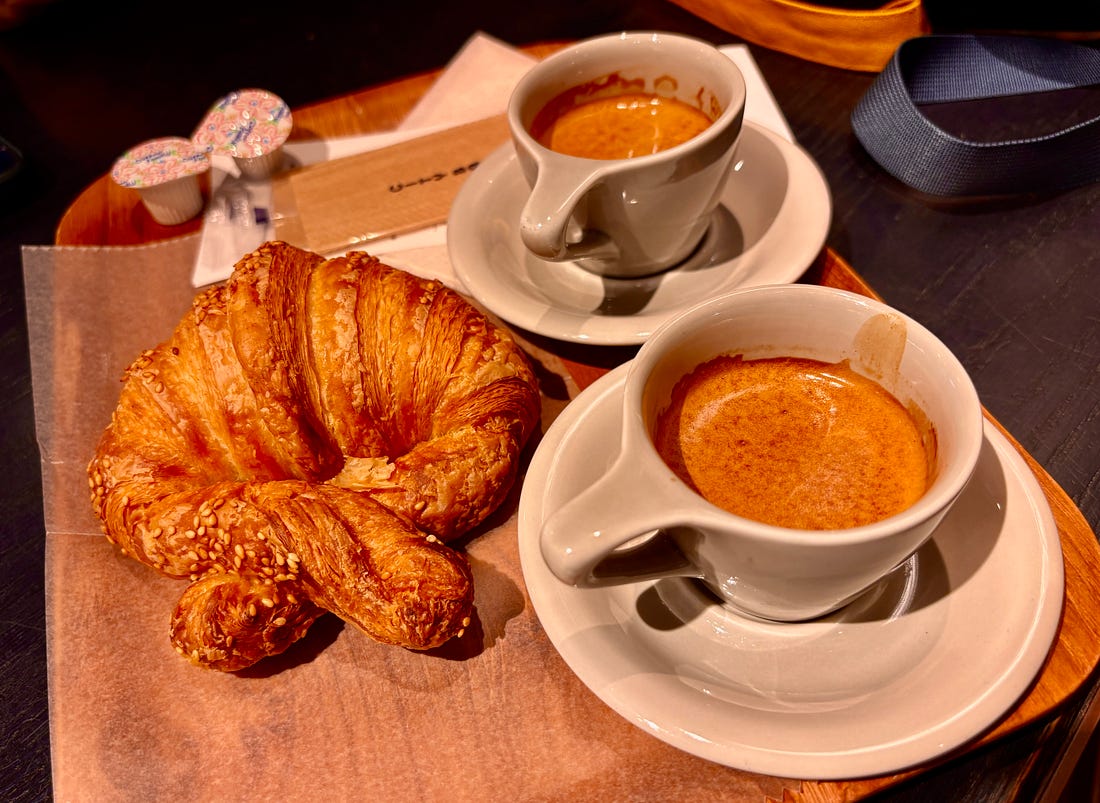
Japanese KitKats get a lot of press due to the unusual flavors that they come in. I saw KitKats made with matcha and flavored like strawberry cheesecake, as well as umeshu (plum liqueur) and purple sweet potato KitKats. And I even saw that they once did limited-edition wasabi KitKats. But I was curious when I saw sake-flavored KitKats as well as hōjicha, roasted green tea, KitKats. The sake ones tasted artificial and kinda weird, a word we’re not supposed to use when describing foods from other cultures. But I’m pretty sure Japanese people might find them weird as well, especially since real sake is so good! But the hōjicha mini-bars were delightful, with the roasted tea flavor giving the bars a bit of earthy smokiness. I brought both back for my friends to try, although I may eat all the hōjicha ones before I give them away. At the crowded Nishiki market in Kyoto, I was surprised/thrilled to find a branch of the late, great City Bakery from New York. Their website misspelled the founder’s name, Maury Rubin (not “Morley”). Maury, not Morley, founded the bakery in 1990 but eventually closed the original bakery, so only the licensed bakeries in Japan remain. While “Frankenpastries” are now a thing worldwide, Maury’s pretzel croissants weren’t icky or supersweet, like some of those other mash-ups. They were a revelation, combining the flaky butteriness of a croissant with the savory appeal of a salted pretzel. I was happy to have one again, although I’ll confess, they weren’t as good as the original ones in New York.
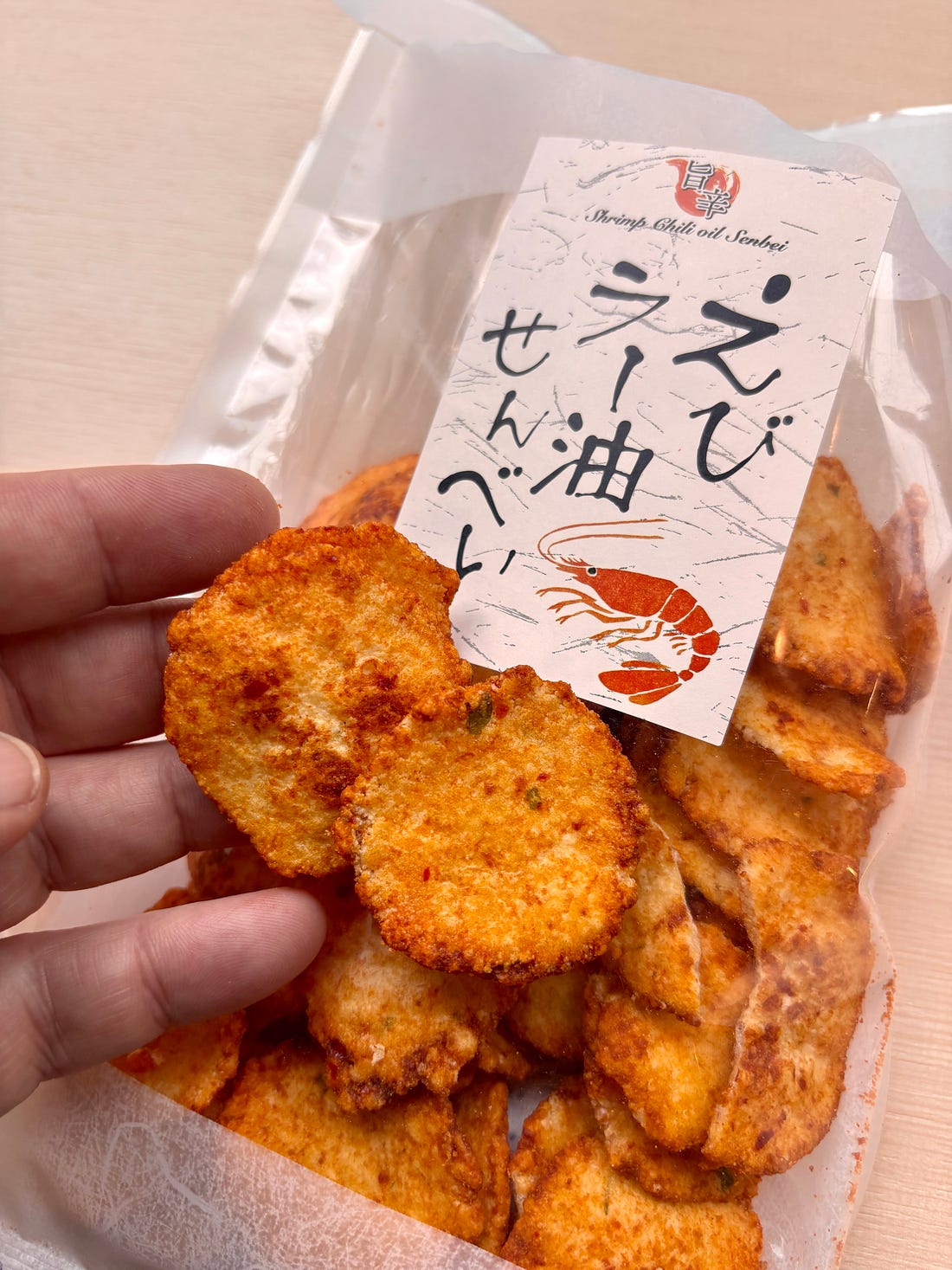
One of my main reasons for going to the Nishiki market was to hit the rice cracker store there. The shrimp-chili oil crackers (below) were outstanding. You can’t eat and walk at the Nishiki market - eating and drinking while walking in Japan is a faux pas - so we ate as many crackers as we could while standing at the counter in the shop, and I brought a bag of them home, where I could wolf them down in the privacy of our apartment.
Fortunately, rice crackers are sturdier than they look and mine all made it home relatively intact. The ones shown at the top of the post were already broken in pieces, which likely made them easier to put in their bags, but was reassuring to me as I didn’t have to worry about breaking them myself.
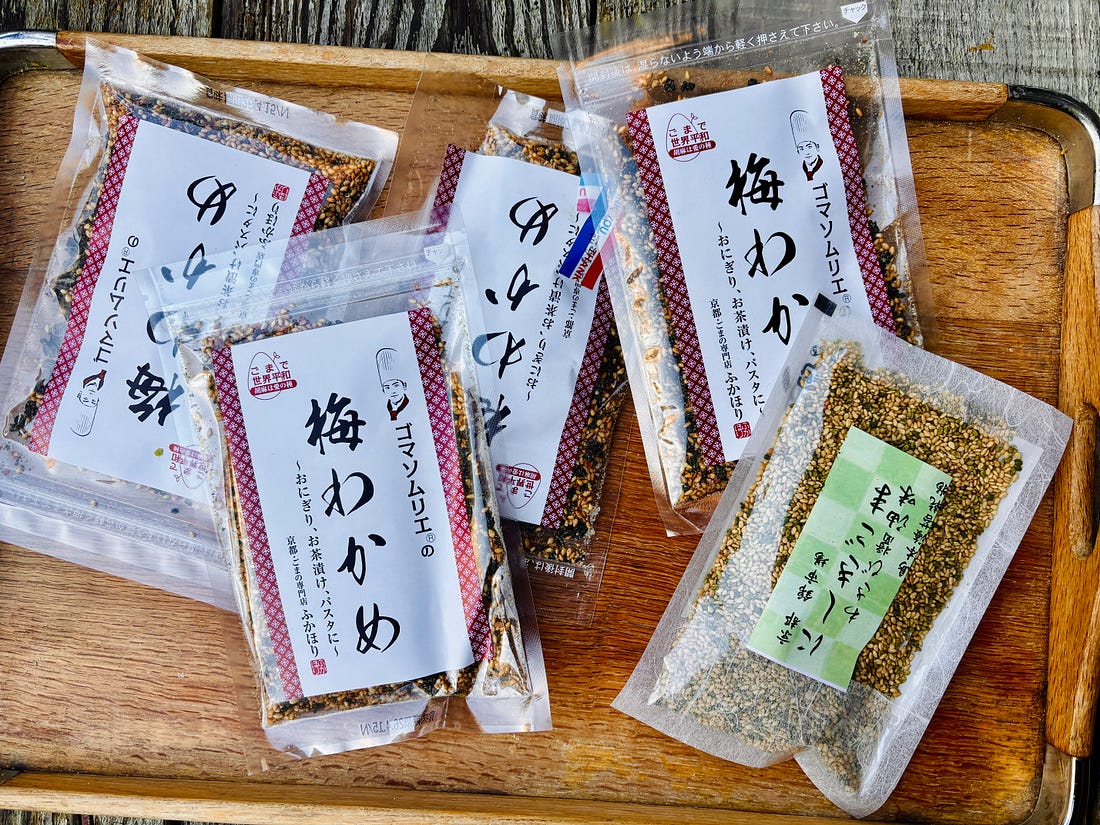
Also at the Nishiki market, I picked up several packages of furikake, a dry combination often made with seaweed or dried fish, sesame seeds, and other things (wasabi, miso, dried eggs, etc.), and gomashio, a salt and sesame seasoning. Both are good sprinkled over rice, but I also like them over roasted vegetables and fish. The seaweed in the furikake is especially good to eat as it’s high in iodine and there’s a widespread iodine deficiency in European diets, which it’s said can cause you to feel chilly, have dry skin, and thin your hair. Needless to say, I’ve got all three so am happy to get any and all the extra iodine where I can.
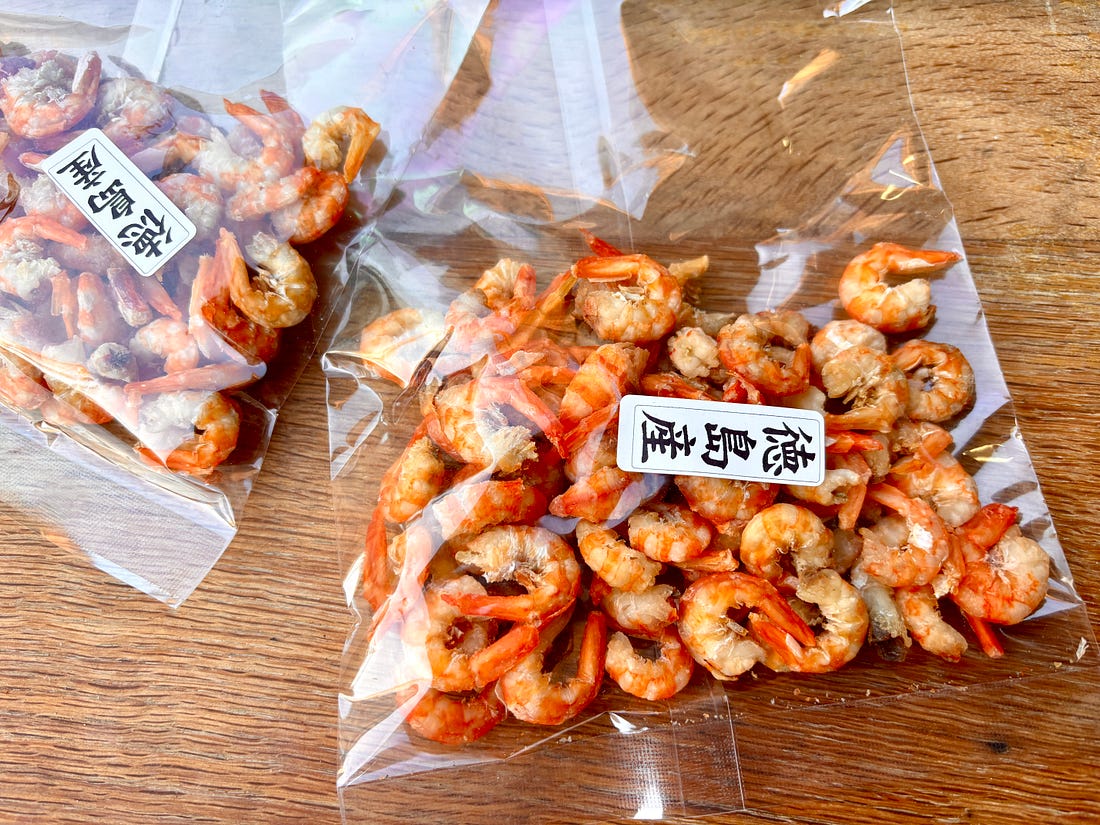
Speaking of dry, I couldn’t resist these dried shrimp, also from the Nishiki market, which features a lot of seafood. There are a lot of tourists at the market but also quite a bit of fresh fish, which I’m sure few tourists are buying. Often dried shrimp sold in Asian markets are small and, well…dried out. These were plump and didn’t look like they’d been sitting around in their packages for a few years. I know people who simply snack on dried shrimp, but I add them to fried rice and jook, and they’re especially good mixed into a green papaya salad, which I’ve never made. Perhaps one day I’ll find some green papayas in Paris, although I’ve never looked. Now that I’ve got the dried shrimp, I guess I should start.
I certainly don’t need any more utensils for my kitchen. Yet that hasn’t stopped me before.
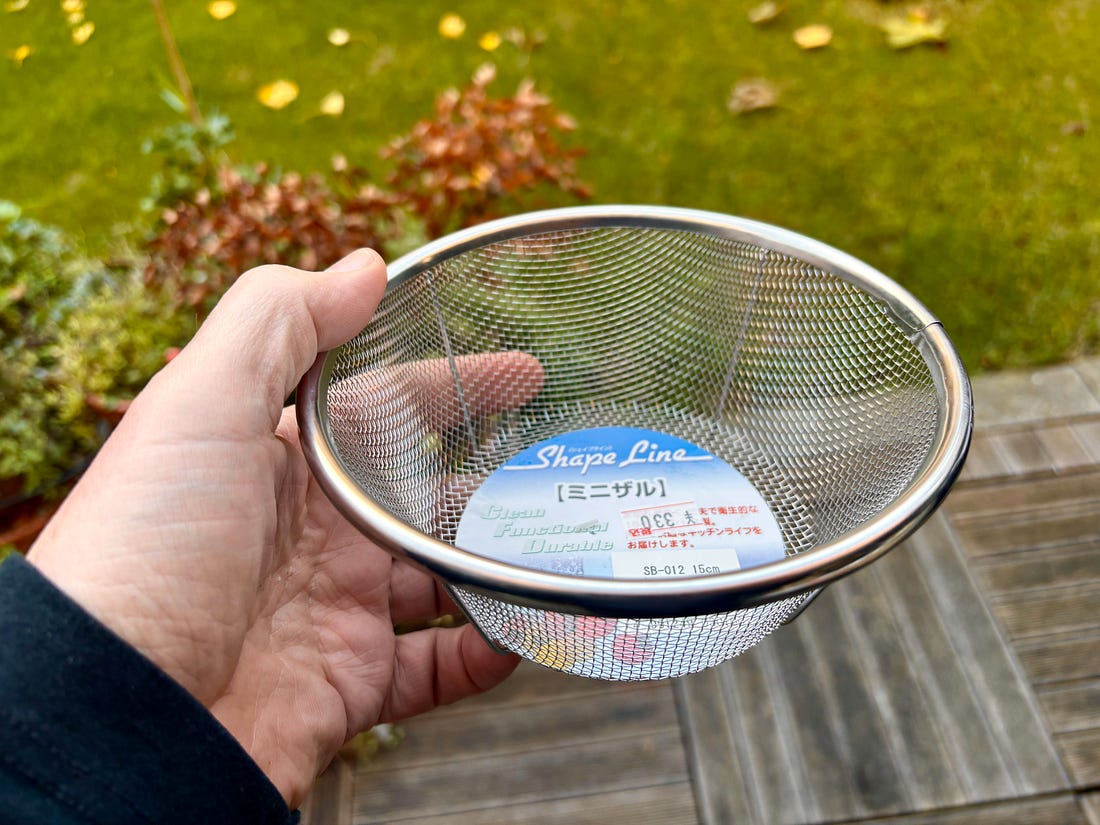
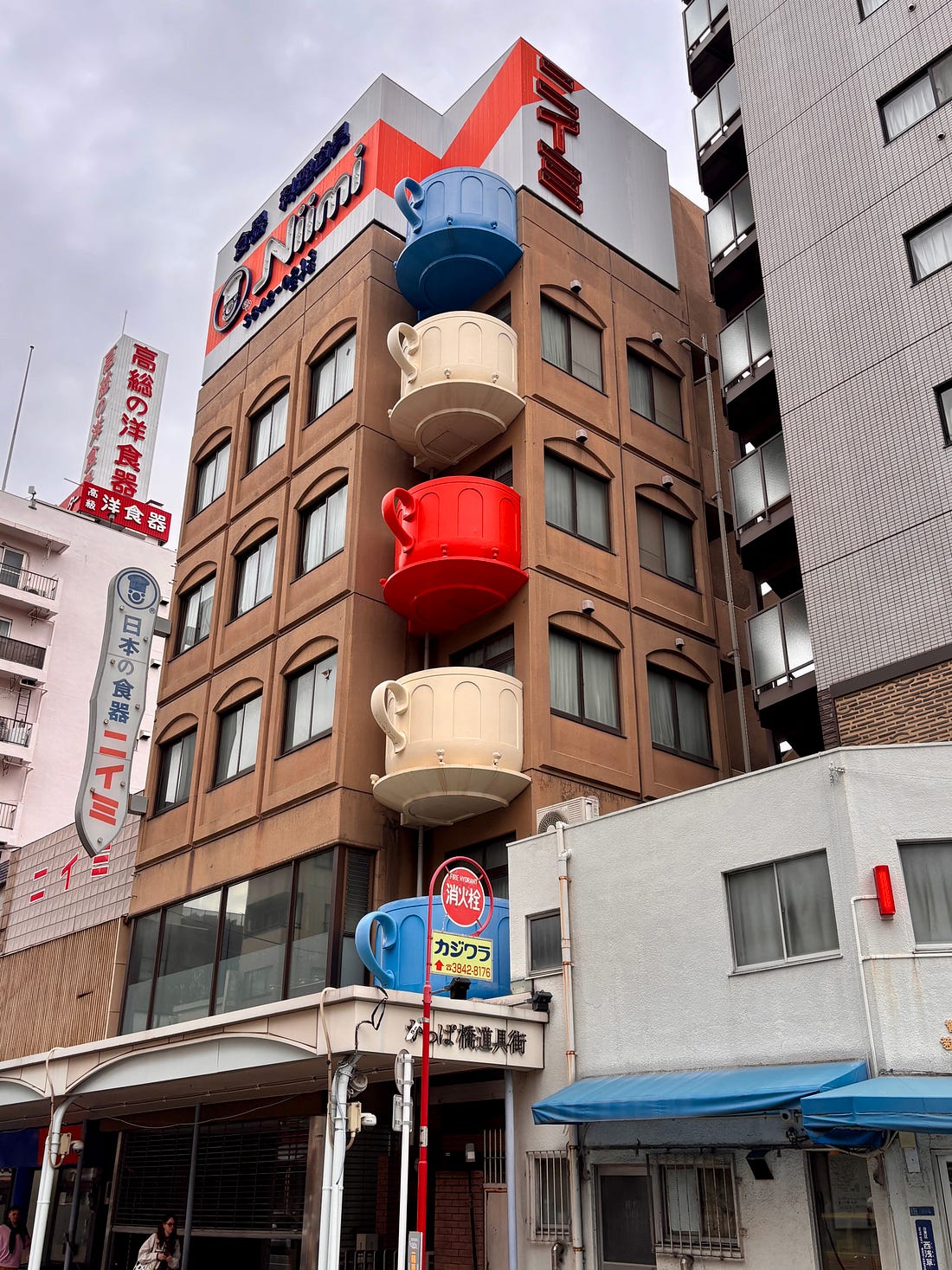
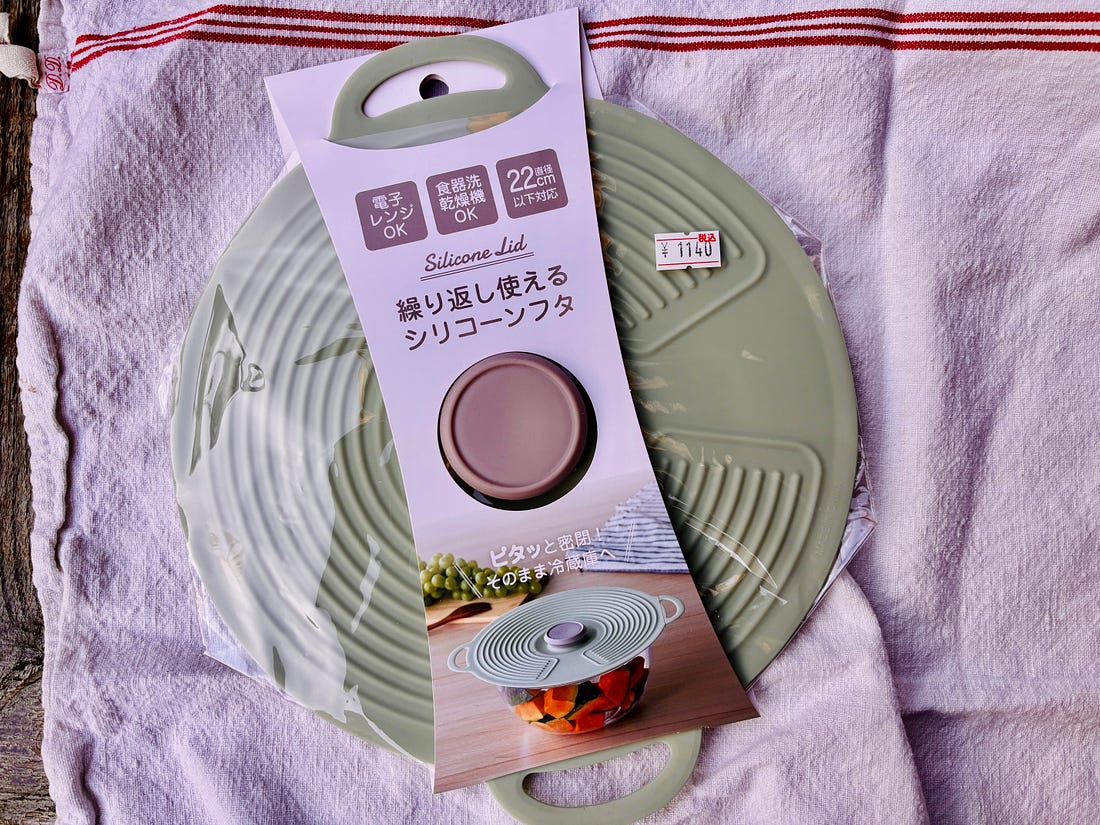
I love poking through kitchenware stores, especially in other countries. On my first day, I visited Kappabashi, where the kitchenware shops in Tokyo are clustered. However, I have more fun in the general-use stores and picked up some small strainers, meant for little Tokyo apartments, and a silicone lid, which I’m told is great for reheating leftovers in the microwave.
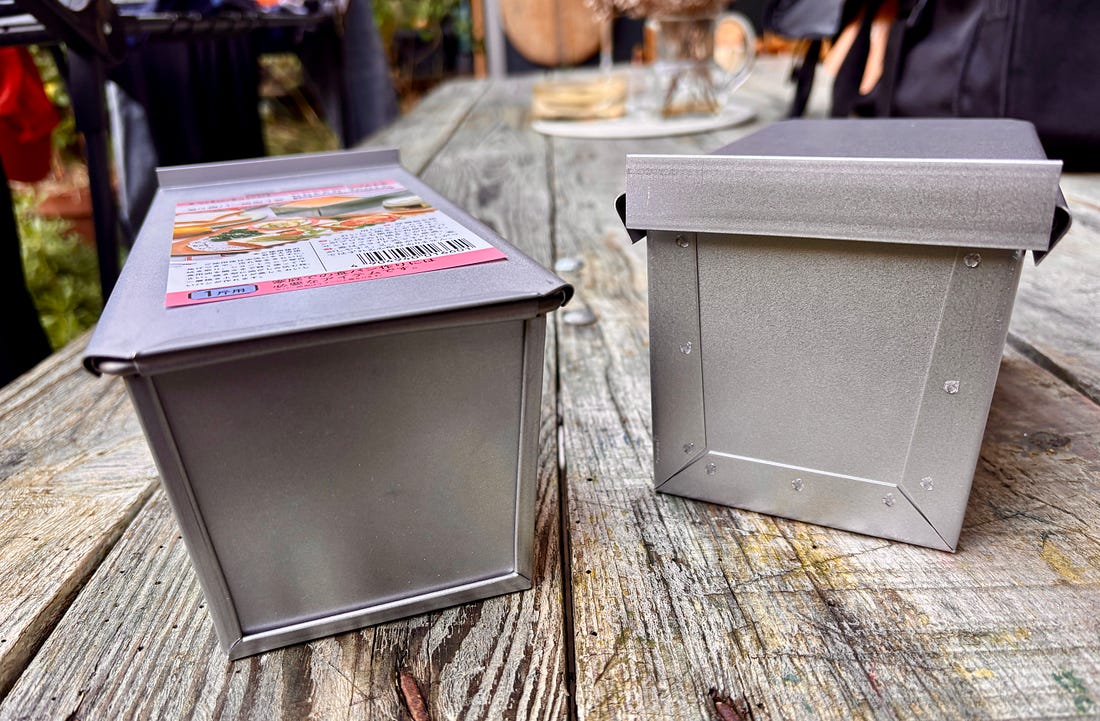
I also looked in the basement of Takashimaya department store, where the food shops and restaurants are. The food-filled basements of Japanese department stores are so well-known that they have their own name: depachika. Some can be rather upscale, and Takashimaya is the fanciest of the lot, I think. But amongst the bakeware, I found these sturdy loaf pans, which were only $15 each.
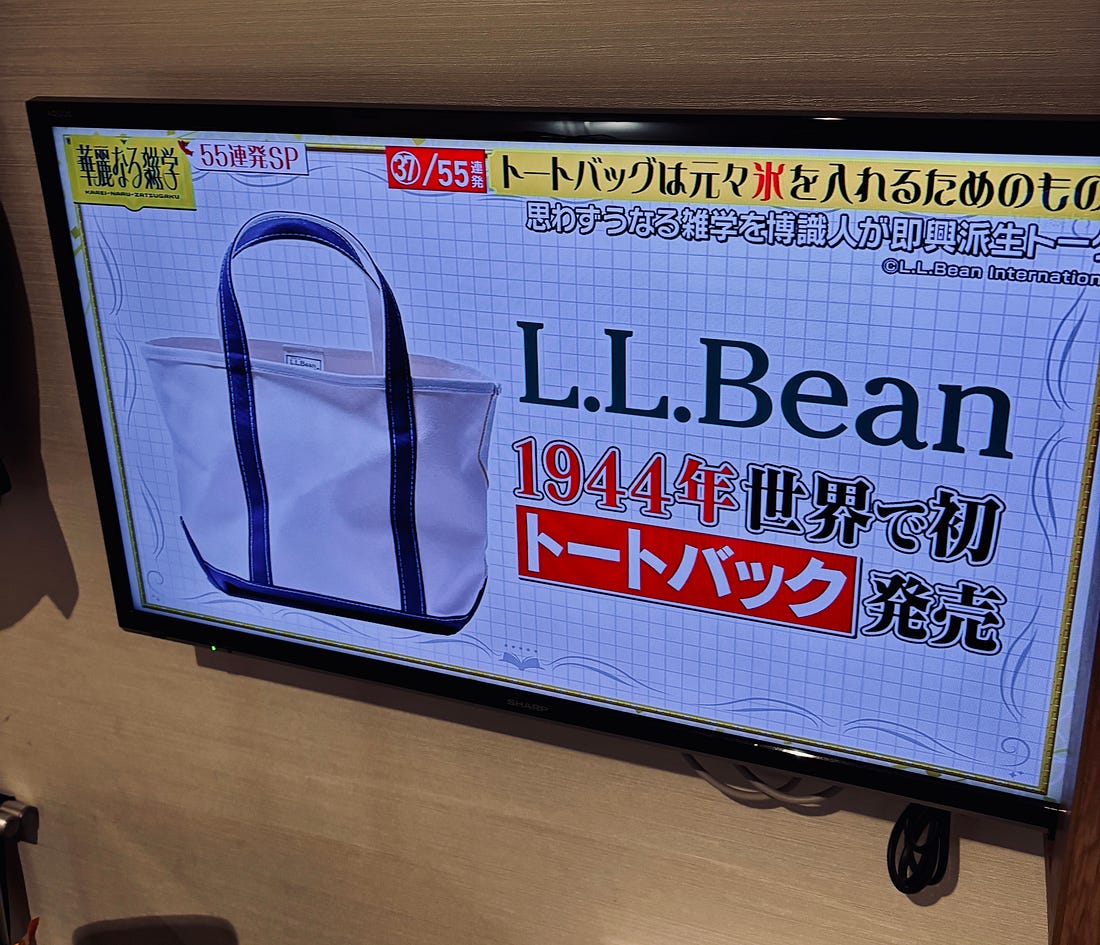
They’re for baking shokupan, Japanese milk bread, which, like green papaya salad, I’ve never made. But I love loaf pans with sharp right angles and couldn’t decide which one to buy, so I got both. They also had these other lovely baking pans (about $50 each), which I (sadly) passed on… 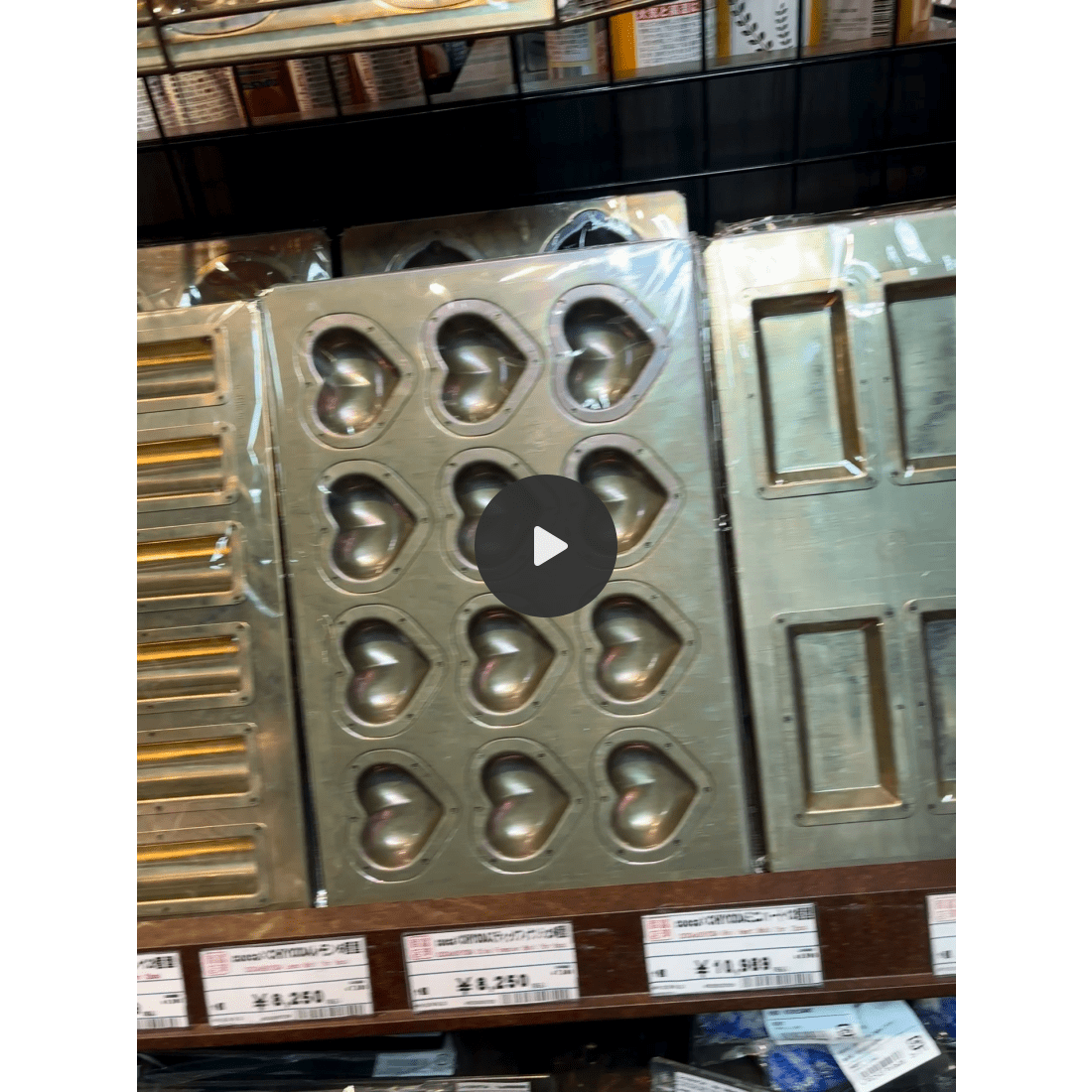 Japan is also known for its fashion, which, like other dapper fellows in the food world, I’m not known for. To catch up to them, I wanted to prowl some of the vintage shops, but all were filled with Ralph Lauren, Eddie Bauer, Wrangler, and Lands’ End stuff. Nothing Japanese. American preppy style is apparently in. I was watching Japanese TV one night and they discussed L.L.Bean Boat and Tote bags.
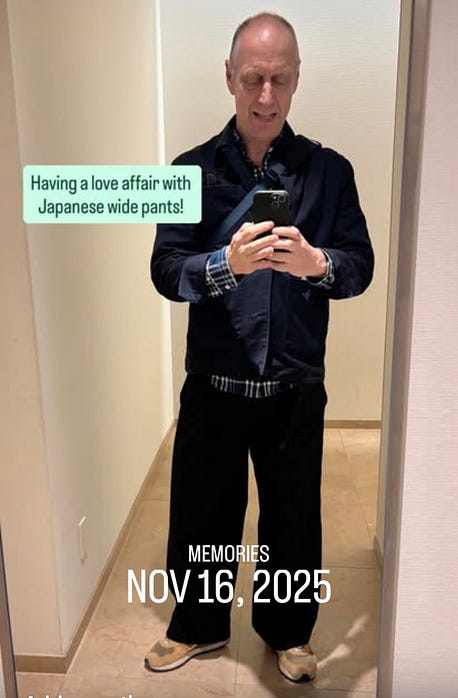
I still have my Boat and Tote from when I went to prep school in New England so don’t need another one. (The vintage shop vendors, though, were very interested in the old J.Crew shirt that I was wearing and I probably could have done some trades.) But I decided to treat myself to some new, non-preppy clothes. Very wide pants are very “in” in Japan, and after I tried on a pair, I was sold…and so were the pants.
I actually ended up not buying just one pair, but two. I loved them and how comfortable they are. Even though they may become the parachute pants of this generation, and I’ll probably look silly in them back in Paris, in Japan, I blended right in. My favorite clothing store was Public Tokyo and big love to Kentaro, the guy who helped me try on clothes at their shop in Kyoto. I spent more than I was planning to, but that’s what bringing along an extra (folding) suitcase is for, which ended up being a wise decision. You're currently a free subscriber to David Lebovitz Newsletter. For the full experience, upgrade your subscription.
|
Sunday, November 23, 2025
What I Brought Back from Japan






Subscribe to:
Post Comments (Atom)
No comments:
Post a Comment