While I generally send out a monthly newsletter on the first of the month, we are out and about, enjoying a little vacation time. Unlike the juilettistes and aoûtiens, people in France who take their vacation in July or August, we like to take ours at the end of August, rather than in the middle of summer. Since we don’t have kids, our schedules aren’t tied to school vacations, so we’re free to go when we want to. Places are also a lot less crowded as summer draws to a close, which to me, means it’s a great time to travel. L’Occitanie (Occitania) doesn’t get the same publicity as Provence, but it’s the southernmost region of France, and the Languedoc-Roussillon is the largest winemaking region in the world. We started coming here during Covid-19, when the country’s borders were closed and a good friend who used to live in France, but moved back to California, couldn’t make it back and kindly gave us her guest house to vacation in. We’ve been coming ever since.
One highlight of coming to the area where we’re staying is the market in Olonzac, which takes place Tuesday mornings. Unlike the markets in Paris, which don’t get going until 9am or so, people arrive at this market early and we try to be there by 8:30am, before it gets too crowded and all the good stuff is gone.
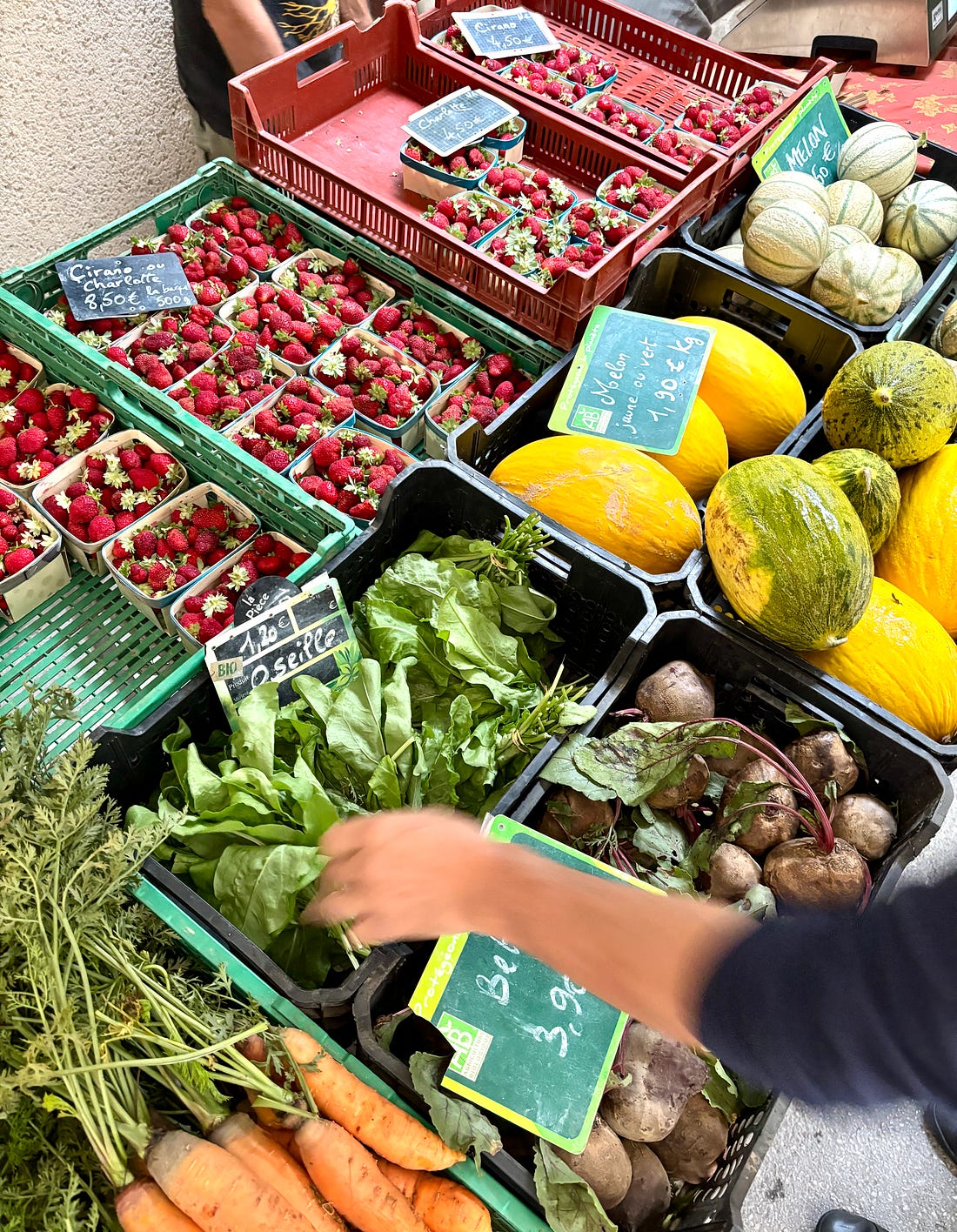
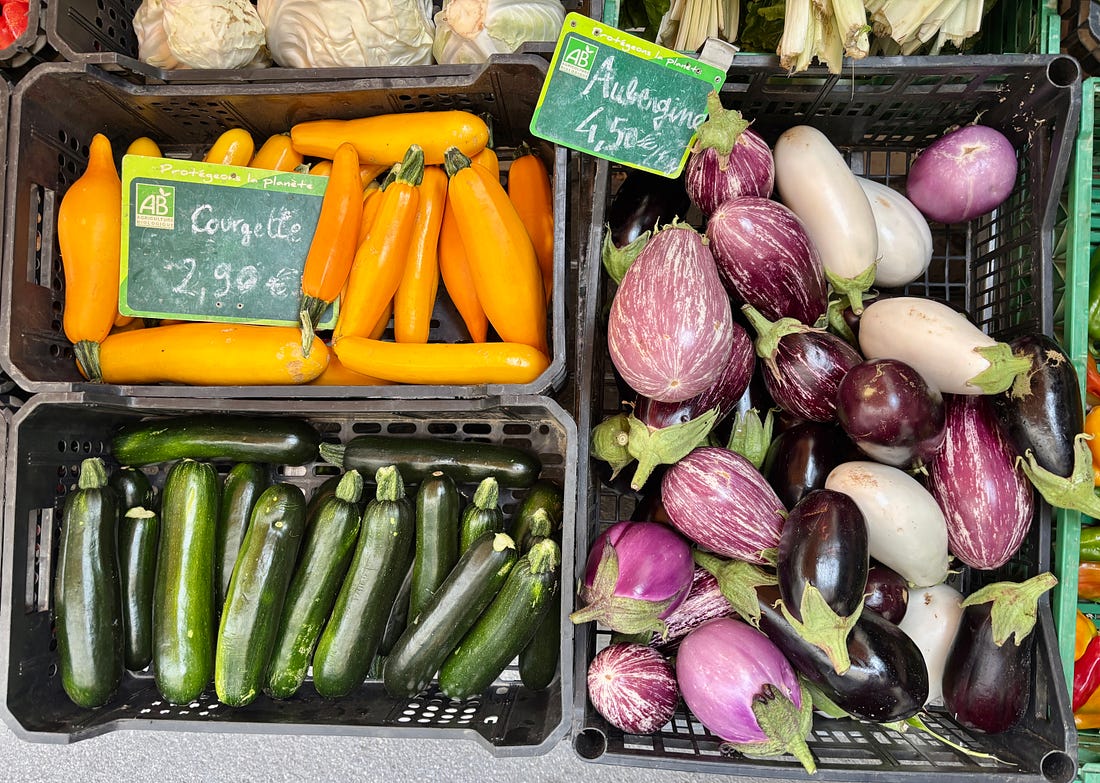
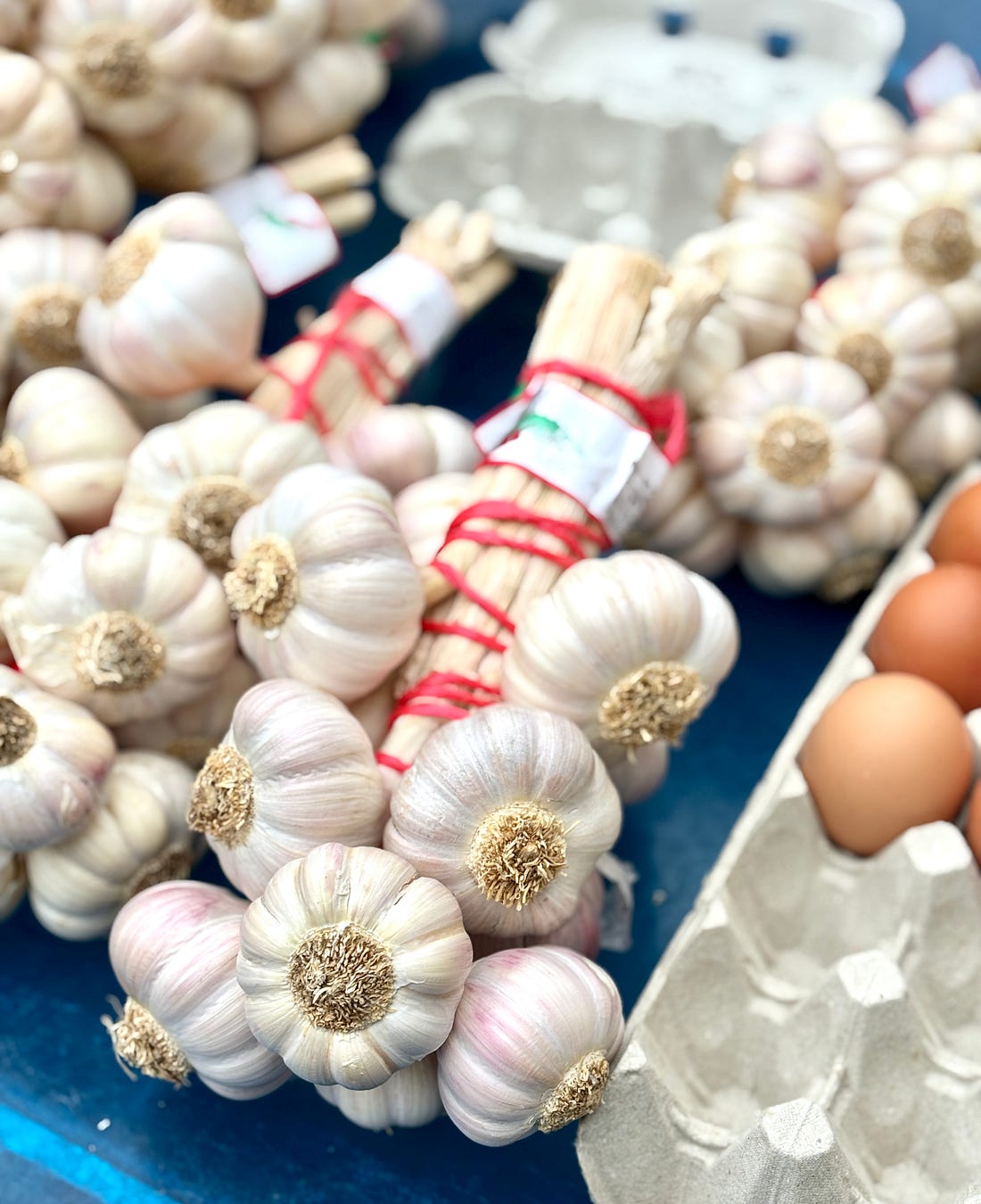
The produce at this market is truly gorgeous and almost all of it is sold by producteurs, producers who actually grow it, rather than négociants, middlemen who buy and resell produce at the market. So the quality is really high and everything is super fresh and packed with flavor. One specialty of the region is pink garlic, which is dewy pink and rock-hard, and is sold tied in bundles. Because of the way it’s dried, pink l’ail rose keeps for months and we always buy a few bunches to bring back to Paris, which we use in the fall and even in the winter.
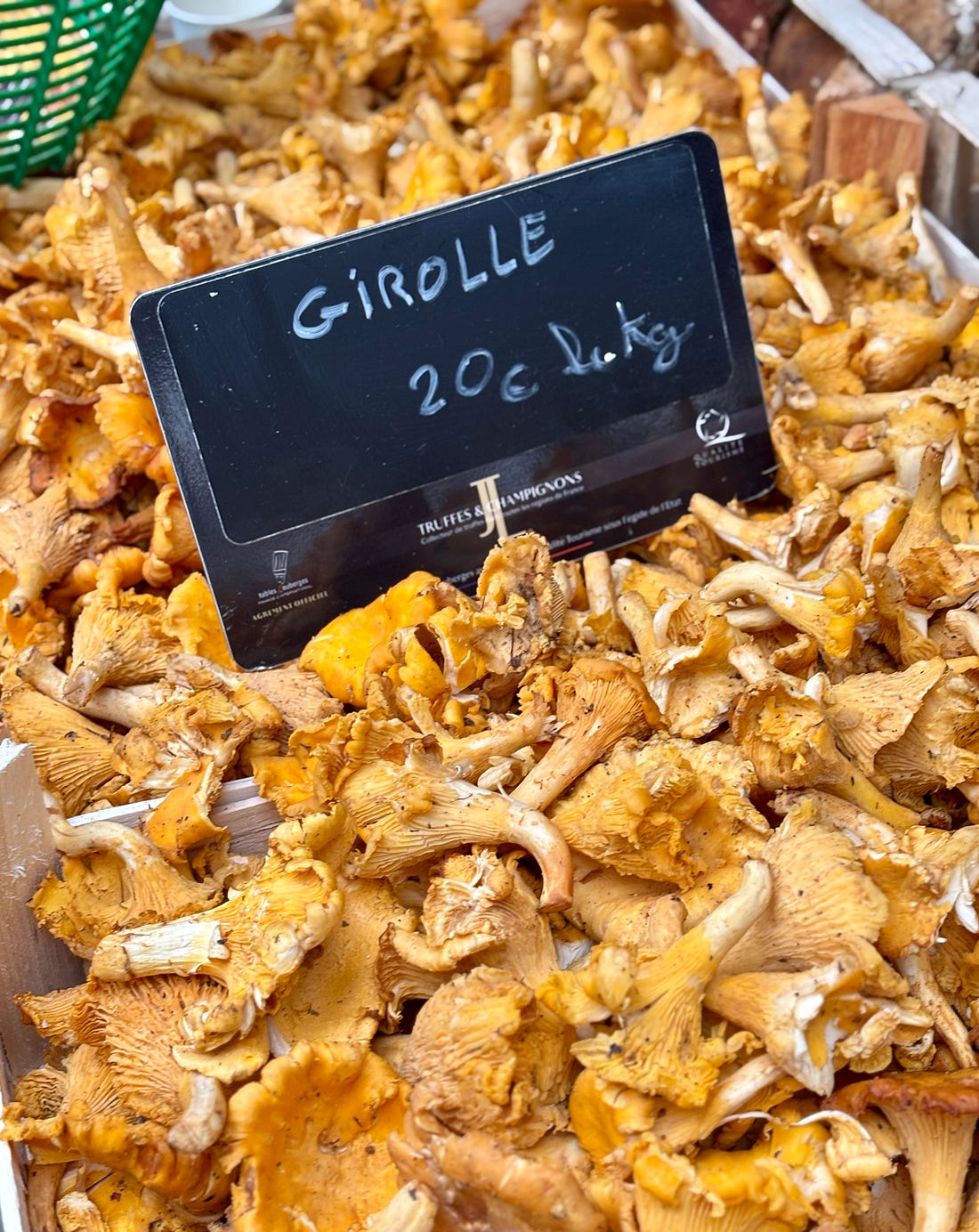
Romain can’t resist girolles (below), and while many that are sold in France come from other countries, people prefer to buy wild mushrooms from France. Some of it is a holdover of concerns that mushrooms grown elsewhere contain radiation from Chernobyl, so buying ones that grew in France, to this day, is more reassuring.
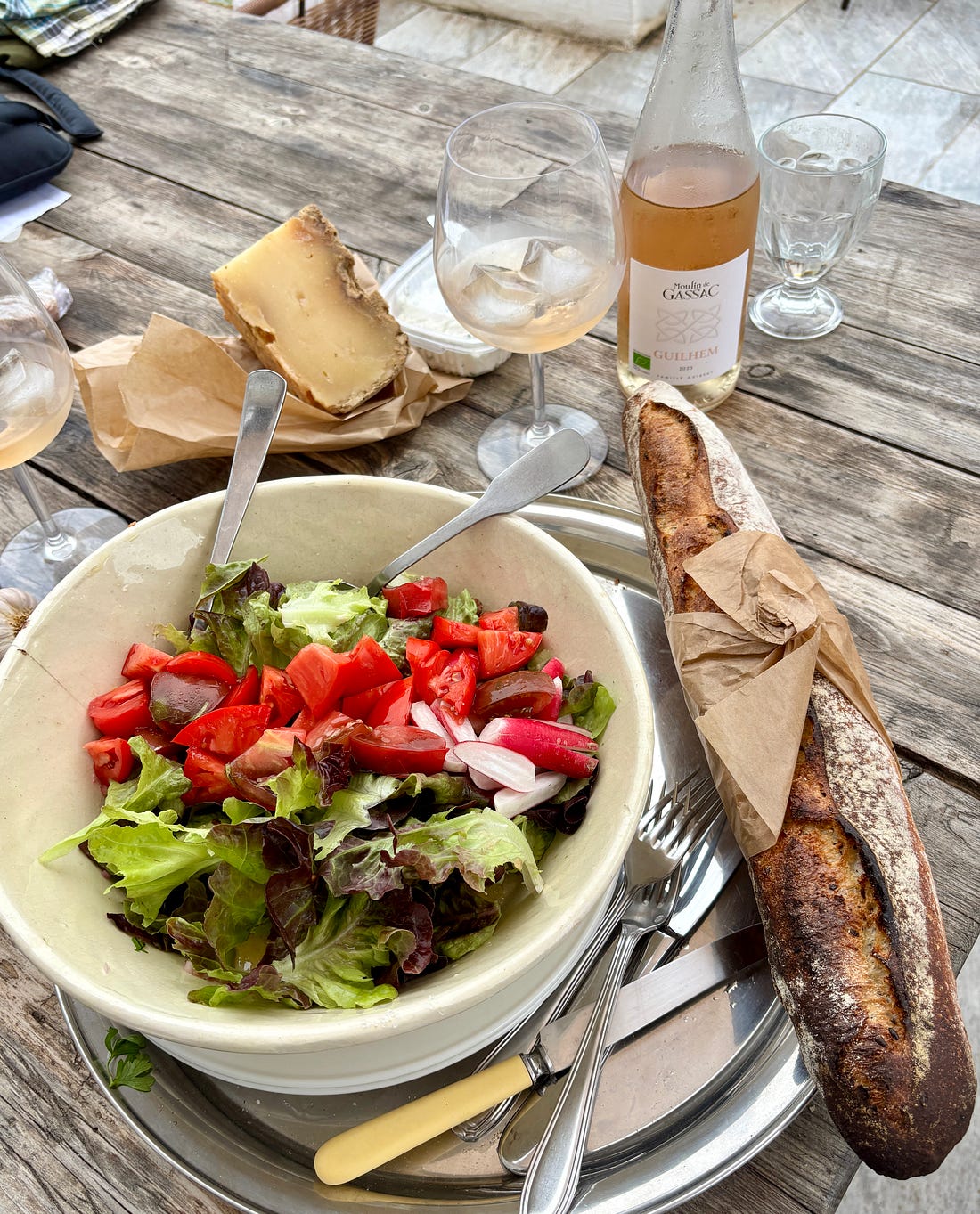
We bought a few baskets of them, along with eggs from a local producer (6 eggs for €1,90, about $2.25), to make an omelet. Unlike some people, I don’t really feel the need to do a lot of cooking while on vacation. When a chef turned his nose up at us at Chez Panisse, calling what we do “shopping, not cooking,” we took that as a compliment since good cooking begins with shopping. Not doing anything more to great ingredients than necessary and letting their flavors shine is the best way to prepare them. It’s been brutally hot in the south of France this summer (we also had major heat waves again in Paris), with neighbors in the village where we are staying telling us that the heat this summer was especially “intolerable.” The hottest it’s gotten while we were here has been 30ºC (86ºF), which isn’t as crazy-hot as it was, but still, we’re eating mostly salads and lots of fruits and vegetables.
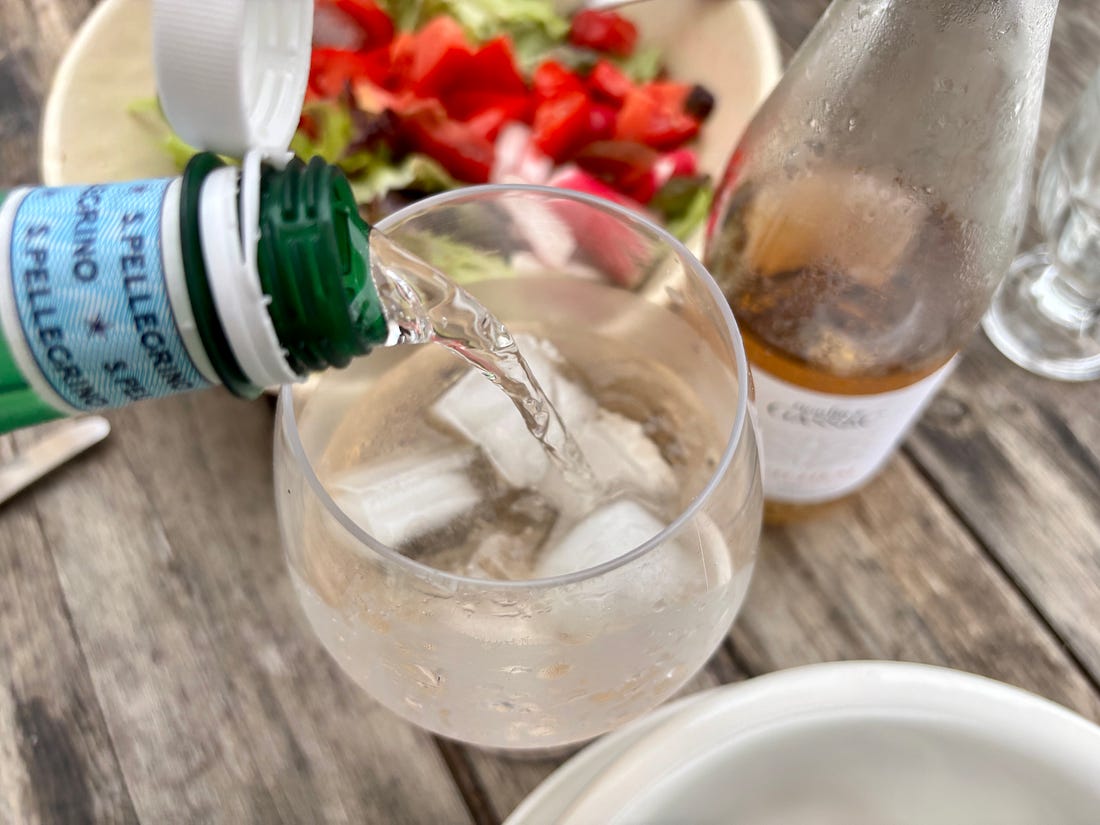
Speaking of heat, people get a little weird when you mention adding ice to wine, but as my friend Rosa Jackson, who lives in Nice, once told me, “People here consider rosé a drink, not necessarily wine.” When I was in Corsica, locals were plunking ice cubes into their glasses of red wine — “It’s too hot to drink it any other way!” — they said. And a friend (who is in the wine business) has a Burgundian mother who always adds water to her wine because it’s “too strong” for her.
The first time I had a wine “drink” was when I went to Italy back in 2007 and noticed people drinking something orange and sparkly, served in big goblets over lots of ice, which eventually became known around the world as the Aperol Spritz. That wasn’t the first time I had one. Before then, back in the States, people were drinking white wine with sparkling water added to it, known as a Spritzer. (If I remember, it was considered a diet drink too.) Today, some cultures make similar drinks, adding soda, like Coca-Cola, to wine, such as the Kalimotxo, or Tinto de Verano, a mix of lemon soda and red wine. My rule for adding things to wine, such as ice and sparkling water, is that if the wine costs €10/$10 or less per bottle, you can do whatever you want to it. I like drinking rosé in the summer, but when it’s really hot, it goes down a little too easily, so a handful of ice and sometimes a splash of sparkling water make it extra refreshing and keeps it enjoyable, while lowering the strength.
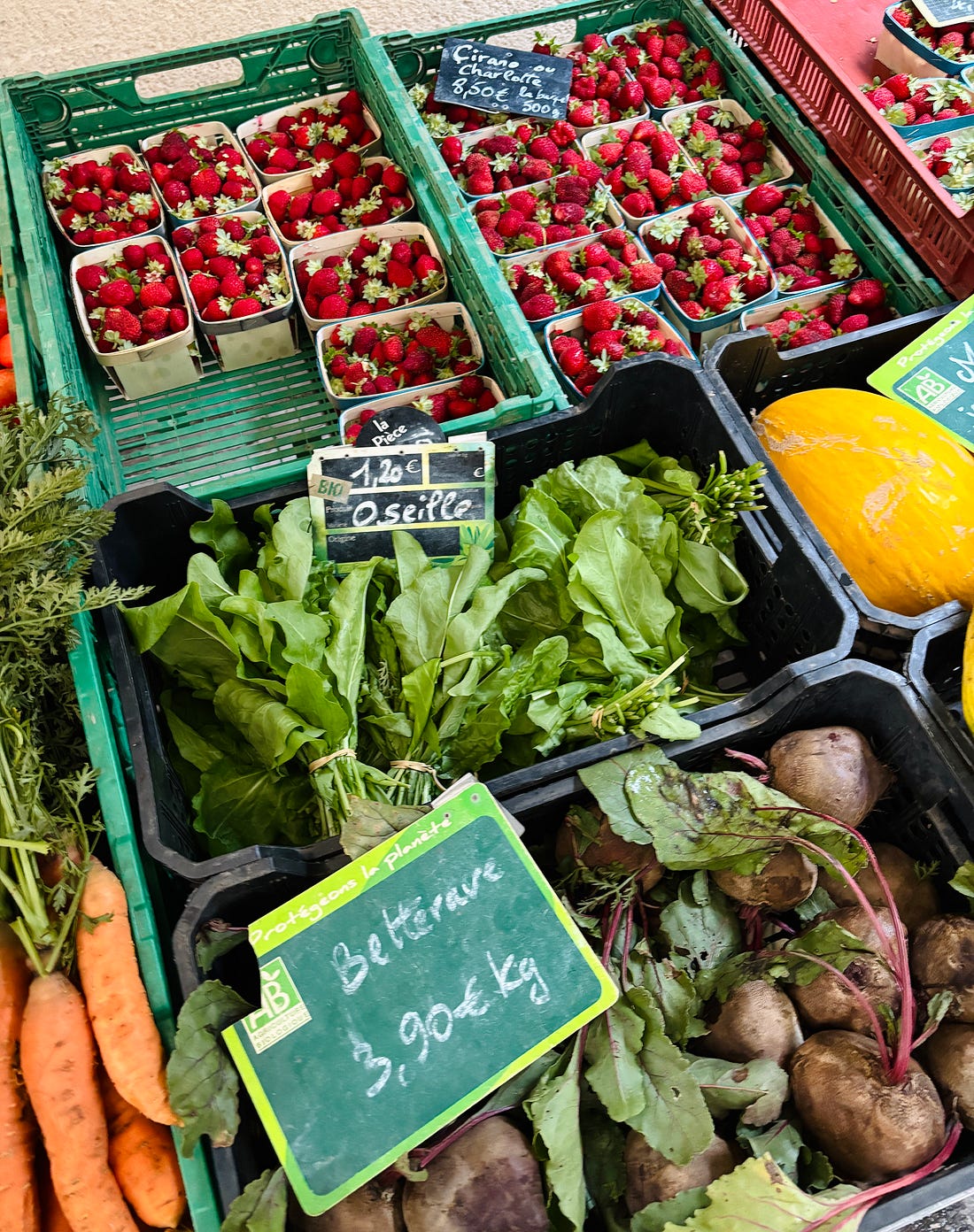
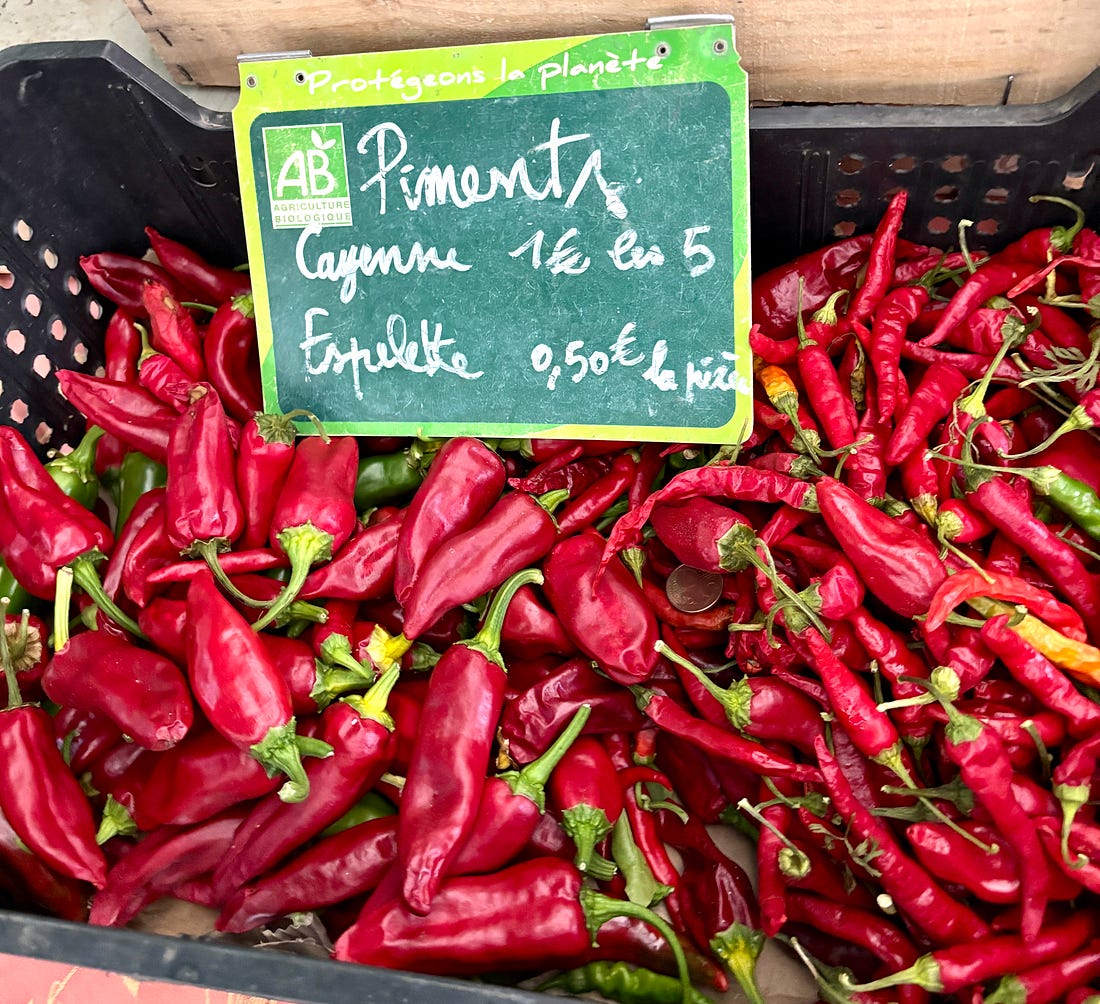
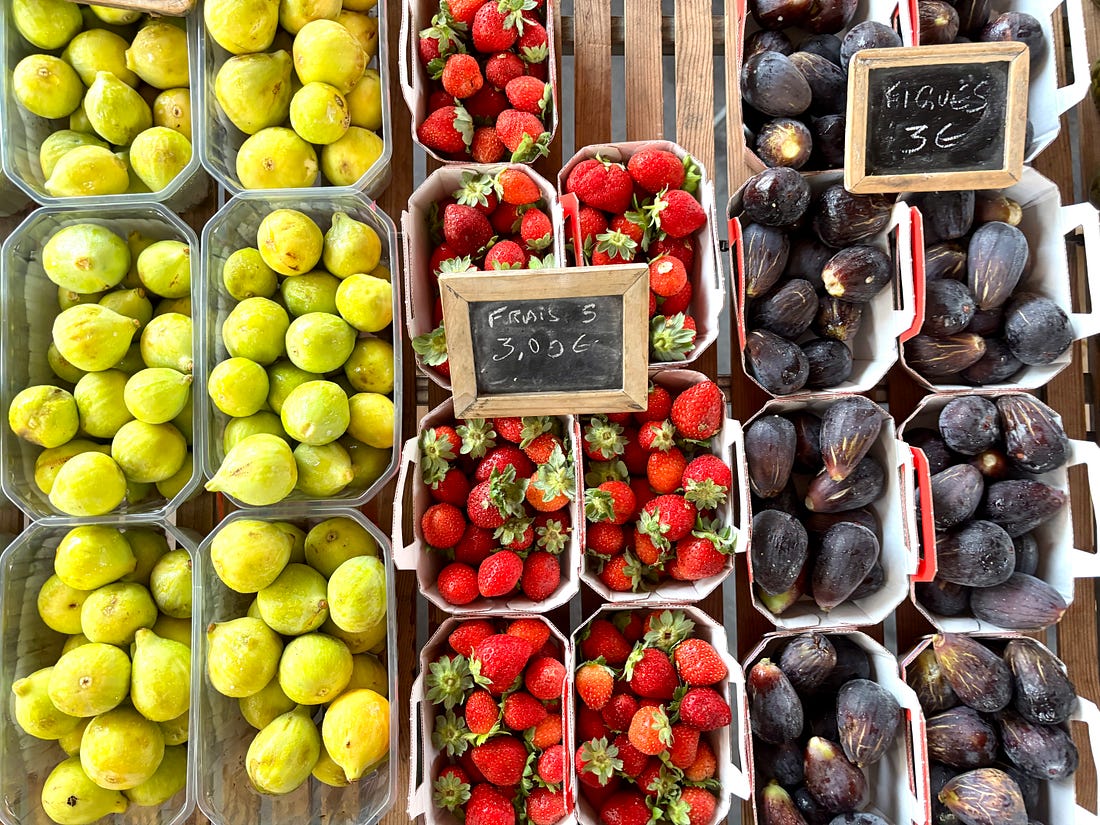
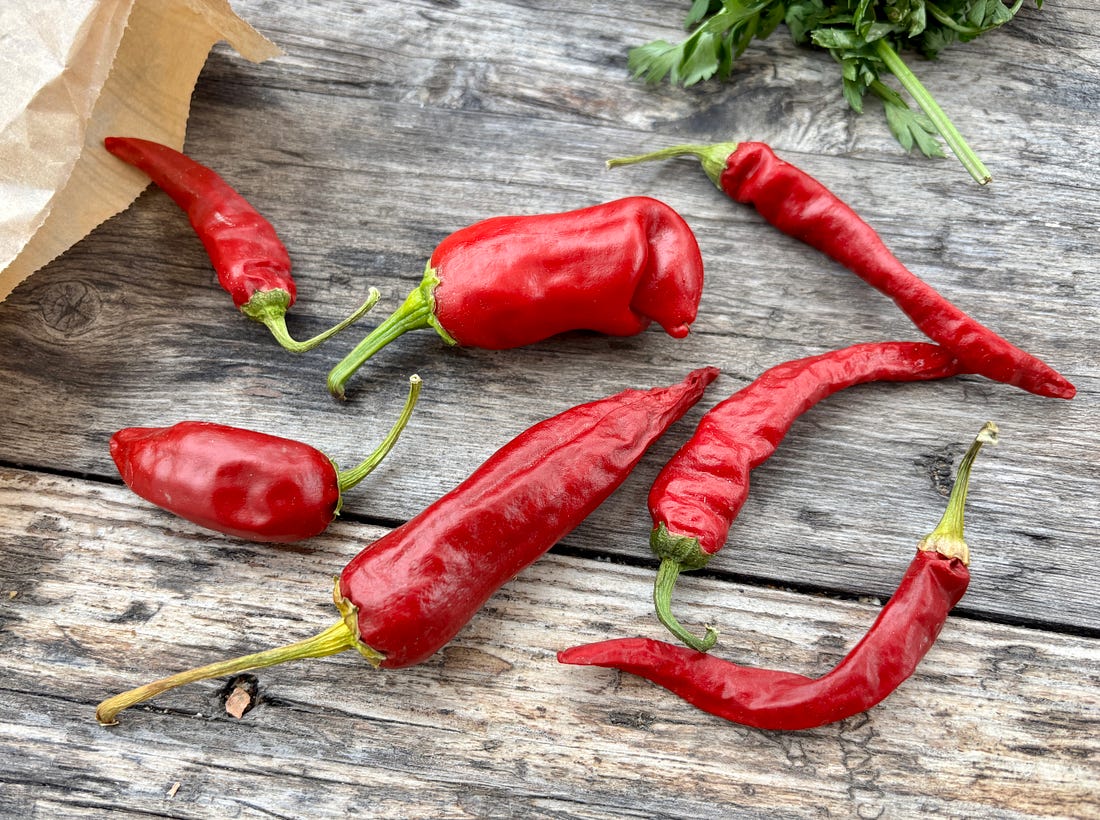
When we arrive at the Olonzac market, after parking the car, we make a beeline for Valerie’s stand, which has the most gorgeous and best-tasting produce that I’ve had in France. Especially good are her strawberries, which are sweet and delicate. Unlike commercial berries, you have to be careful packing them in your bag as they smoosh easily. People in the comments were shocked by the price of strawberries at the greenmarket that I posted pictures of when I was in New York City: 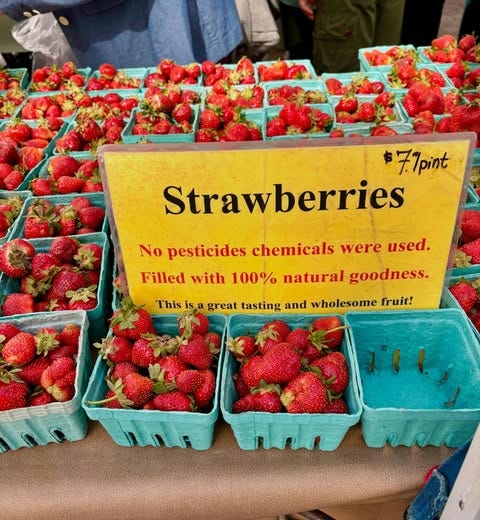 But picking strawberries is backbreaking work since they grow low to the ground. Good strawberries (not the rock-hard ones sold in plastic clamshell baskets) only last about a day, and if it rains and you’re growing the berries organically, your crop can be ruined by mold. Good strawberries, the delicate kind with flavor, are a lot of work to grow and harvest, plus the growers get up at whatever time they need to in order to bring everything to the market by 7am, then spend the day on their feet selling them. Valerie drives an old white truck, not a Mercedes. In the south of France, people aren’t afraid of a little heat, at least in their cooking. While it’s funny to see chile peppers sold individually, I appreciate that people grow and offer fresh chiles. The cayenne peppers I planted in Paris were devastated by slugs this year, but I’ve got two Espelette plants growing, which are milder. Parisian slugs are hardy souls, and nothing, from beer traps to nematodes, could stop them. So it was nice to see that someone was able to grow fresh chiles in abundance.
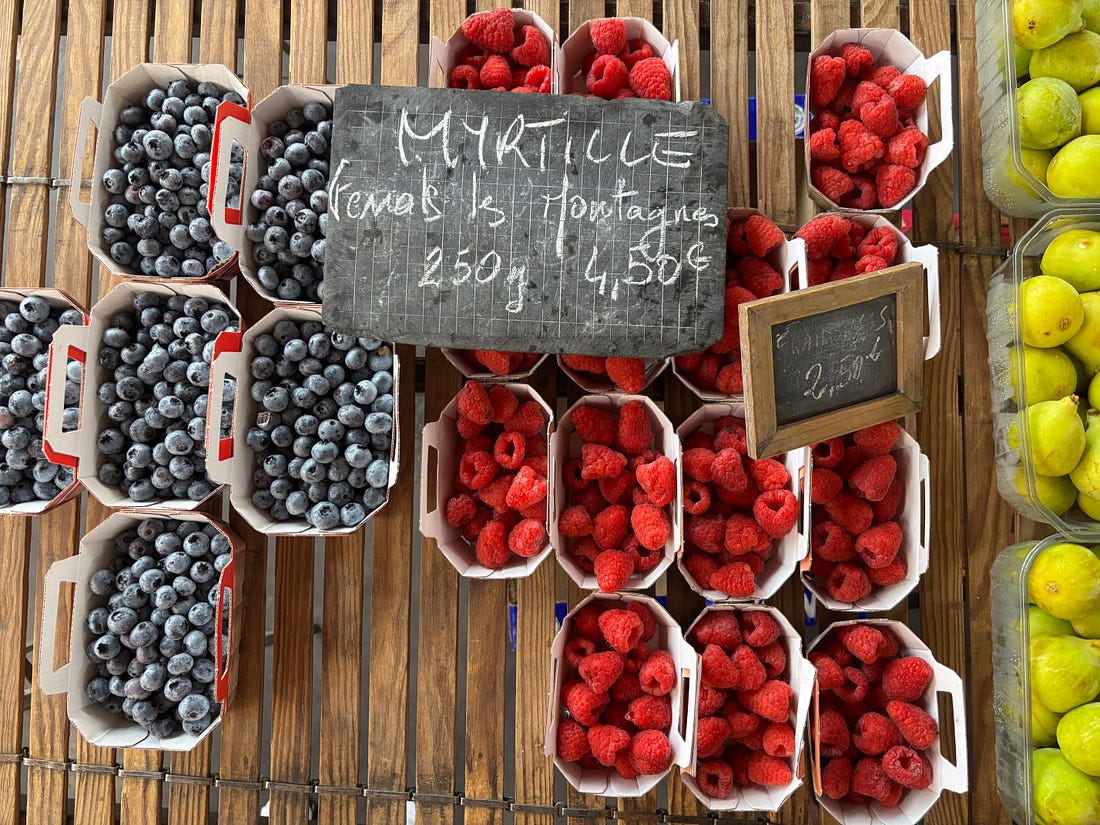
There’s also a nice gentleman at the Olonzac market who sells a selection of fresh berries (called fruits rouges in French), which tend to sell out very quickly. And if you could smell his raspberries, I’d say: for obvious reasons.
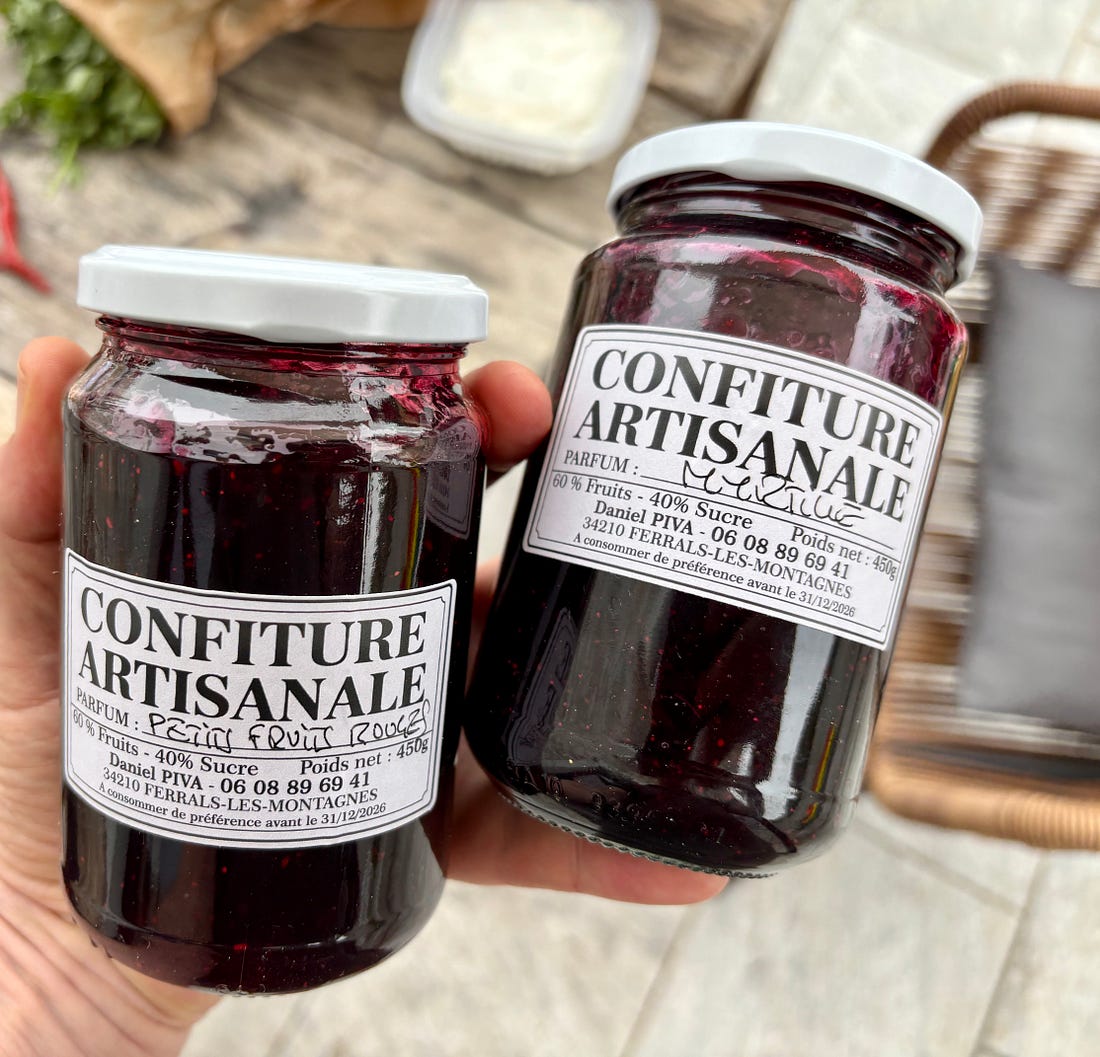
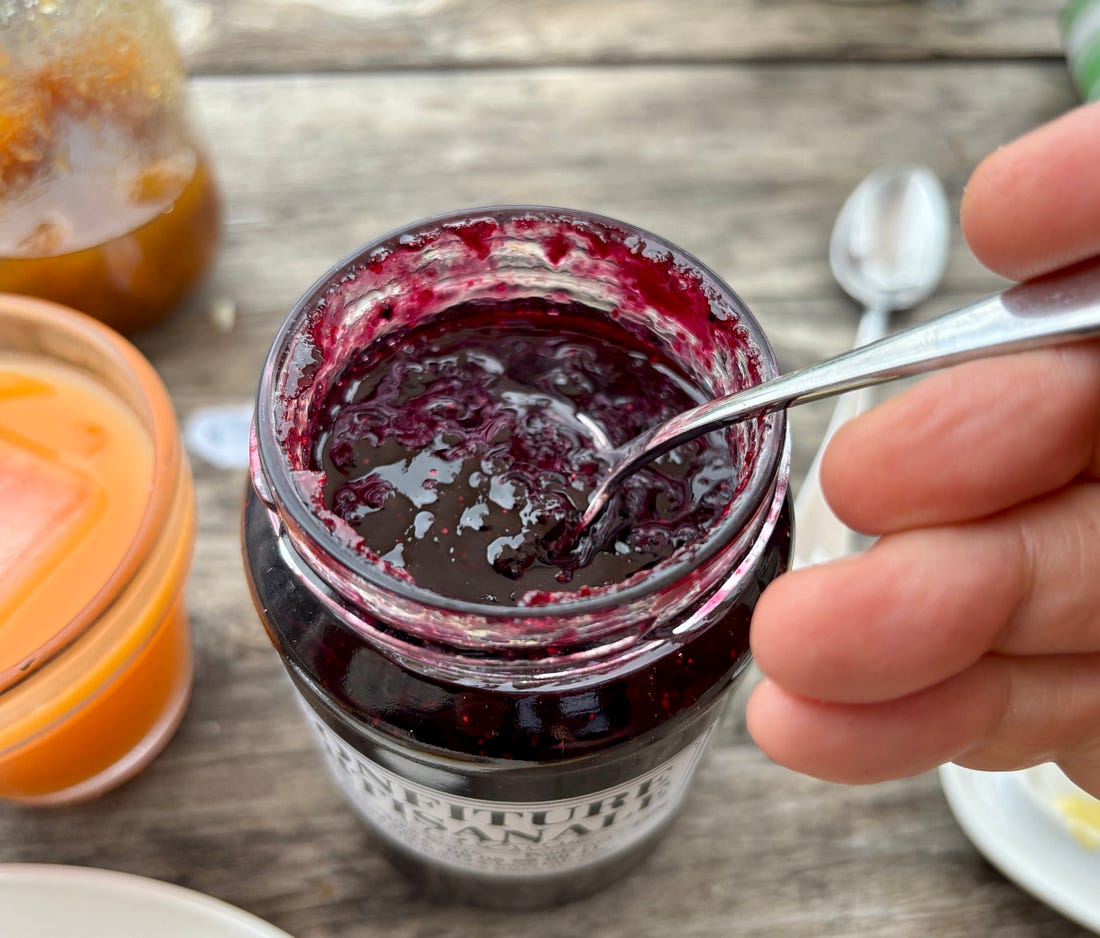
After seeing how common blueberries were in America (although the commercial ones I’ve had the last few times I’ve been there seem to have lost most of their flavor), Romain is now hooked on myrtilles. The ones here are particularly flavorful and the fellow also makes a variety of jams from his berries, which you don’t really want to do in Paris as the berries are so dear that it’s a shame to cook them.
So I let this fellow do it. His jams cost around €6,50 ($7.50) a jar, and you can taste the flavor of the top-quality berries in every spoonful.
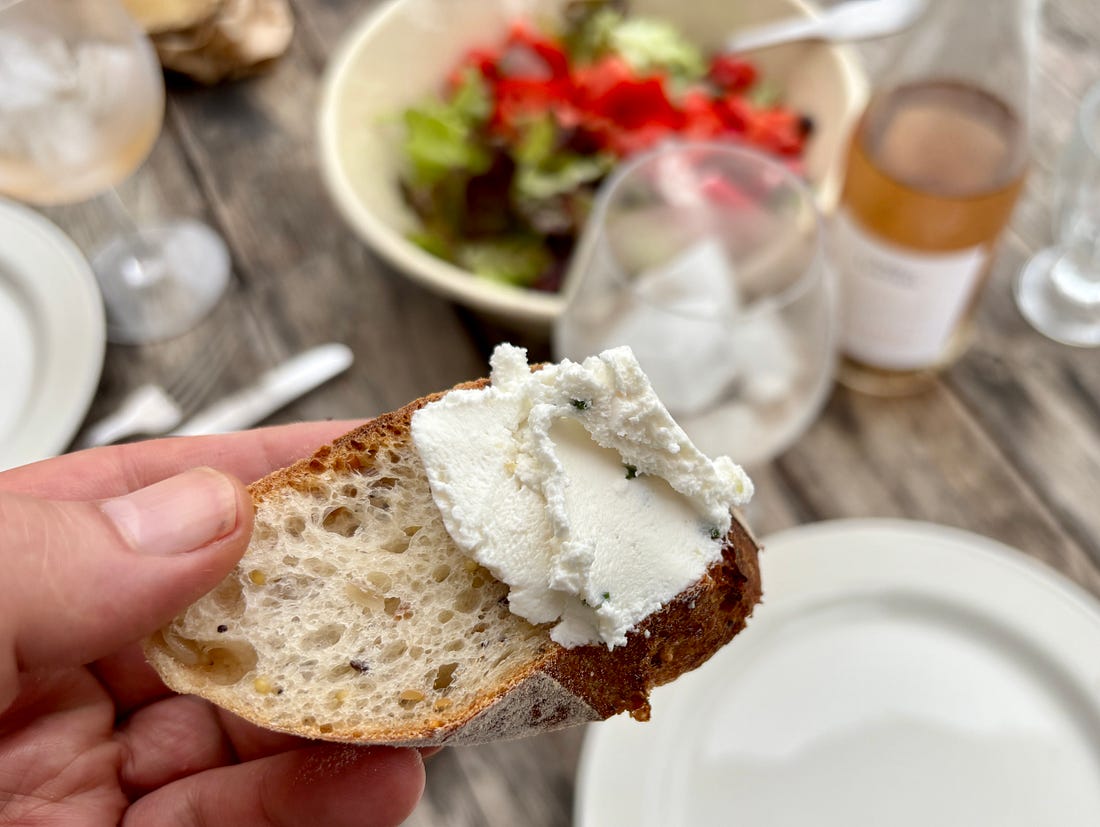
In this region, most cheeses are made with sheep’s or goat’s milk (brebis and chèvre), rather than cow’s milk. There are several people at the Olonzac market who sell fresh goat’s milk cheeses, which are ridiculously inexpensive, around €2,50 for a small round. When I wondered to Romain how he made any money, Romain said to me, “Maybe he’s not interested in making money,” which was certainly a fair point that I hadn’t considered.
I bought a barquette (container) of his goat cheese spread, which had the tang of fromage de chèvre, along with a good amount of garlic. Like chile peppers, people in the south are more liberal with their use of garlic than their Parisian counterparts. In fact, I may need to go back to the market before we head home to stock up on more pink garlic.
And perhaps some more fresh chiles, too, in case I get home and find the slugs also spent their (or our) vacation dining on fresh produce, as we did.
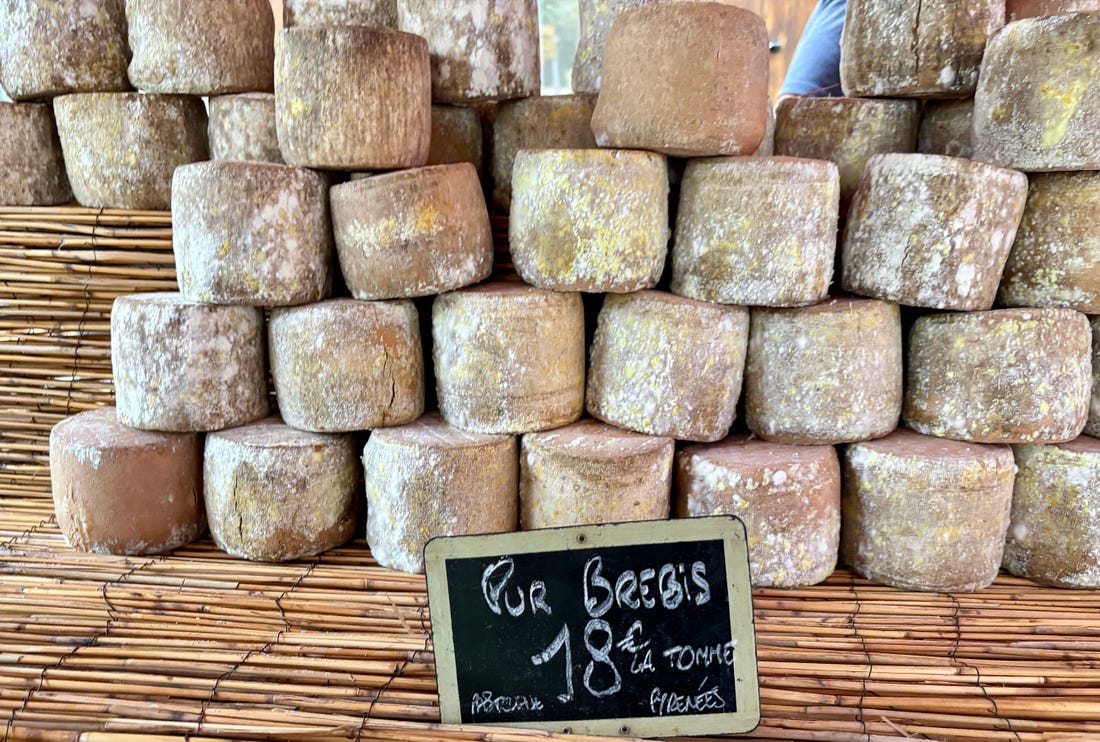
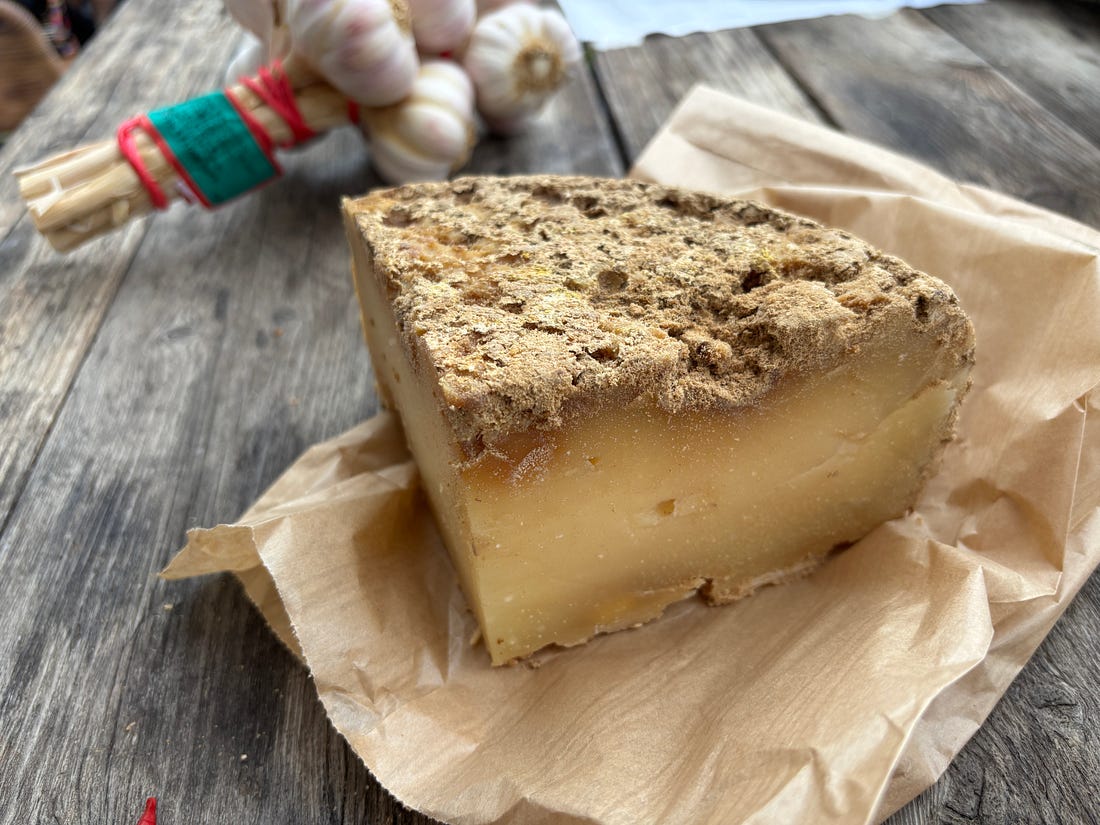
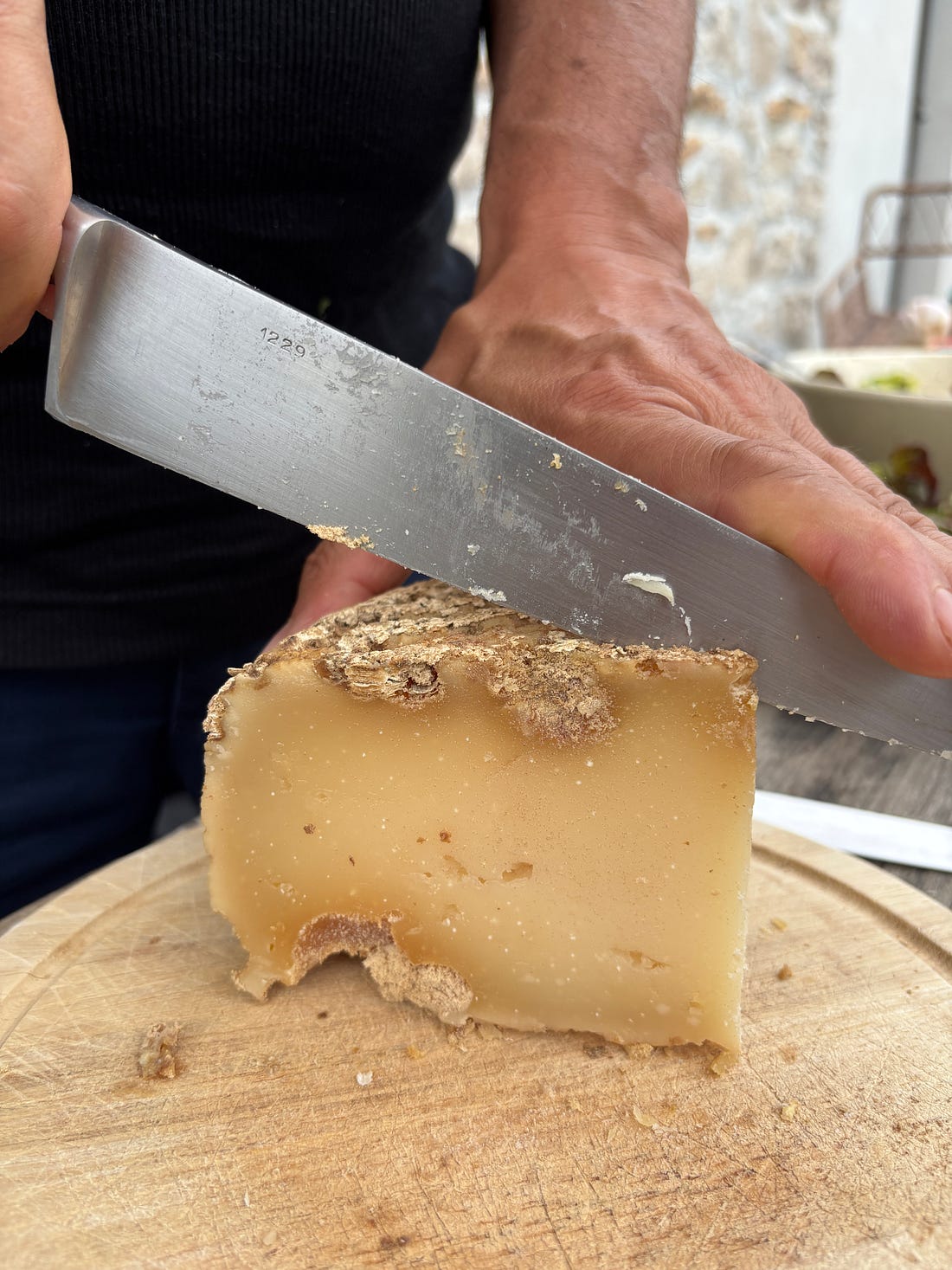
Sometimes when I post about cheeses, readers ask me what the names of them are. Which is often the case with cheeses you find in cheese shops. But out in the countryside and at markets in villages, they might just say the cheese is “pure sheep’s milk” and leave it at that. The guy at the stand that had the cheeses above gave us tastes of a few of his, and each was phenomenal. While it’s common for people to say they like aged cheese better (people tend to like anything that is “more”), the younger ones tend to have more of a fresh milky flavor.
However, the cheese above, with the dusty crust, blew us away. It was one of the best cheeses I’ve ever had. We didn’t blink at buying a quarter wheel of it, which was €25/$29 and well worth it.
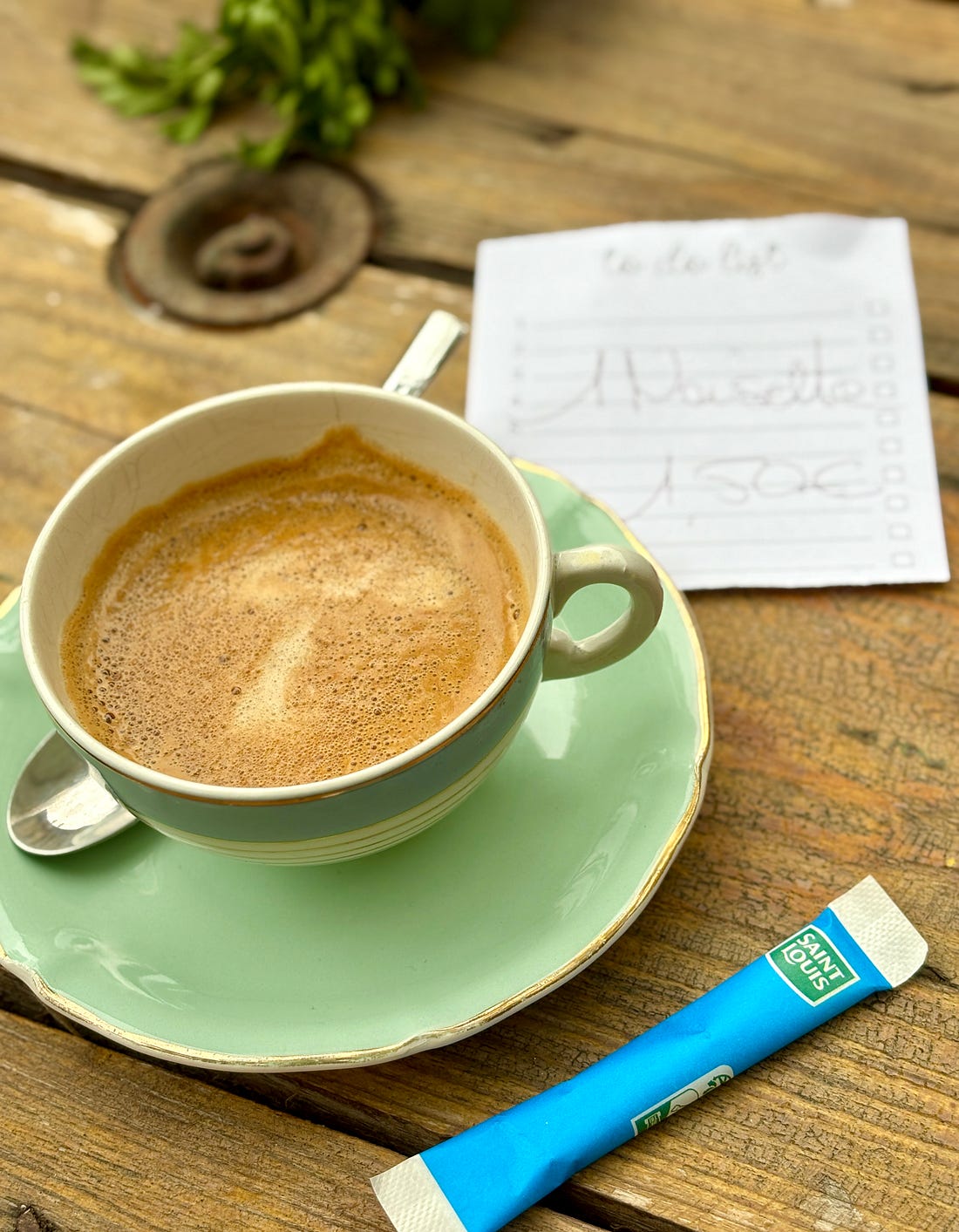
After the market we met up with a local friend for coffee.
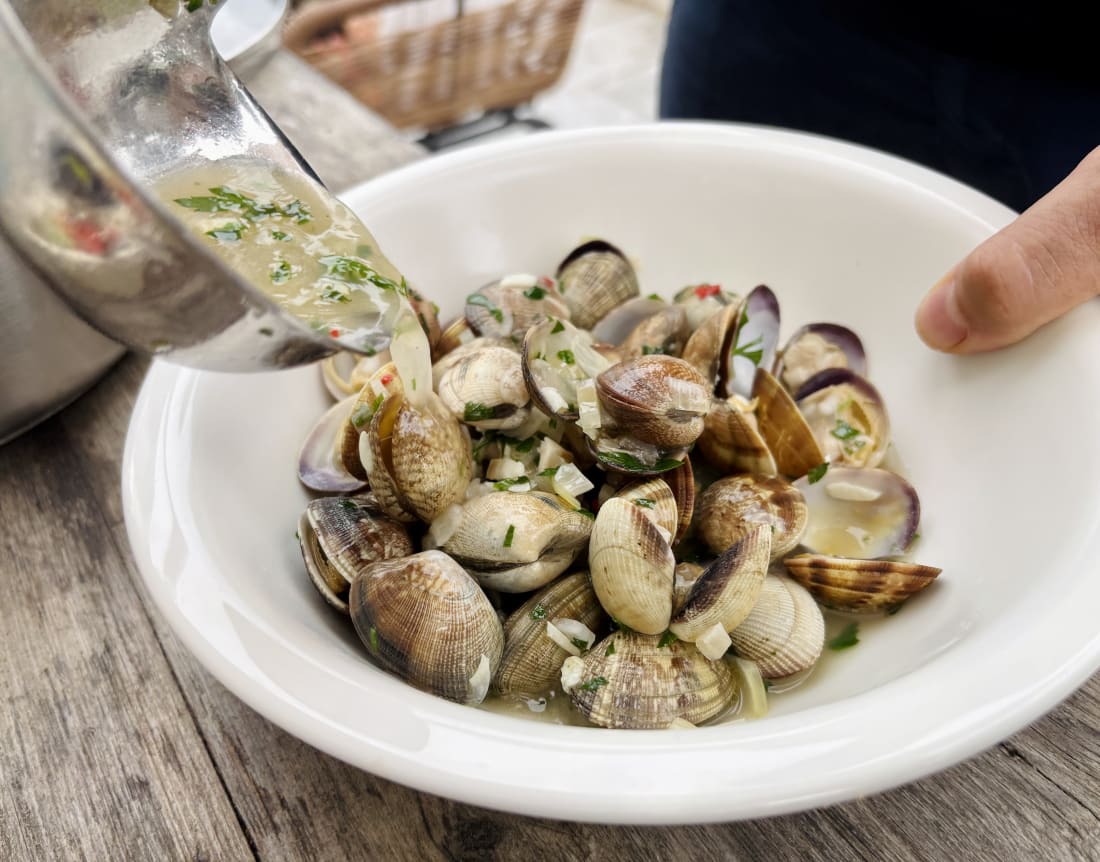
And when we got home, I cooked the palourdes (clams) that we I bought at the last minute, in white wine, butter, garlic, and some chopped, fresh cayenne pepper for lunch.
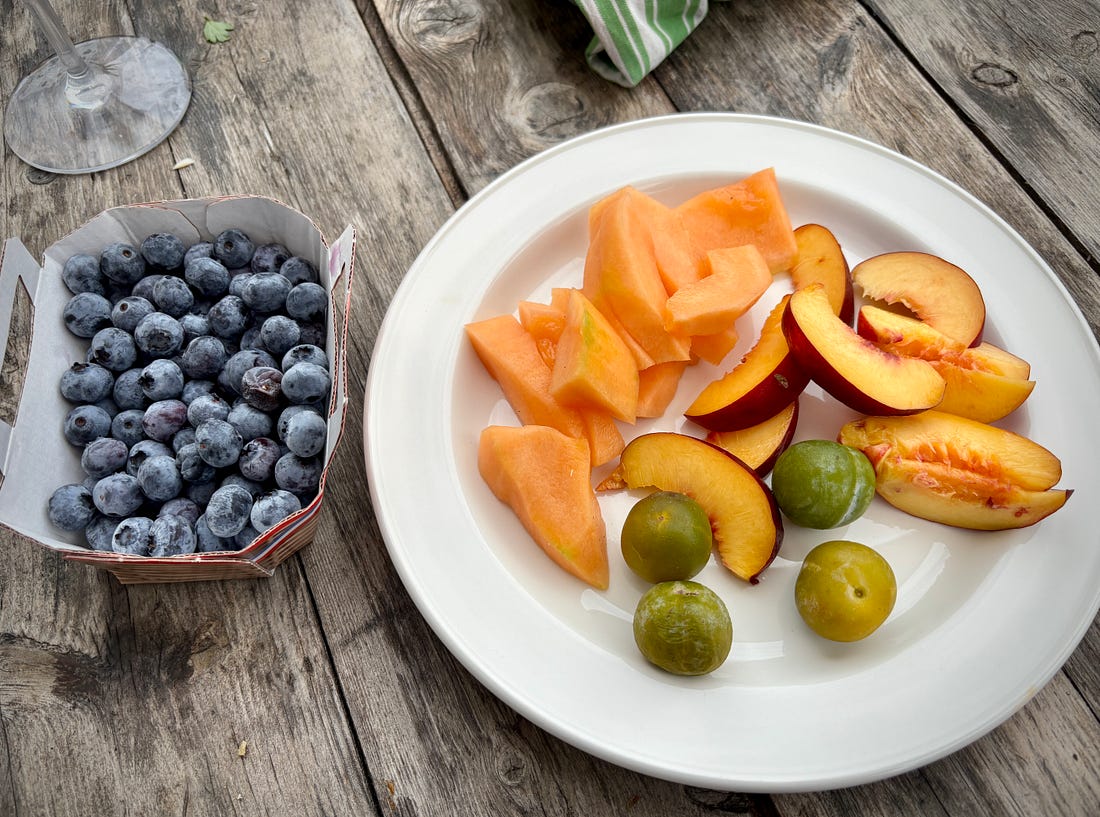
Dessert was fruit from the market: melon, blueberries, nectarines, and Reine Claude plums, which are dwindling down. The heat did a number on the fig trees in the region, so figs weren’t as abundant this year as they have been in the past. Most of the figs on the tree in the yard where we are staying were withered and dried out when we arrived, and the dirt around the tree was littered with sticky, icky figs that are fermenting on the ground.
We’re heading to Provence in a few days to spend the rest of our vacation there. Not that it was a big factor in deciding where we should stay, but our friends there have a fig tree that has the best figs I’ve ever had, and hopefully there will be plenty to gorge on when we get there. Fingers crossed!
Invite your friends and earn rewardsIf you enjoy David Lebovitz Newsletter, share it with your friends and earn rewards when they subscribe.
|
Monday, September 1, 2025
The Olonzac Market








Subscribe to:
Post Comments (Atom)
No comments:
Post a Comment