I've been confabbing with a friend from San Francisco, whose family is Hakka, from the south of Taiwan, to visit the country. And after a couple of years of talking about it, two friends of mine and I finally did it, and joined him there.
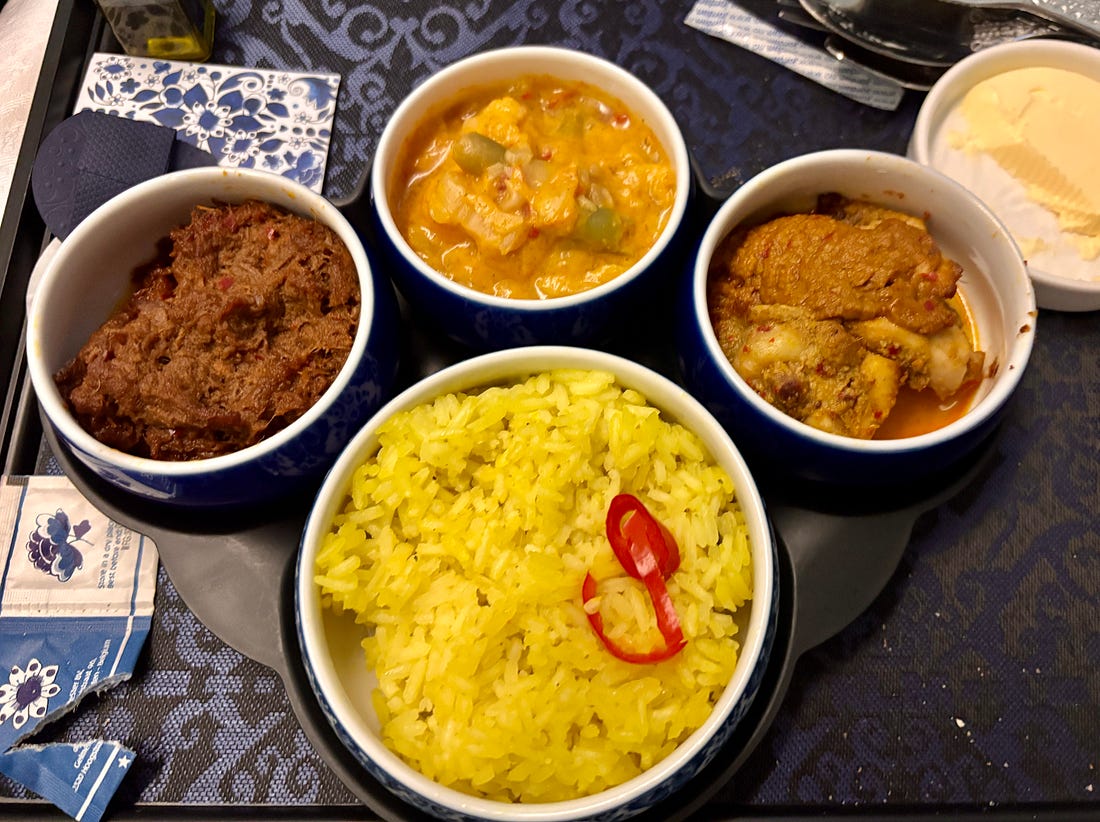
I had a bit of trepidation about the trip there since the itinerary was a bit complicated. Fortunately, though, I didn’t book on one of the flights that went through the Middle East, instead booking a KLM flight from Paris through Amsterdam, where there were only two of us going through immigration, and I made it through in record time, so making my connection was my first sense of relief. Then I flew from Amsterdam to Taipei which, speaking of “relief,” — we were told as we were taking off that three of the bathrooms on our plane, which was filled to capacity, were out of service. So I didn’t drink much on the plane and arrived rather parched, to put it mildly. Shout-out to the flight attendants on KLM who were super lovely and very friendly. I watched two very good movies, Rental Family and Bugonia, which was wild, and had a good meal of what I think was Indonesian food. My arrival in Taipei was pretty easy as well; unlike the airport in Paris, there are tons of bathrooms at the Taipei airport — you didn't have to hike twenty minutes and take two flights of stairs to find one. After hydrating myself back to normal, I took a train from the airport in Taipei to the high-speed train station, then another train to Kaohsiung. I arrived at my hotel about 23 hours after I left home. I rehydrated some more, then went to bed, relieved that I had made it.
I don’t know much (or anything, really) about Taiwan or Hakka food, except that in San Francisco, I frequently ate at a Hakka restaurant, which was legendary — except I just read that it closed. But our friend is from this part of Taiwan and told me that because the Hakka were displaced, their food was on the simpler side. And because at one point the Japanese had colonized Taiwan, there remains a moderate Japanese influence. The next day, I went to a funeral.
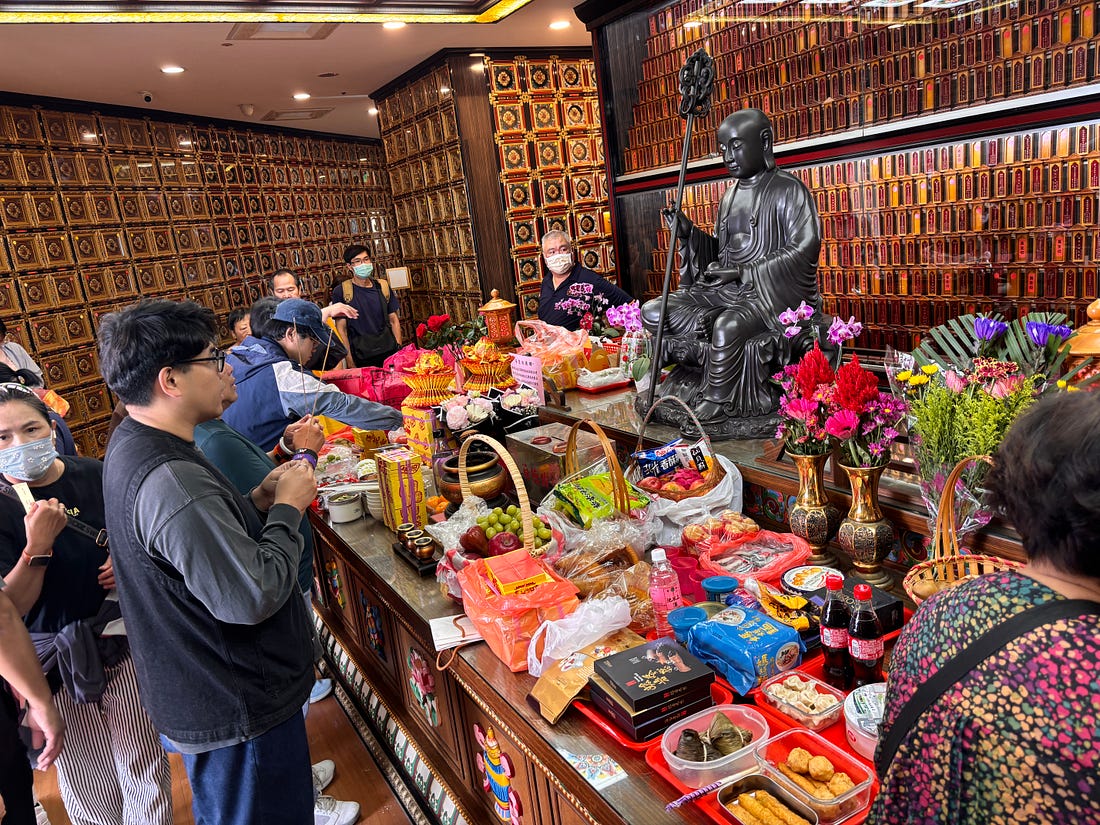
It wasn’t actually a funeral but “Tomb Sweeping Day,” when people visit cemeteries and columbariums to clean the tombstones of those who have passed. The columbarium that we visited was packed with friends and families bringing offerings of food. It was touching to be invited and to see how people celebrate and honor their ancestors. Afterward, of course, there was food. (And don’t worry, all that food that’s brought for offerings gets taken home and eaten. I was also wondering about that…)
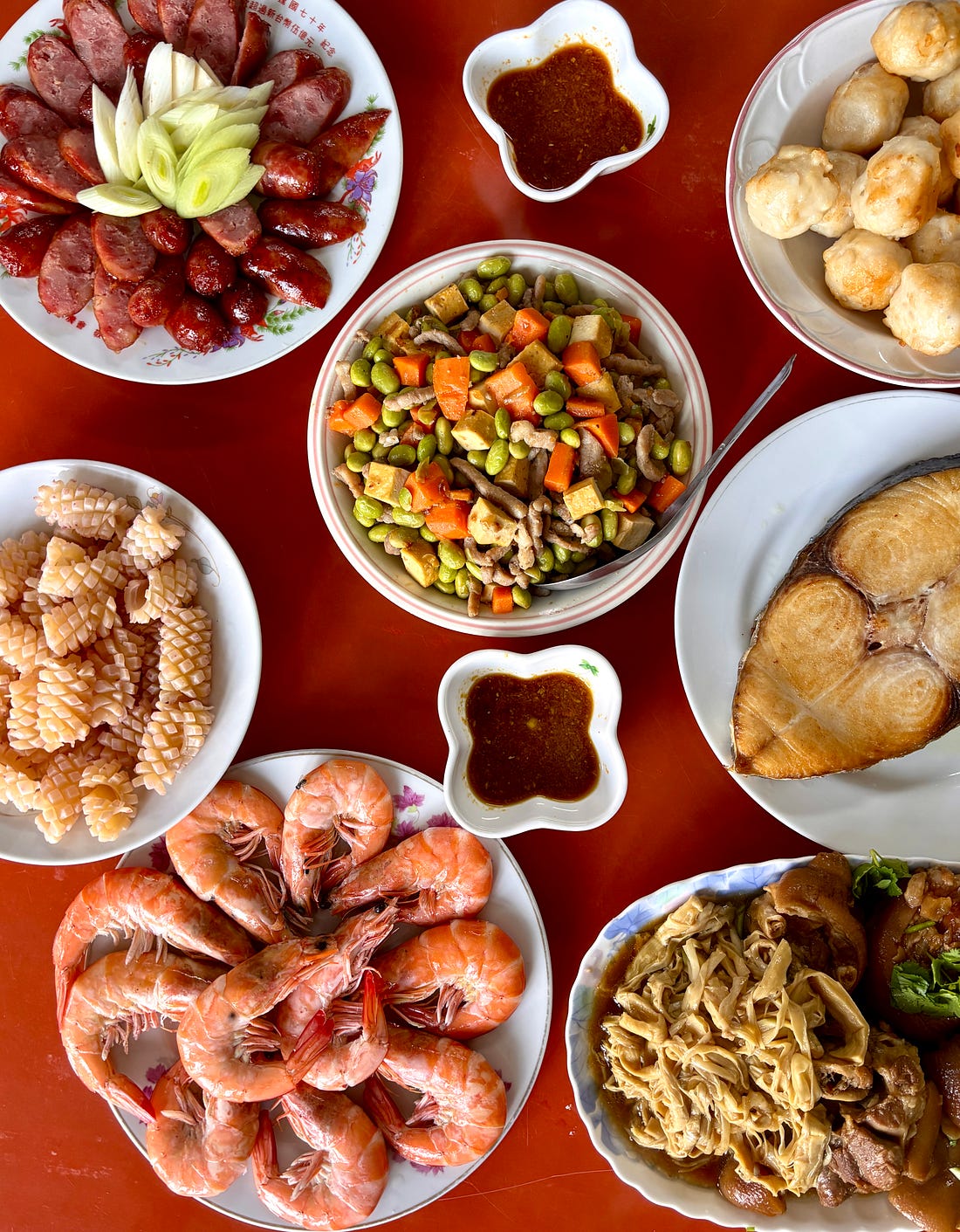
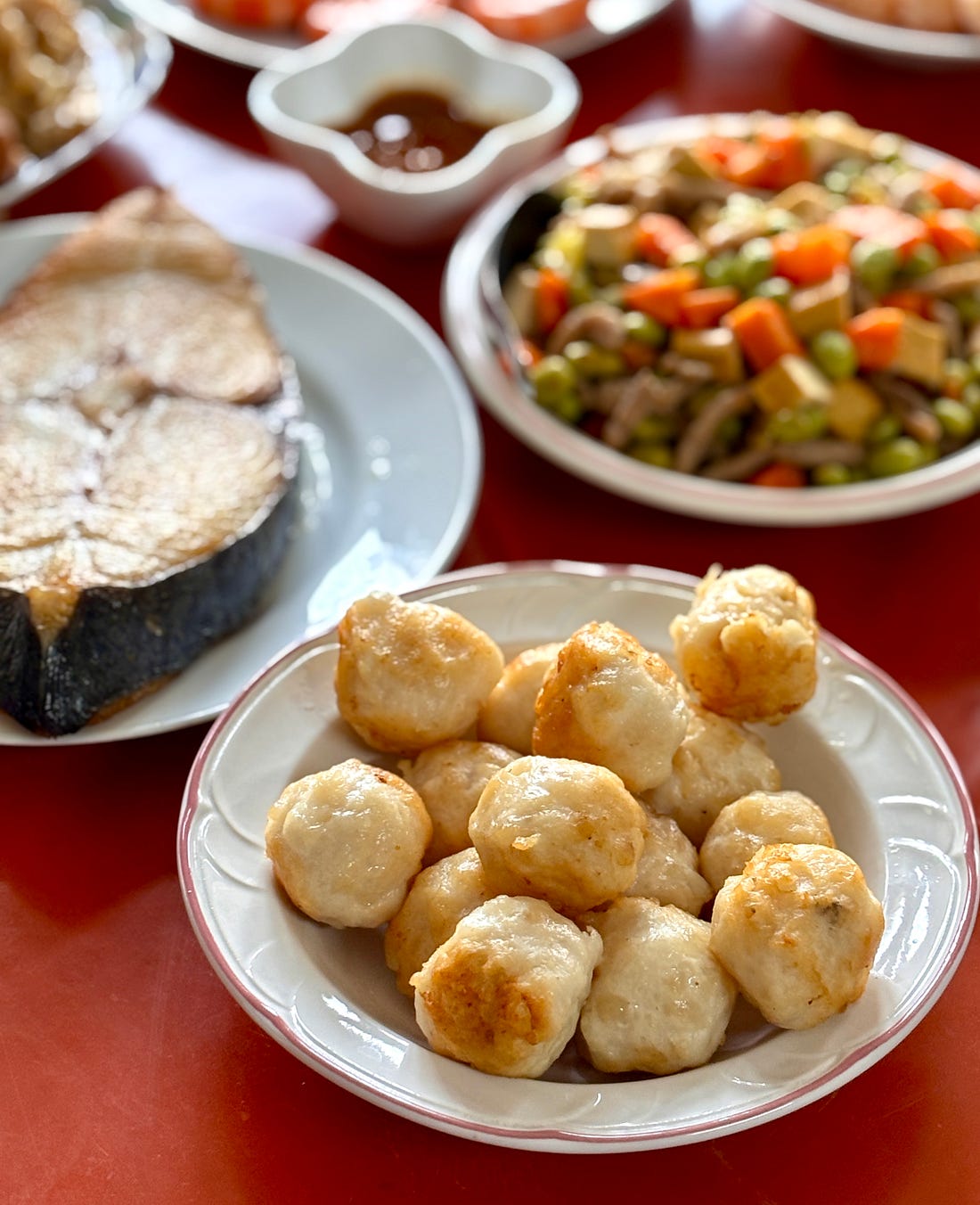
My friend’s cousin made lunch for us back at her house. And what a meal it was! There were probably ten or twelve dishes, put together in their humble kitchen, but with great finesse. We had heaping bowls of fish cakes, and then a cascade of other platters and plates arrived. Braised pork trotters, Taiwanese sausages with fragrant and flavorful garlic greens piled in the middle, fresh shrimp and cuttlefish in the back — and my friend Cal showed me a locally grown star fruit. They are usually green, hard, and unripe, and this ripened one was a treat. 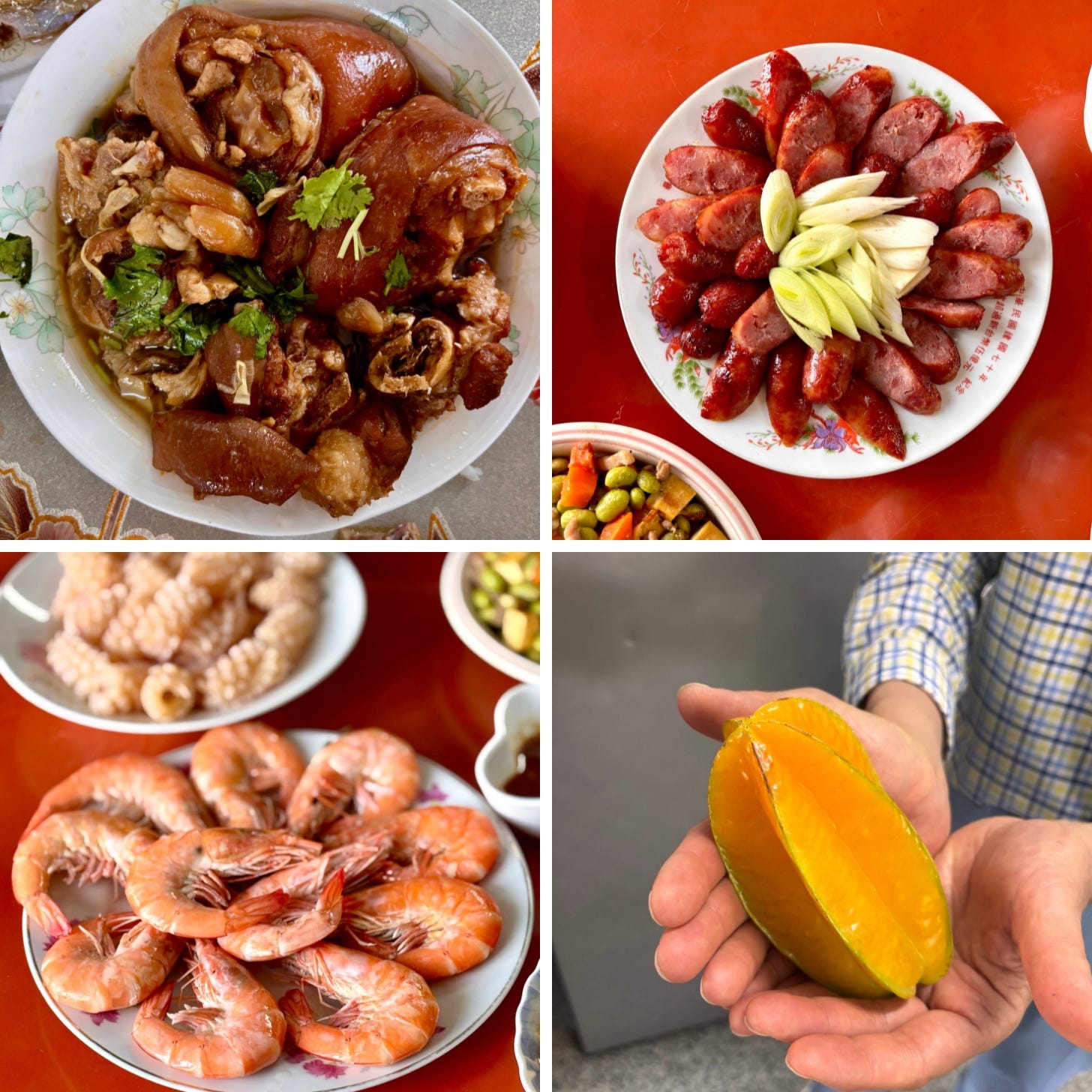 We finished the meal with an alluring soup…
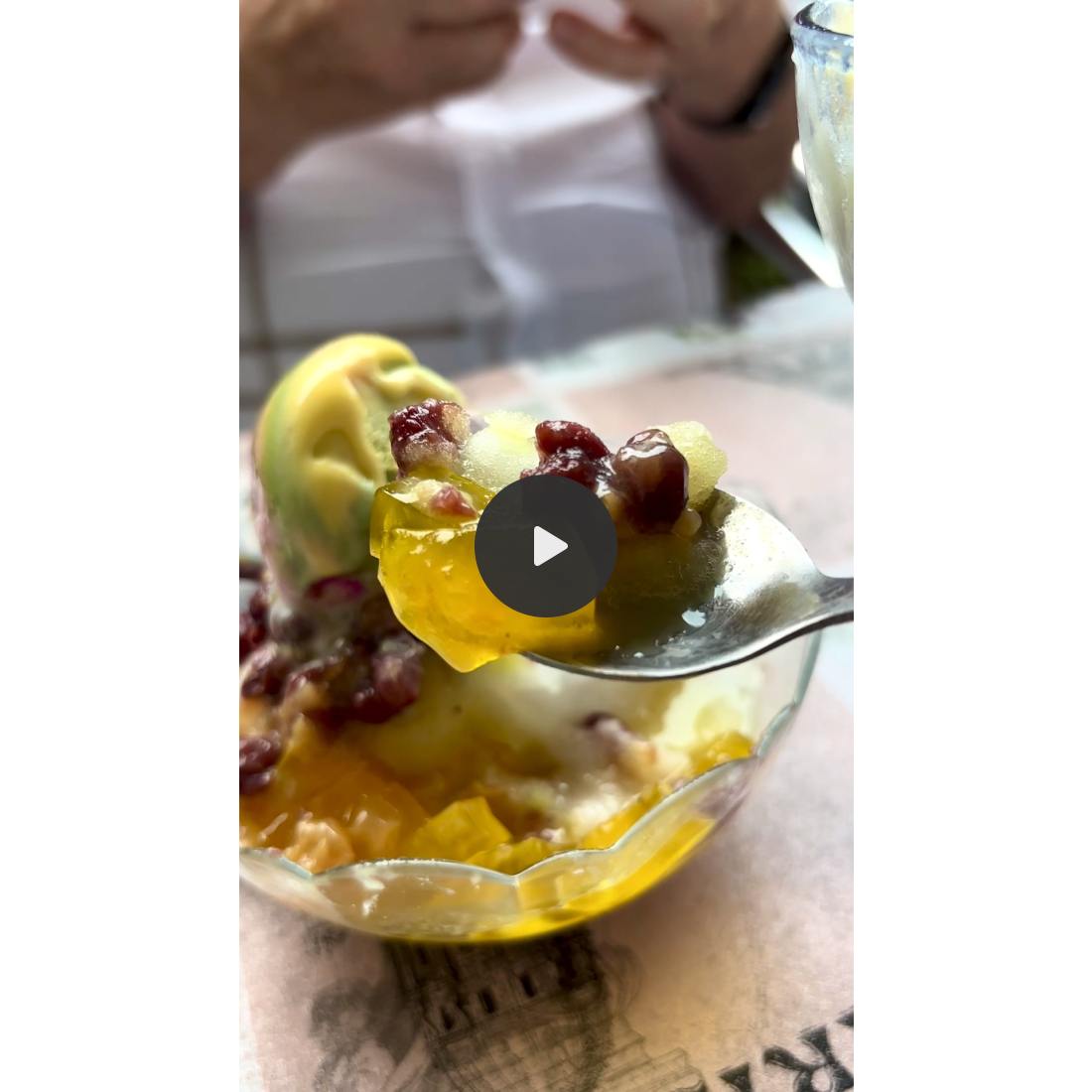
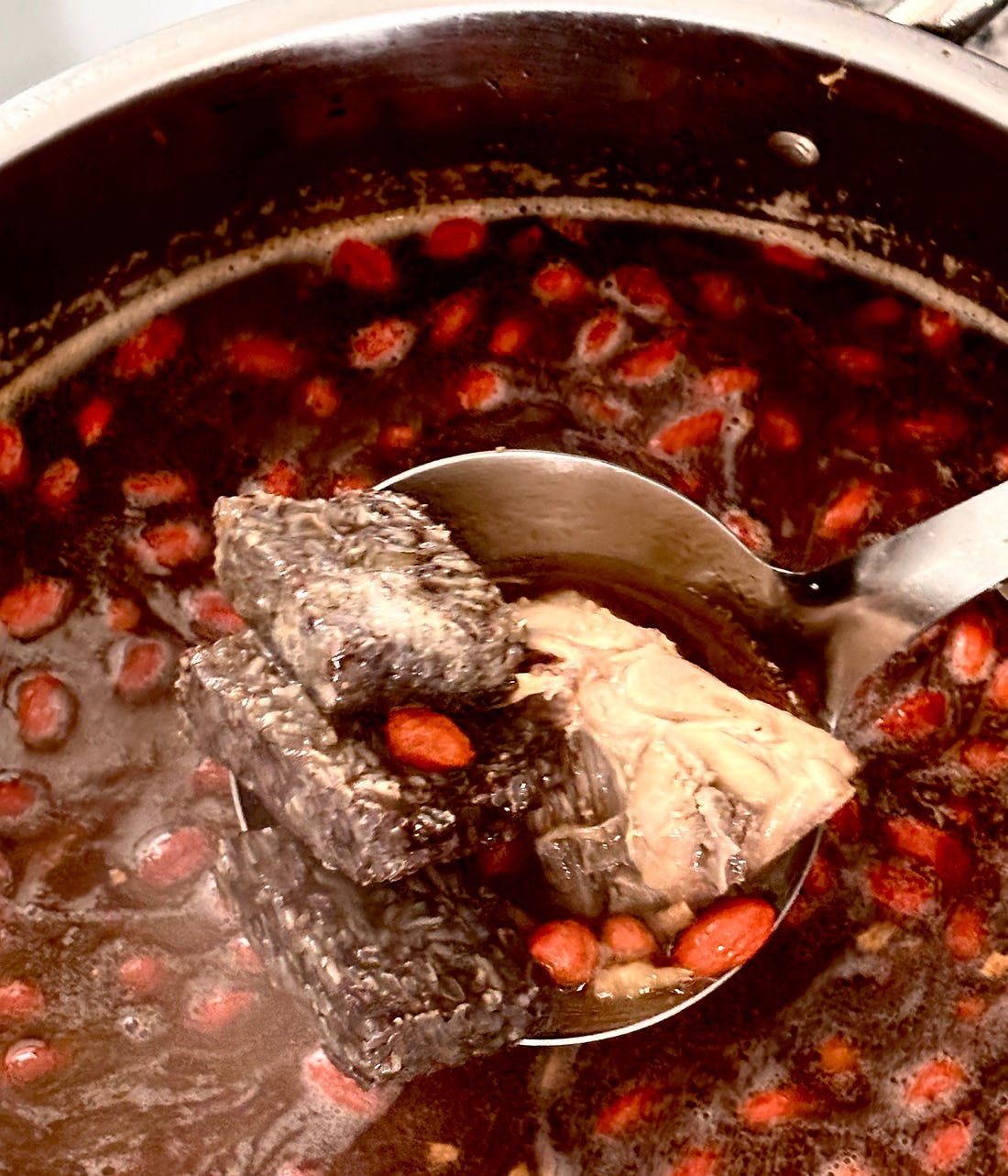
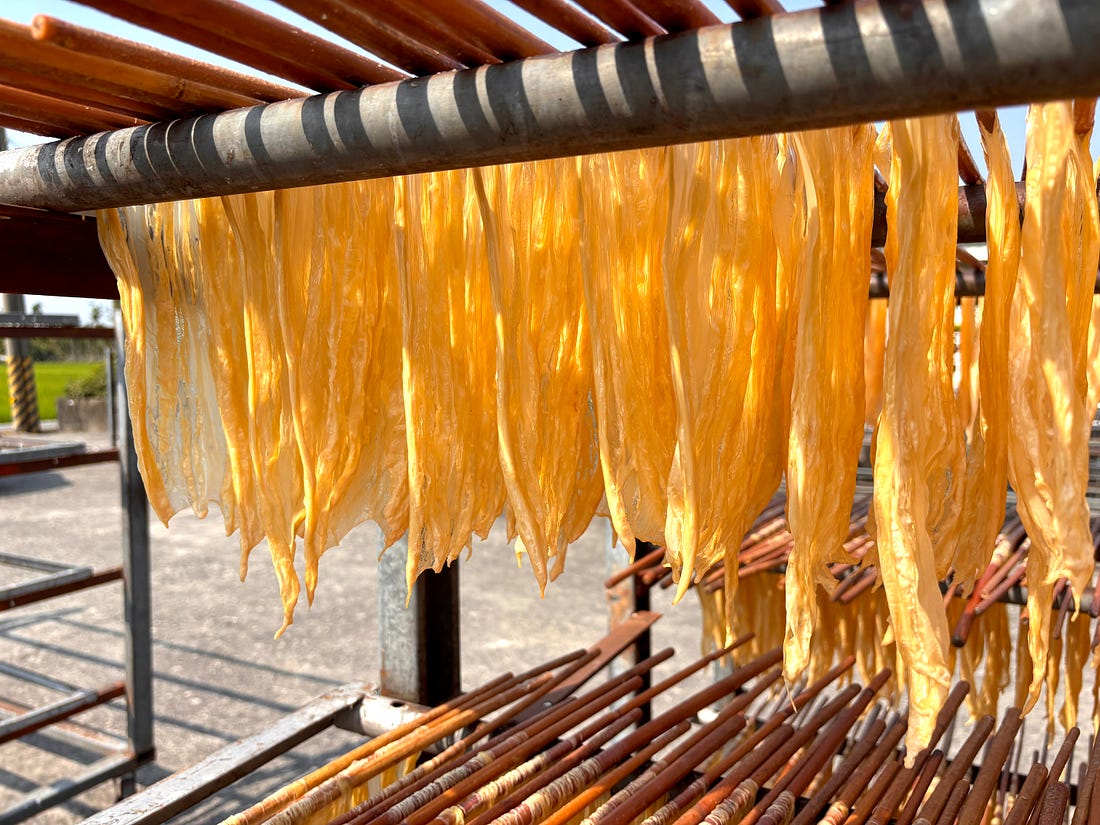
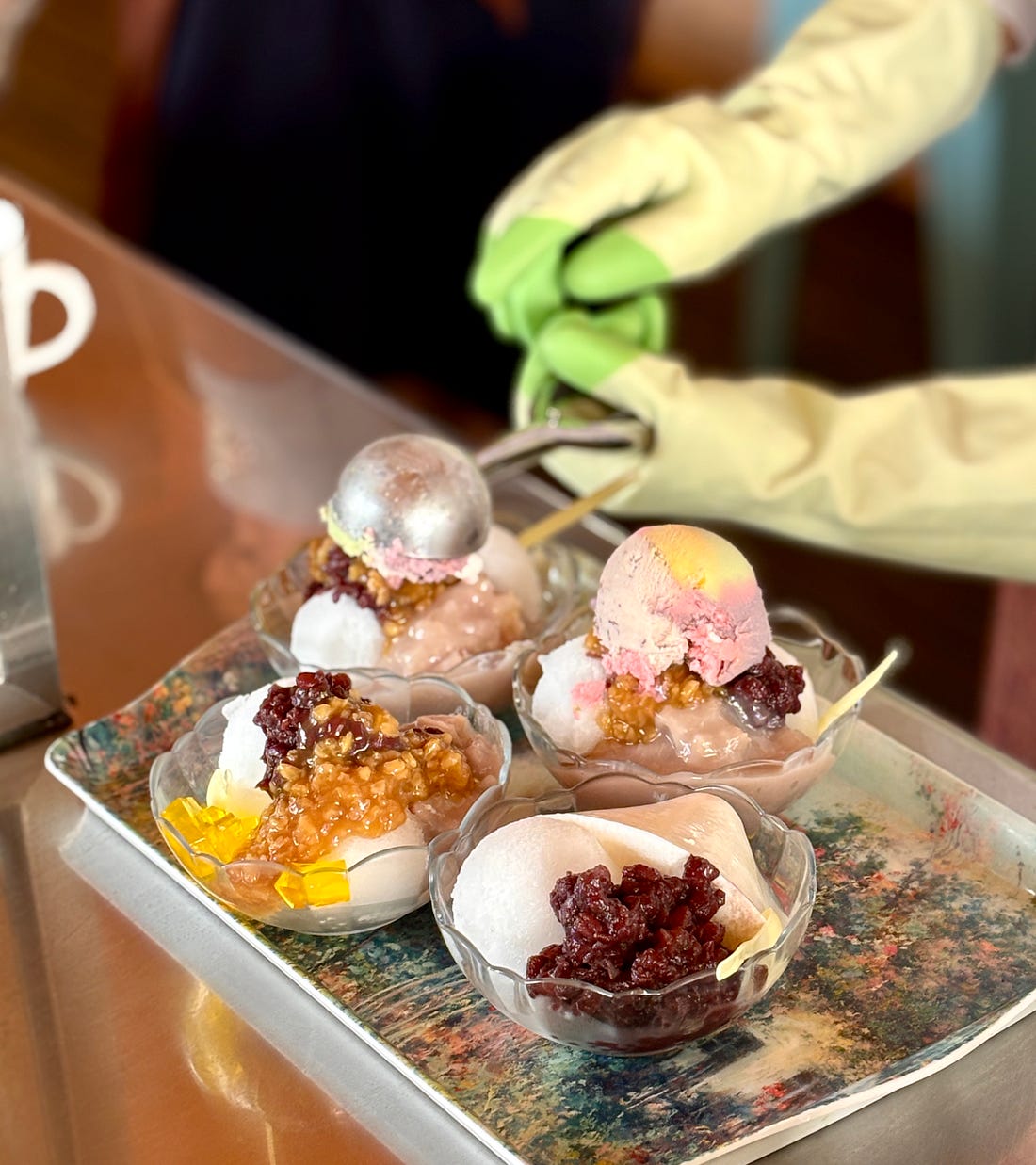
…served from a big pot with cubes of blood-rice sausage and pieces of locally raised chicken (which was “sacrificed” that morning on the farm), spiked with a lot of millet “wine” — which was actually millet eau-de-vie, at 40% (or more) alcohol. It was so strong that my friends and I had a little trouble finishing a whole bowl, but the elders in the room didn’t have any trouble. Desserts aren’t usually served after Hakka meals, but that didn’t stop us from heading over to the local shaved ice shop. 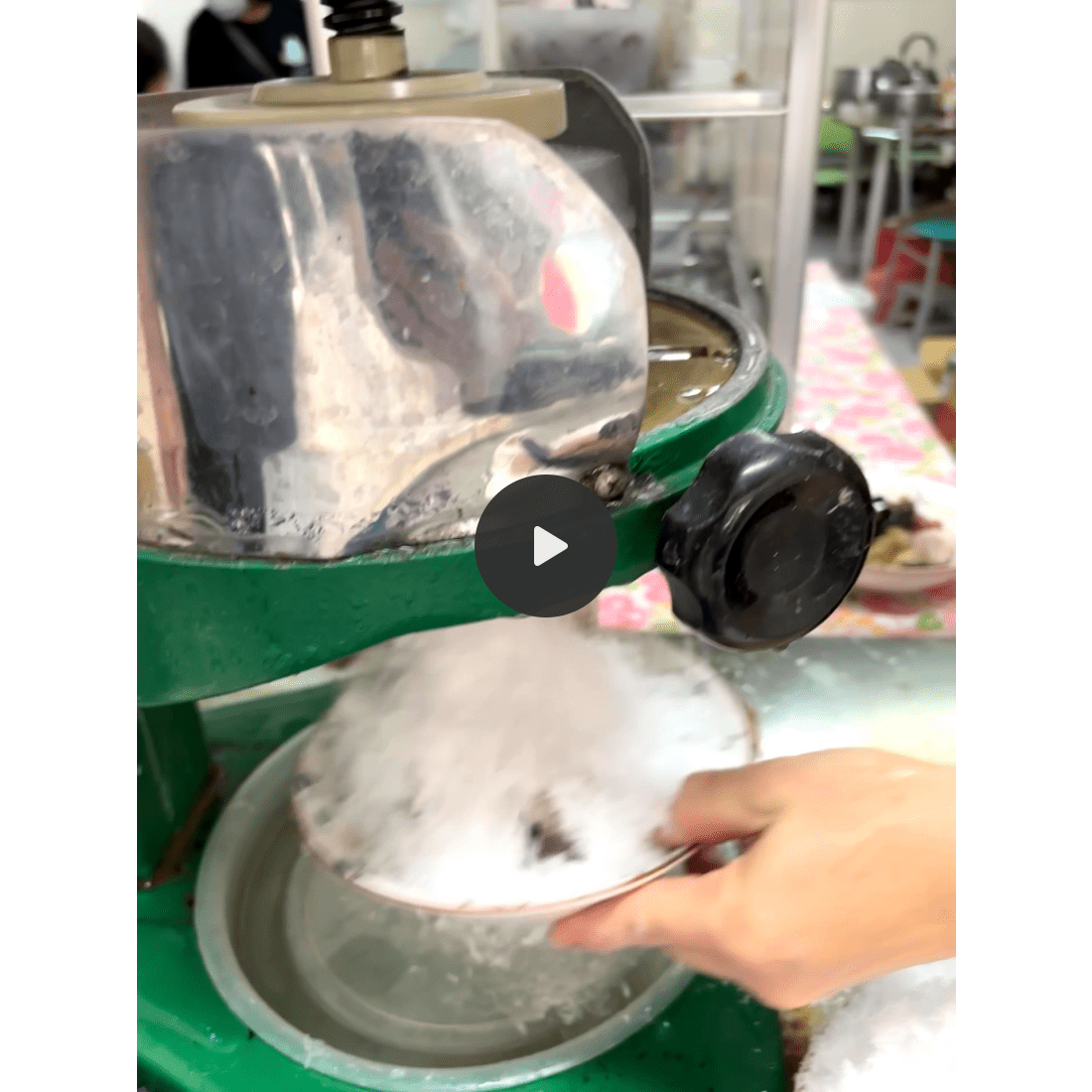 I fell hard for my bowl of shaved ice, which had layers of candied red and mung beans, as well as chunks of starchy taro root and grass jelly under a layer of snowy, airy wisps of ice. 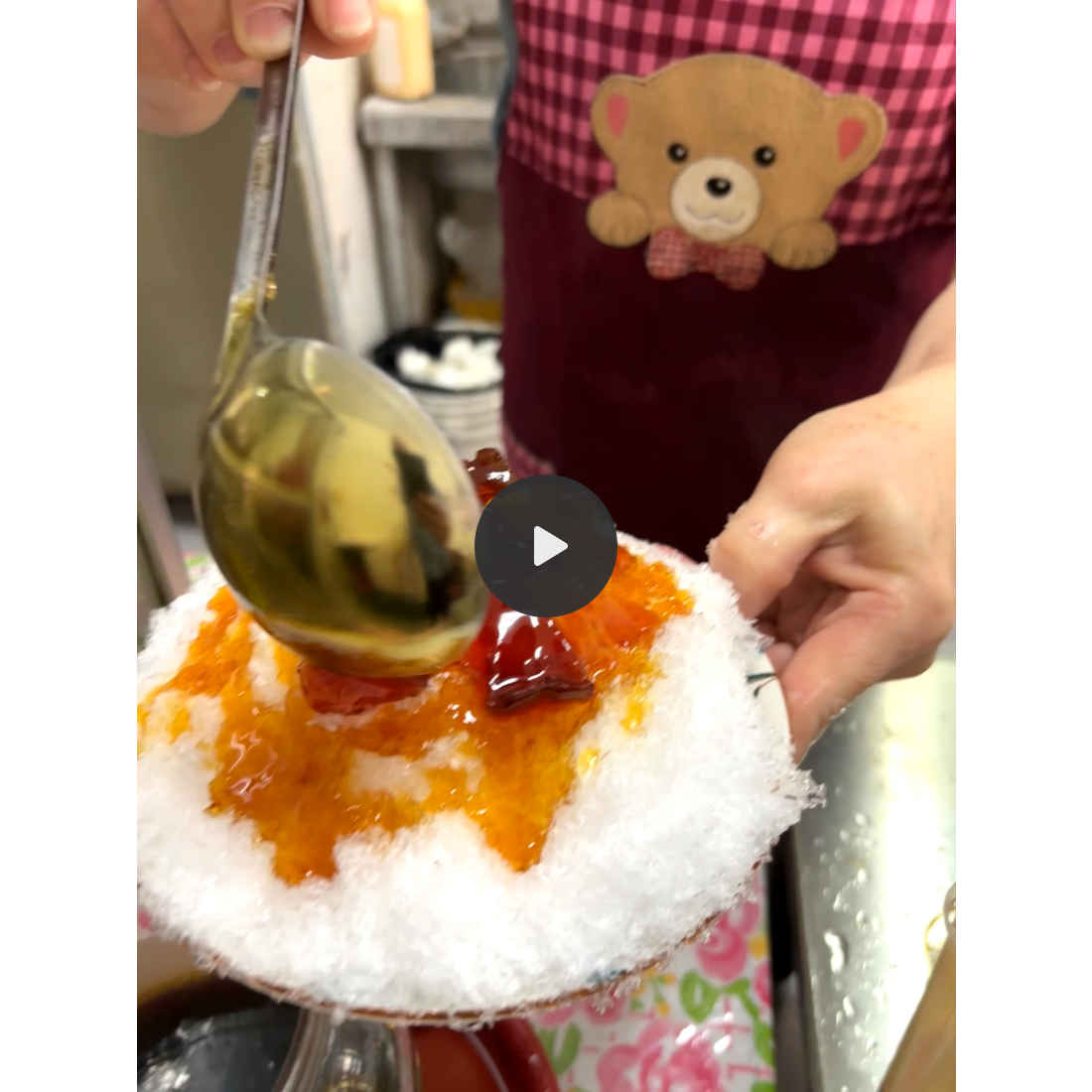 My absolute favorite part of the 剉冰 were the chunks of candied winter melon the owner spooned on top, with a drizzle of raw cane sugar syrup. The dessert was barely sweet and completely refreshing. We'd ordered three bowls to share amongst the five of us, but our Taiwanese friends didn't want to share, and each ended up ordering their own — and finished them, as did I. Well fed, and (finally) well-hydrated (no thanks to that soup!), the next day we visited a rice noodle factory where the layers of rice batter were rolled out by machines, then cut. 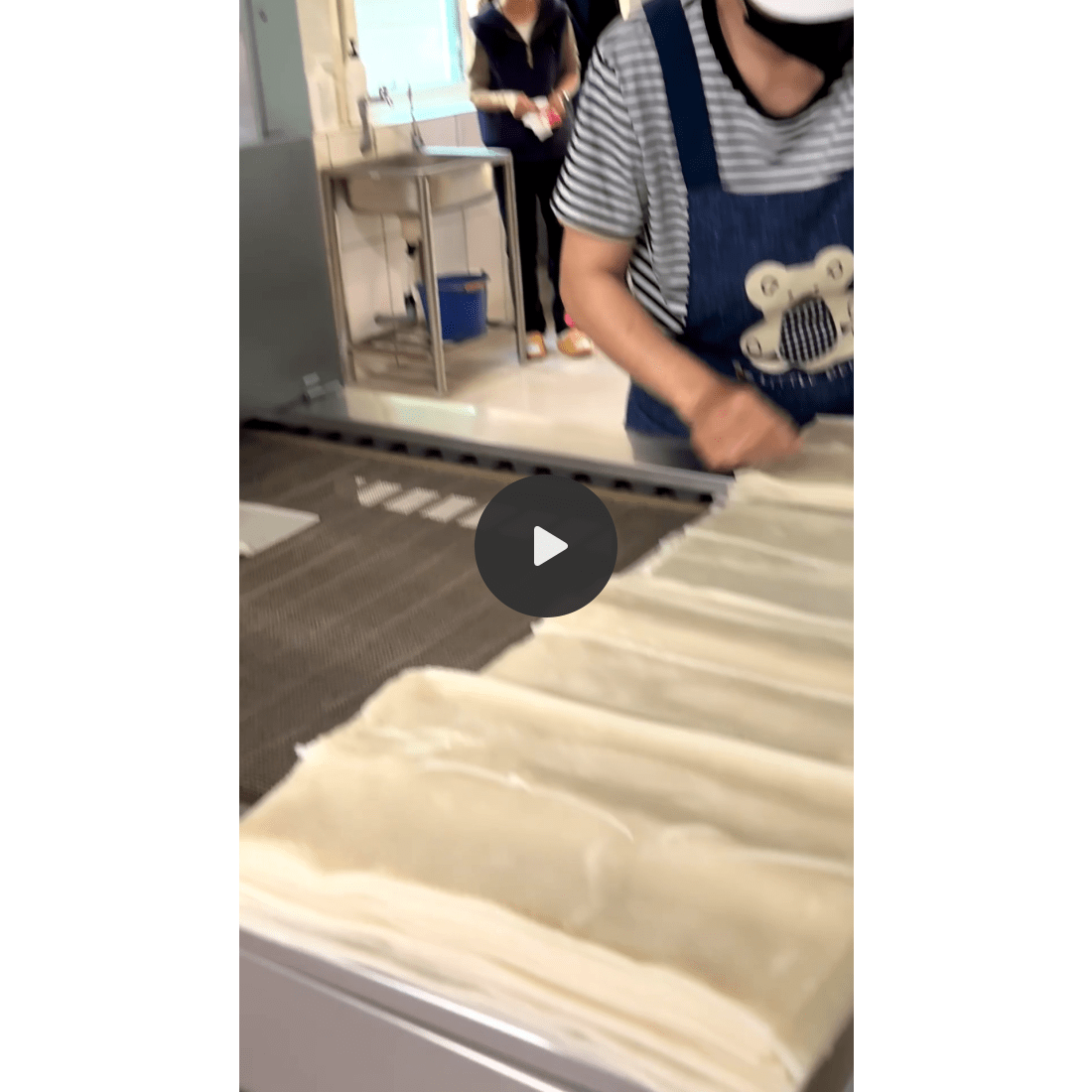 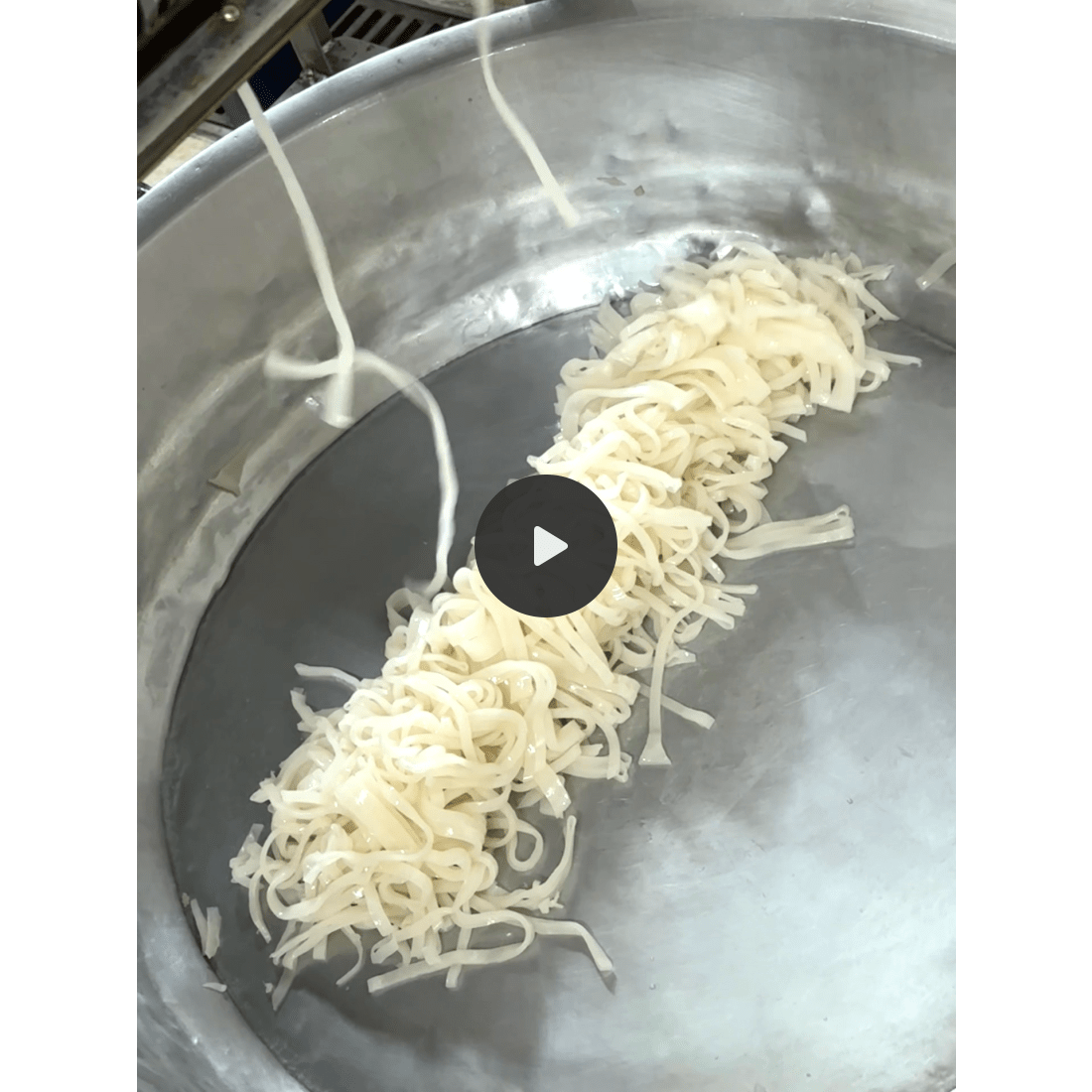 My absolute favorite part of the 剉冰 were the chunks of candied winter melon the owner spooned on top, with a drizzle of raw cane sugar syrup. The dessert was barely sweet and completely refreshing. We'd ordered three bowls to share amongst the five of us, but our Taiwanese friends didn't want to share, and each ended up ordering their own — and finished them, as did I. 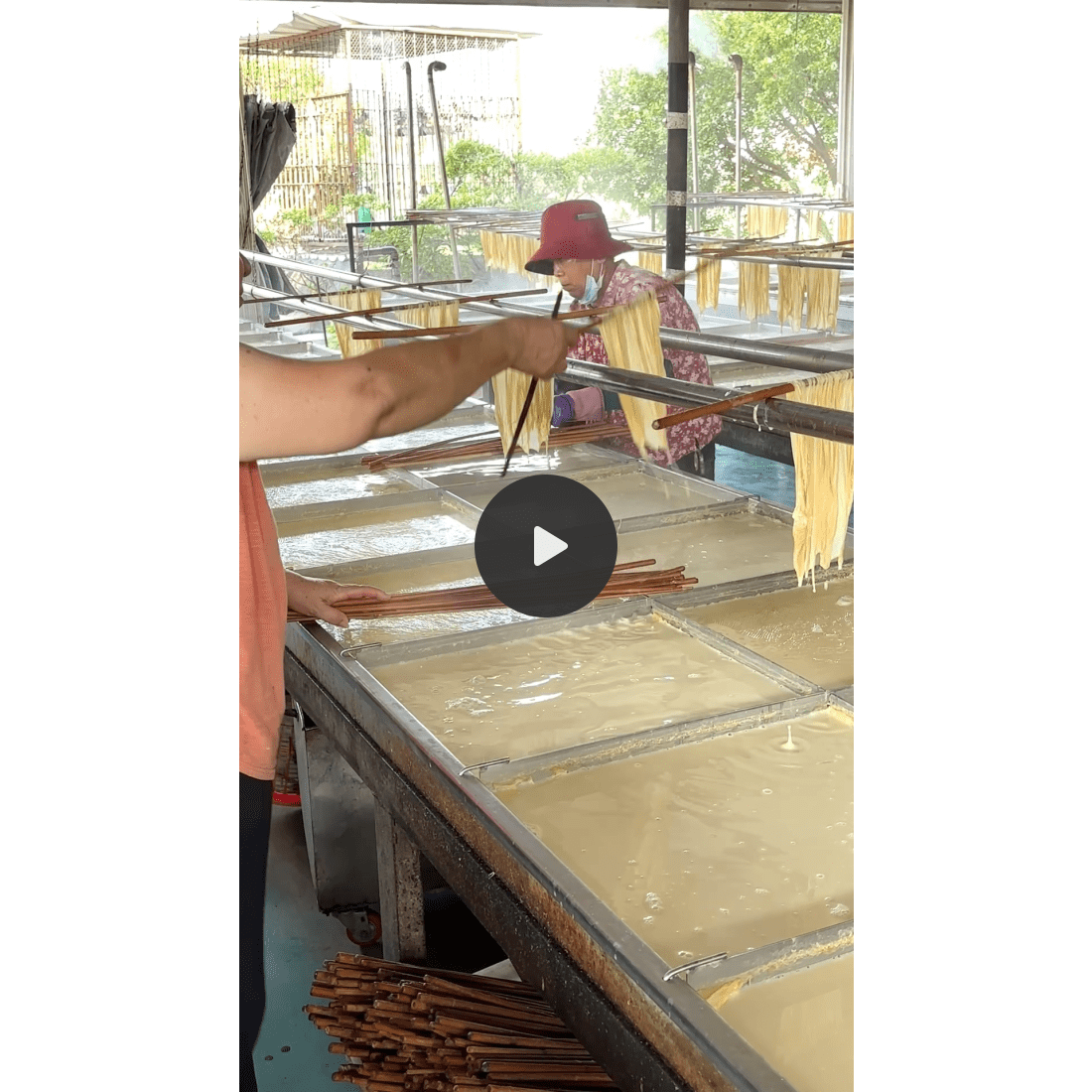 Then the skins are left to dry out in the sun until crisp. Even though they're dried, their shelf life is short — just a few weeks — so I didn't bring any home. But the tofu skins from this particular place are very sought after.
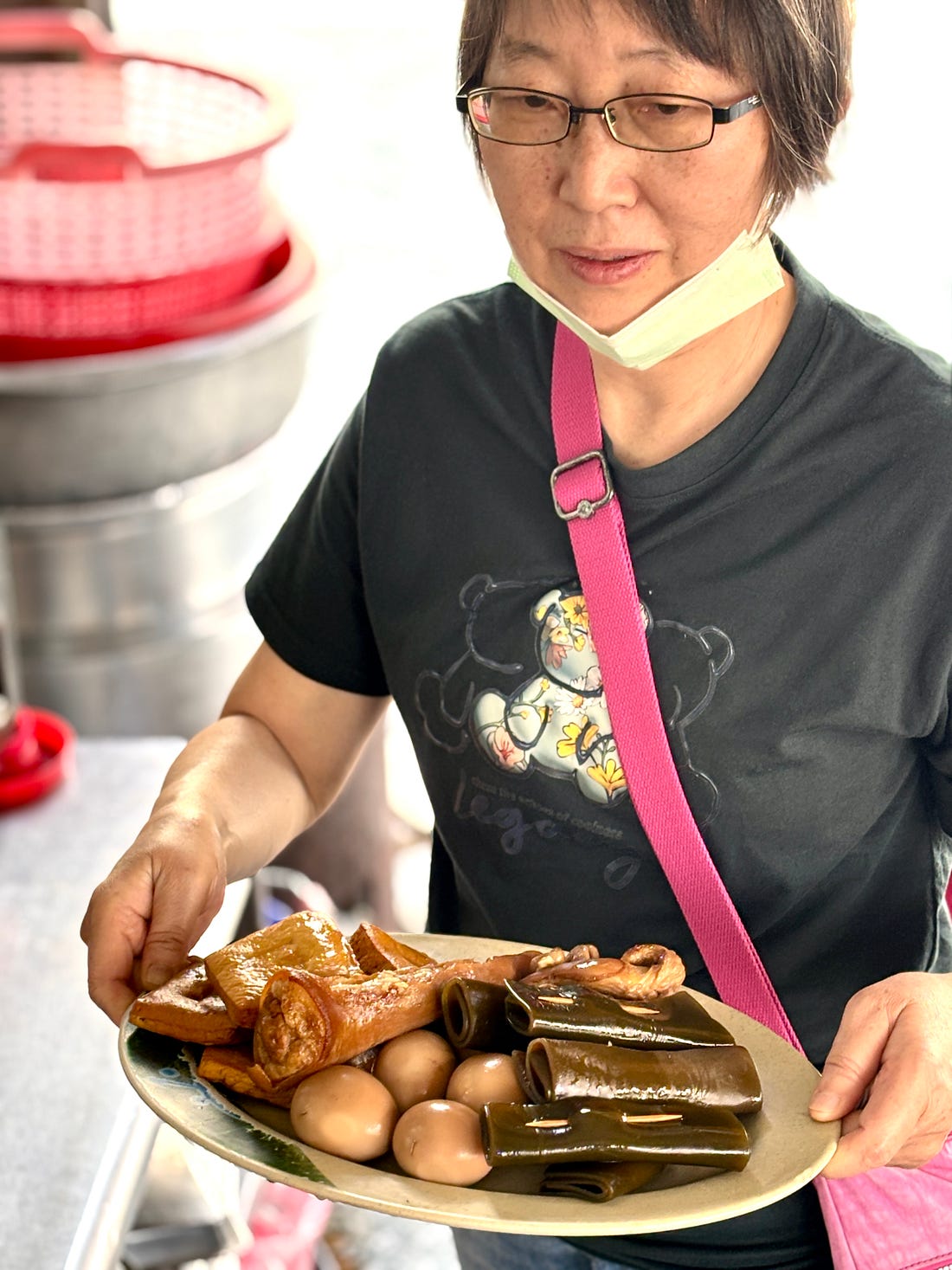
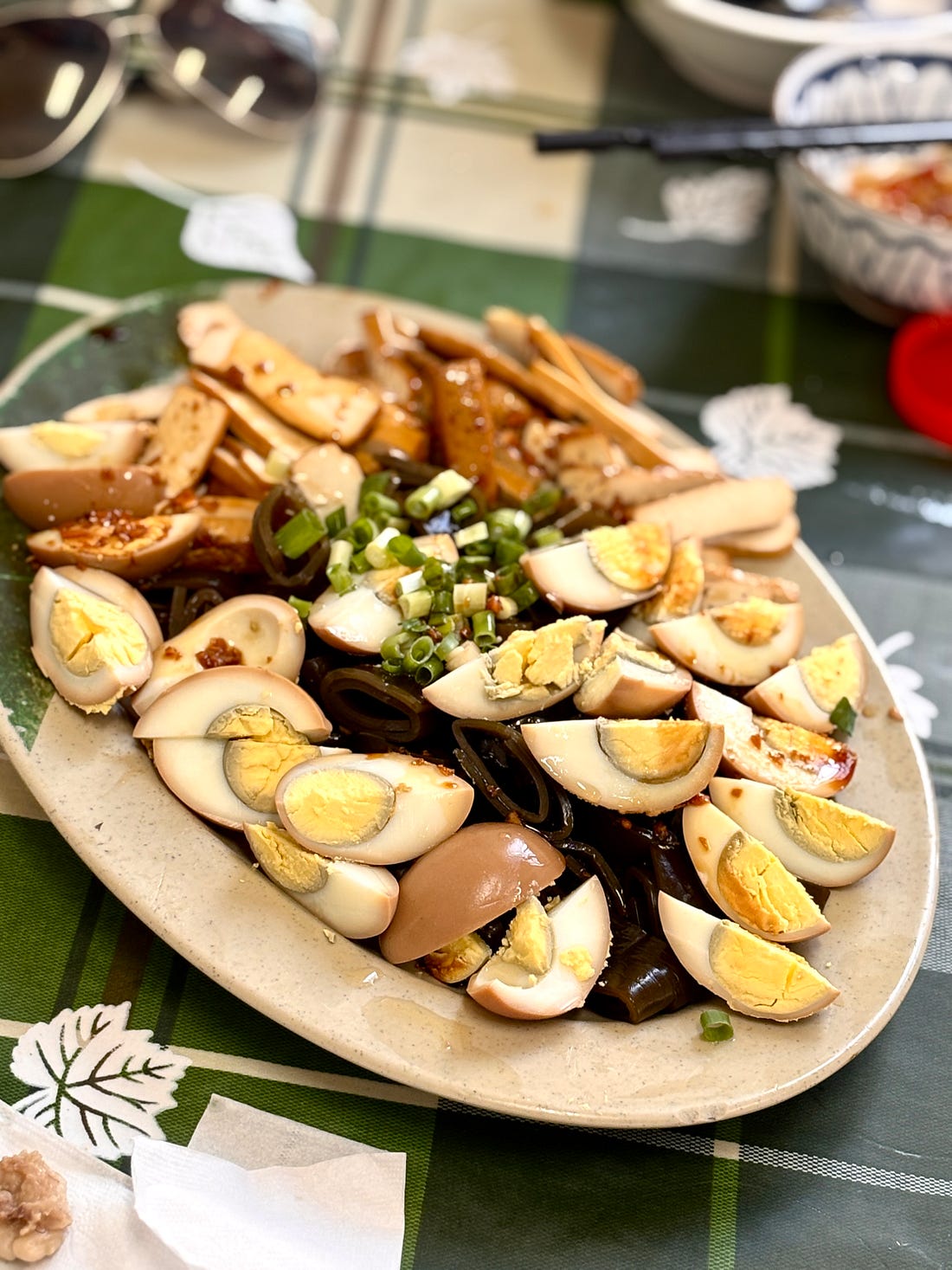
I asked if I could give it a try, after a bit of reassurance that I was a baker (so they'd know I wouldn't completely screw up their whole production) — and I got a little lesson: 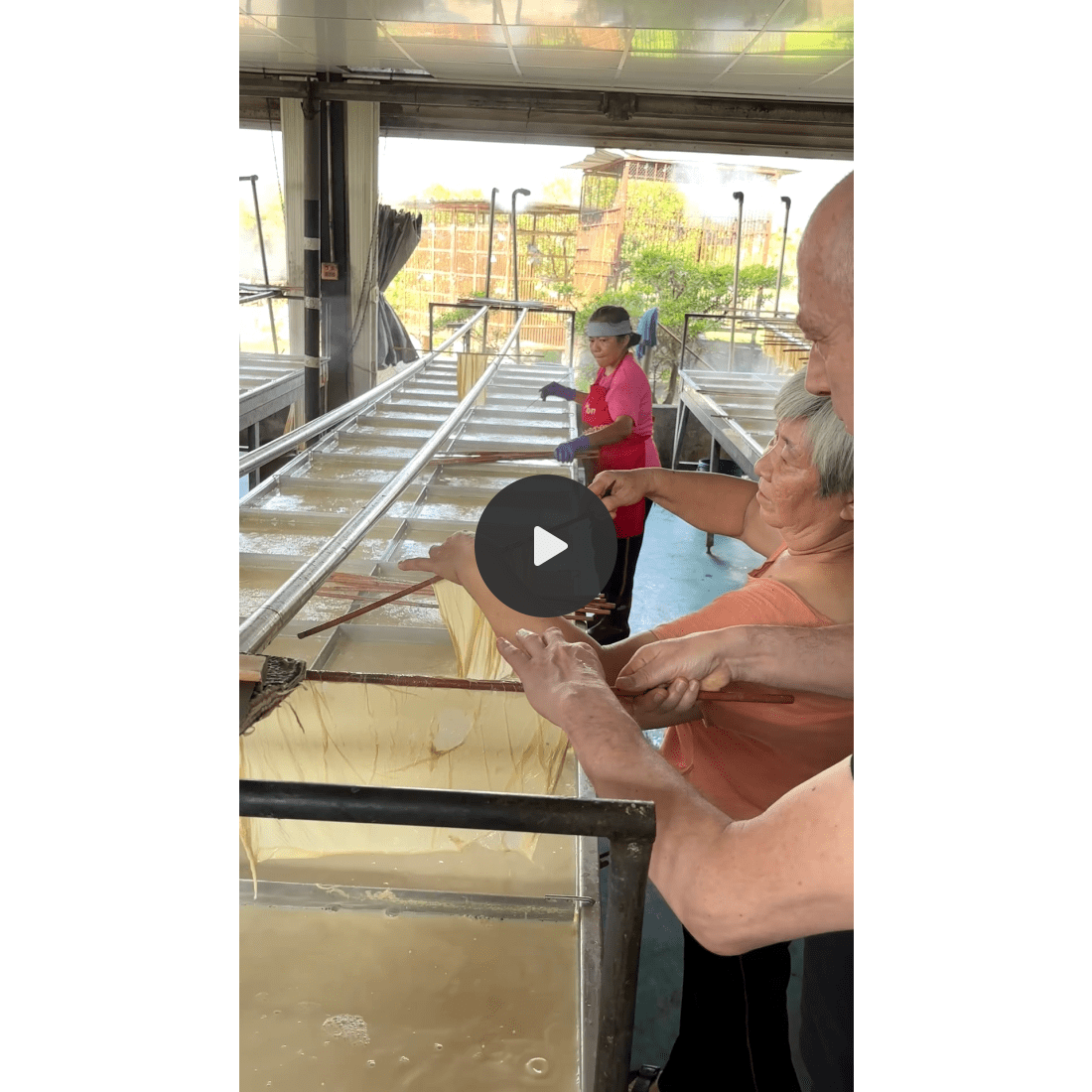 It took me a few tries to get the hang of it. I was pleating them starting from the wrong end, and the woman who was showing me how to do it told me I needed to speed things up. 😂 I'm sure if I'd spent a little more time with them, which I would have been happy to do, I would have gotten faster and better at it. Watching rice noodles and tofu skins being made made me hungry for noodles. Fortunately, that was our next stop. Tofu skins can be cooked and eaten like noodles, presoaked and tossed in stir-fries, or used to wrap dumplings. They're one of my favorite things, and when I was in Osaka, we ate at a restaurant that specialized in yuba, or tofu skins. 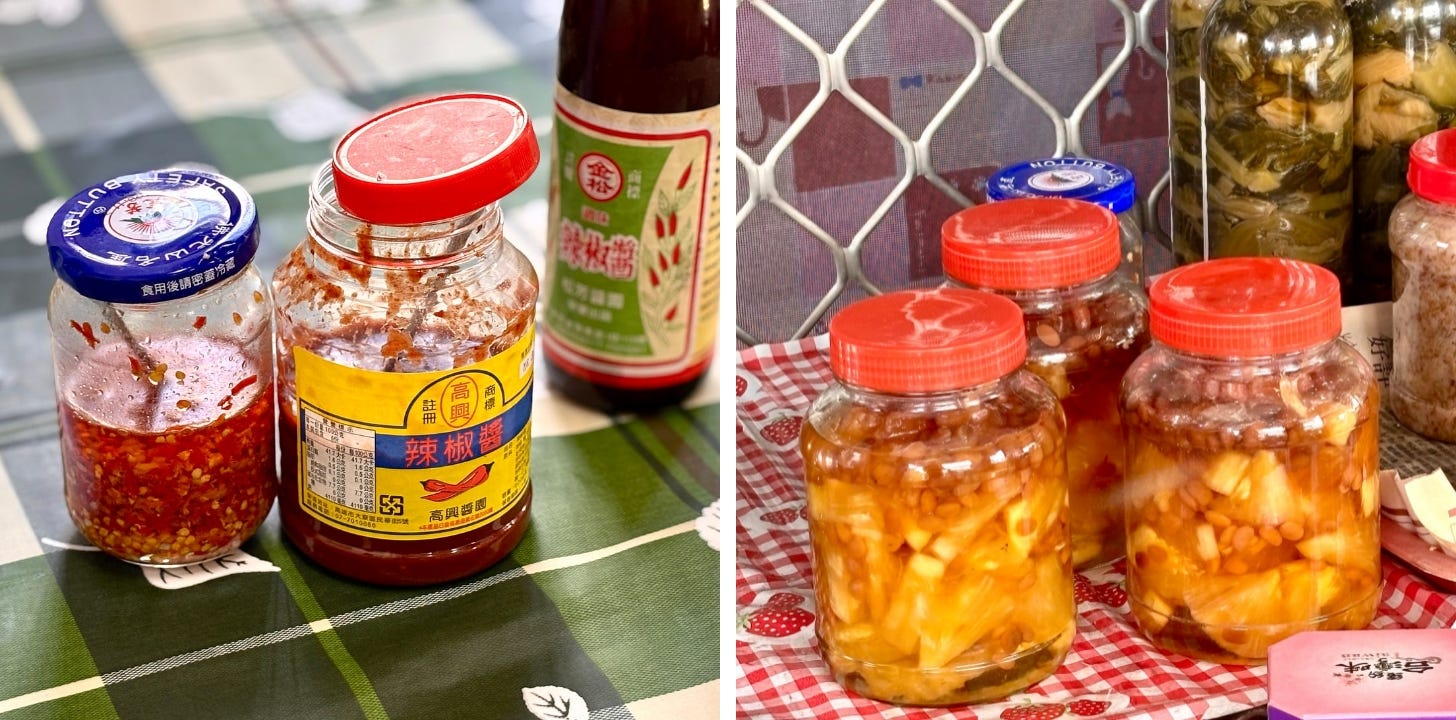 At the noodle shop, there was a platter of pig’s trotters, braised eggs, pressed tofu, kombu (seaweed), and some spicy condiments on the table, including jars of fermented pineapple.
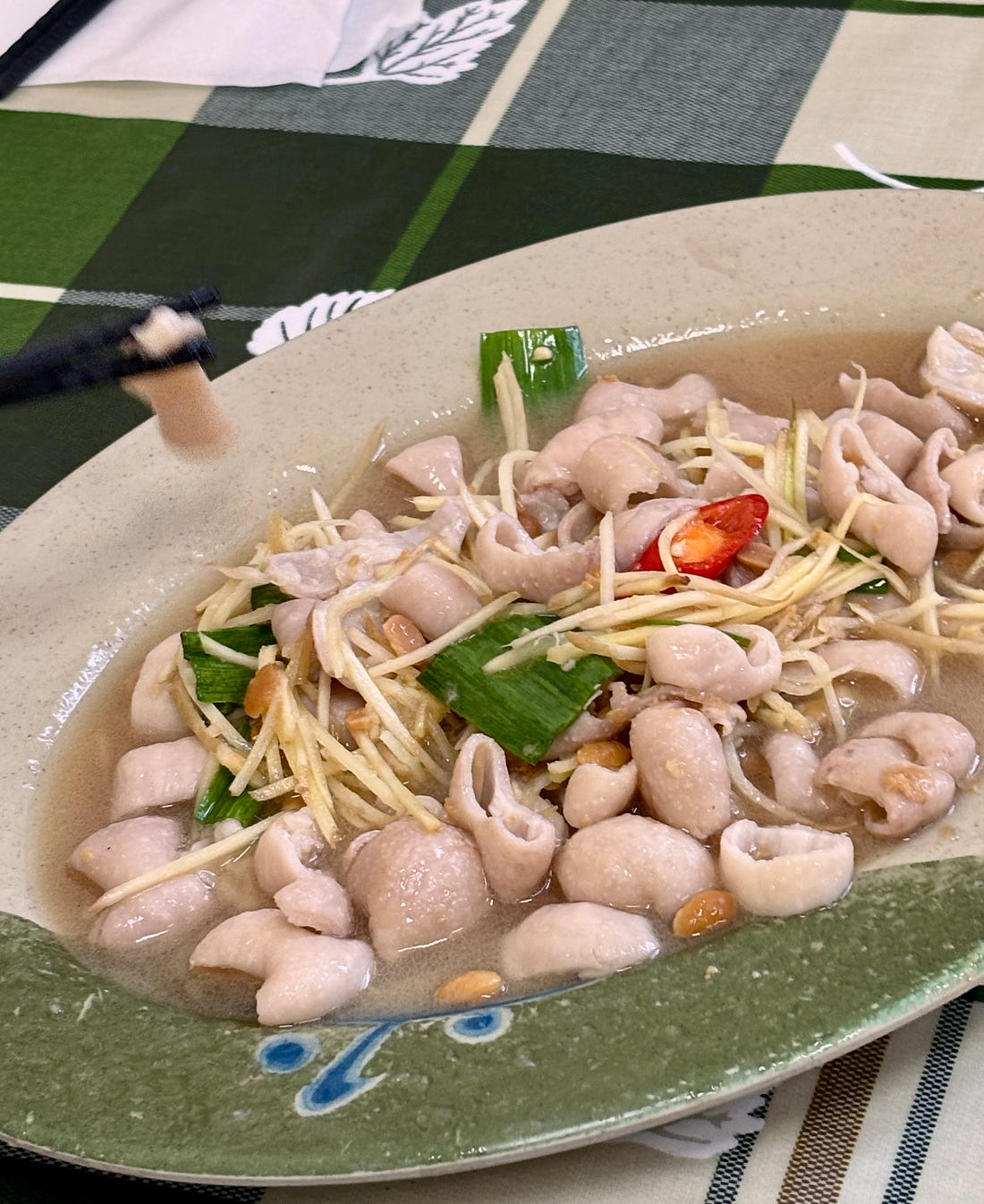
Before the noodles, out came a platter of pork intestines covered with slivered fresh ginger. The intestines were a little chewy, but the copious amount of ginger was a welcome treat.
Once all the accompaniments were sliced and presented to our table, I was ready for noodles.
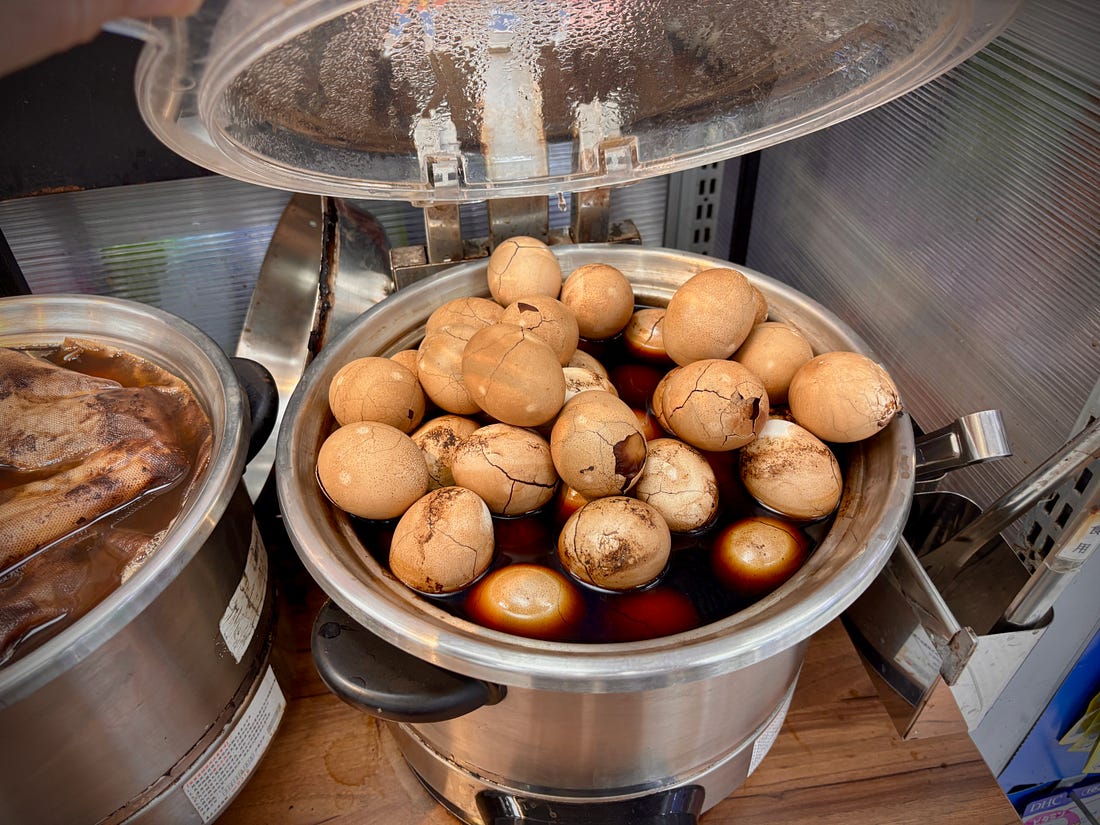
I'm sure some of you may be hovering over the "Leave a comment" button regarding the greenish outer yolks of the braised eggs, but there's a pot of them in every convenience store, bubbling away for who-knows-how-long, and they go fast. So it doesn't seem to bother anybody, including me, since they're pretty tasty.
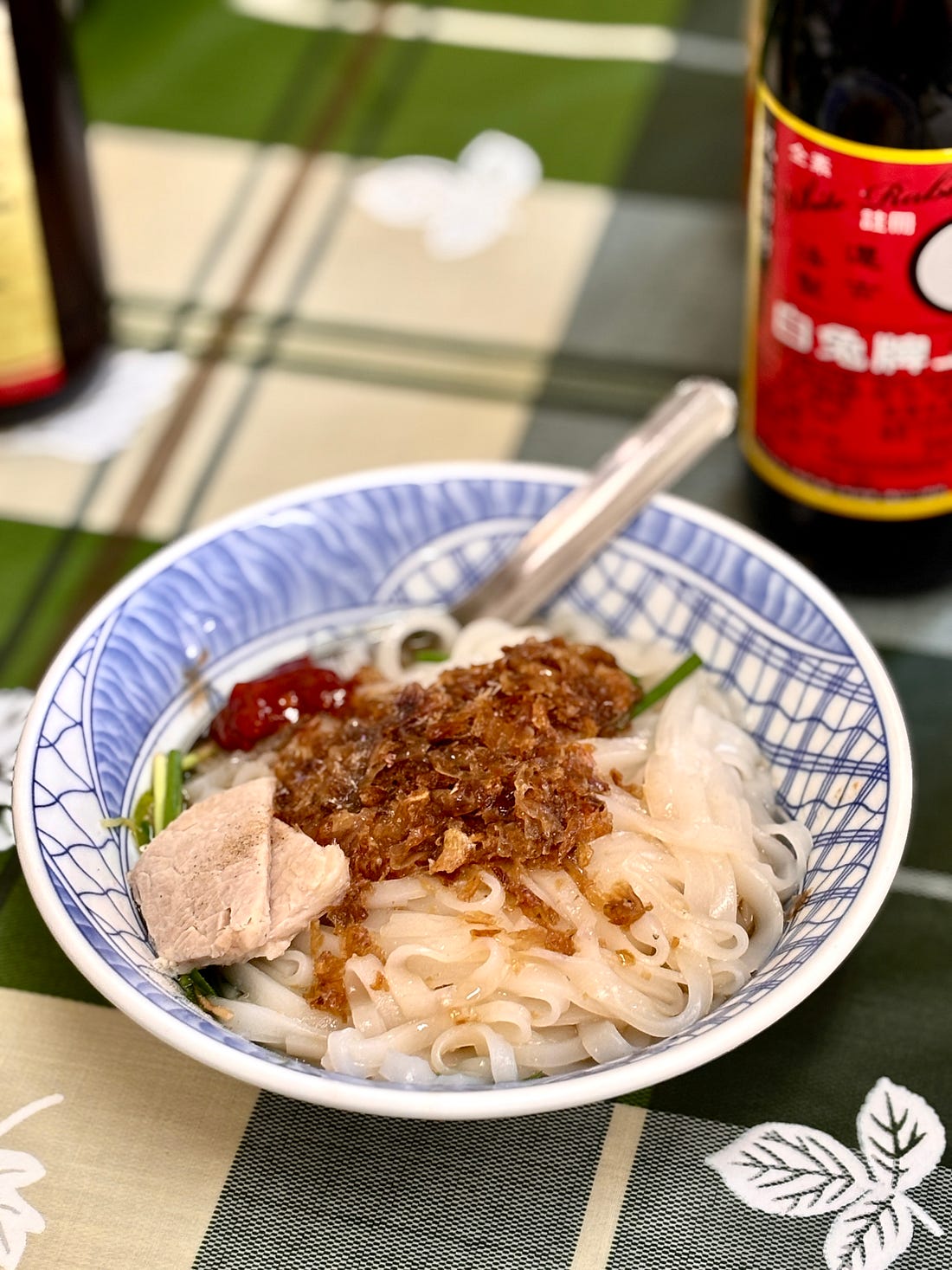
Then, out came the individual bowls of fresh rice noodles for us, which were topped with caramelized shallots — a popular condiment here — and then you add other condiments such as black vinegar, miso-based soy paste, and chili pastes. (I have this miso soy paste at home, which my Taiwanese-American friend sitting next to me on the train right now, tells me is thicker than what we had here.)
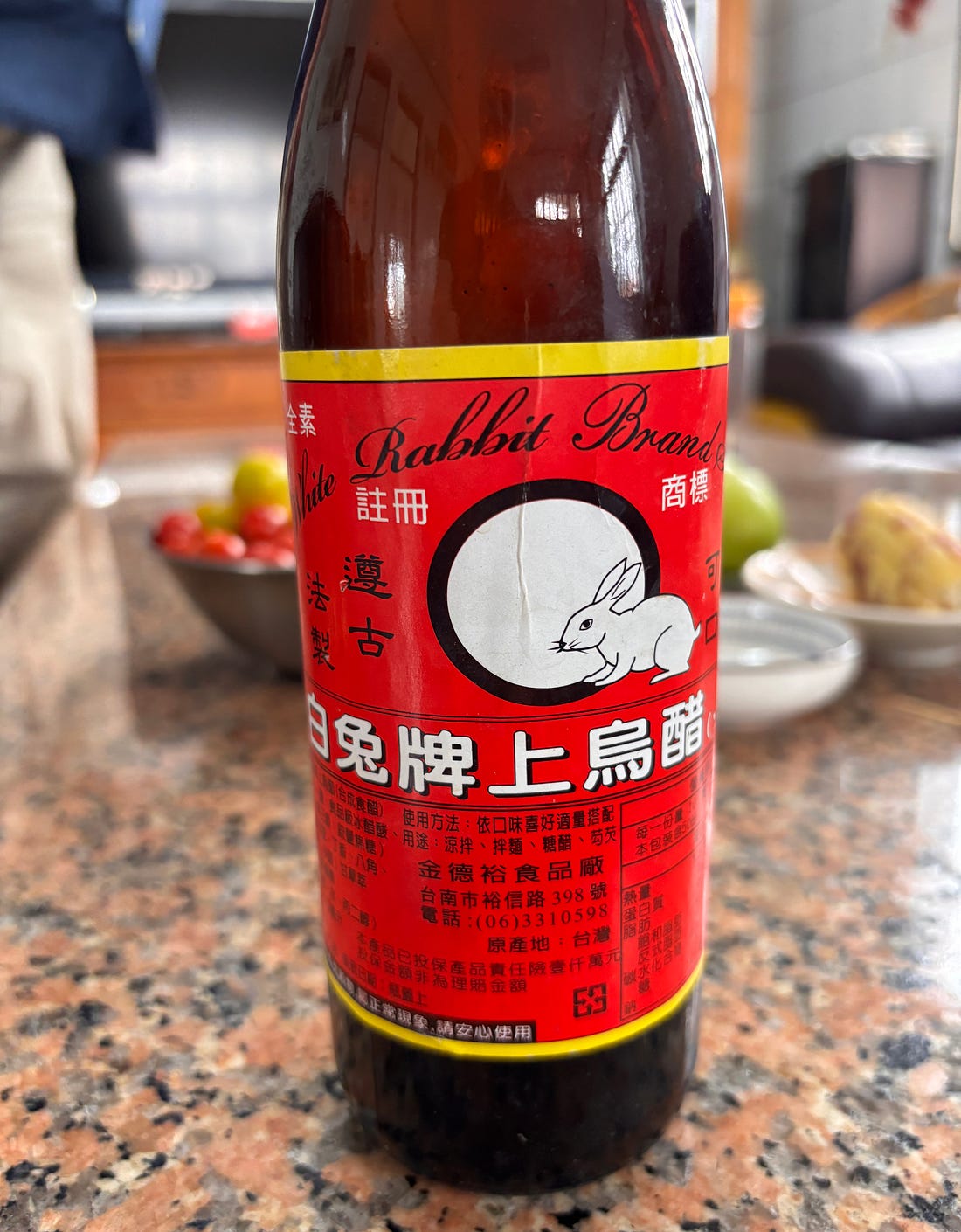
And the White Rabbit black vinegar we used was also a bit of a revelation to me as it was much better than the regular black vinegar I get at the Asian markets back home. It had a tangy, fruity flavor and my friend's cousin poured a little over my noodles, then a little of the miso soy sauce over them, and told me to mix everything up and eat. I added some of the chile sauce and paste as well.
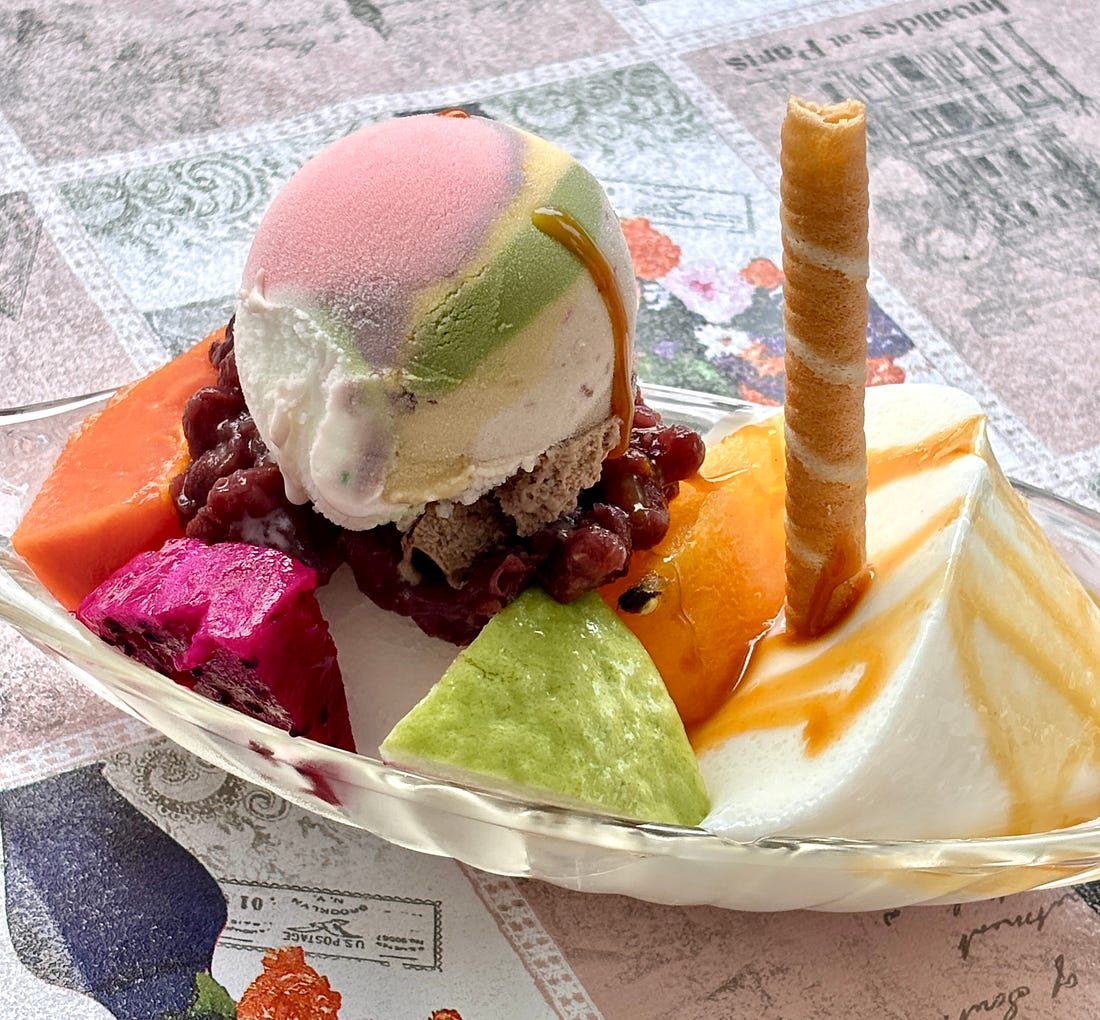
Finally there was dessert (again), and at my request, we went for ice cream.
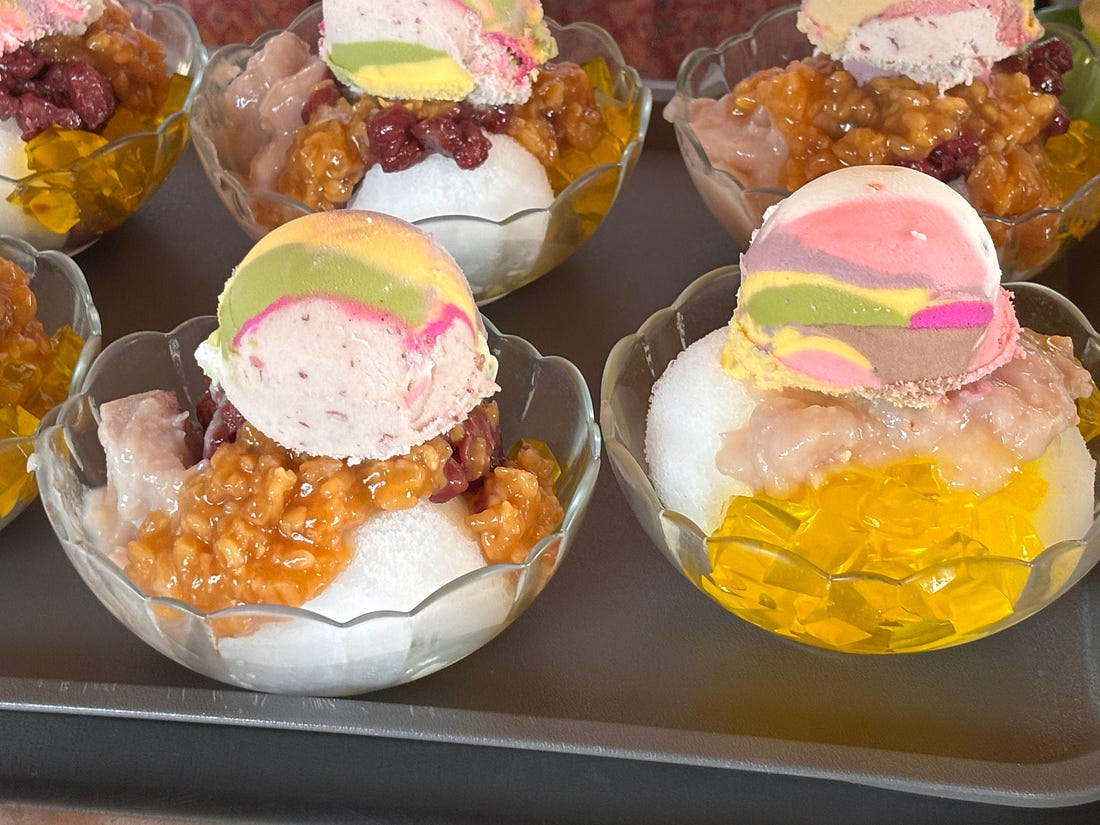
The menus were all in Chinese (or maybe they were in Hakkanese, the local language?) and while I used Google Camera to do some translating, my friend's cousin took control of the order, and I was glad that she did. She obviously knew what she was doing, and while I suggested we get a few to share, everyone wanted one of their own, customized the way they liked it, with various jellies and candied beans spooned on top and around the rainbow scoops.
I also asked if we could add an almond jelly, which I like a lot. It came served with dragon fruit, papaya, and whole guava (the green chunk, whose skin you eat), with an extra dollop of candied red beans (which I also like a lot) under the ice cream.
 The morning we left Kaohsiung, I planned to stop at Xing Long Ju for Taiwanese breakfast. In France, breakfast isn’t a big thing, and going “out” for breakfast means a café express and perhaps a croissant, standing at the bar in a café. Taiwanese people seem to love to eat, which they do at all hours of the day. Meal times here aren’t strictly defined as they are in France, and if you’re hungry and feel like eating, you eat. Taiwanese breakfasts include things like cha siu bao (warm steamed BBQ pork buns), eggy pancakes, fan tuan (sticky rice rolls wrapped around crispy crullers, sometimes with meat), and dumplings. Almost over my jet lag, I woke up at 5am and was ready to head over there. Xing Long Ju opens at 4:30am, and just as I was about to head out, I did a quick search to confirm the address and saw they were closed on Tuesday. Zut! Oh, well. You can’t do and see, and eat, everything — but when I get to Taipei, I hope to have a Taiwanese breakfast, no matter what time it is. Just as long as they’re open.
A while back, I made some videos of my friend Trigg Brown making Taiwanese-style breakfast items in his kitchen. You can watch them in this post here… You're currently a free subscriber to David Lebovitz Newsletter. For the full experience, upgrade your subscription.
|
Tuesday, March 24, 2026
Postcard from Taiwan








Subscribe to:
Post Comments (Atom)
No comments:
Post a Comment