A Visit to Bernard Antony, the Master of Ripening French CheeseMeeting the master of French cheese in Alsace
When I moved to France and was doing food tours, at some point, a guest would inevitably ask, “Why did you move to France?” while we were in front of a bakery or a cheese shop. I wouldn’t say anything (which was unusual for me) but would just point at the magnificent pastries or cheeses in the window, and they’d get the message. Also, nearly twenty years ago, during that same time in France, I was at a restaurant in the Champagne region and before dessert, was offered a plate of cheese that I still remember to this day. It was a Comté, aged for four years. The nutty, raw milk mountain cheese made in the French Alps is normally aged between 8 and 24 months. The longer a cheese is aged, the harder, drier, saltier, and sharper the cheese becomes, as it loses moisture. When I visited the region, the fellows who made the cheeses told me they preferred the younger Comtés; they are smoother (doux) and milkier-tasting, which gave me a greater appreciation for younger cheeses, although I do like the concentrated flavors in a well-aged cheese.
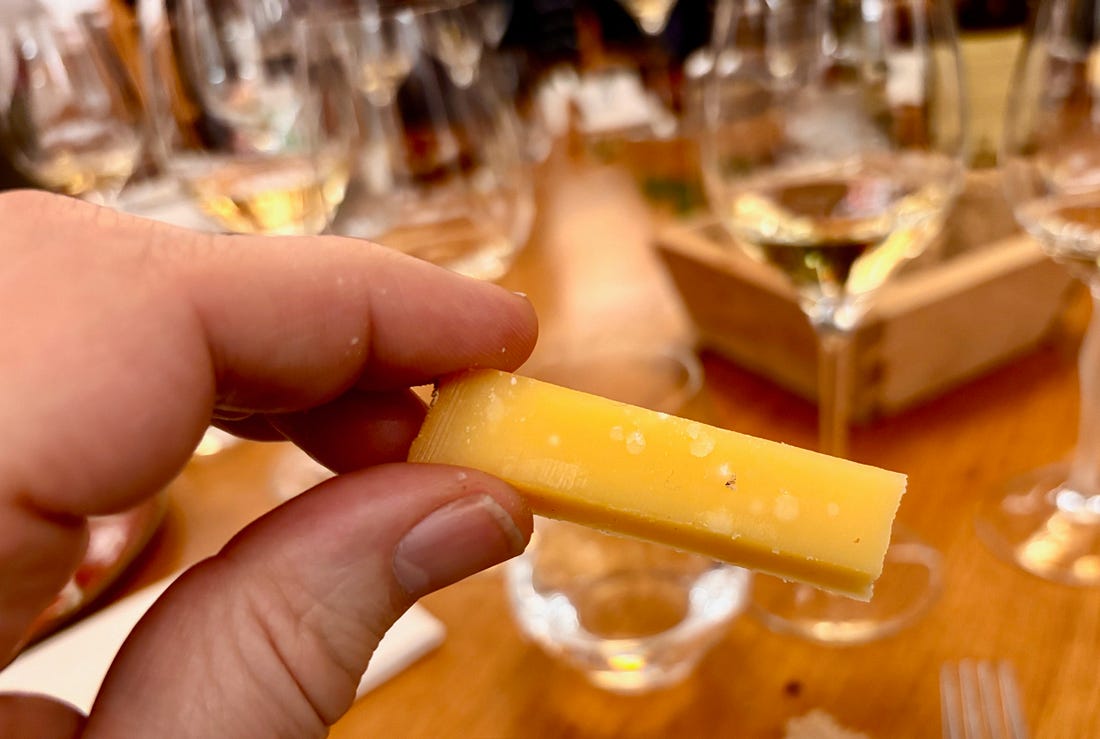
As the years passed, I couldn’t stop thinking about the four-year-old Comté that was presented to me after dinner, served as lamelles, thin wisps stacked on a plate. The medium-dry shards of cheese, with notes of hazelnuts and grass, had little crackly bits in them and were a revelation.
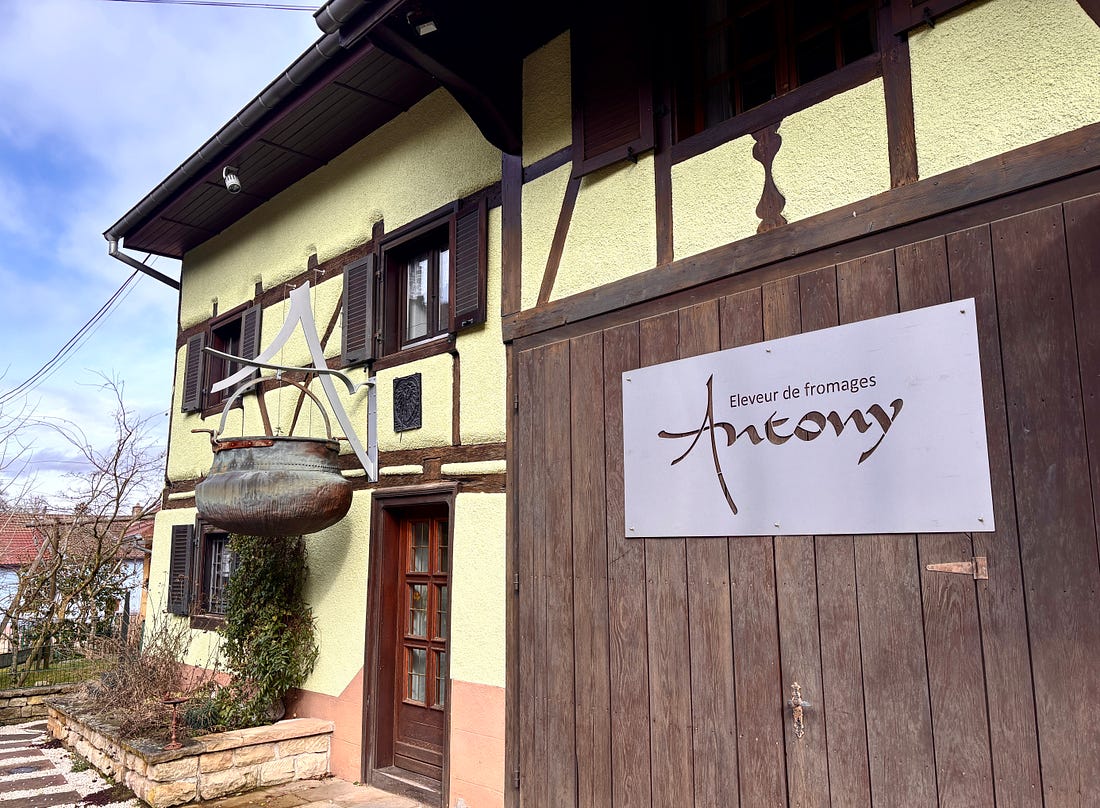
I was told that the amazing cheese was from an affineur (cheese ripener) named Bernard Antony, who was located in the small village of Vieux-Ferrette, in Alsace. As proof that good things come to those who wait, when an invitation arrived last month to visit his ripening caves and shop, it was a dream come true.
Cheese shops (fromageries) do their best to store cheese under proper conditions; some cheesemakers send their cheeses to affineurs, whose specialty is carefully ripening unfinished cheeses. They know exactly how each cheese needs to be treated, from the correct temperature and humidity levels in the caves, to what to brush or rub on the outside of the cheeses as they are ripening, and when.
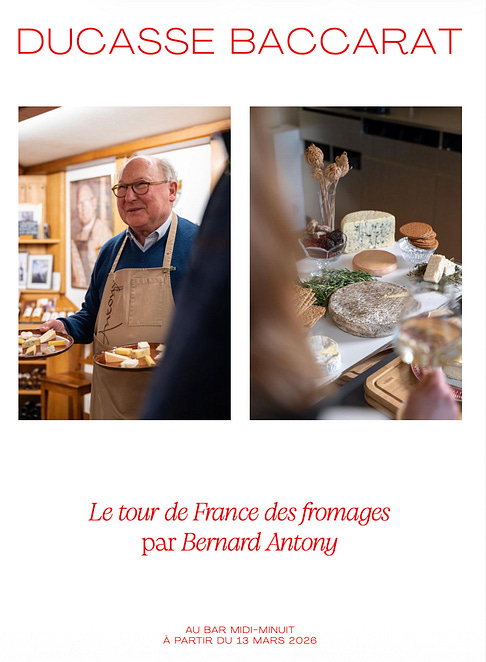
As luck would have it, I was invited to join a small group of people: Chef Christophe Saintagne and sommelier Fabrice Langlois of Ducasse Baccarat restaurant, as well as Fabrice Gepner, aka, Le Cheese Geek.
I woke up at the bleary hour of 5:45am to get to the station and leave Paris on the 7:20am train, arriving to meet Bernard Antony by late morning.
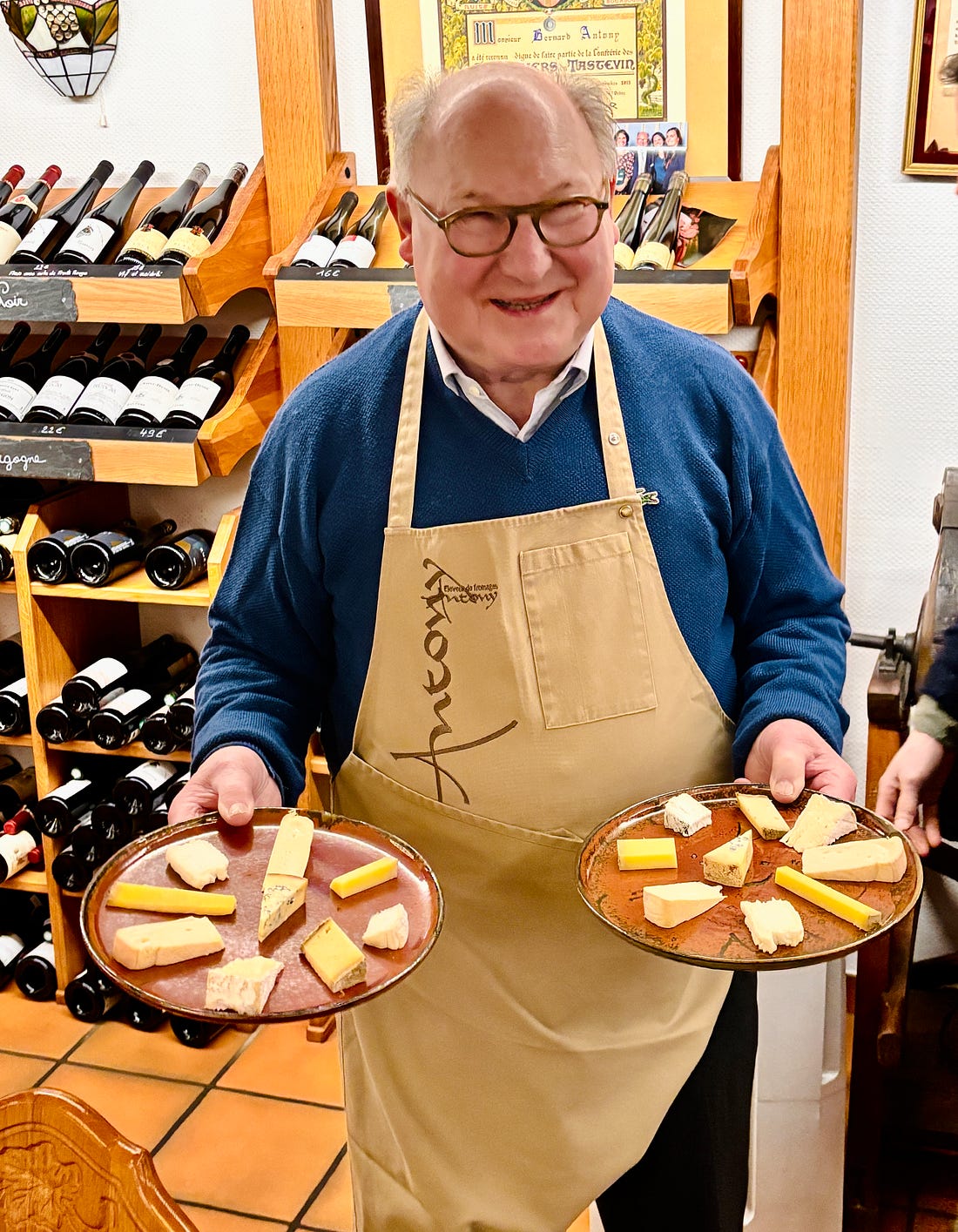
The jovial Monsieur Antony grew up in a family of farmers and started ripening cheeses in 1981 at his family farm, which is now his well-known shop and ripening caves.
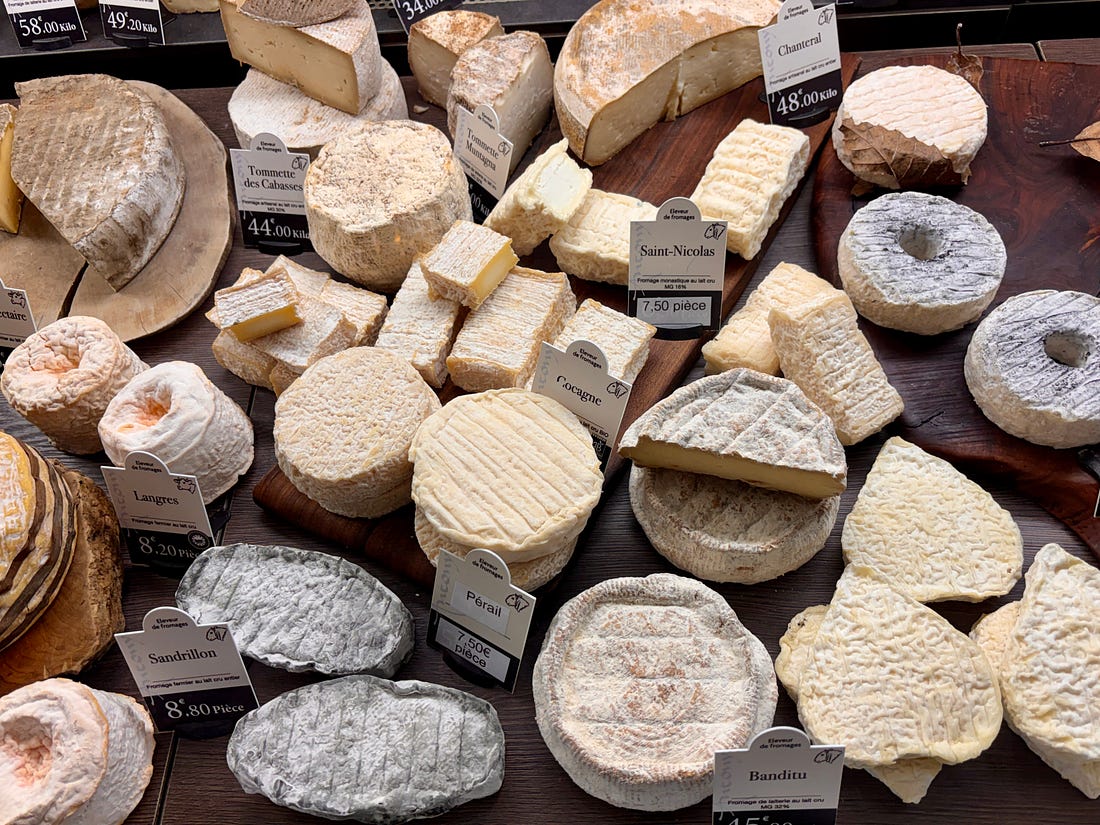
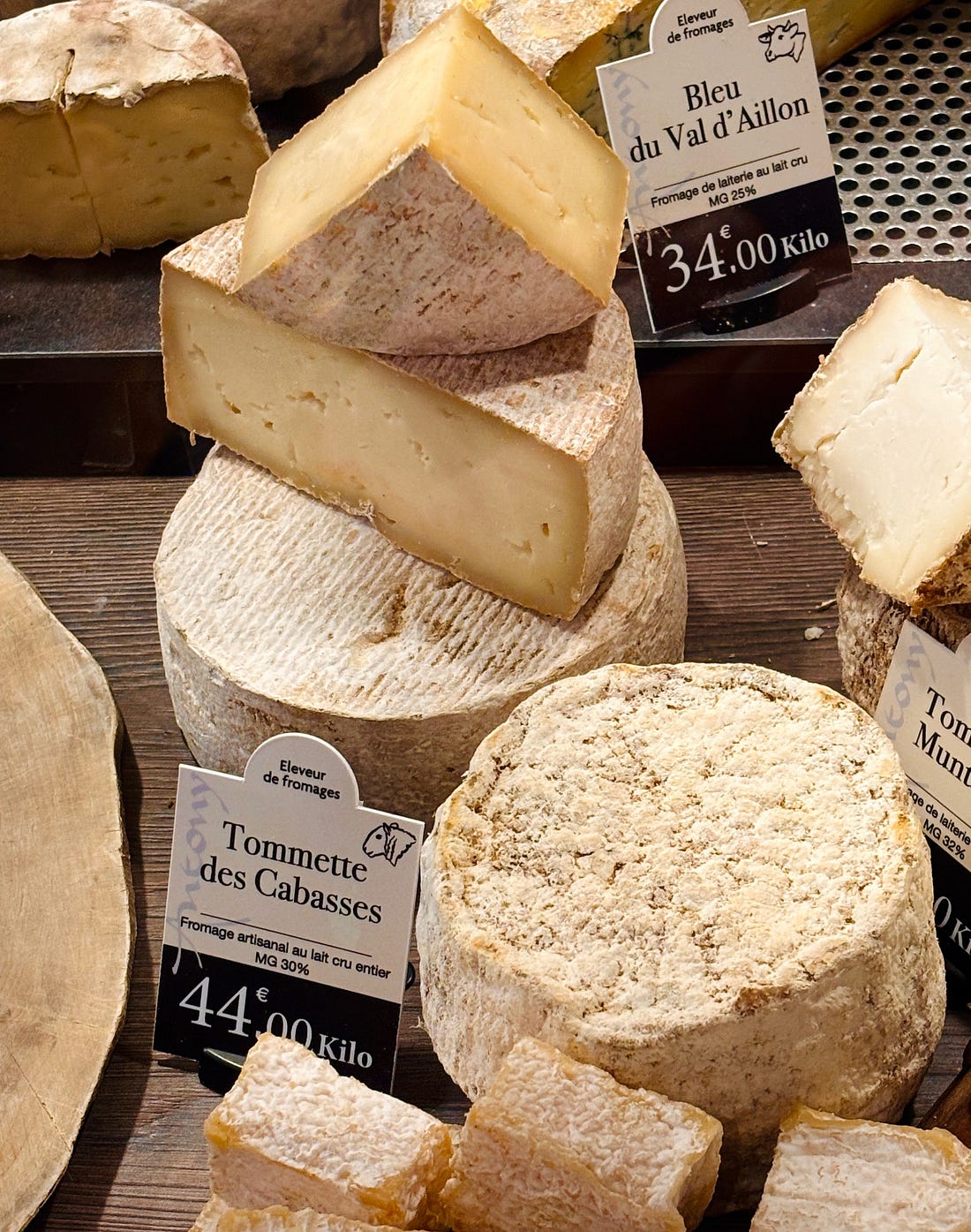
The shop was in full swing with cheesemongers talking to customers, helping them select the right cheeses, then carefully wrapping each one up to take home. The showcase was filled with spectacular cheeses. There were quite a few that I’d never seen before and was happy to try.
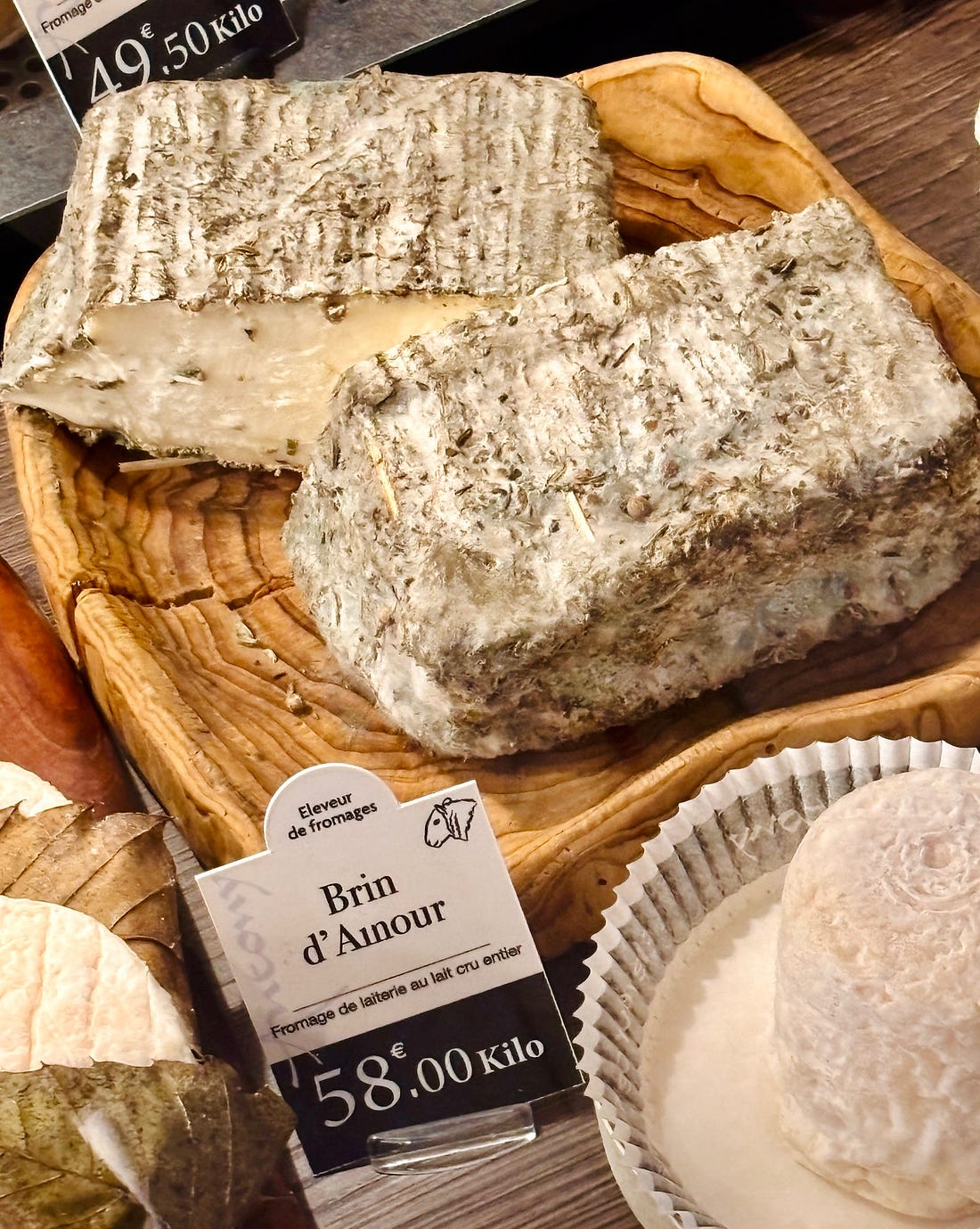
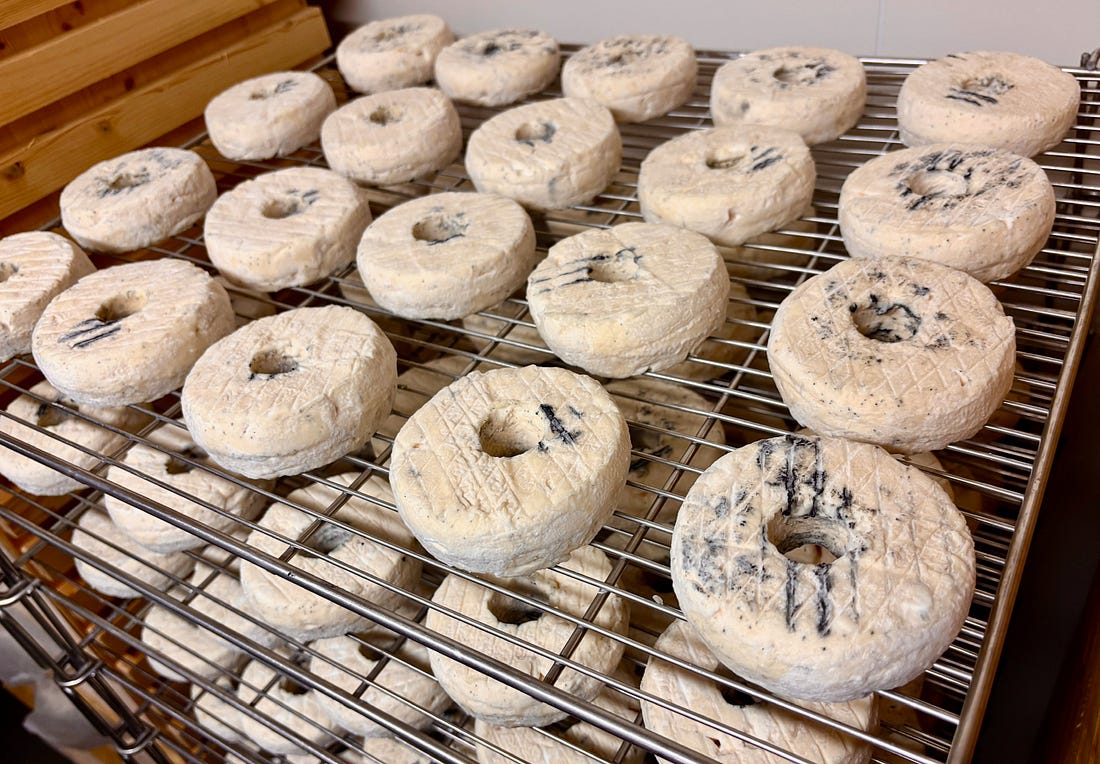
There were others that were familiar to me, such as the Brin d’Amour (below), that look quite different (and a lot better) than the ones I was used to.
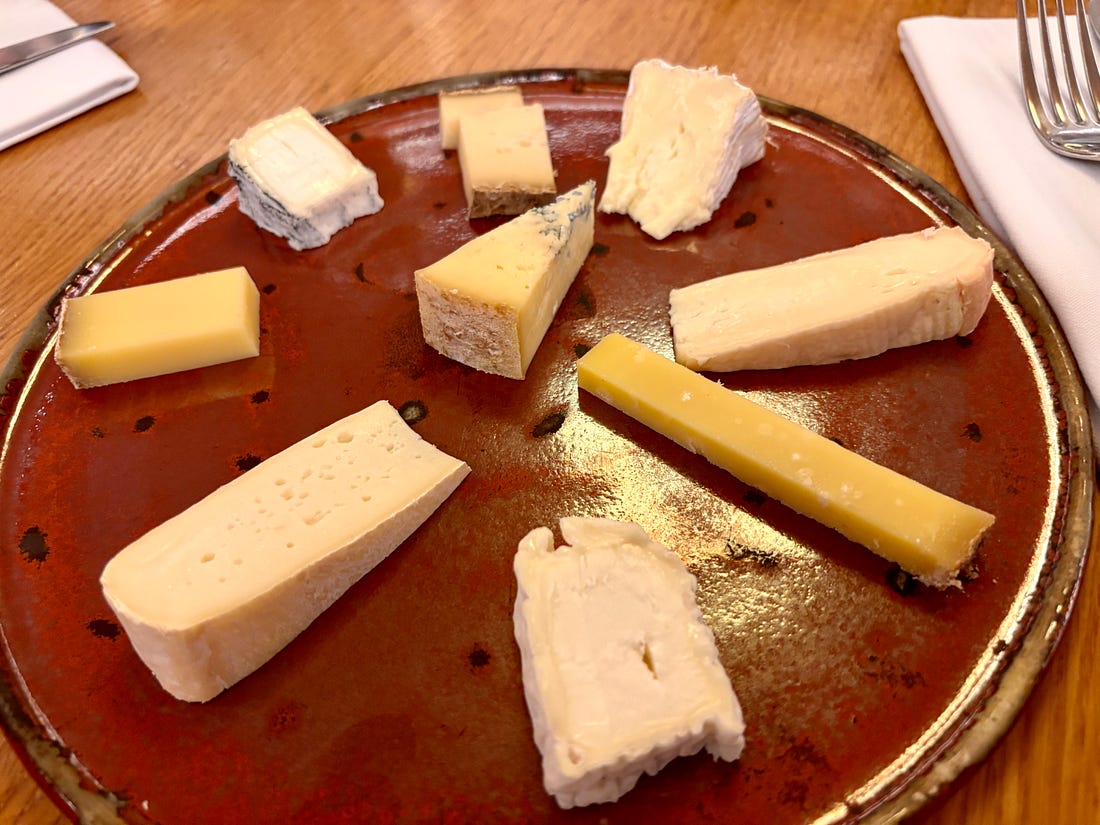
After I put my dropped jaw back into place, we were led toward a tasting room, where we were presented with a roundup of perfectly ripened cheese, ready for our dégustation.
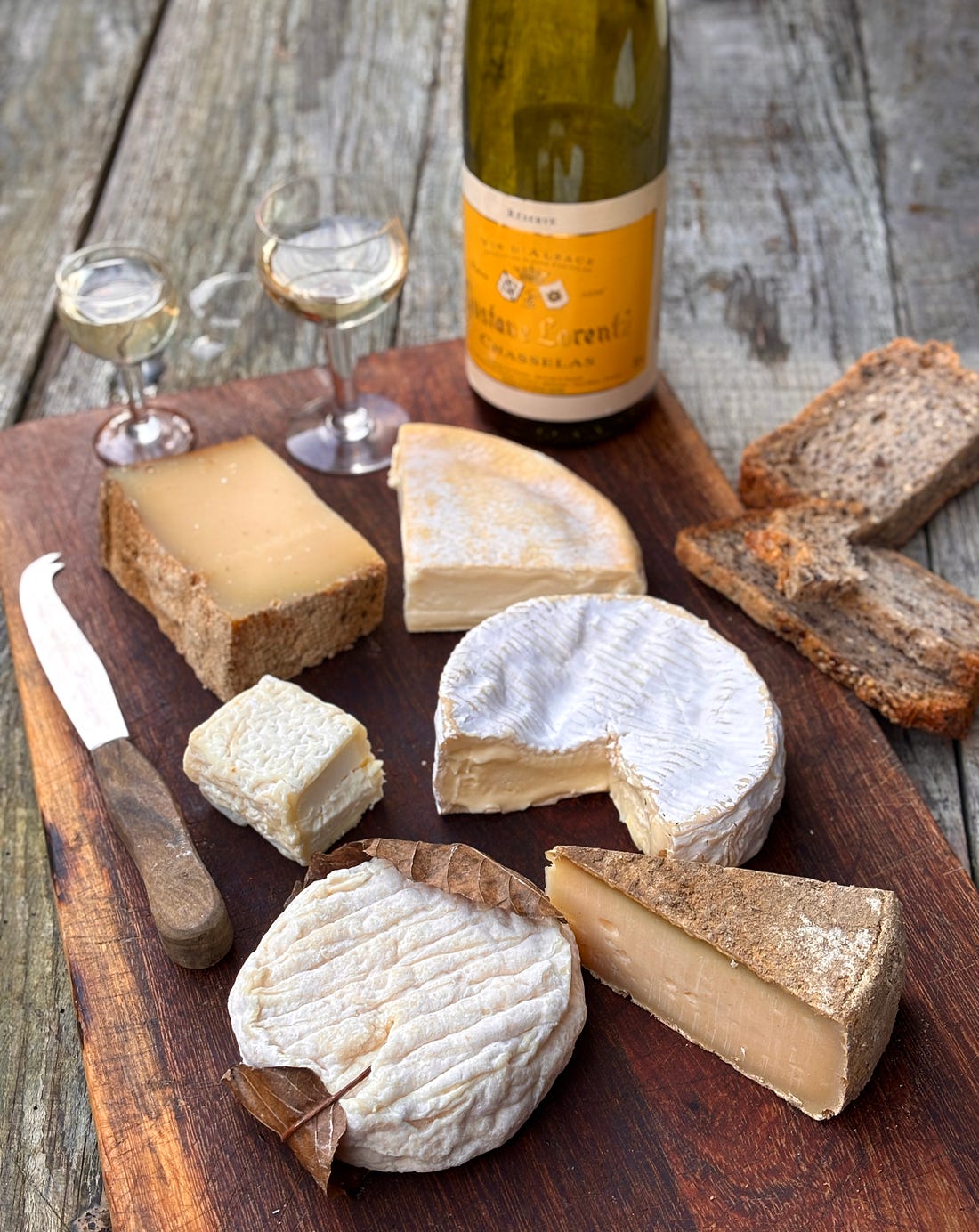
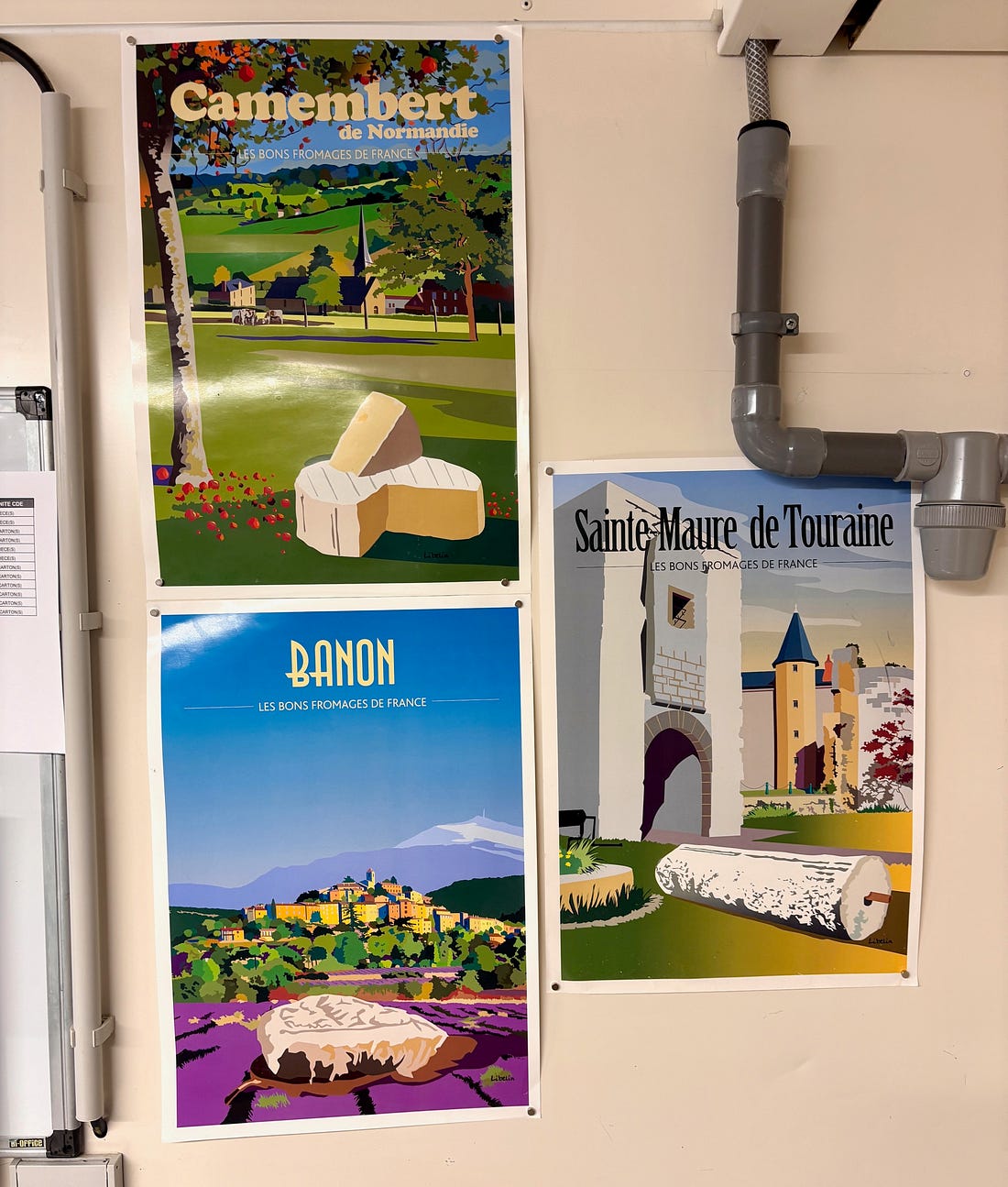
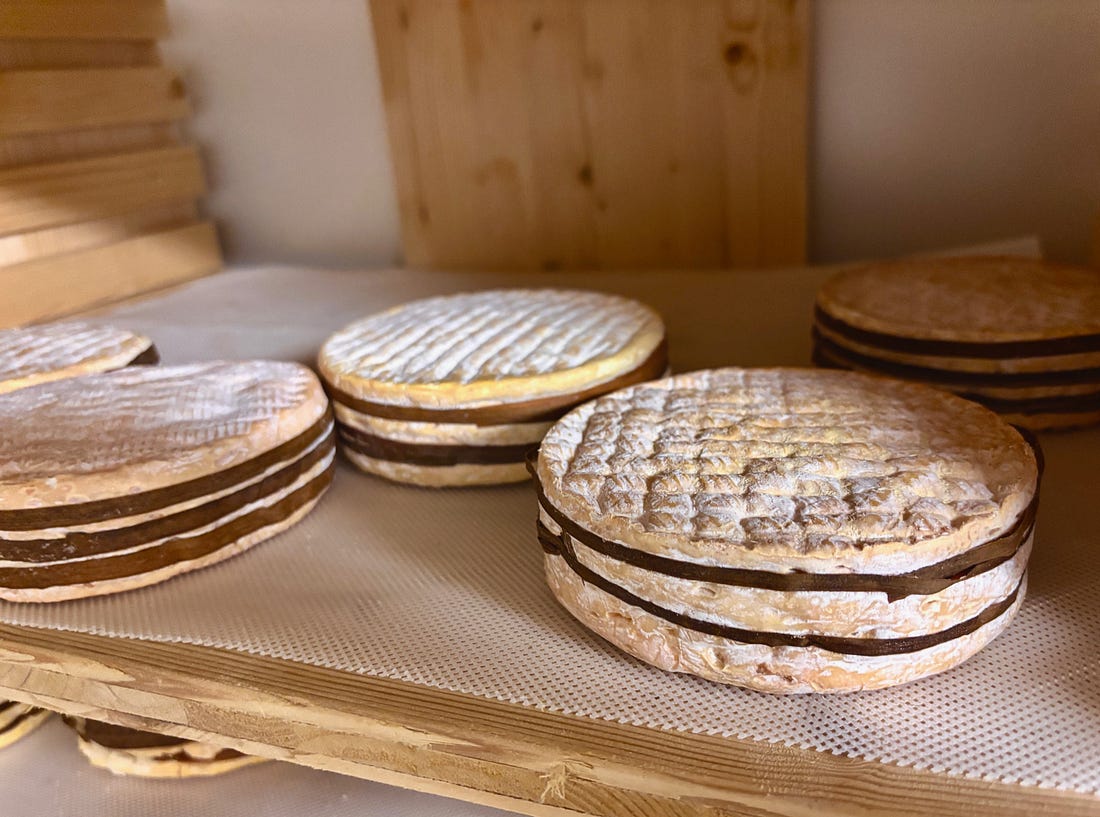
The cheese at the bottom was Saint-Nicolas, a partially aged cheese that had a delectably creamy tang due to the sheep’s milk used to make the cheese. The one next to it, with the rounded edges to its left, was an Abbaye de Cîteaux. Sometimes these kinds of washed rind cheeses can be rubbery, like Morbier can be, so I generally avoid them. But this was the most surprising cheese on the plate and was even better than perfect. It was divine. Moving on to the next one, the small block of golden yellow cheese was a twenty-month-old Comté Réserve. Comté is one of the most popular cheeses in France, and Jean-Francois (Monsieur Antony’s son) told us that, in his opinion, twenty months was the ideal age for Comté. Another cheese was a Tomme de Savoie, a sort of catch-all term for a number of cheeses from the Savoie, that the Antony website says “doesn’t mean much anymore.” But like the Abbaye de Cîteaux, when you get a good version, you taste what the other tommes are missing. And this one was going on my mental list of cheeses to bring home. There was a small wedge of a truly remarkable Camembert de Normandie. Like “tomme,” the word camembert is applied to many cheeses that look like the real deal, but there are just a handful of producers left of Camembert de Normandie. Always look for “de Normandie” after the name if you want to get the real deal in France, made from raw milk and molded by hand. Most Camemberts de Normandie are slightly musky and funky (in a good way), but this was a whole different category with powerful flavors of wild and dried mushrooms. It had an extra-strong creaminess thanks to the milk used to make the cheese, which comes from Normande cows, known for their especially high-quality milk. 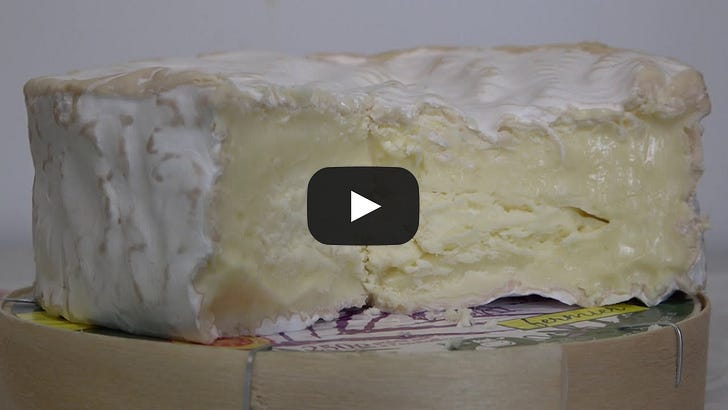 I don’t buy Camembert too often since it’s so rich, and a good one starts oozing out shortly after you cut it - which is why they sell special boîtes to store ripe Camembert in. So when I do buy one, I get the best I can find. And while I thought bringing one home was a good idea, after it was gone two days later, I wish I’d bought at least a second one. Because we were in Alsace, of course there was a slice of Muenster to taste. But I was still euphoric from that exceptional Camembert de Normandie and looking forward to the next cheese, the Comté I remembered from decades ago.
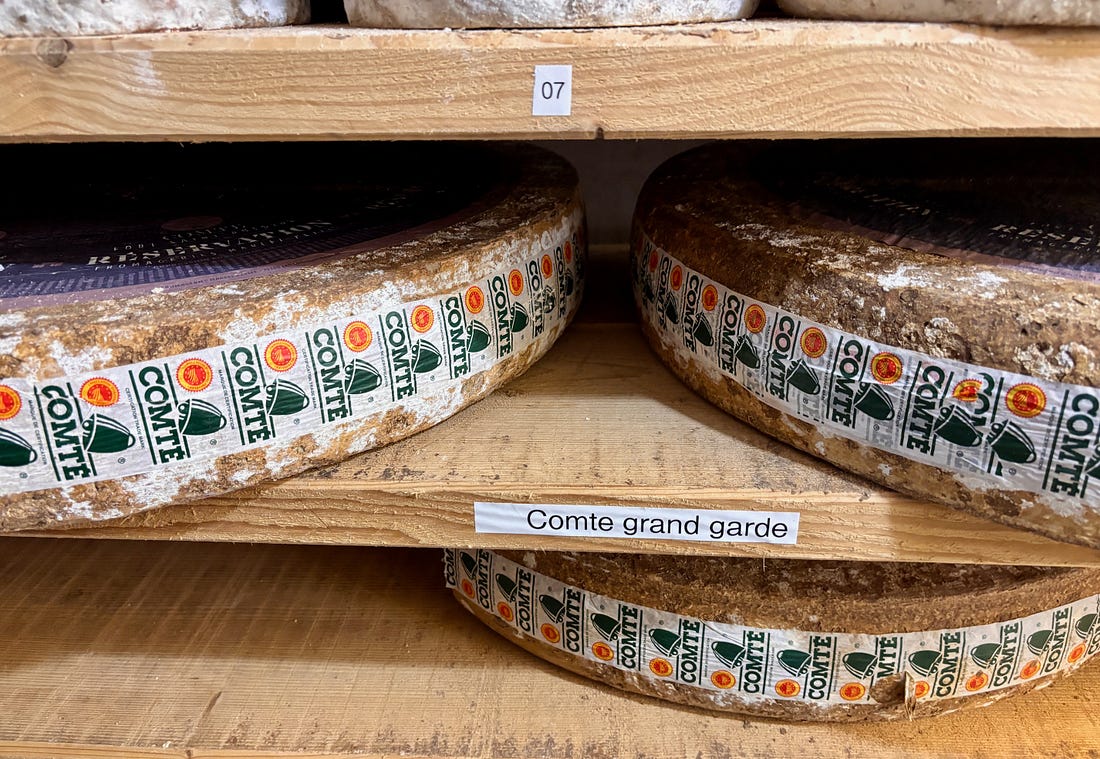
Yes, it was time to revisit the Comté Hors d’Age (Comté without age). They mentioned how aging this cheese up to 48 months can pose some challenges, namely a loss of moisture and higher salt content. Their knowledge of cheese ripening really shines in this elegant cheese, which keeps the character of Comté but deepens it. This was also the most expensive cheese that they sold, but all the work that goes into it definitely pays off. The perfect pairing with cheese is wine, with cider and beer also being fine accompaniments. Alsatian wines are some of the best you can drink. And no, they’re not all sweet.
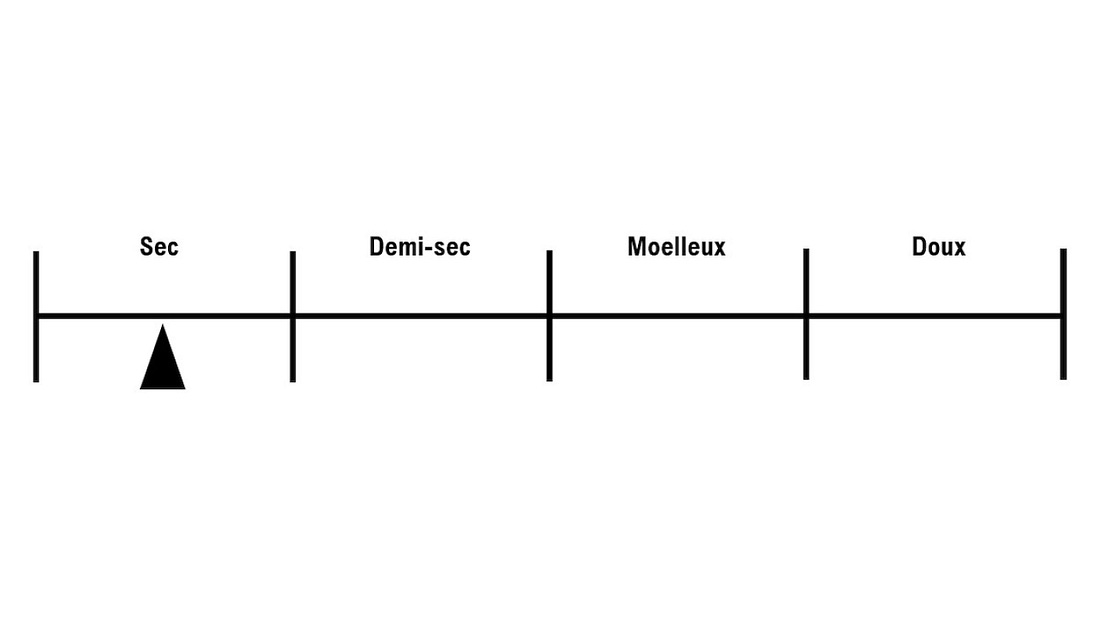
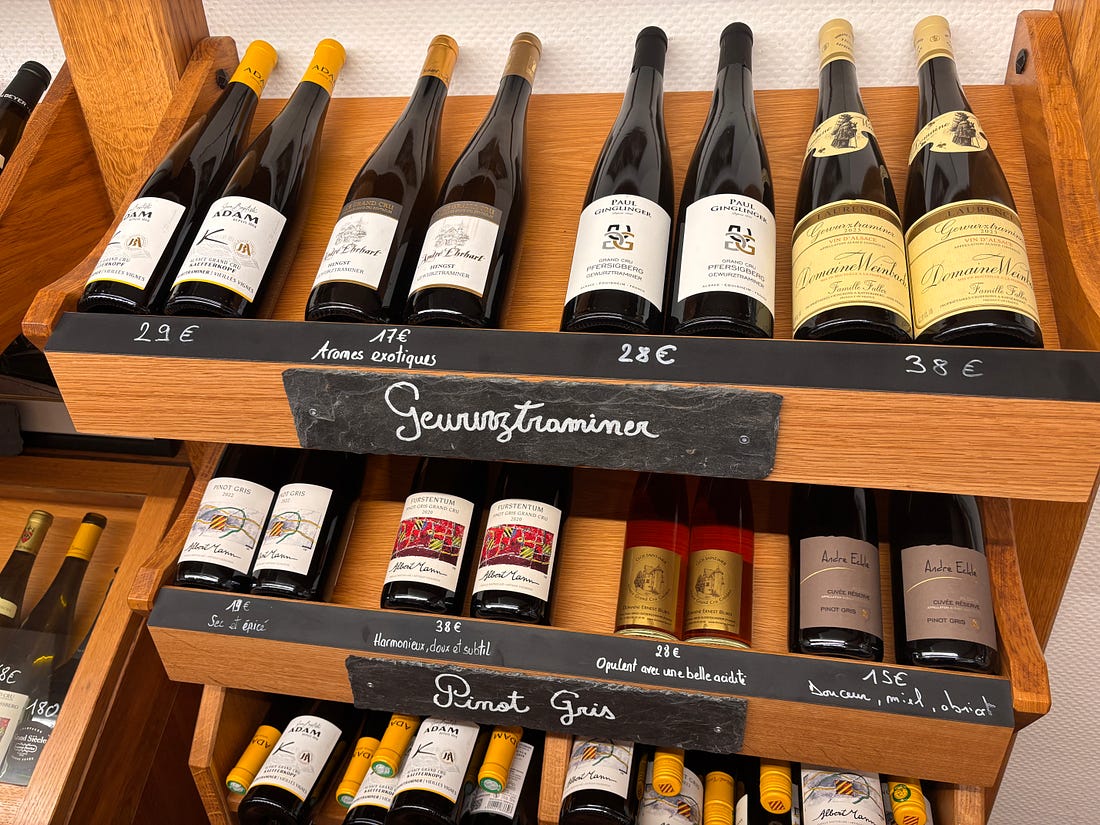
In fact, most are dry. But because that perception still exists today, a wine scale is posted on the back labels of Alsatian wines, which rates the wine from dry (sec) to sweet (doux).
Alsatian wines are also notable as they’re sold by the cépage (grape variety) in France, rather than by the region. Few people in France know the grapes that go into, say, a red Burgundy or a white Muscadet from the Loire, but because of their Germanic influence, wines from Alsace are labeled by the grape variety and often sold in elongated bottles, called flûtes d’Alsace.
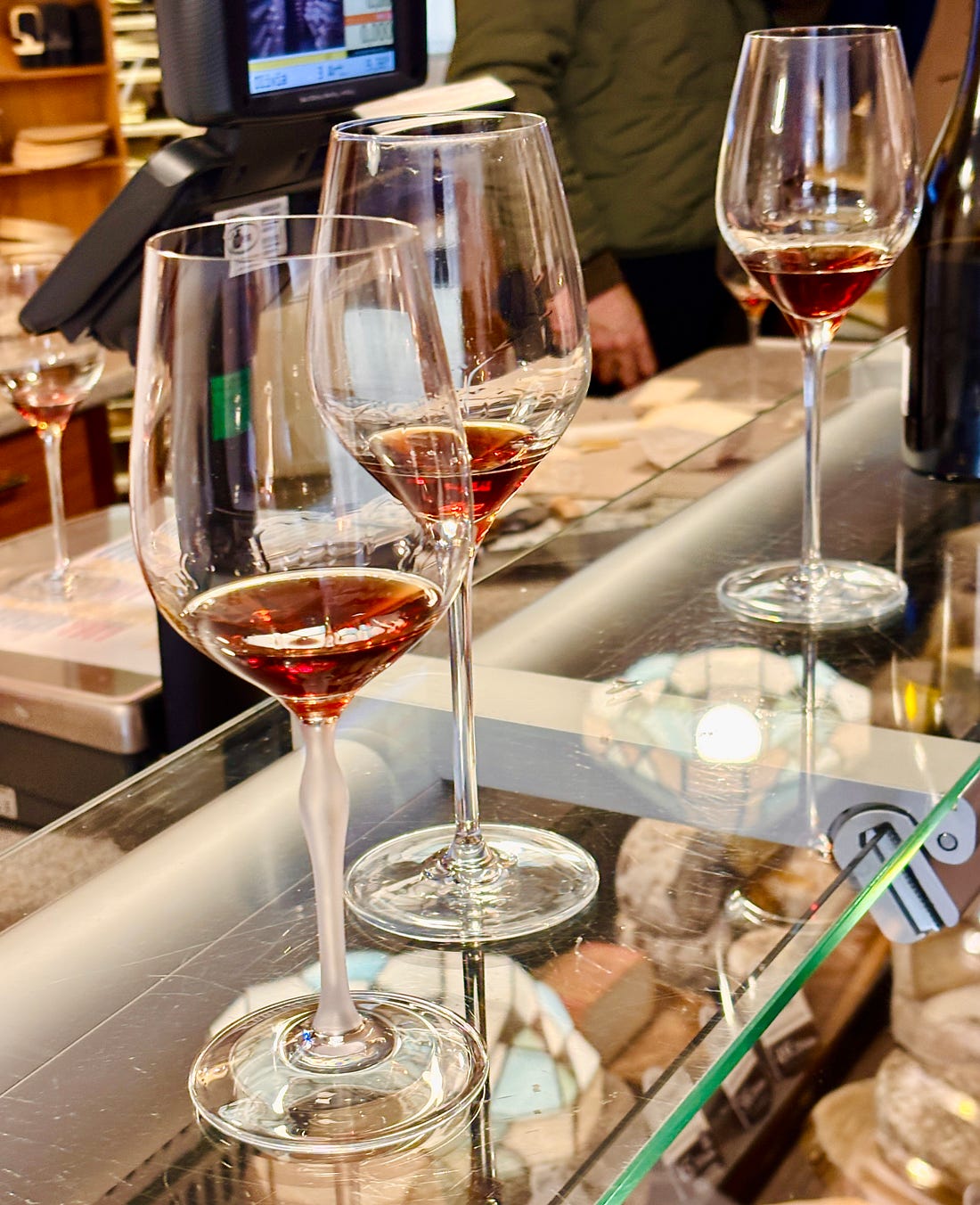
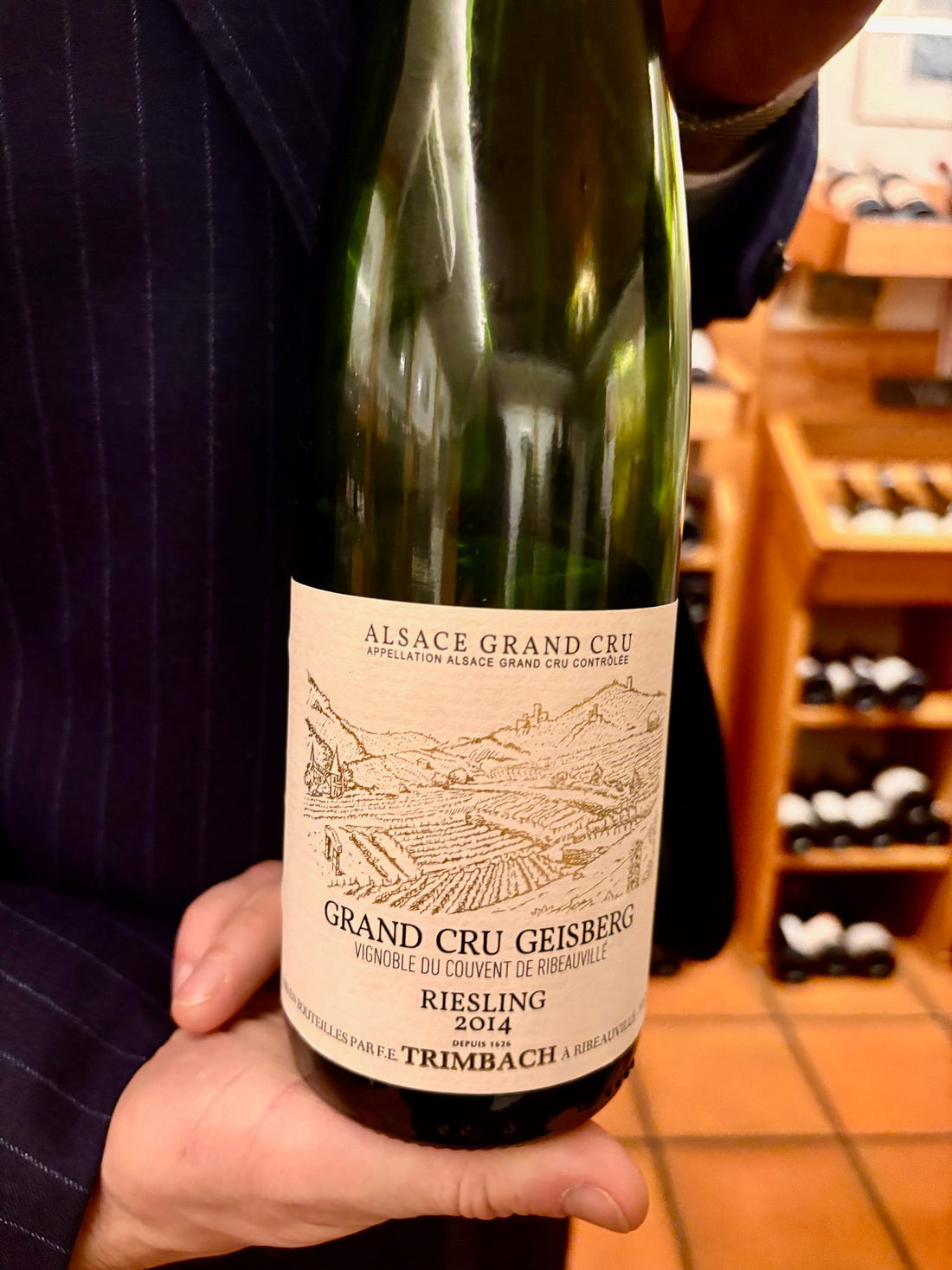
Because it goes so well with cheese, their shop sold quite a few wines, but sommelier Fabrice Langlois, who worked the night shift before our trip (and somehow managed to make the 7:20am train), came with a backpack rattling with incredible bottles of wine. This one was my favorite:
Following the “what grows together, goes together” theme, this Trimbach Grand Cru riesling was especially good with the Alsatian cheeses.
In addition to “Alsatian wines are sweet,” another myth that needs to go away is that red wine goes with cheese. There are a lot of subtle flavors in cheese and a tannic, heavy Cabernet Sauvignon, for example, can obliterate those flavors. Even in France, the cliché of “red with cheese” is still strong. It reminded me of a passage in restaurateur Keith McNally’s memoir, I Regret Almost Everything, that I just finished. He talked about reading Don Quixote because his friends told him it was one of the best books ever written. And he hated it:
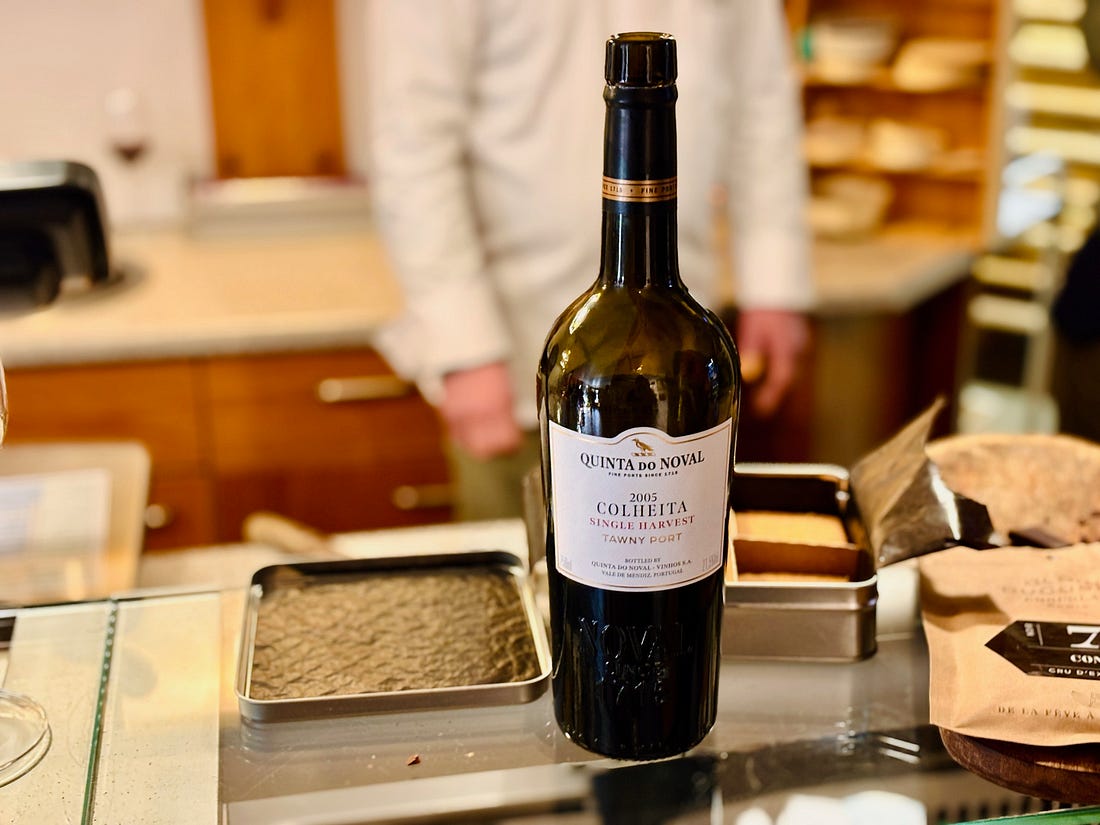
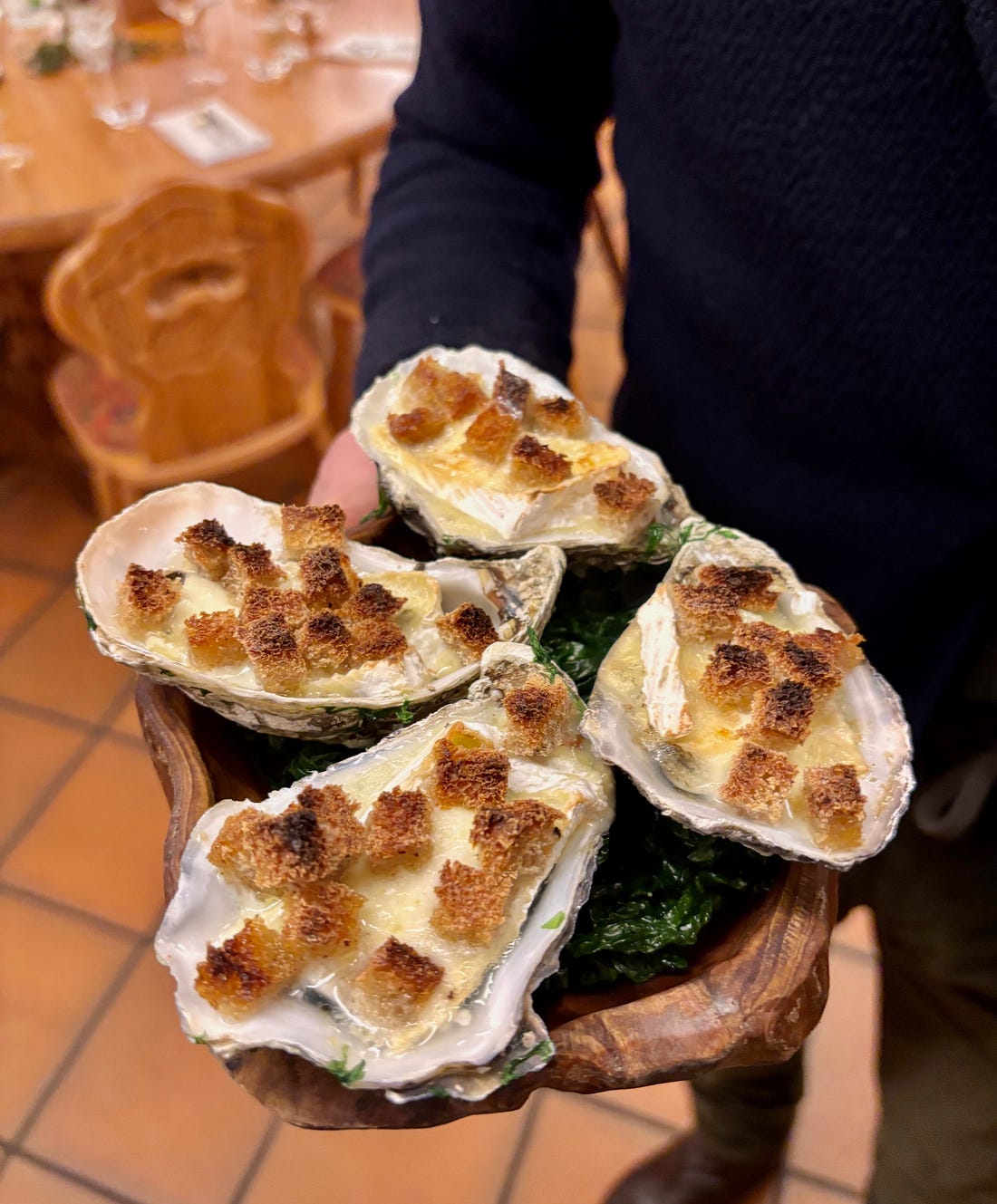
If you really do like red wine and cheese together, great! But if you want to go with red, I might suggest trying something with less tannins, or a softer, slightly sweet wine like port or sherry, which pair beautifully with many cheeses. Another myth is that cheese doesn’t pair with seafood, which as anyone who’s had a tuna melt knows, isn’t true. But a pairing I wouldn’t have thought of were these oysters.
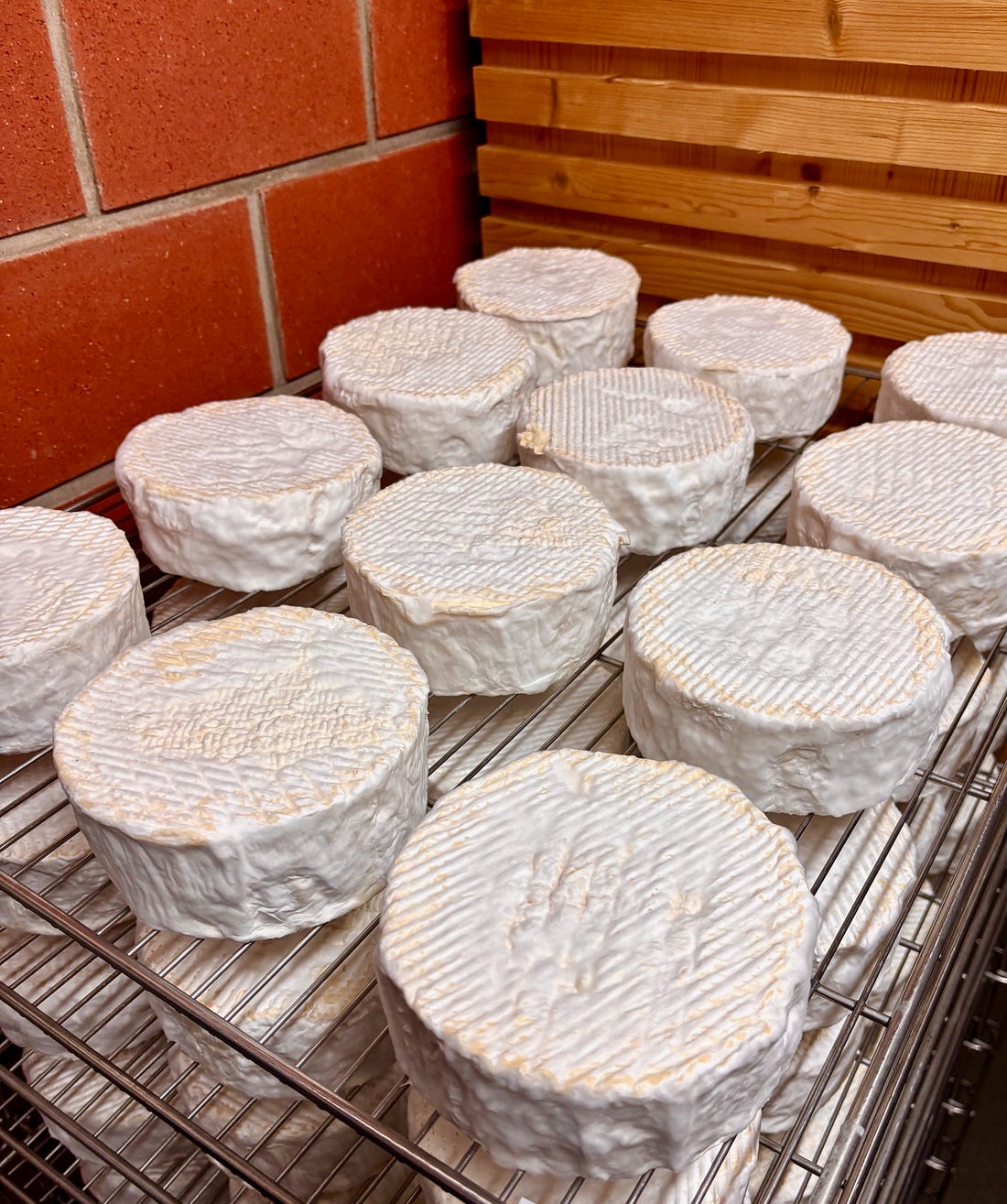
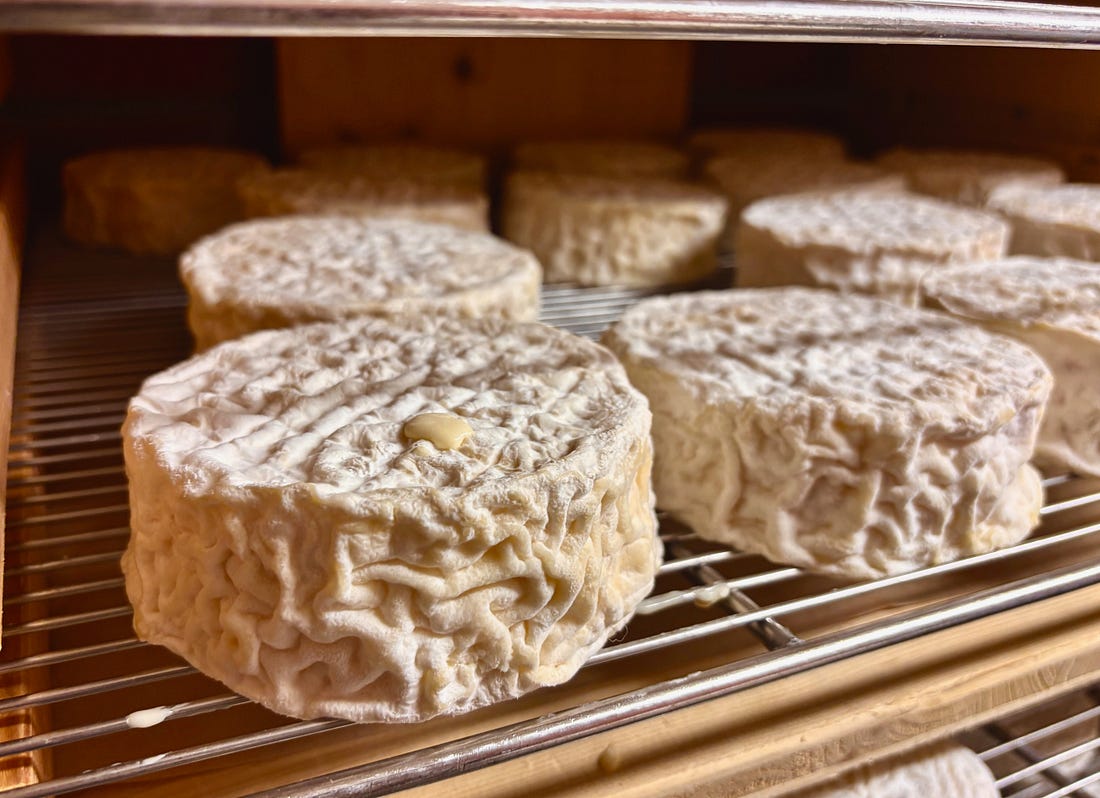
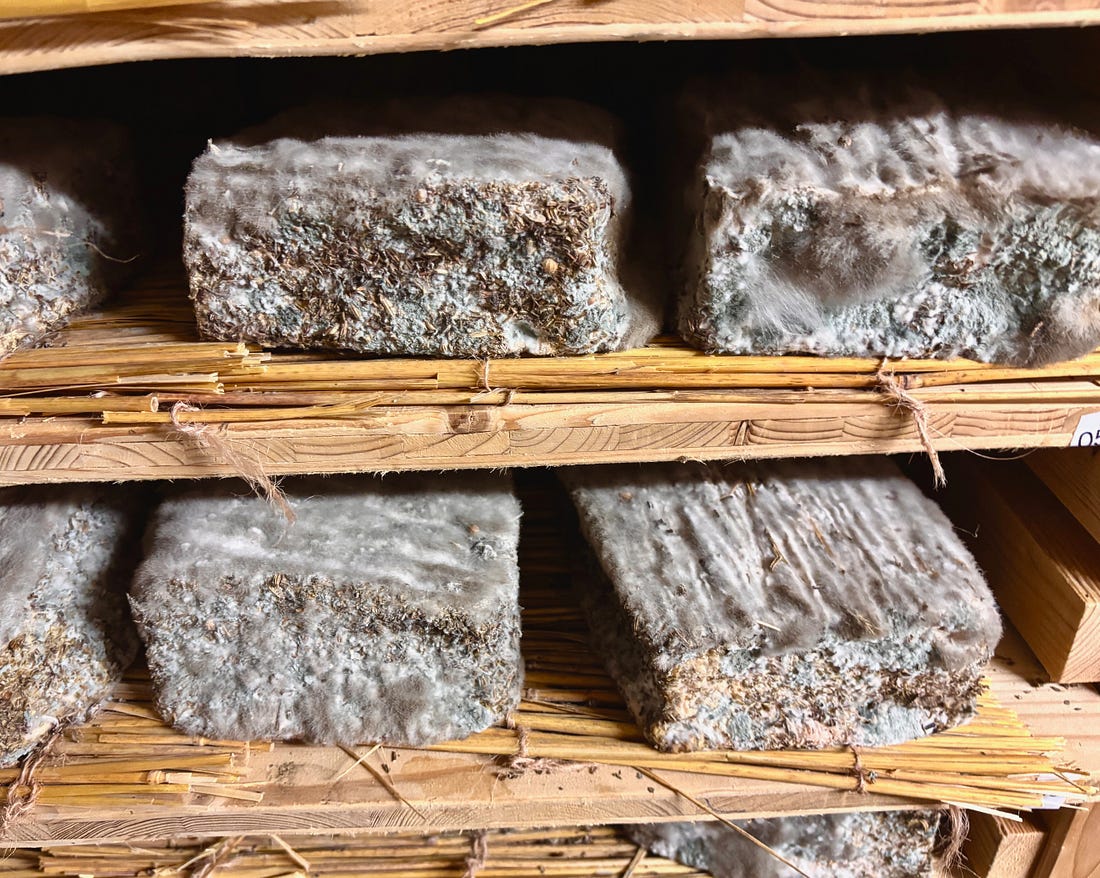
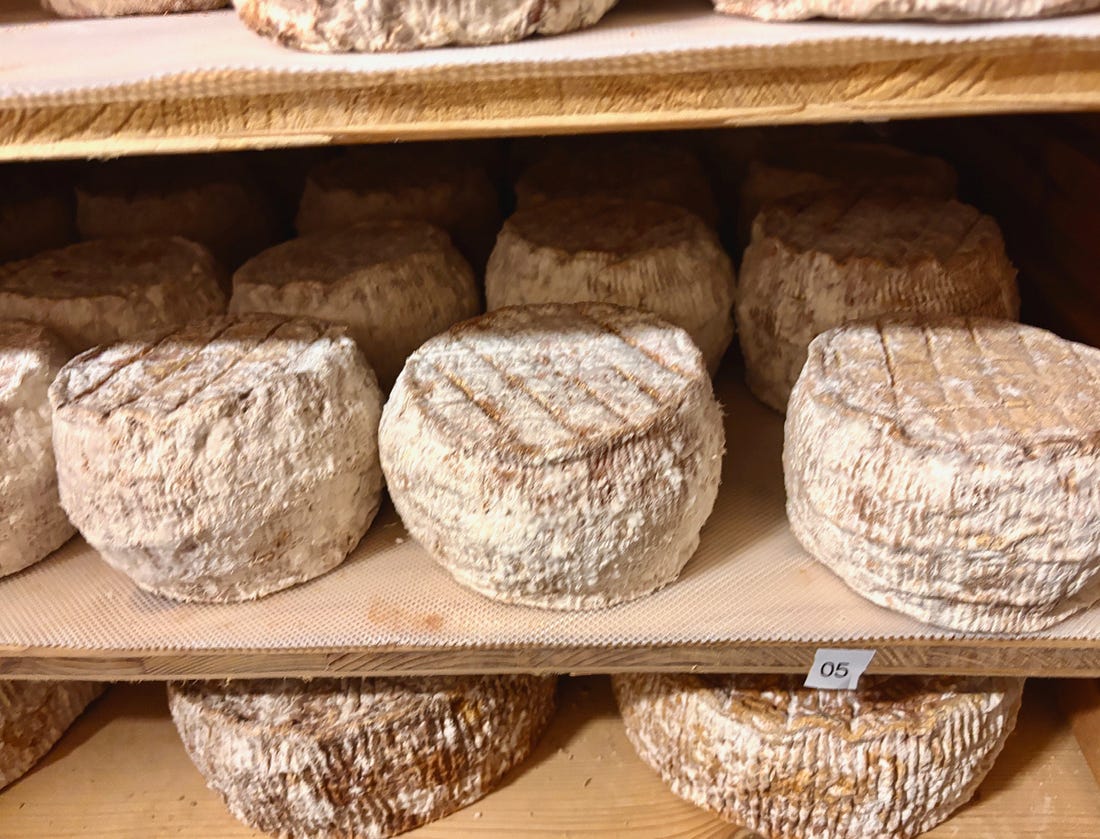
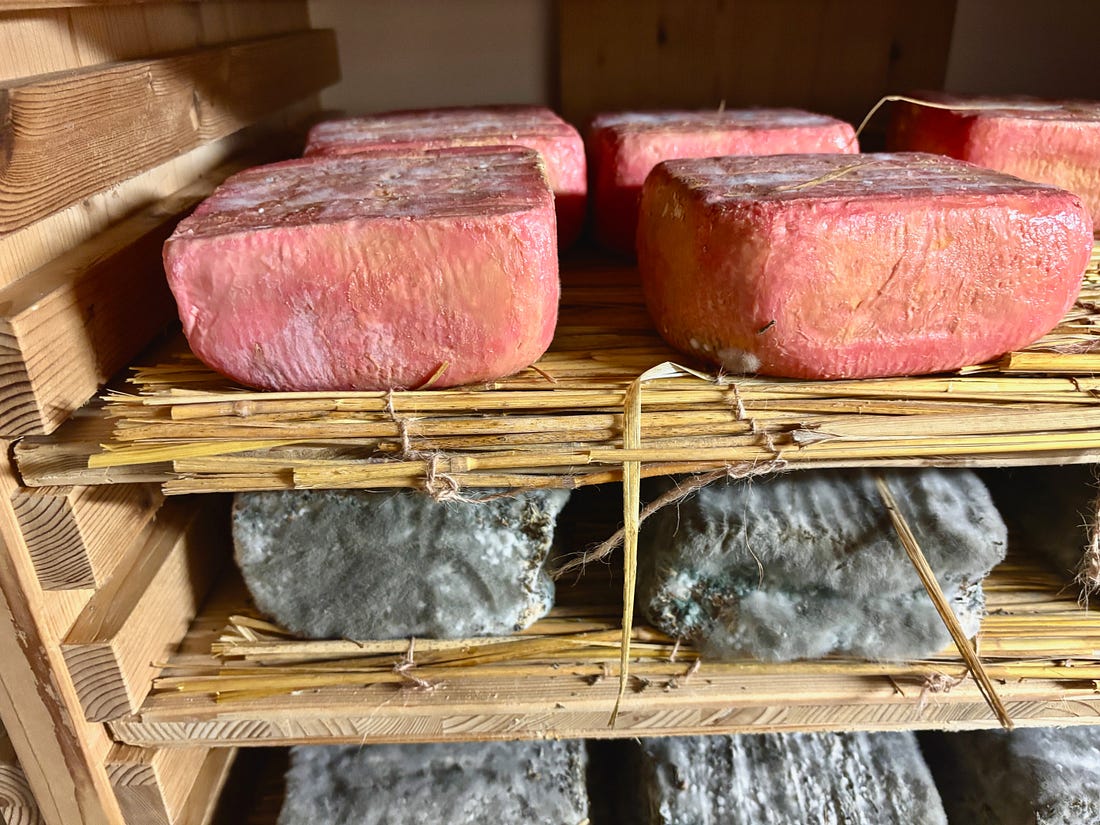
Chef Saintagne worked his magic on them, broiling up the oysters, gratinéed with slices of Camembert de Normandie, and dotted with toasted croutons on top. The salty, briny oysters were an incredible pairing with the rich cheese. They reminded me why it’s good to keep an open mind, rather than just following along with what everyone else says. Otherwise, I would have missed these oysters, which I might even try making at home. After our extensive cheese and wine tasting, we visited the caves where the cheeses are ripened. As a side note, you often go to tastings and people just…taste, and leave a lot behind on the plates. When were were done, every plate was completely cleaned.
⭐ Bernard Antony Cheese Tasting in Paris ⭐
We didn’t catch all the names of the cheeses (frankly, there were a lot), but often it’s best to go to a cheese shop and see what looks best or most appealing that day and make your selection then. That said, the shop has a page on their website in three languages that identifies and describes many of their cheeses.
After visiting the caves to see the ripening cheeses, because I live in Paris, I’ve learned how to get — and remain — at the front of a line, no matter how many people are behind me. Fortunately, trying to cut in line hasn’t made it to Alsace, but because I am bien élevé (well-raised, and well-mannered), I let someone in our group go ahead of me. He ended up buying at least as many cheeses as I planned to, but I was happy to be next in line, as a lengthy line was forming and snaking out the door, since they’d just reopened after their lunch break.
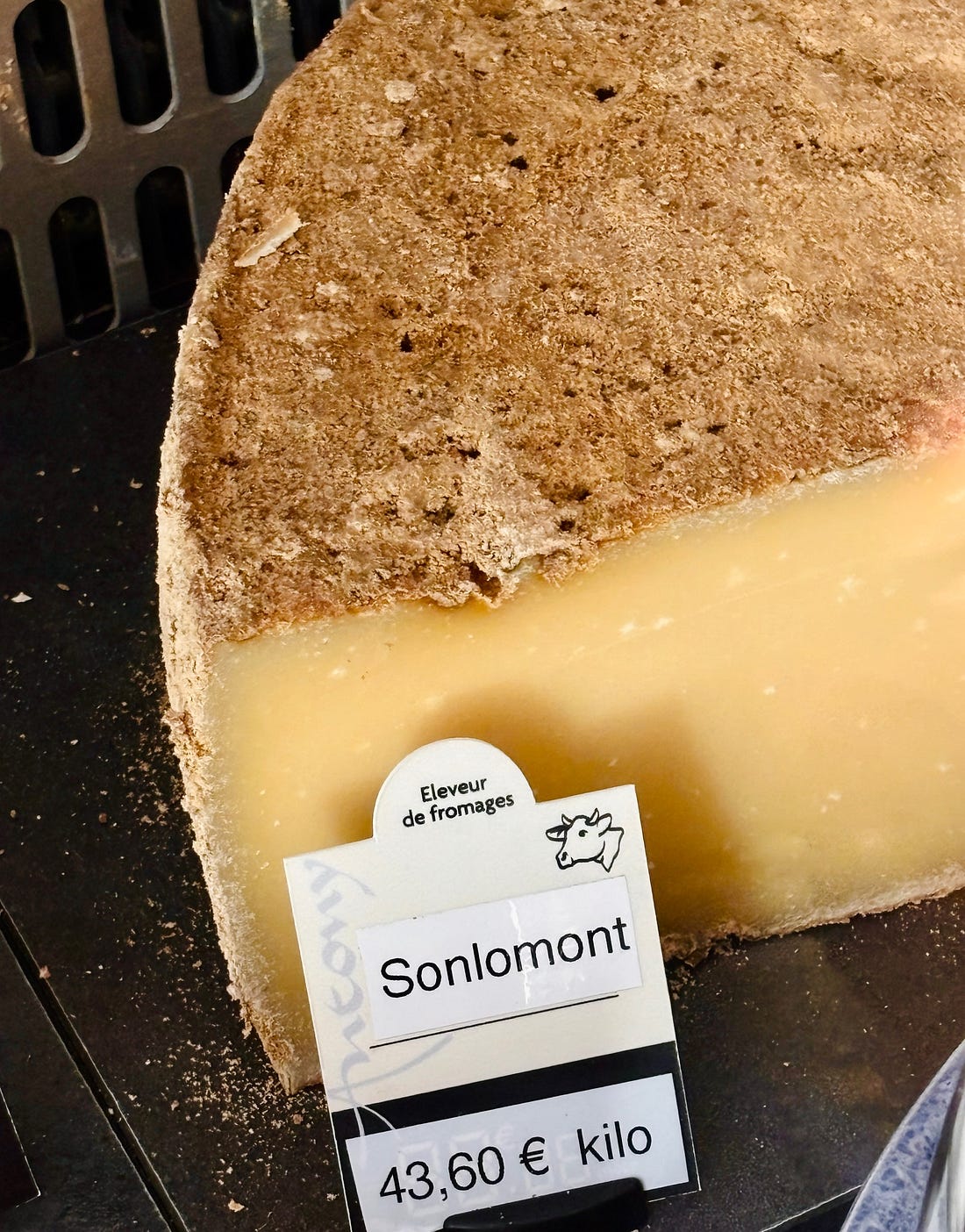
I’d never heard of Sonlomont, a cheese from Switzerland that I think is the same as Tome de Lomont, but happy to be corrected. They gave me a taste, which confirmed that I needed to bring a block of that home.
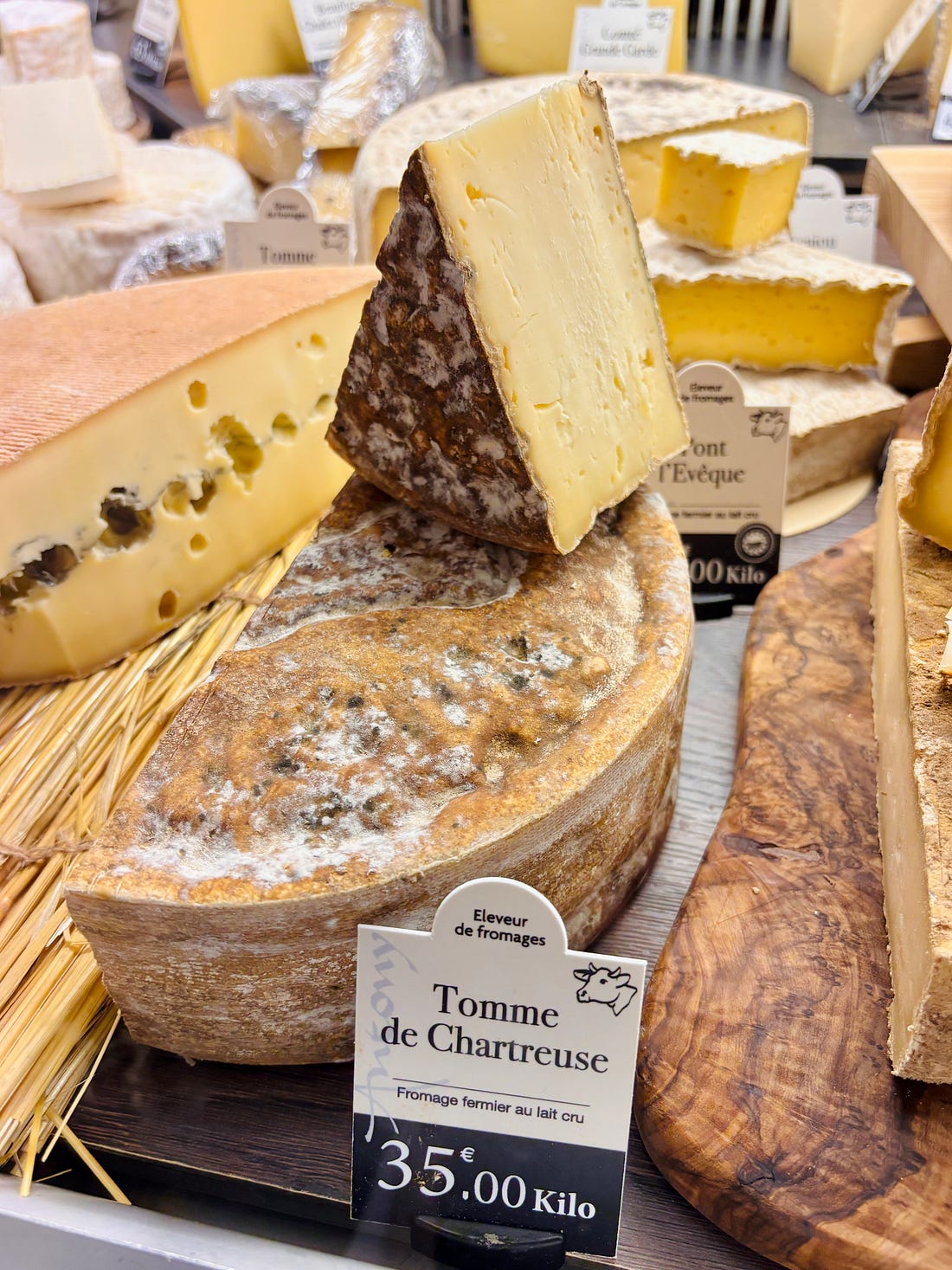
There was also this Tomme de Chartreuse, which didn’t contain any of the famed liqueur, but was made in the mountainous region called the massif de la Chartreuse. Following in the steps of “what grows together, goes together,” I’d imagined the mountain cheese with the semisoft texture and milky flavor would go well with the liqueur. I made a mental note to bring a wedge of that home, but somehow, I forgot to ask for it, which I realized on the train back to Paris. That was also a shame because I was having drinks with friends from Chartreuse later that evening in Paris, which ended at 1:20am. (It was a long day!)
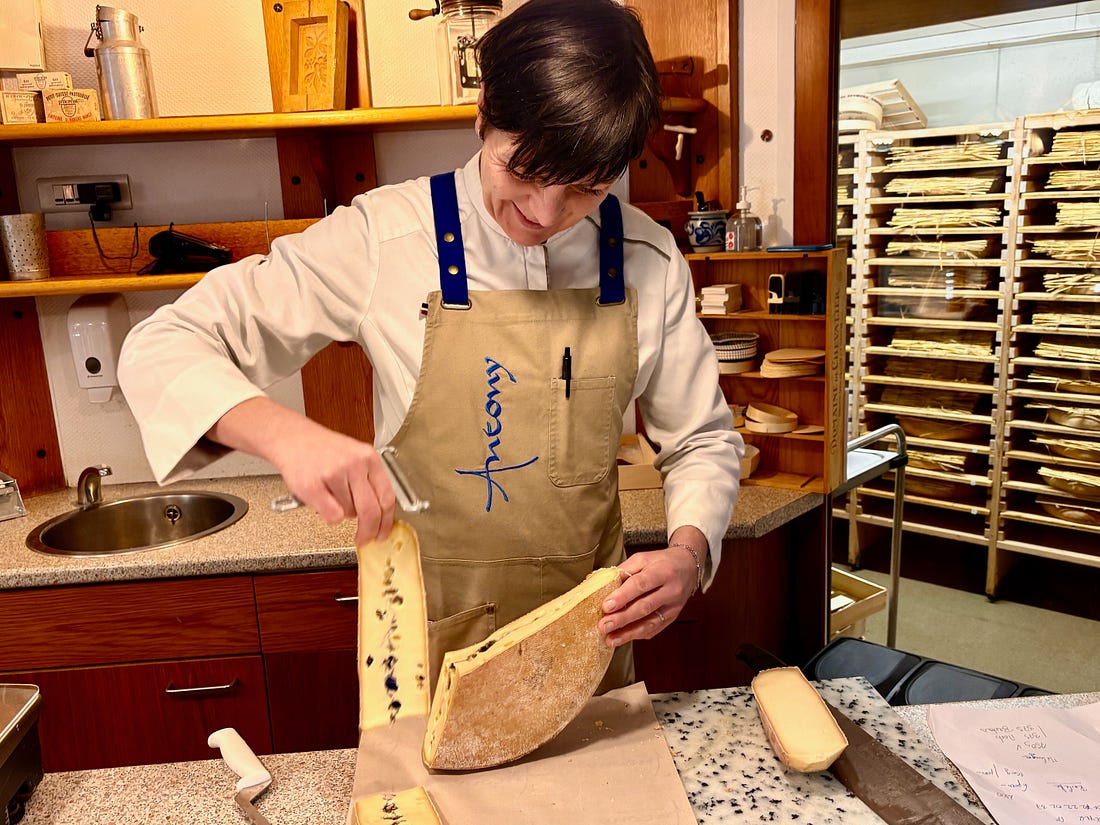
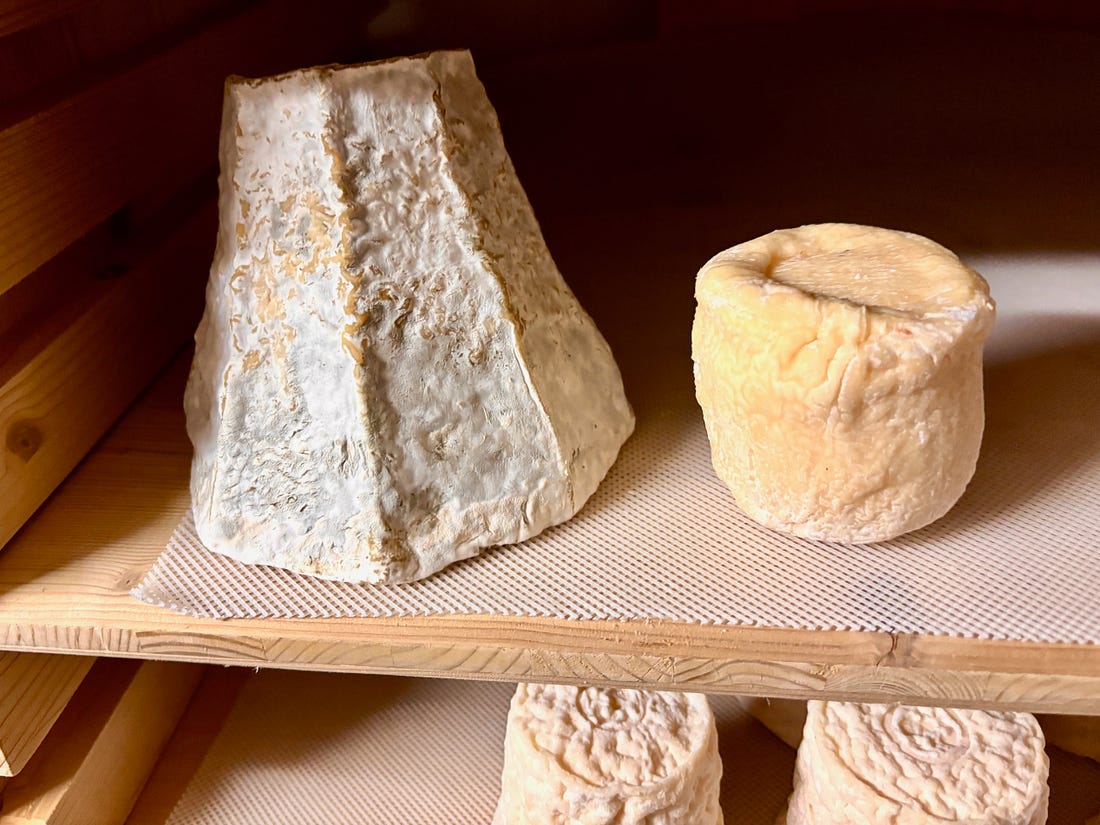
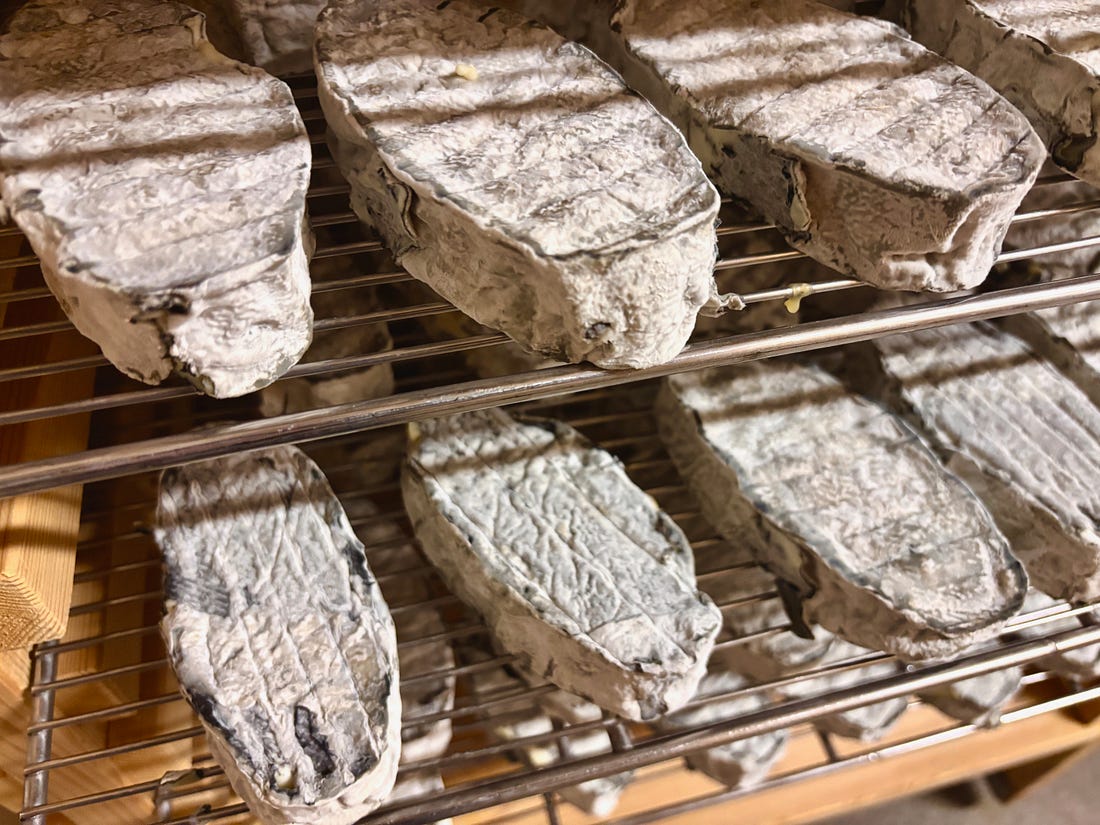
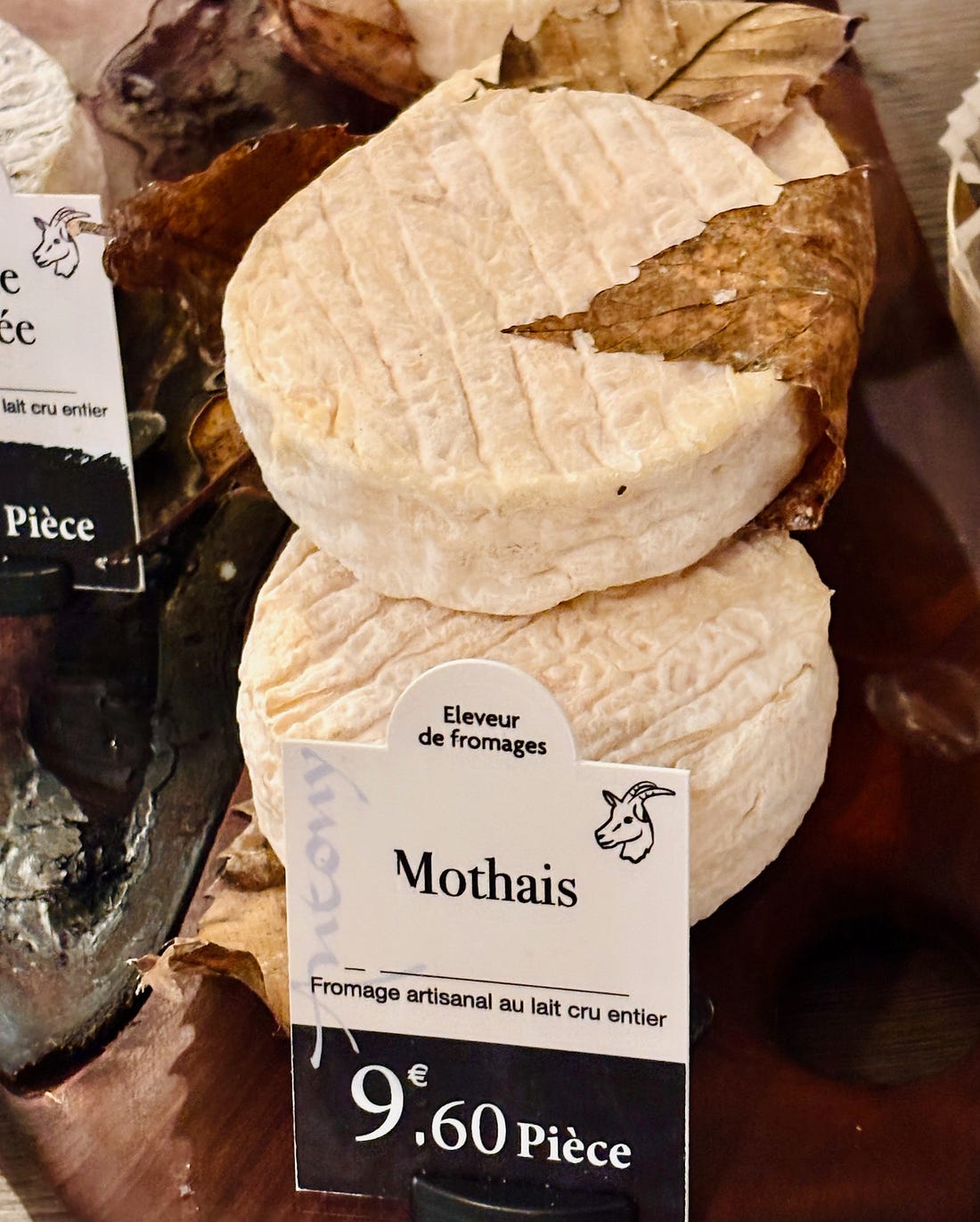
Monthais sur Feuille is one of my favorite goat cheeses, ripened on a chestnut leaf (feuille), which absorbs some of the humidity. While you can find this cheese at many fromageries, theirs is exceptionally good, made by a “passionate and incredibly gifted producer.” It’s nice to see them calling out the work and effort of producers they work with, since at Fromagerie Antony, cheese is a collaborative process. They follow the whole process, from milking the cows, to curdling and molding the cheese, and finishing it in their cellars.
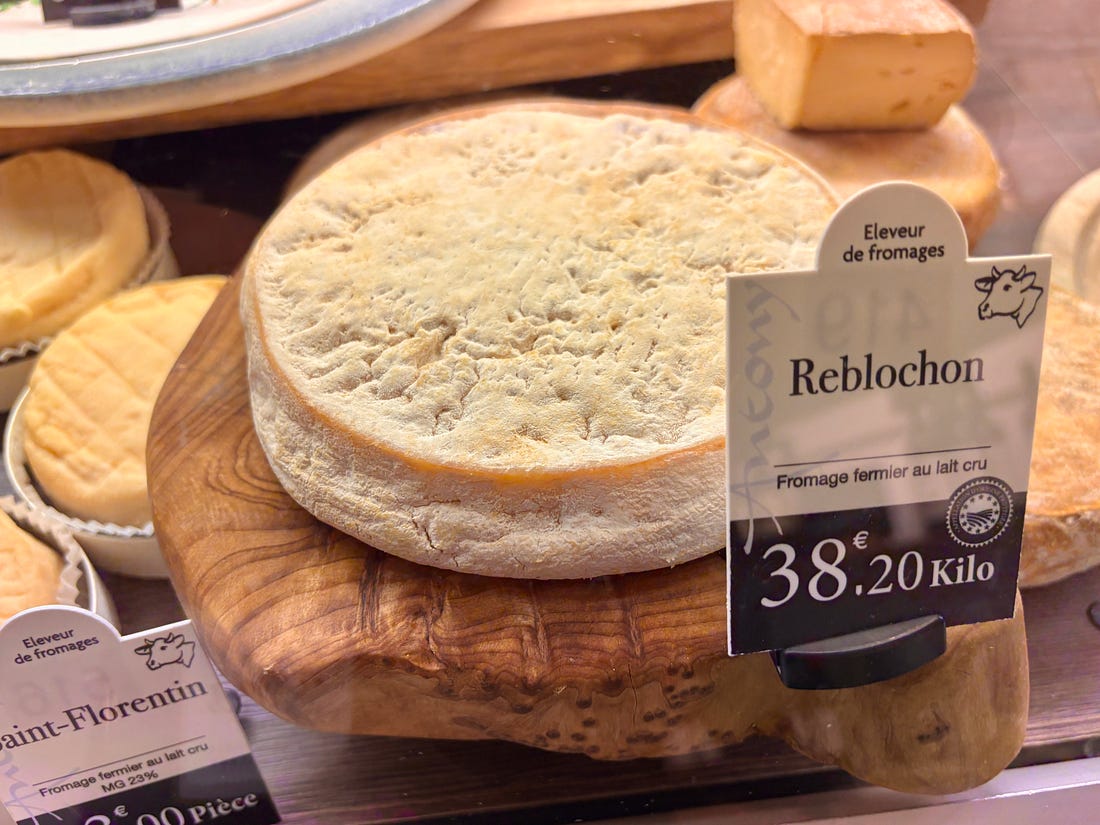
A few years ago I got picked on for making Tartiflette without Reblochon, the classic cheese. But I saw the high prices for it outside of France, and because, in reality, a lot of times in France, Tartiflette is made with other cheeses, sometimes labeled as “Le Fromage pour Tartiflette” (without a speck of Reblochon in its ingredients). I decided to let people know they can make it with other cheeses, as it’s done in France. That said, if I lived near Fromagerie Antony, I would get my Reblochon there and make Tartiflette with that. Actually, if I lived nearby, I’d get all my cheeses there. Unfortunately, it’s a little too far to do my cheese shopping, but at least I had the good sense to bring enough cheese home to last us a few weeks…even if it didn’t.
Fromagerie Antony If you want to visit, cheese tastings are available to the public by reservation here, with at least a one-day notice. Their website also offers information on lodgings in the area as well as taxi services. Getting there from Paris requires a train trip and a taxi or rental car. (When driving, their website notes that navigation systems don’t always take you to the right village, even if you enter it correctly in a GPS system. They suggest you follow this Google Map.)
You're currently a free subscriber to David Lebovitz Newsletter. For the full experience, upgrade your subscription.
|
Tuesday, March 10, 2026
A Visit to Bernard Antony, the Master of Ripening French Cheese










Subscribe to:
Post Comments (Atom)
No comments:
Post a Comment