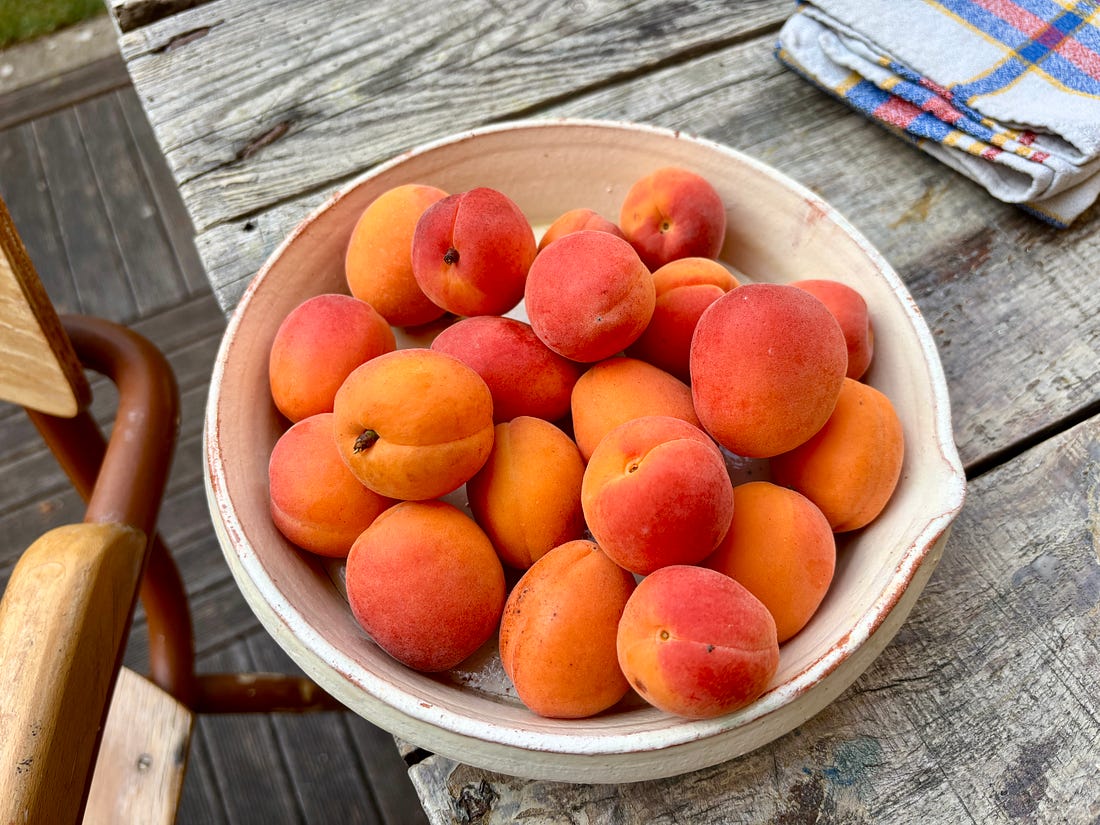
August is finally here. Being Paris, the weather has teetered between heat waves, and chilly spells, and everything in between. Someone told me when I moved here, “If you don’t like the weather…wait 15 minutes.” I spend most of the year waiting for summer, mostly because of the fruits we get, and it doesn’t disappoint. I am in heaven with all the nectarines, cherries, strawberries, and apricots that are available, and admit to being very greedy with them.
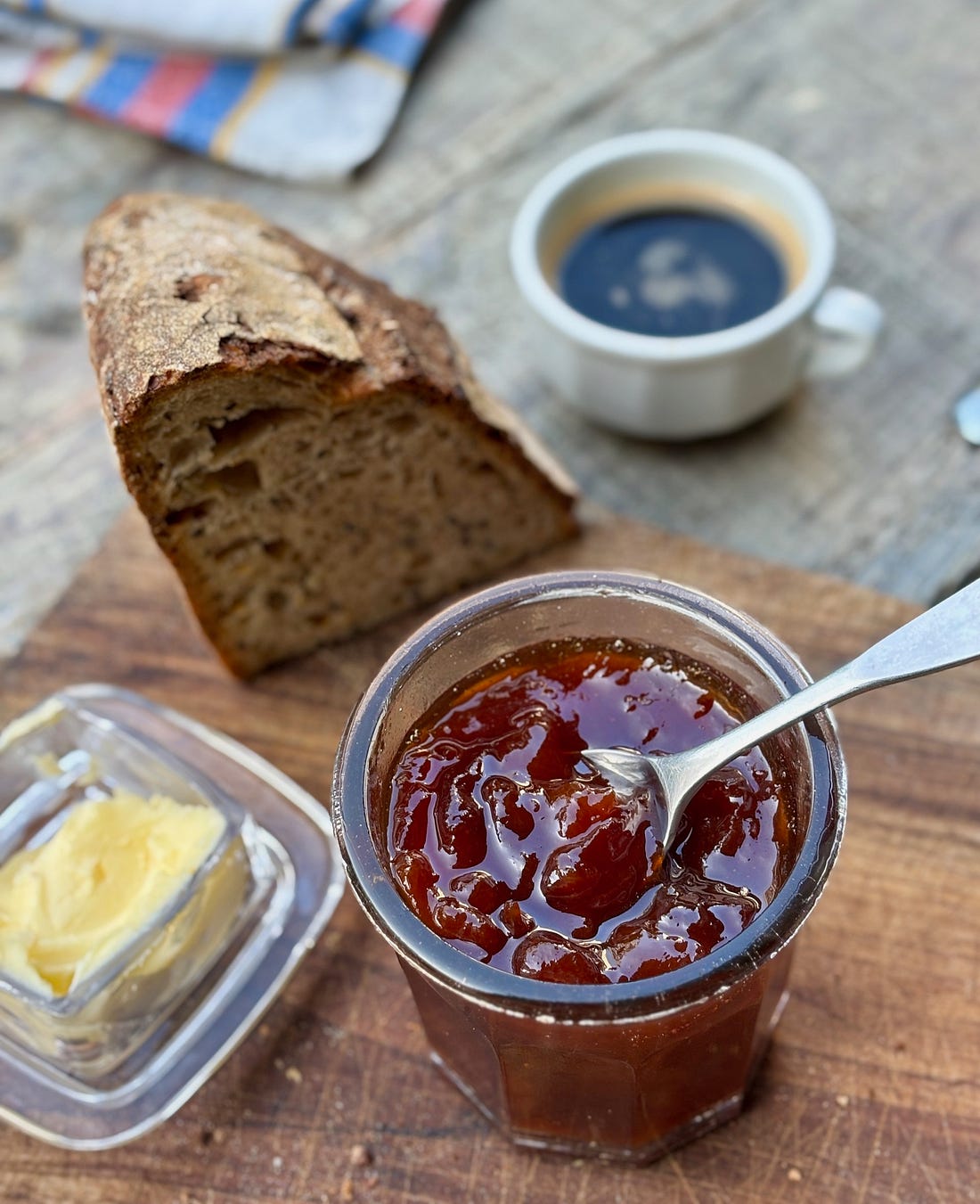
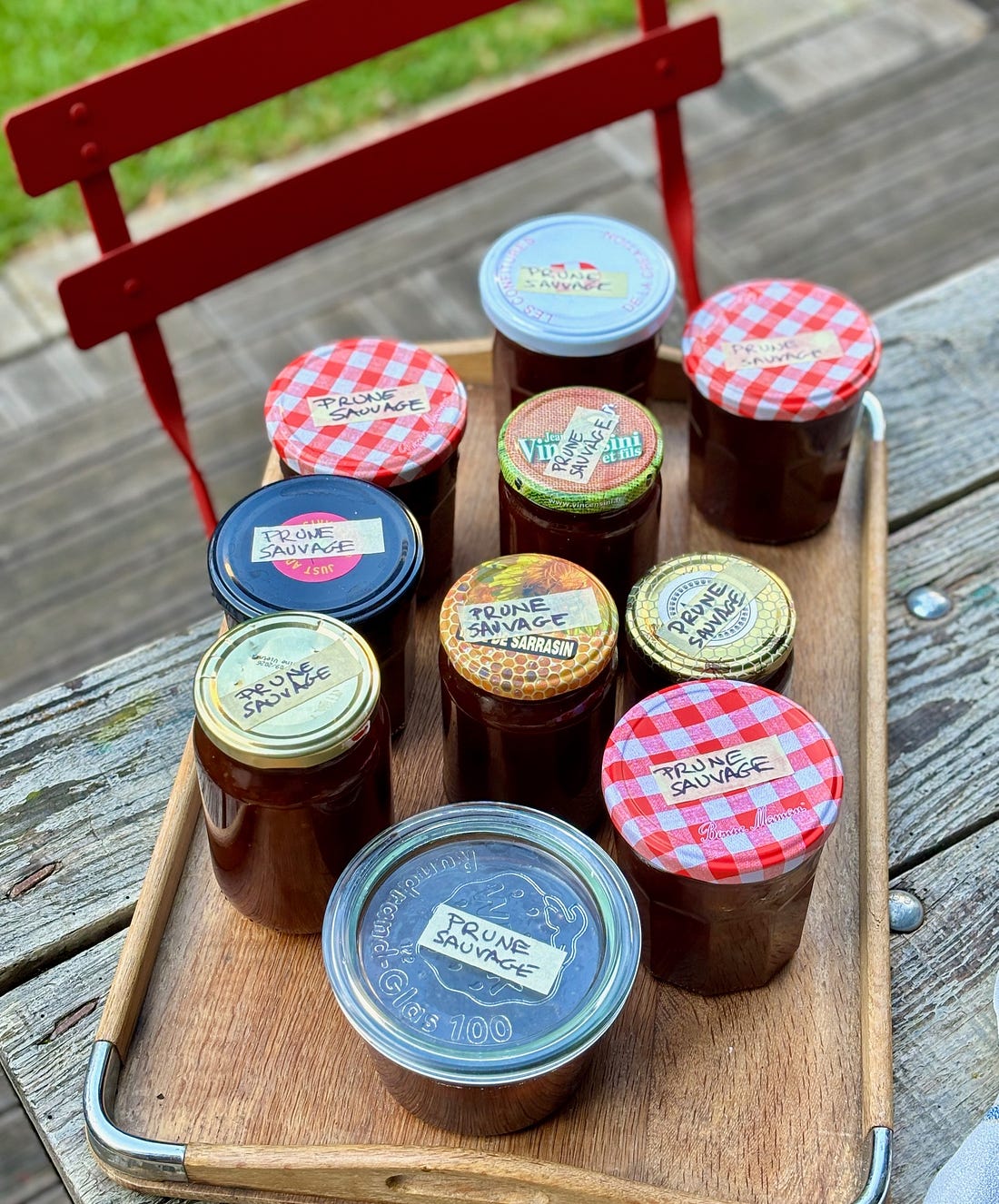
Sadly, apricots and cherries have wound down, as well as strawberries, and those above are likely the last of them. But we’ve had a good run together, and I’ve made apricot jam and a few galettes; however, I am already missing cherries, which I can never get enough of. Thankfully there are still nectarines, peaches, and plums, which are tumbling forth. In France, sweet plums are the mostly widely available, such as mirabelles and Reines-Claudes (greengage plums), and I like them both, especially the latter. But I am also a fan of the big, purple tangy plums that are so abundant in America. The best plums for jam—imho—are tart plums, which make a particularly wonderful jam. And nothing beats wild plums, prunes sauvages, for baking and jarring up.
When we returned from our trip to Brittany …
…I had my hands (or rather, my suitcase) full of wild plums that I’d picked and made a lot of jam from them.
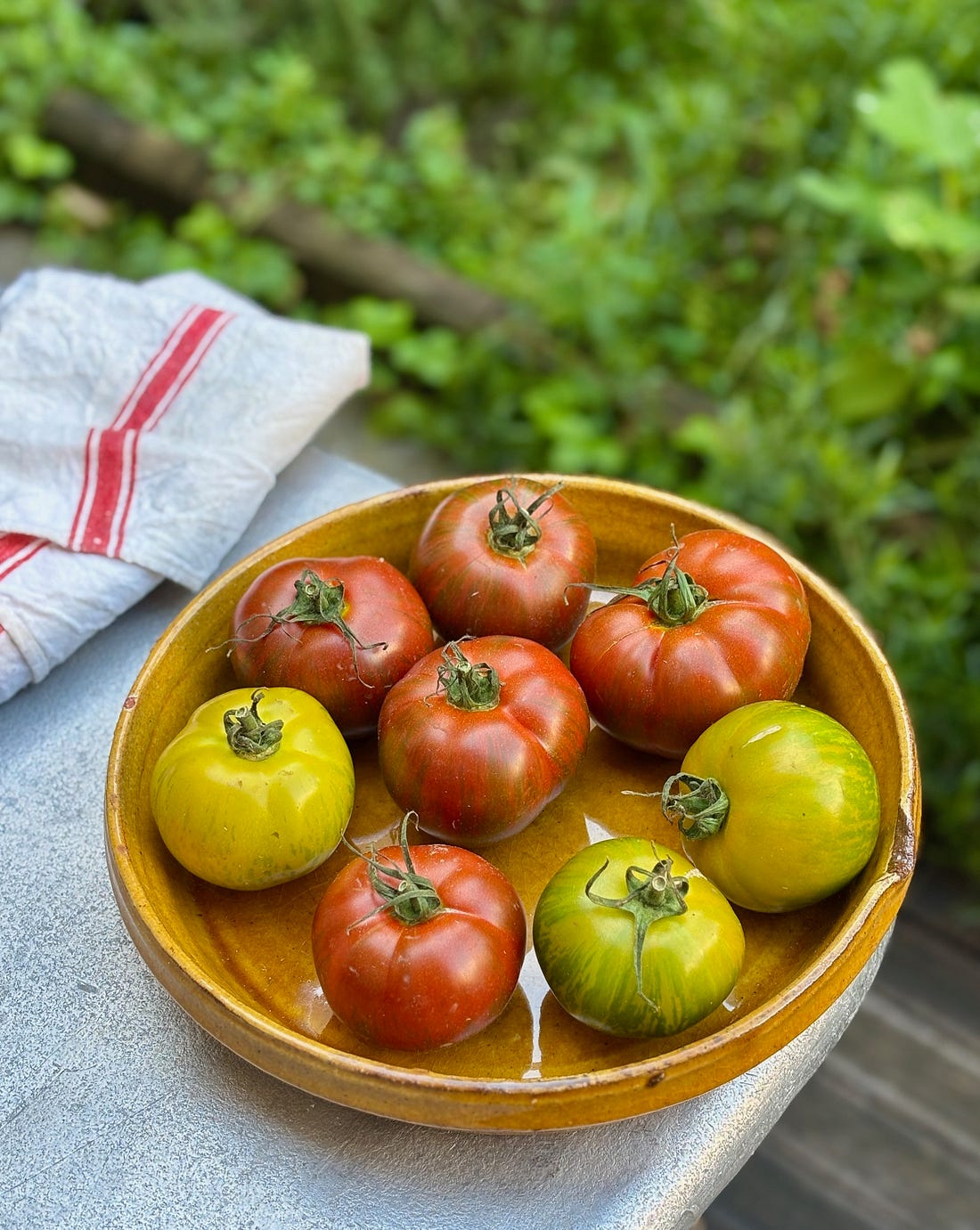
Paris has also turned into a good tomato city. For many years, the markets were dominated by rather wan hothouse varieties, even in the middle of summer, but now tomates anciennes (heirloom tomatoes) are available in shops that sell produce, from small producers, and at some outdoor market stands. And another sign of change was that I actually got two ears of rather decent fresh corn (each ear was €2,20/$2.75), which was an affordable risk. In France, corn was traditionally raised as animal feed, so most of it was hard and close to inedible to humans, especially to those of us raised on fresh, sweet corn.
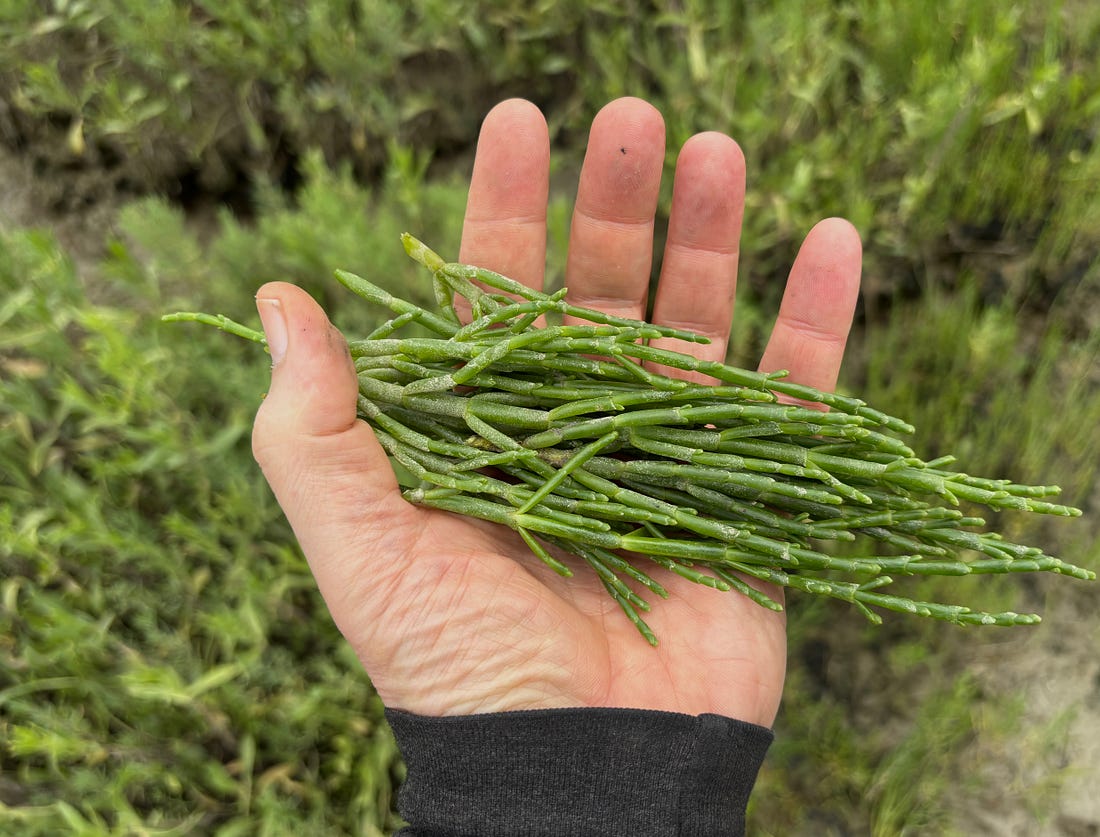
Romain, who never had fresh corn on the cob in his life, was smitten with it due to trips to the U.S., so he was as thrilled as I was to get a taste of summer. While I’ve always boiled corn, once I learned how easy it was to microwave it, which also eliminates the need to remove those pesky strands of corn silk, I became a convert. Another thing I picked, and picked up, in Brittany was salicornes, called samphire in English, which are little succulents that grow in salt marshes, of which there are many in Brittany.
Because they’re not that well known, they’re often called “sea beans” due to their slight resemblance to green beans.
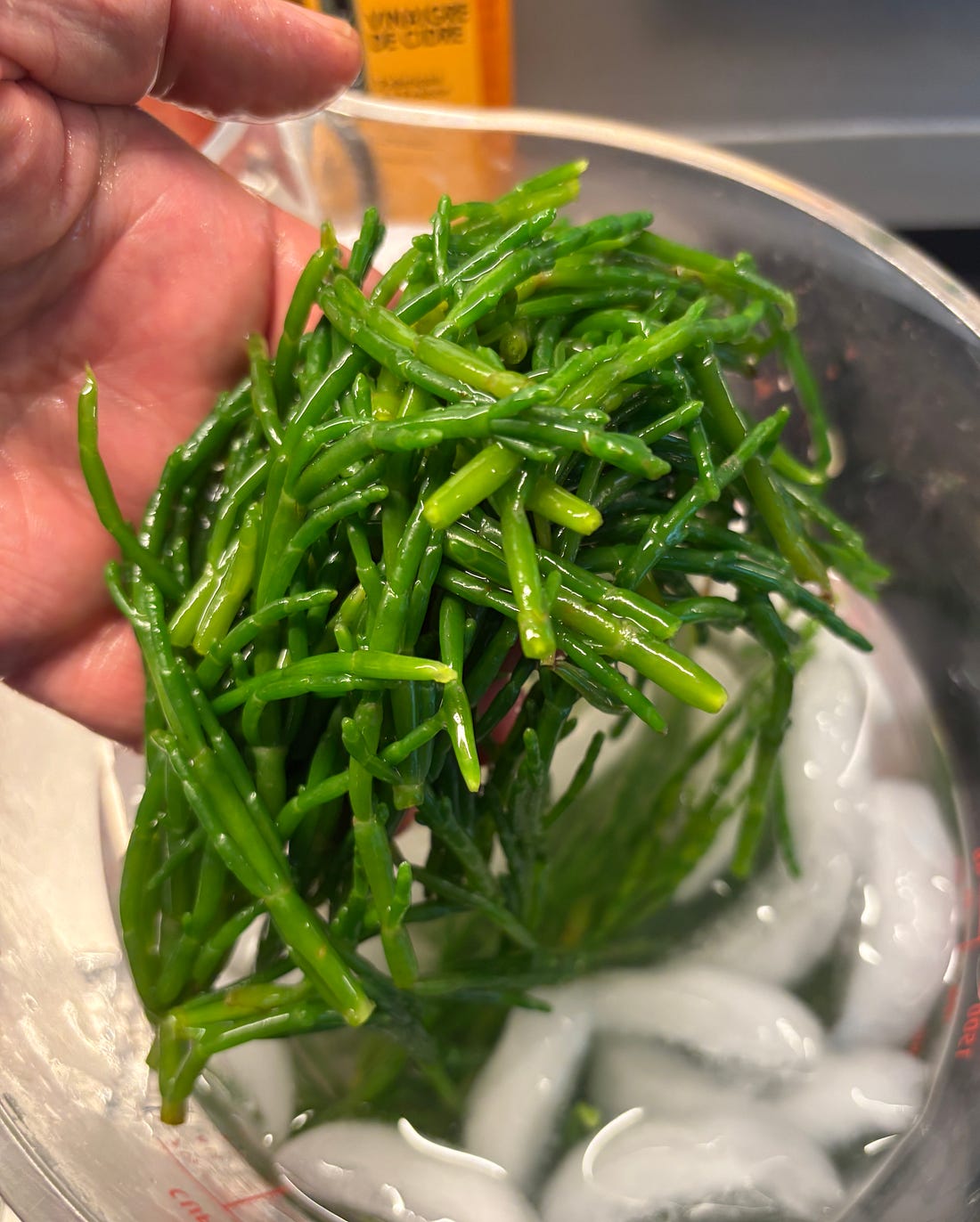
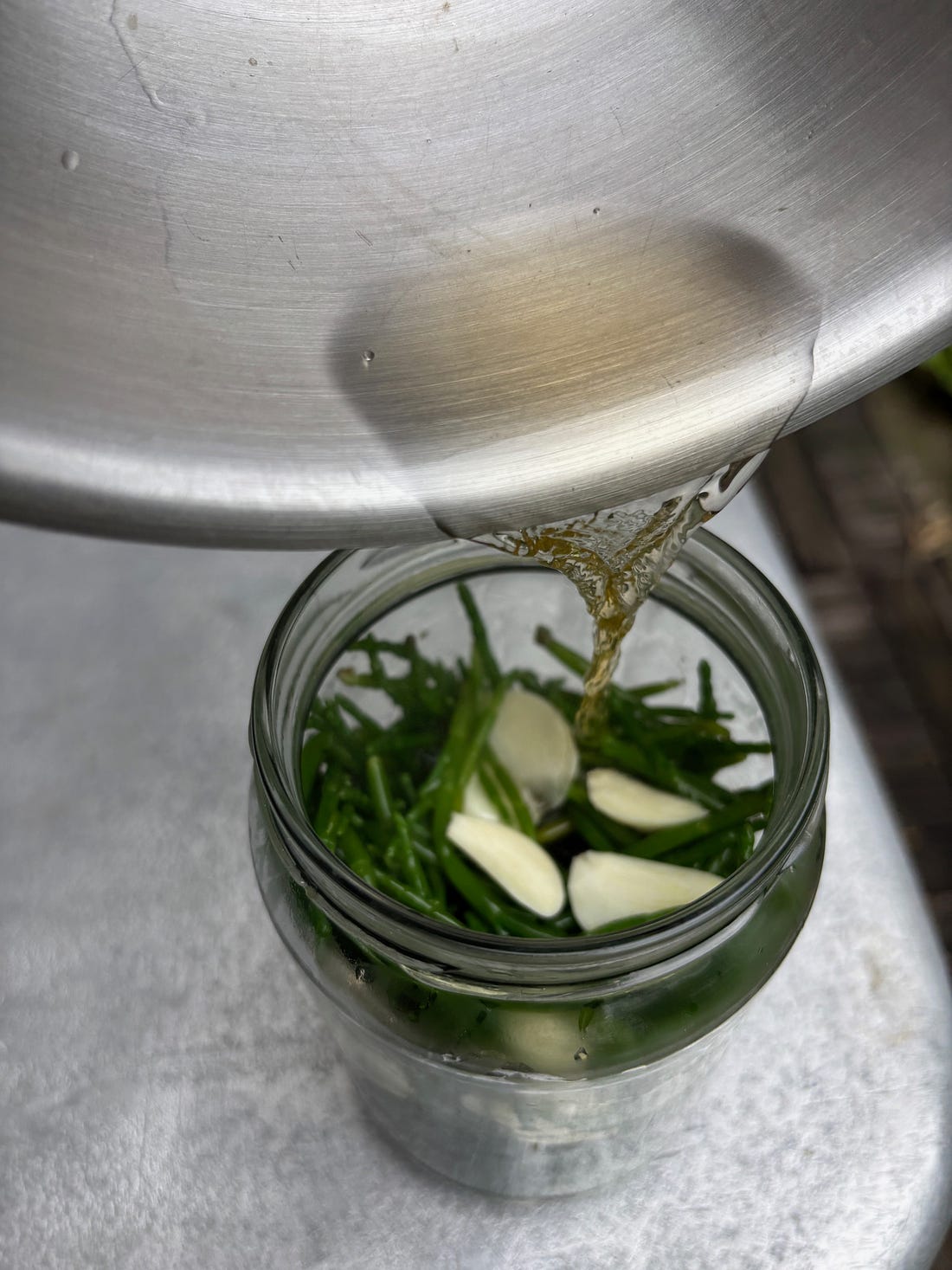
So while the tides were low, we snipped a few handfuls and I took them home to pickle. After trimming off any firm or brown bits, I figured I’d blanch them for about 30 seconds in boiling water, then shock them in a bowl of ice water, hoping that would help them keep their vibrant green color, which it seemed to do. I packed them into a clean jar (I had about 5 ounces/150g) of samphire, along with 2 thinly sliced garlic cloves, 8 black peppercorns, and 1/2 teaspoon of coriander seeds. I heated up 1 3/4 cups (430ml) of cider vinegar with 1 teaspoon of sugar, enough to submerge the samphire, then poured that over them in the jar. Once they cooled down a bit, I screwed on the lid and refrigerated them.
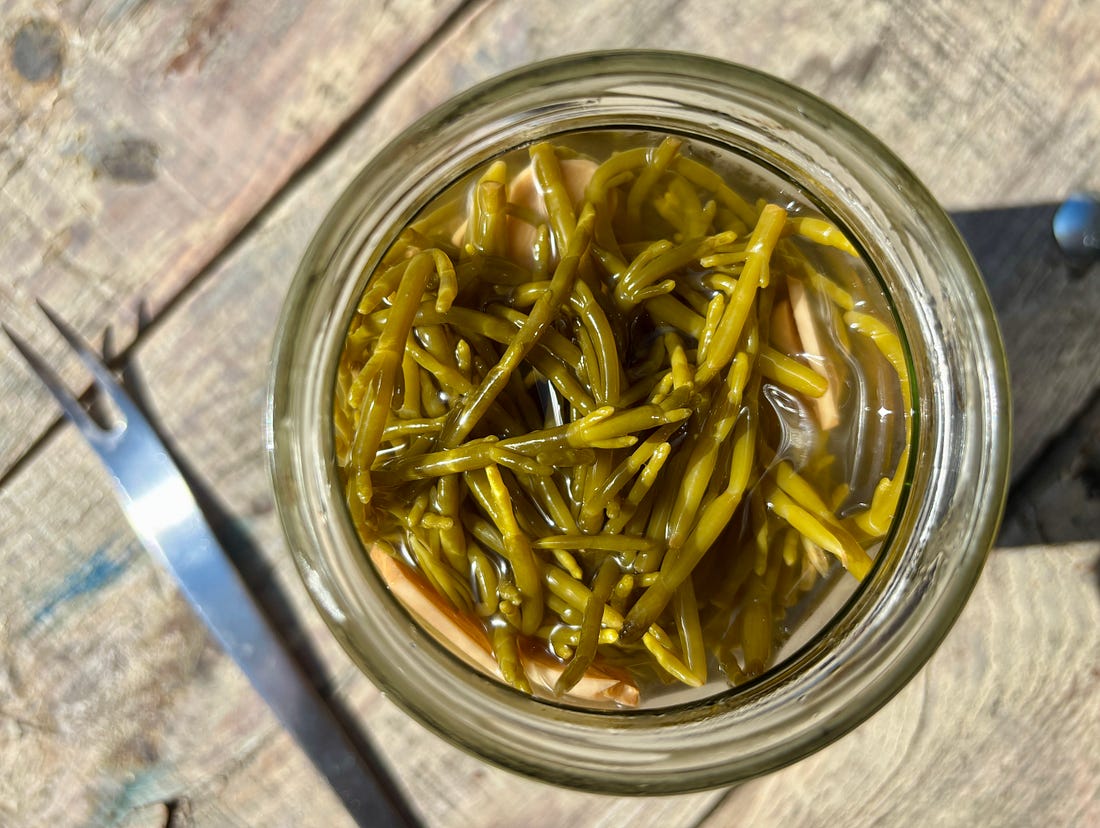
They came out pretty well after a few days…
…although I’m not sure blanching them was necessary since their bright green color had diminished a bit. But they tasted great and will be delicious served with pâté or chopped up and used in place of capers, or as a base for a salsa verde of sorts, along with lots of chopped fresh herbs and olive oil. Since it’s August, many in Paris have left town for the summer. We are here because a contractor, who has been stringing us along since we engaged him in March, promised to come next week. He absolutely was insistent that he would start on a certain date, so we asked him, since he was so sure he’d come on that date, that if he didn’t, he’d lower his fee by 20%. He balked at lowering his fee, but I countered that if he was sure he was coming, he had nothing to worry about. So we’ll see. Romain said he would probably come in October. 🤷 We’ll be taking off the last part of August through mid-September and will return after the rentrée in France, missing the mass migration back to the city, while we visit some friends, drink some rosé, and hit a beach or two.
I hope you all are enjoying the summer as much as I am, and enjoying the bounty of fruits and vegetables wherever you are. -David
Links I’m Likin’-Not sure I want anyone touching my M&M’s. (Newsweek) -We’re finally getting some good news (episode 9, season 3), for those watching And Just Like That. This 55-point recap is spot-on. Note: It contains spoilers. (Vogue) -In U.S. drug stores, two out of three shoppers won’t buy things behind locked cases, which are annoying for those of us who like to browse. (Consumer World) -EU to ban charging customers for carry-on luggage. (Euro News) -Scandal hits the rice pudding world. (Tasting Table) -Is the bread in Europe really better for you? (NYT/article unlocked) -This giant chocolate chip ice cream cookie sandwich is the sweetest recipe of the summer. (Smitten Kitchen) -My absolute favorite food book is The Auberge of the Flowering Hearth. Does it matter if it’s largely made up? (The New Yorker/possible paywall) -I was going to take up a collection for this Emilio Pucci men’s shirt…but it sold out😞 (Emilio Pucci) -79-year-old woman ditches life in New York for Paris…in spite of the differences in laundry detergents, customer service, and the lack of kale.* (CNN, via Michael Ruhlman) -Someone once told me all the extra things you pay for when you live abroad are “expat taxes,” but I never knew about the tourist tax** until a former waitress in Paris spelled it out, after a journalist for a French newspaper went undercover and revealed how American tourists can get ripped off in Paris. (The Guardian/The Independent) -Joe Yonan, longtime food and dining editor of the Washington Post and all-around terrific person, shares 6 things he’s learned about food journalism in 25 years, as he retires. (WaPo/article unlocked)
*There is kale in Paris, but no one really knows what to do with it. I’d rather have broccolini. If someone can start growing that in France, I’d sign up for a weekly bunch. **I don’t know how frequently it happens but if it does, it’s likely in heavily touristed areas, such as Montmartre and the 6th and 7th arrondissements. A 15% service charge is always included in a restaurant or café bill; a pourboire, or tip, is optional and can be left in cash and sometimes on the credit card machine. A carafe of water is always free, and you should never feel obliged to pay for a bottle of water, although some restaurants and cafés now offer carafes of in-house filtered still or sparkling water, and there may be a charge for that, which should be noted on the menu. When you dine out, it’s a good idea to check the bill as servers do make mistakes (as they do everywhere, even with locals). French people don’t like to see people cheated either, so if you feel you’ve been charged for something in error, be like a local and don’t be afraid to speak up.
Dreaming of a Loft in Paris?France doesn’t have a comprehensive MLS (multiple listing service), as there is in the U.S., that you can peruse when buying a property. A few websites, such as SeLoger, Le Figaro Immobilier, and Bien’Ici, have sprung up to create a multiple listing of sorts. But unlike the MLS, where everything in the entire city is listed so it’s easy to find a place, agencies pay to list there, so just a fraction of properties for sale are included. Many properties in France are sold directly by the owner, much more so than in the U.S., so people search on real estate websites and Le Bon Coin, a website where everybody in France sells everything, from vintage Le Creuset, garden supplies, and used bicycles to cars, houses, and apartments.
Real estate agencies have improved their websites (and attitudes) immensely since I wrote my book, L’Appart (although this newsletter, in the Q+A section at the end, points out something to watch out for). Some even specialize in espaces atypiques, or atypical places, such as lofts and apartments with terraces or gardens. If you’re one of those people who can’t stop scrolling on Zillow, here are some websites for unique properties in Paris: -Rez-de-Chaussee: Specializes in ground-floor apartments, which are often lofts or old workshops transformed into living spaces. -Terrasses et Jardins: Focuses on apartments with terraces and gardens. -Les Enfants Rouges: Paris real estate agency mostly located in the Marais but covers other trending areas, such as the 10th and 11th arrondissements. -Espaces Atypiques: Unique apartments in Paris and across France. Their well-done website also can be read in an English version. -Loftappart: Loft apartments in Paris. -Belles Demeures: Higher-end apartments in France. Website has an English-language version.
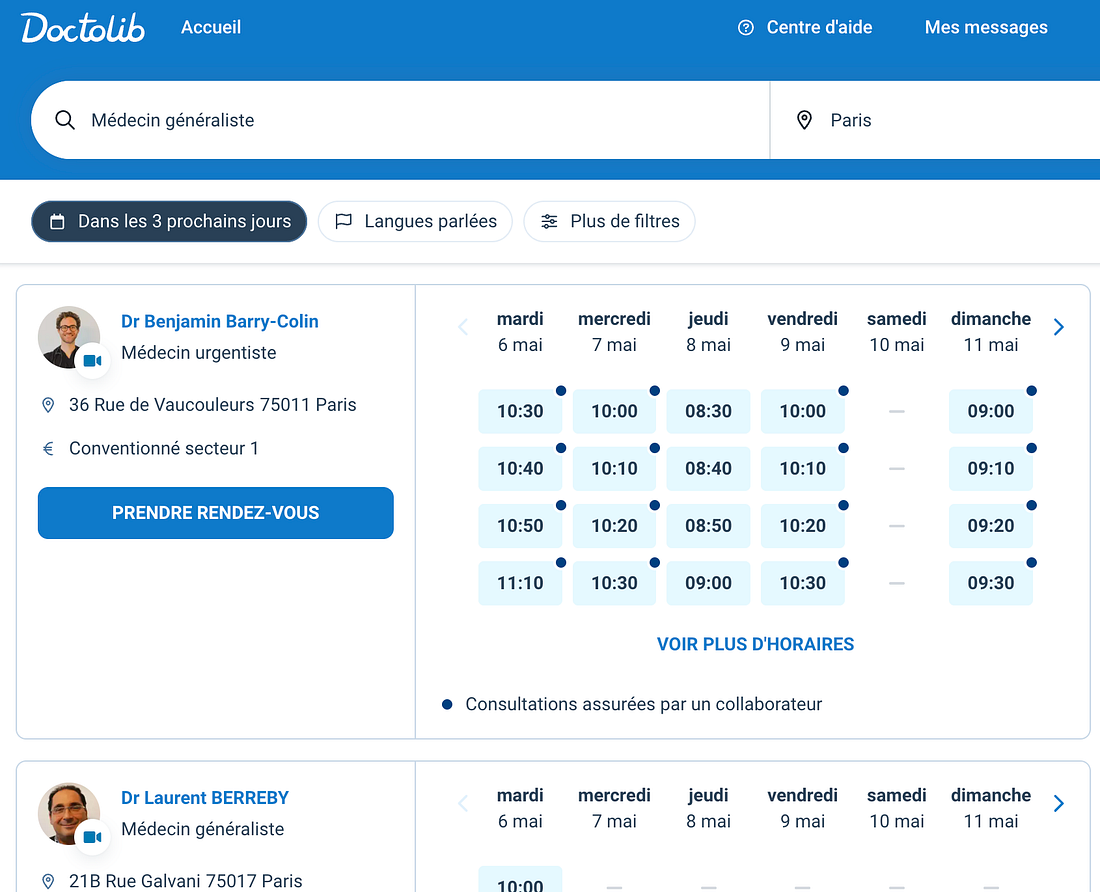
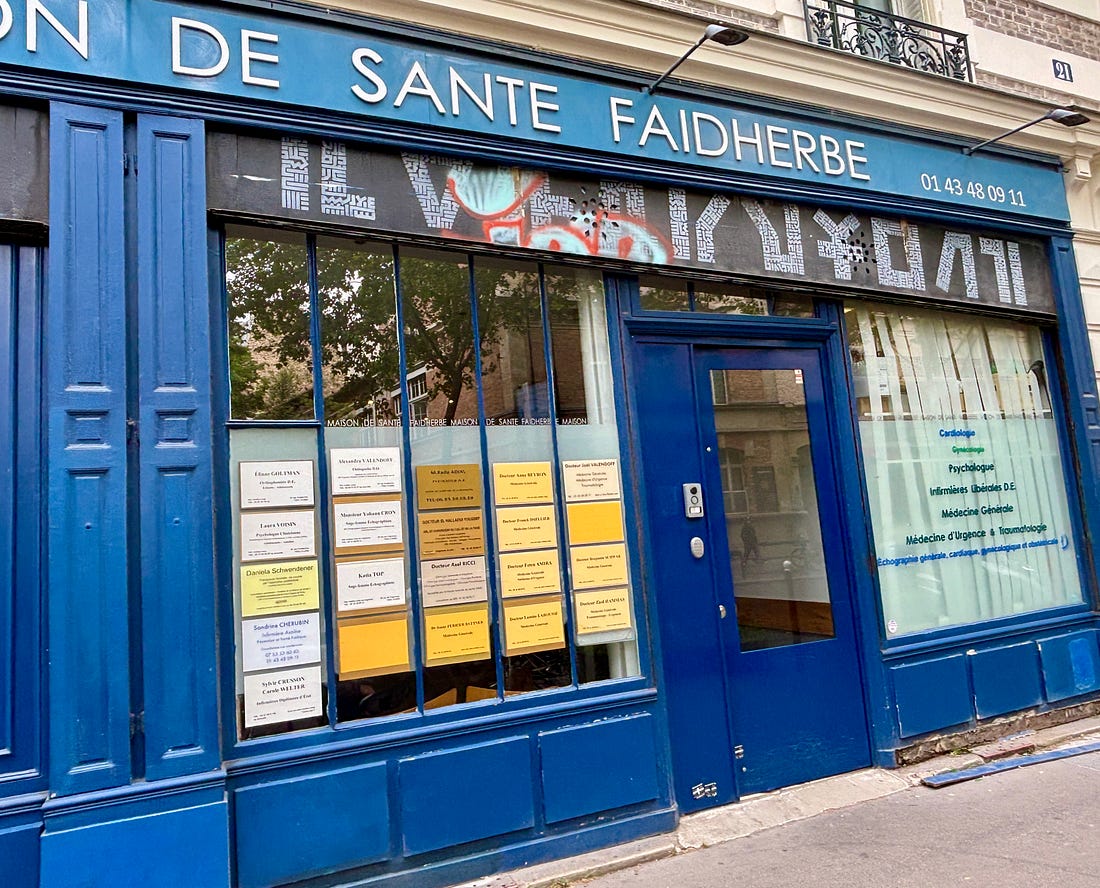
What to do with a medical issue or emergency in ParisA friend recently arrived at our place in Paris, as we prepared to spend time together eating around town and exploring the city. The next morning, she felt wobbly and dizzy. I texted a neighbor who is a doctor and she said to take her to the emergency room right away. My friend ended up staying in the hospital, in intensive care, for five days. Even though the weekend was a pont, a holiday weekend, when most salaried workers take an extended weekend, the staff at the hospital took her right in, and I spent the day with her as she saw a series of doctors and nurses. At the end of her stay, after the doctors made sure she was okay to leave and travel, I took her home. During her time in the hospital, she asked me how much it was going to cost. (She had health insurance in the U.S. and travel insurance.) The doctors said it wouldn’t cost anything and were surprised at the question. Upon checking her out, I asked if we needed to go to an office to settle up and they said, “It’s okay to leave.” Nowadays, travel insurance is recommended for everyone, although medical costs are substantially lower in France (and in other countries) compared to the U.S. The system in France is supported by social charges employers and self-employed people pay, a percentage of their salaries and earnings. If you have a minor medical question in France, you can go to a pharmacy. French pharmacists have more leeway than pharmacists in the States, and they can diagnose and treat you, as well as administer some vaccines and medications. But they aren’t doctors. If you need to see a doctor, they can refer you to one, or you can go to one of the many medical clinics in Paris. If you want or need an English-speaking one, don’t be afraid to ask. Most doctors work by appointment, but some clinics in Paris take walk-ins. You can find a doctor or clinic on Doctolib, a medical appointment booking service. There you can search by neighborhood, specialty, and availability: Same day (aujourd’hui), within the next three days (dans les 3 prochains jours), or in the future.
You can search by langues parlées (spoken languages), which range from German to Ukrainian, as well as sign language. The website is only in French, so make sure you’re making an appointment for an in-person consultation, rather than a video one, which is denoted by a little camera icon in the lower corner of the light blue time slot(s). SOS Médecins, whose website is in English and French, and UMP are private doctors who make house calls 24/7, or you can do a video consultation. SOS Médecins and UMP both have walk-in clinics as well, which I linked to. (In my experience, it’s preferable to use SOS Médecins.) When you see a medical professional in France, they’ll ask for your Carte Vitale, a French insurance card. If you don’t have one, you’ll have to pay for the services. When you pay, ask for a facture acquitée, a receipt that you paid (which is more detailed than a credit card receipt, which doesn’t mean anything in France), that you can send to your insurance company when you get home.
Prices vary, but a house call in France will range between €36 and €86, depending on the time of the day and where you are. If you go to a doctor’s office or clinic, the base prices are listed here (about €30), although specialists and other doctors, especially in Paris, often charge more, up to €150 for a consultation. For an emergency, dial 112, or 114 if you need hearing assistance. Other phone numbers are here. You can also call 18, which is the French fire department, who are highly qualified to deal with medical emergencies. There’s a list of medical emergency terms in French here. At the end of my friend’s stay in the hospital, she did get a bill for close to €12,000, most of it for the room with a nominal amount going toward the extensive medical care she received, which her U.S. insurer is paying most of, with travel insurance covering the rest.
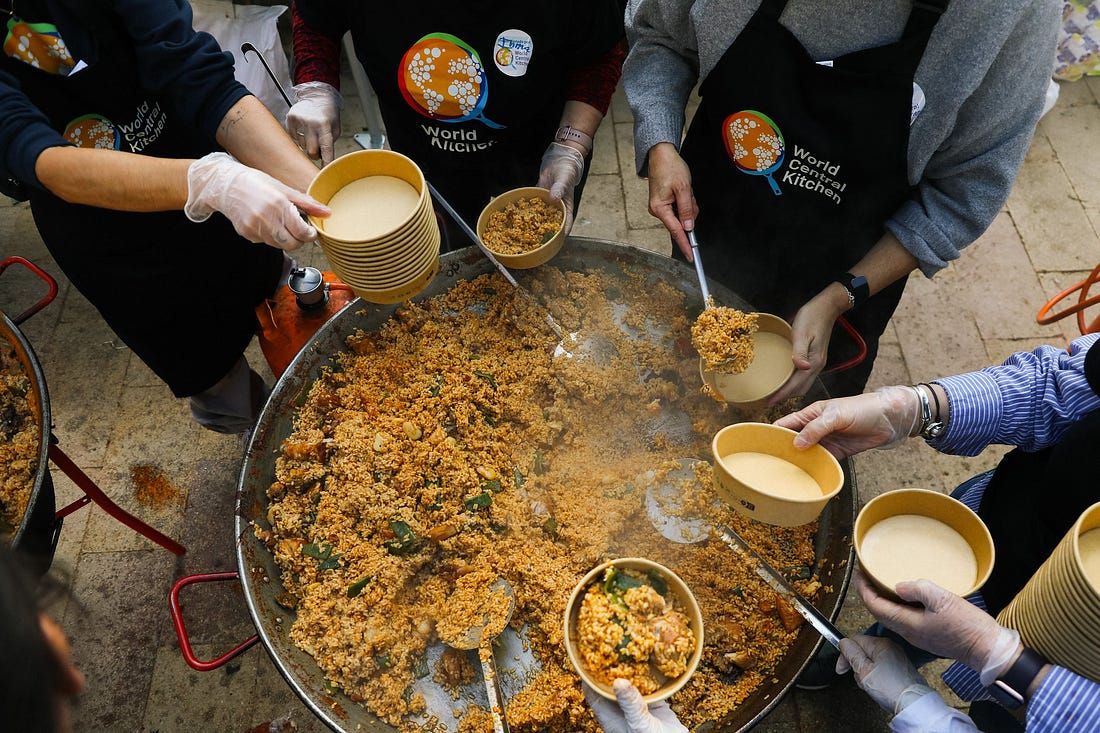
Lastly, it’s been hard watching and reading news about people going hungry. My life has always revolved around food, and I’ve spent the last fifty years of my life feeding people. I am very fortunate to be able to go to the market or a grocery store whenever I want and fill up my basket with food. (Plus I am the very definition of hangry, and can’t imagine not being able to having access to food when I need it.) So seeing people, especially children, go hungry is heartbreaking. As Chef José Andrés, founder of World Central Kitchen, said in his essay, The World Cannot Stand by With Gaza on the Brink of Famine (article unlocked):
Just this week they were able to set up a kitchen and are working on preparing sixty thousand meals a day, and will soon be setting up more. They are also providing meals to people affected by the floods in Texas, the war in Ukraine, wildfires in Spain, and earthquakes in Guatemala. Their mission crosses borders, and is solely to feed people in need. It’s hard for me to ignore hunger, especially when it involves children, but when people are hungry or in need, if there’s something that can be done about it, I’m glad the World Central Kitchen is there to help.
You're currently a free subscriber to David Lebovitz Newsletter. For the full experience, upgrade your subscription.
|
Friday, August 1, 2025
August Newsletter




















Subscribe to:
Post Comments (Atom)
No comments:
Post a Comment