Flavour nugget #16: why bavette (flank) is the best steakAnd a recipe for bavette with cavolo nero beans
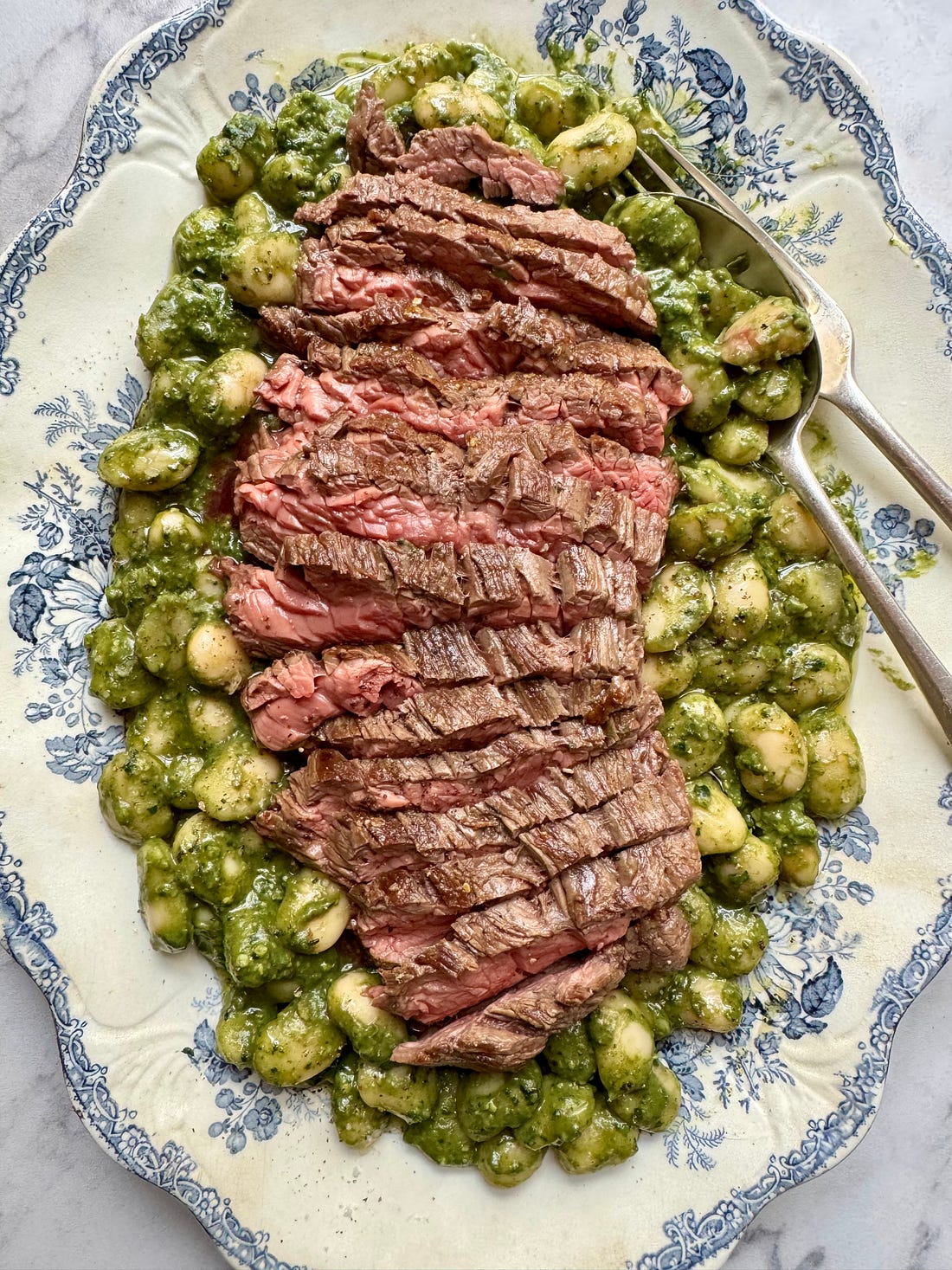
Hello, friends! How wonderful to see your numbers grow over the past couple of months since I started Flavour Nuggets. Usually, I jump right into this newsletter but today I couldn’t resist saying: thank you. It’s a pleasure to write to you each week. Today, we’re talking about steak. Bavette, or flank to my US readers, is from the abdominal muscles of the cow (underneath the sirloin) and has fast become my cut of choice. Why? First, it cooks quickly. Second, it’s great value compared to other steaks and third, it has proper depth of flavour. Once reserved by butchers for their personal plates and *technically* defined as offal, it’s become one of those once-ignored-now-trendy cuts like lamb shanks and oxtail in their heydays. Thanks to its affordability, bavette is as spotlight-hogging on a weeknight as it is starring in the weekend matinee. I mean sure, if I want a big blowout then I’m speed-dialling ribeye - a swaggering, chap-swinging hunk perfect for showboating and sharing. Bavette, though, is stealthily *performing*. There’s a lot of information about cooking steak out there, so I want to keep this simple. It isn’t hard! Here’s how I do it. PREP Bavette is a textured cut, so marinating it with something acidic such as citrus to tenderise it isn’t a bad idea. However, I practically never do this and it’s always fantastic eating. What *is* essential is a scorching hot pan. The kind of pan that will see a droplet of water skip across its surface. I use a cast iron skillet or griddle pan for this, although you won’t be surprised to learn that I also love to use a BBQ (for those new here: I have a strong interest in BBQ cookery). COOKING If your pan or BBQ is hot enough, you won’t need to add oil to the steak. However, I know that people like an insurance policy, so feel free to rub the meat lightly with an oil that has a high smoke point (e.g. vegetable or groundnut). Whatever you do, you must pat the steak dry first, then add oil (if you are using it), then season HEAVILY with flaky sea salt. This is all essential for building a flavourful, golden, intensely savoury crust. Slap the steak into the pan or onto the grill, then flip it every 30 seconds until cooked to your liking. How do you know if it’s cooked to your liking? You use a probe thermometer. Steaks come in all shapes and sizes and while, sure, I’d have some idea of how well the meat is cooked from experience, I want to know EXACTLY how much it is cooked. A probe thermometer is the answer. There are only two states of doneness relevant when cooking bavette, so here are your temps: Rare: remove from the heat at 48°C for a final serving temp of 50°C. RESTING Then, of course, you must rest it. Ten minutes will do ya just fine but 15 is even better. SLICING It’s always important to slice meat correctly (meaning: in the right direction) but with bavette it’s crucial. Have a look at the direction of the grain and slice against it, thinly (no 3cm-thick rib-eye-style slices please). If you have a large piece of bavette and cutting against the grain would result in unusually long slices, cut it into two or three sections with the grain then treat each as a single steak (sliced against the grain). SERVING Here are some suggestions for serving your perfectly cooked bavette!
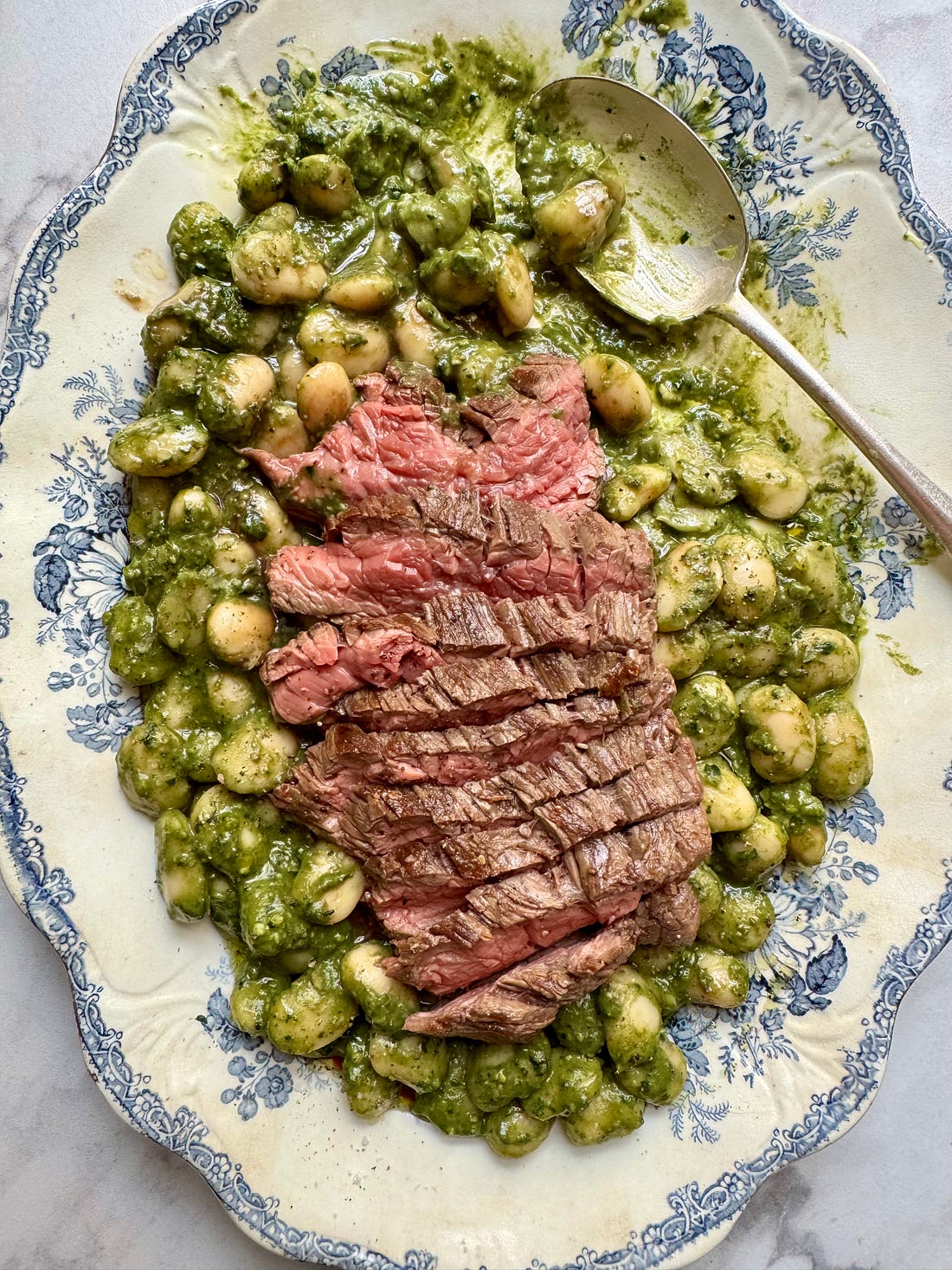
You can easily adjust the quantities here. The recipe below makes enough beans for 4 servings, but if you’re not serving 4 you can cook steak for 2 and have leftovers, or halve the beans recipe. You will also have leftover pesto - win! Put it into a container and cover with a layer of extra virgin olive oil. It will keep in the fridge for a couple of weeks. Bavette with Cavolo Nero Beans 2 bavette steaks (size is up to you as you’re cooking to temperature not time) Heat a griddle pan or other heavy-based frying pan over high heat and bring a saucepan of water to a boil. Fill a bowl with cold water and set aside. Blanch the cavolo nero leaves and garlic cloves for 3 minutes, then drain and plunge into the bowl of cold water. Pat the steaks dry then rub the steaks lightly with oil (if using) and season highly on both sides with flaky sea salt. Add a steak to the very hot pan. Cook, flipping at 30-second intervals until the required internal temperature is reached (see refs above). Rest and repeat with the second steak. Drain the cavolo nero and garlic cloves without squeezing out excess water, then blend with the Parmesan, walnuts, lemon juice and zest, extra virgin olive oil and some salt. If it’s still thick, add another splash of water until you have a pesto consistency. Put the beans and their juices into a pan and heat gently. Once warm, add a generous couple of tablespoons of pesto and mix well. Slice the steaks thinly against the grain. Divide the beans and steak slices between serving plates and enjoy!
You’re currently a free subscriber to FLAVOUR NUGGETS. For the full experience, upgrade your subscription.
|
Tuesday, February 18, 2025
Flavour nugget #16: why bavette (flank) is the best steak









Subscribe to:
Post Comments (Atom)
No comments:
Post a Comment