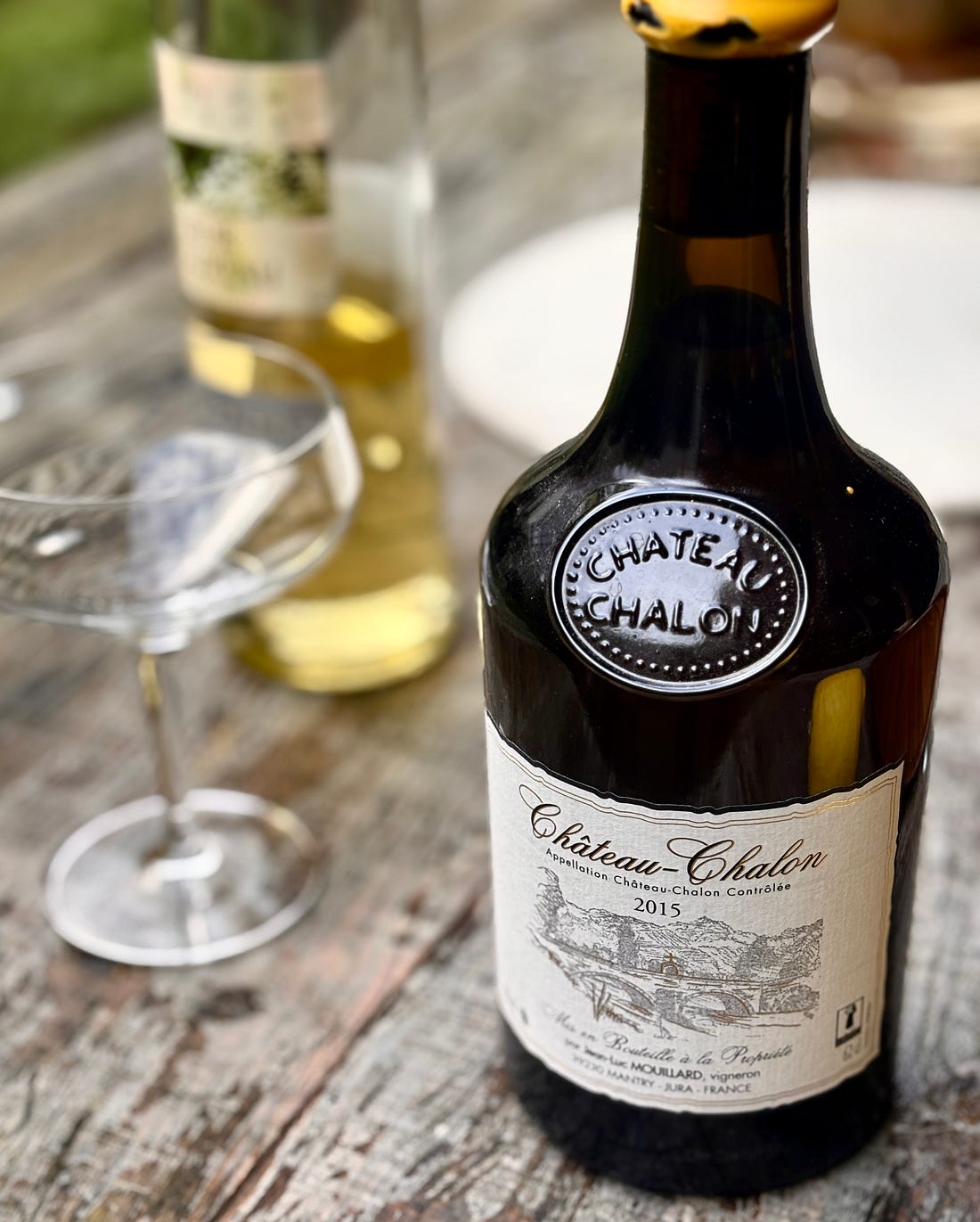
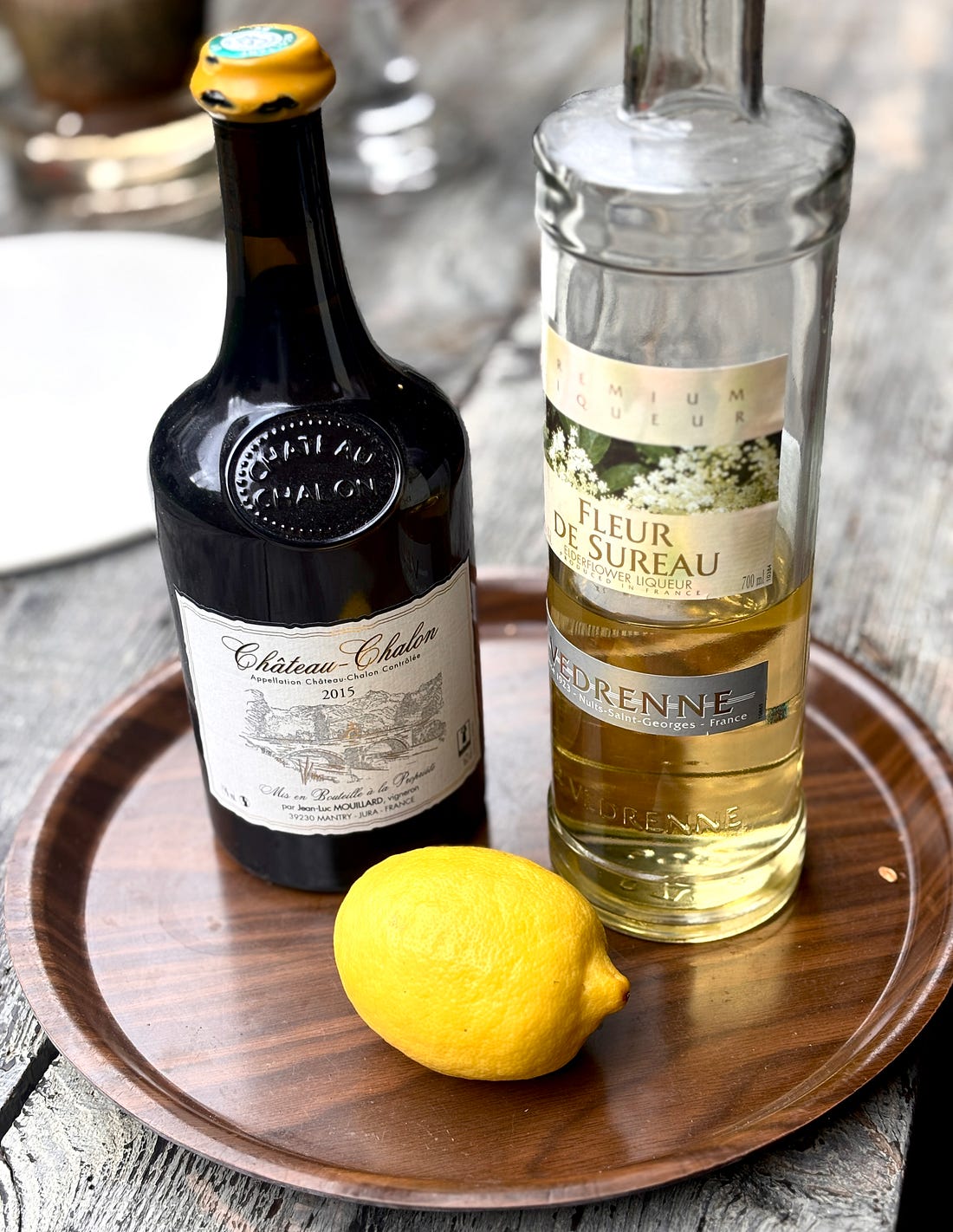
I don’t blame you if you haven’t heard of vin jaune, the primary ingredient in this cocktail. For years, the wine wasn’t available in the U.S. due to the size of the bottle: 62cl. Called a clavelin, its particular shape references the amount of wine that was historically left in the standard 70cl bottle after its 6+ years of aging. The wine that evaporates is called the part des anges, the angel’s share.
Winemakers in the Jura region, between Switzerland and Burgundy, where vin jaune is made, refused to change the size of the bottle to conform to U.S. standards, but it’s finally been cleared for legal sale in the U.S.
Even though it’s been cleared for export to the States, vin jaune remains an outlier in the wine world. In the Jura, some wines are intentionally oxidized, called sous voile. Unlike conventional wines, during aging, the oak casks for sous voile wines aren’t topped up, leaving room for a veil (voile) of yeast to form on the surface of the wine. That yeast is called the flor. Sous voile wines aren’t to everybody’s taste, and it’s easy to confuse their flavor with flawed wine. I like their more complex tastes, but for those who aren’t expecting it, they might think the wine is spoiled.
Other wines from the Jura are topped off with additional wine as they age, keeping the barrel full, called ouillé, and those wines tend to taste more like conventional wines. Because wine production in the Jura is low, the wines tend to be harder to get outside of France, and are more expensive. So I nudge visitors to France to give them a try while they’re here.* Why not?
Vin jaune means “yellow wine,” which refers to its rich golden color. It has a very distinctive nuttiness with notes of dry wood, green apples, lemon, burnt sugar, and maybe even spices. Because it’s made in the same region as Comté cheese, there is no better cheese pairing than Comté and vin jaune. It’s perfect.
Pre-order The Great Book of Chocolate
Better known than vin jaune is elderflower liqueur, which is now everywhere, prompting it to be dubbed the ketchup of bartenders. The sweet liqueur is a popular addition to spritzes and glasses of bubbly. And while people tell me they don’t like sweet cocktails (neither do I), cocktails often need a touch of sweetness to balance the other ingredients, such as lemon juice and stronger spirits.
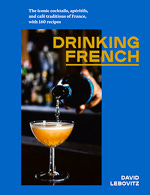
When I was writing my book Drinking French, bartender and bar owner Joseph Boley gave me a bottle of another French-made elderflower liqueur, which was featured in his cocktail in the book, and told me it’s the same thing but half the price. I’ve been using it (as you can see) and no one’s pointed out any difference.
Get Drinking French
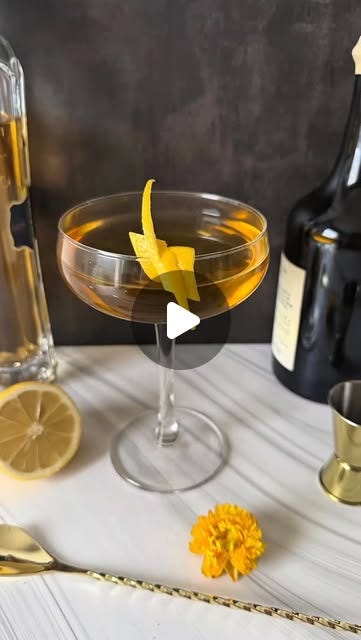
La Percée Du Vin Jaune on Instagram: "Fl’or du Jura 🌸, le vin…
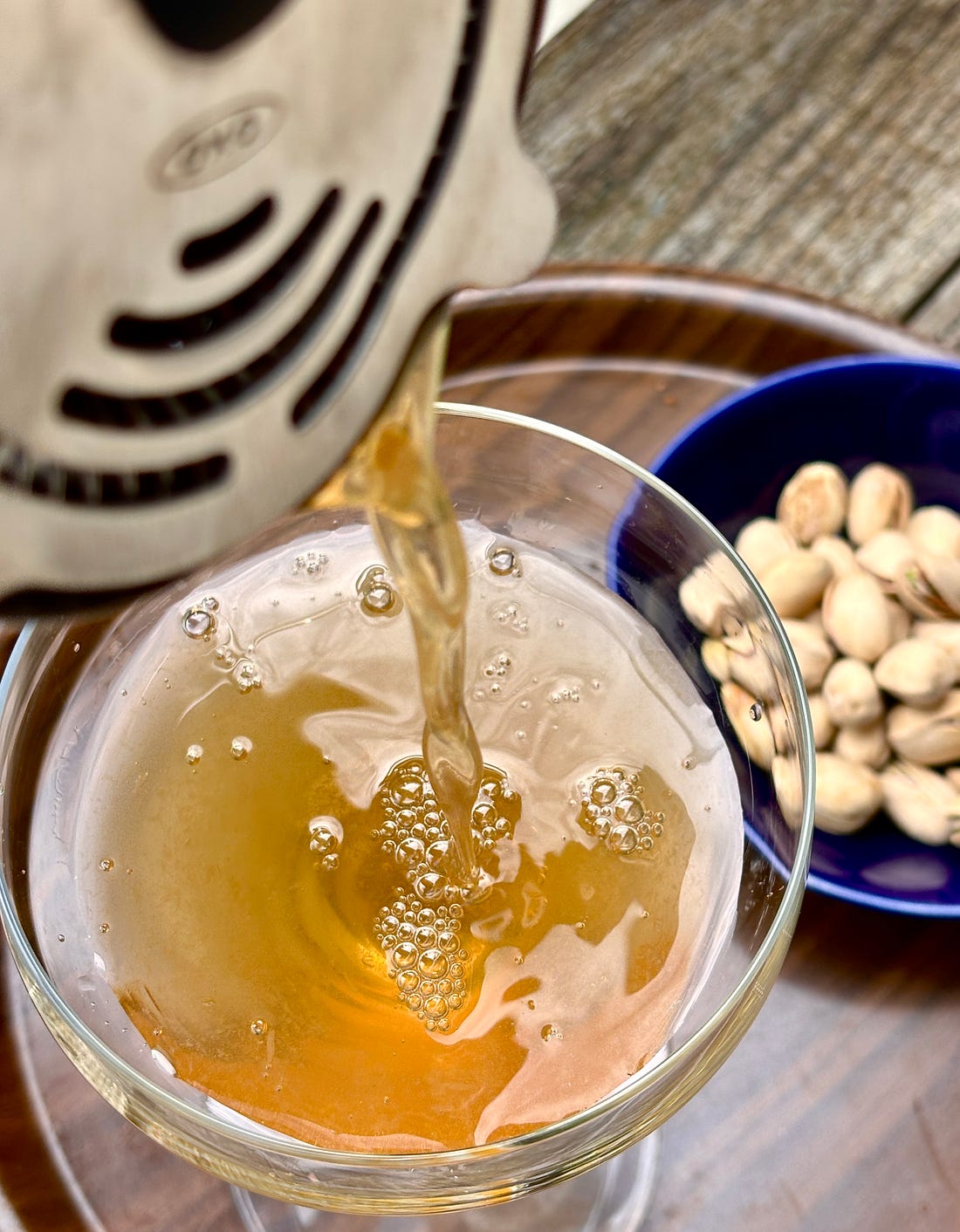
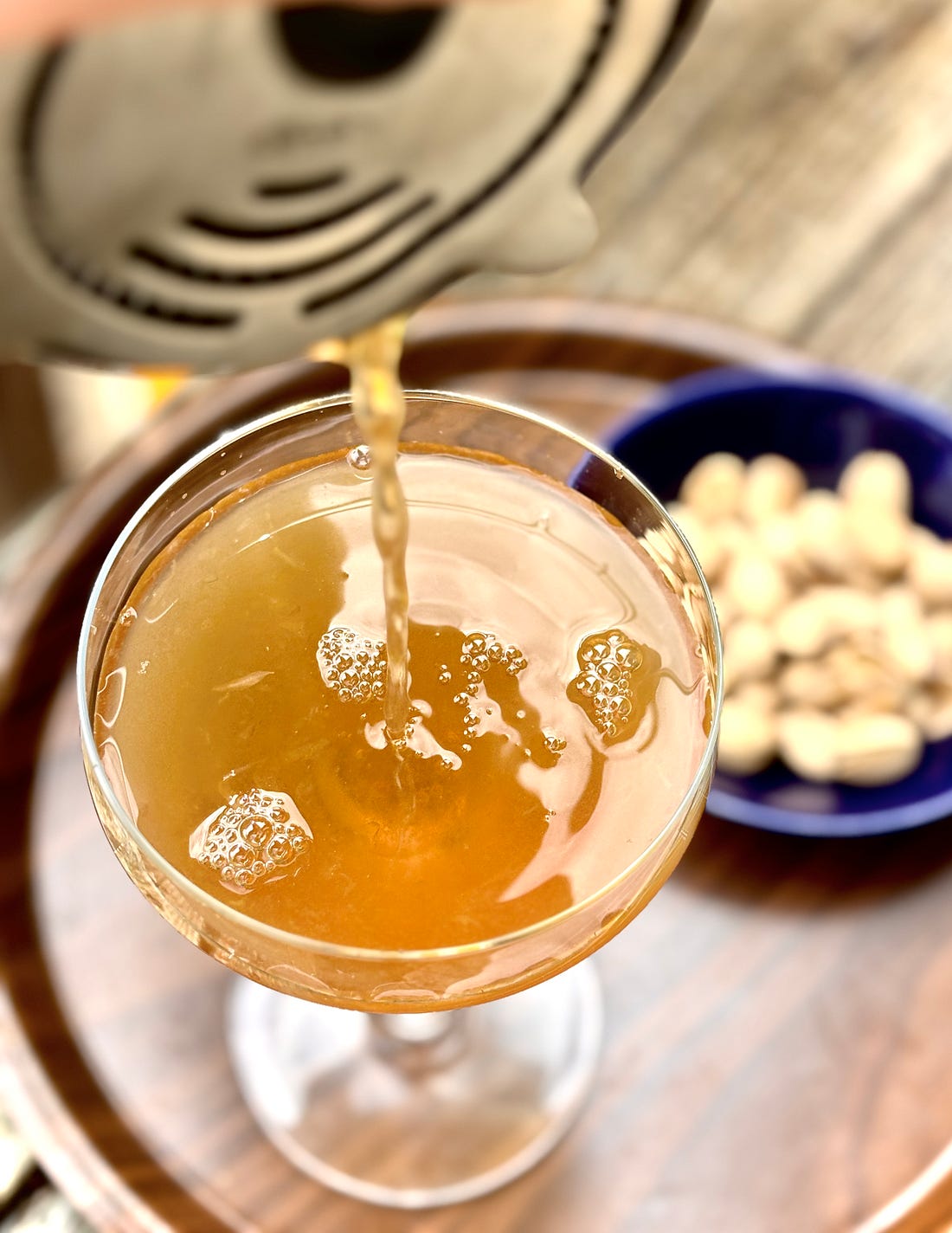
Every year, there is a vin jaune festival in the Jura called La Percée du Vin Jaune. I’ve always wanted to go but a friend who worked in the region told me it’s a lot of drinking and there are a lot of people; their website said 33,000 attended last year. The festival takes place in February, when it’s pretty cold in the Jura. However, I found a recipe that they published (above), the Fl’or du Jura, that I can enjoy in the crowd-free, cozy comfort of home.
Like one of my favorite cocktails from Drinking French, the Yellow cocktail, the Fl’or du Jura combines a few seemingly disparate ingredients that come together in one cohesive cocktail. You may have to track down a bottle of vin jaune to make it, although I tested it with sherry and it was just as delicious. It’s also lower in alcohol than other cocktails since the wine and elderflower liqueur are less than half the ABV as gin, whiskey, and rum, but it’s filled with flavor. À santé…!
Leave a comment
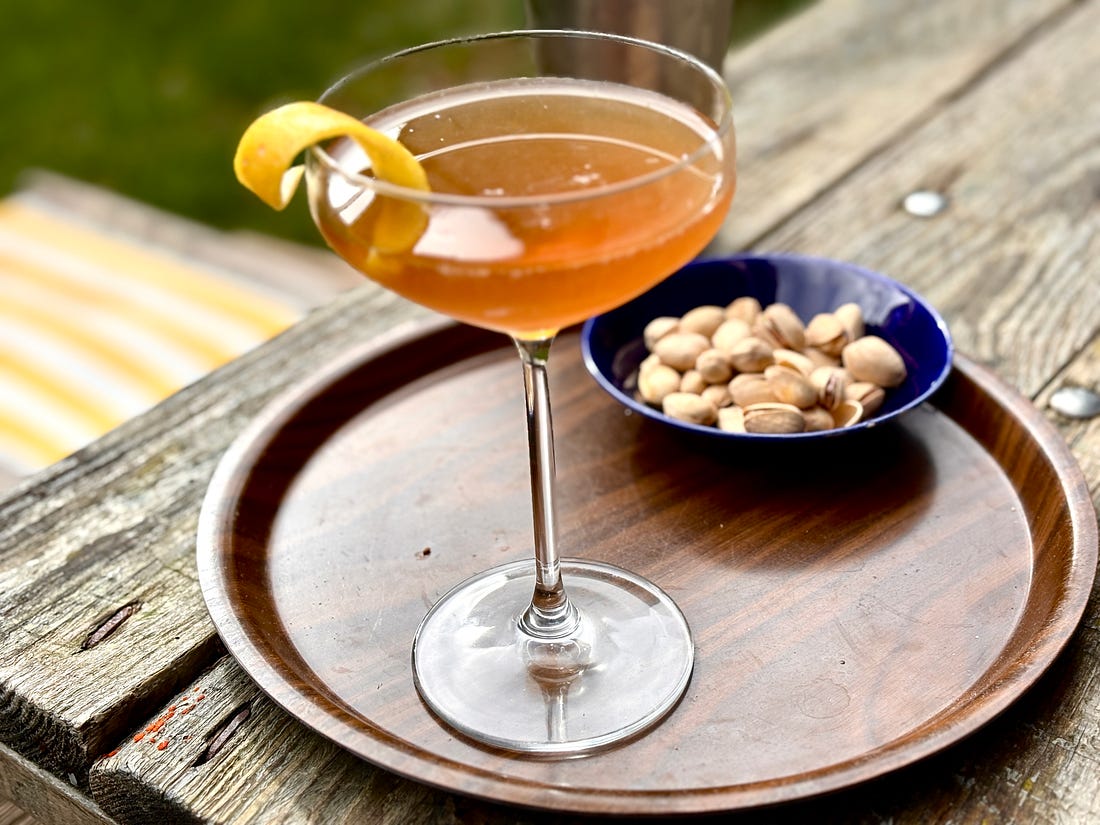 Fl'or du Jura | | | If you can't find vin jaune or don't want to spring for a bottle, you can use a light sherry in this cocktail. The lightest are fino and manzanilla sherries. |
| | | | | | | | Equipment | | Cocktail shaker and strainer |
|
| | | | Ingredients | | | 2 1/2 | ounces vin jaune | | 1 3/4 | ounces elderflower liqueur | | 1 | ounce freshly squeezed lemon juice | | 1/2 | ounce simple syrup | | Lemon twist, for garnish |
|
|
| | | | Preparation | | | Step 1 | | | Add the ingredients (except the lemon twist) to a cocktail shaker. Fill the shaker three-quarters full of ice, cover, and shake vigorously for 10 to 15 seconds until the drink is thoroughly chilled. |
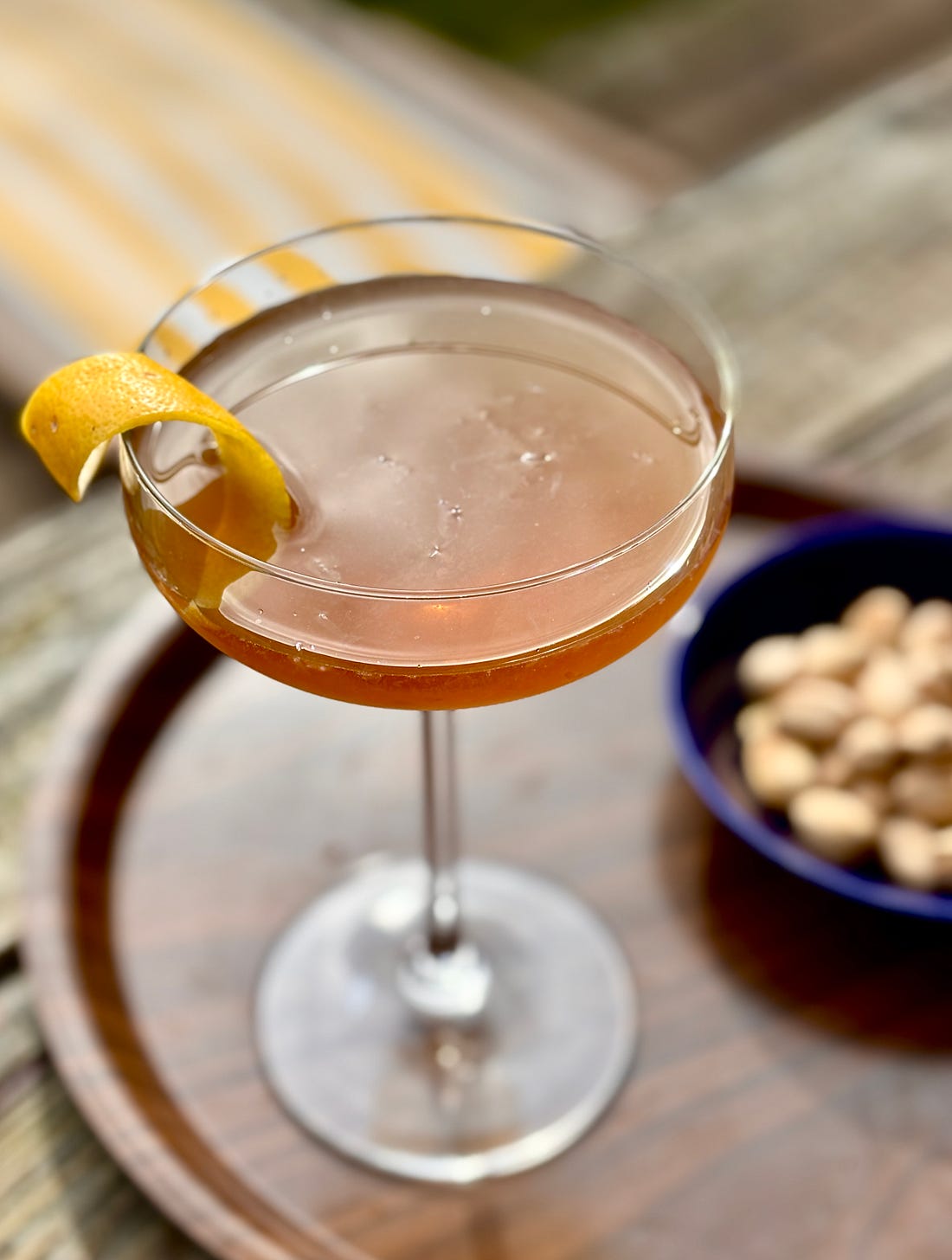
| | | Step 2 | | | Strain into a chilled coupe glass. Garnish with a lemon twist. |
|
|
|
| | | | |
|
Note: Substack has a new way of publishing recipes, which is used in the format above. However it doesn’t come with a Print option (don’t worry, I’ve already asked for it…) Hopefully that’ll come shortly. For the time being, would you prefer I use the formatting that I used here, or go back to the previous way I published recipes, which included a downloadable PDF?
*Some restaurants in France offer vin jaune by the glass, often listed on the menu under after-dinner drinks since it’s drunk with dessert. In his excellent book, The Food & Wine of France, Edward Behr, in the chapter on vin jaune (subtitled The Virtue of Rancidity), he notes about vin jaune: ”On first trying it, many people dislike it.”
Vin jaune is delicious in this cocktail and may not be what you expect when you first try it, on its own, but it does grow on you. If you get a bottle, it’s remarkable with Comté cheese or a similar nutty-tasting mountain cheese, such as Gruyère or Beaufort. Once opened, the bottle will keep in the refrigerator at least a month.









No comments:
Post a Comment