Years ago, I went to Japan to work for a week. While it was fascinating to be there, I didn’t get to do or see much as I was working. I’ve always wanted to go back, and this year seemed like the right time. Part of the reason was that my friend Rosa Jackson was organizing a culinary tour of the less-visited Tohoku region where we hiked, cooked eggs in a natural hot spring, learned to make soba (buckwheat noodles), watched how sake, soy sauce, miso, and tofu were made, and ate a lot. (Through it all, we had an amazing guide and translator.) I had a busy year and the idea of someone else planning a trip for me sounded good. Romain didn’t come on the culinary tour but he joined me afterward and we visited Tokyo, Kyoto, and Osaka, as well as Hakone, famous for its natural hot springs. While Hakone often gets promoted as a day trip from Tokyo, we stayed for two nights at a ryokan, a traditional Japanese inn with tatami floors, multicourse meals served in the room, yukata robes and comfy slippers to wear, and a communal onsen (hot spring bath) to unwind in.
For the second part of the trip, I used a Paris-based travel agent to plan the trip because I didn’t have the bandwidth to do so. There were things I did, and didn’t like, about working with the travel agency (one was that our agent quit in the middle of planning our trip, which I was informed of by auto-reply). They also failed to tell me to get a QR code before the trip to pass through Japanese customs easily, and they didn’t tell us the ryokan would pick us up at the train station, which would have saved us a walk up a very steep mountainside set of stairs with luggage. Fortunately we’d sent our bigger suitcases ahead. Otherwise, we wouldn’t have made it. Now that I’m better versed in Japan travel, I could plan a trip myself. Trains run frequently and are reliable, making travel within the country fairly straightforward. They have English-speaking people at the train stations to assist you with the ticketing machines and in some stations, such as in Tokyo and Kyoto, they even have dedicated offices for overseas visitors. You can reserve seats on trains in advance but some train cars are marked for people who don’t have reservations, so you want to get in the line at the platform that’s the shortest. You’ll need to make reservations on the Shinkansen bullet trains for your suitcase if it’s larger than will fit on an overhead rack, since the trains weren’t designed for large suitcases. You can also send your luggage ahead in Japan, from your hotel or drop-off center, to your next destination, which is inexpensive and reliable. As for hotels, I wanted to stay in more traditional ones; our travel agent booked some, but others were modern hotels that could have been anywhere. A travel guide in Japan did tell me some visitors come and don’t want to take their shoes off when entering a shop, hotel, or restaurant, and others prefer western mattresses over futons. (A friend who goes to Japan every year said to take English-language hotel reviews with a grain of salt as westerners tend to have different ideas and expectations of service and what’s comfortable than Japanese people do.)
Although I’m not an expert on Japan, after my month there, I thought I’d share some tips in case you’re planning a trip. On my prior visit to Japan, ATMs, shops, and restaurants wouldn’t accept foreign credit cards, and all the signs were in Japanese and hardly anyone spoke English (d’oh! I was in Japan…) But it made using public transit a challenge, and to make things more challenging, Japan has several different train and subway companies and you not only need to figure out how to get where you’re going, you also need to figure out how to connect between them if you need to.  Thankfully we relied on Google Maps, which explained which subway to take and where to make connections. When things weren’t clear, station staff were helpful, as were other people in the stations who we either asked or came to our aid when we looked lost.
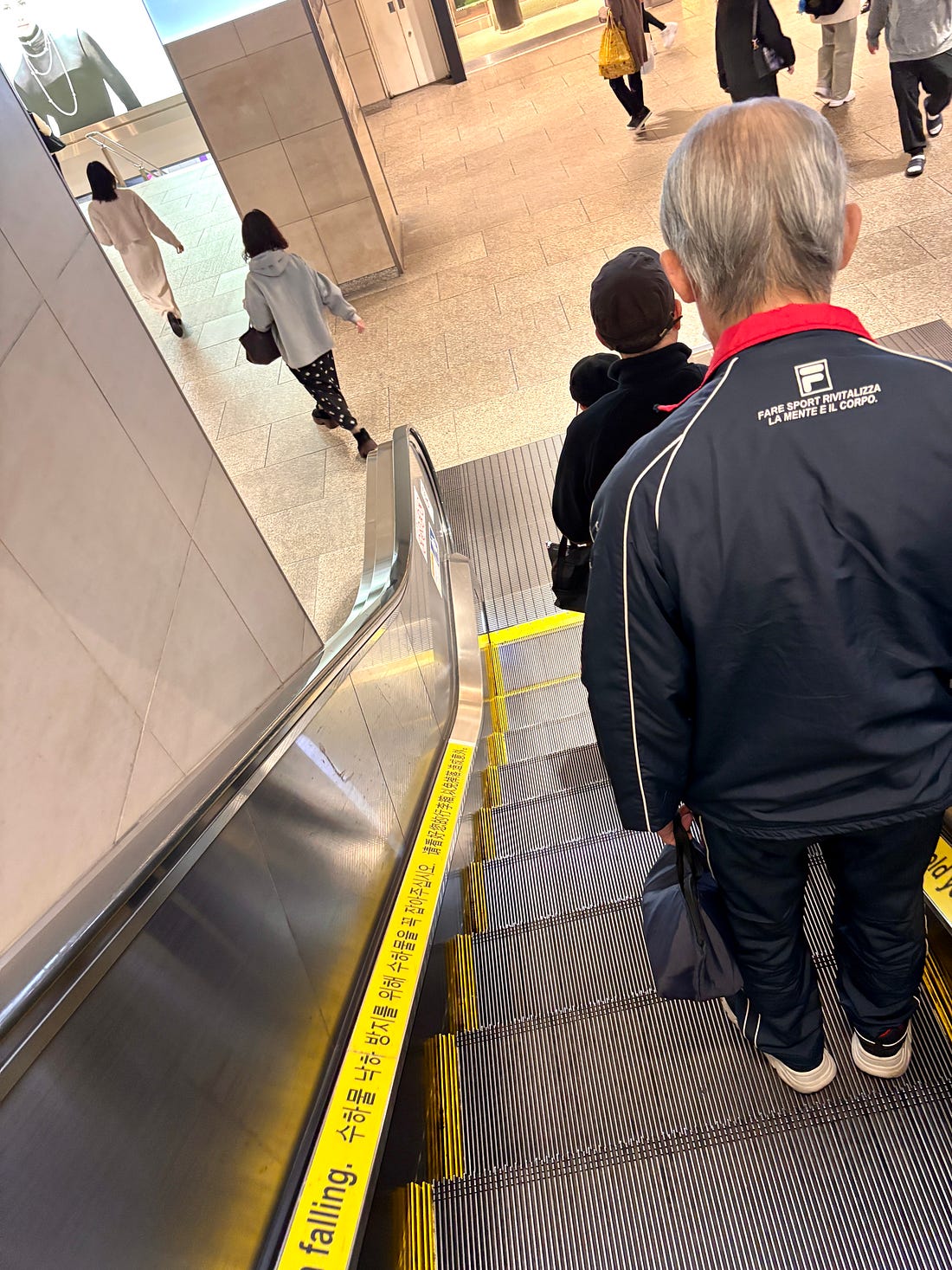
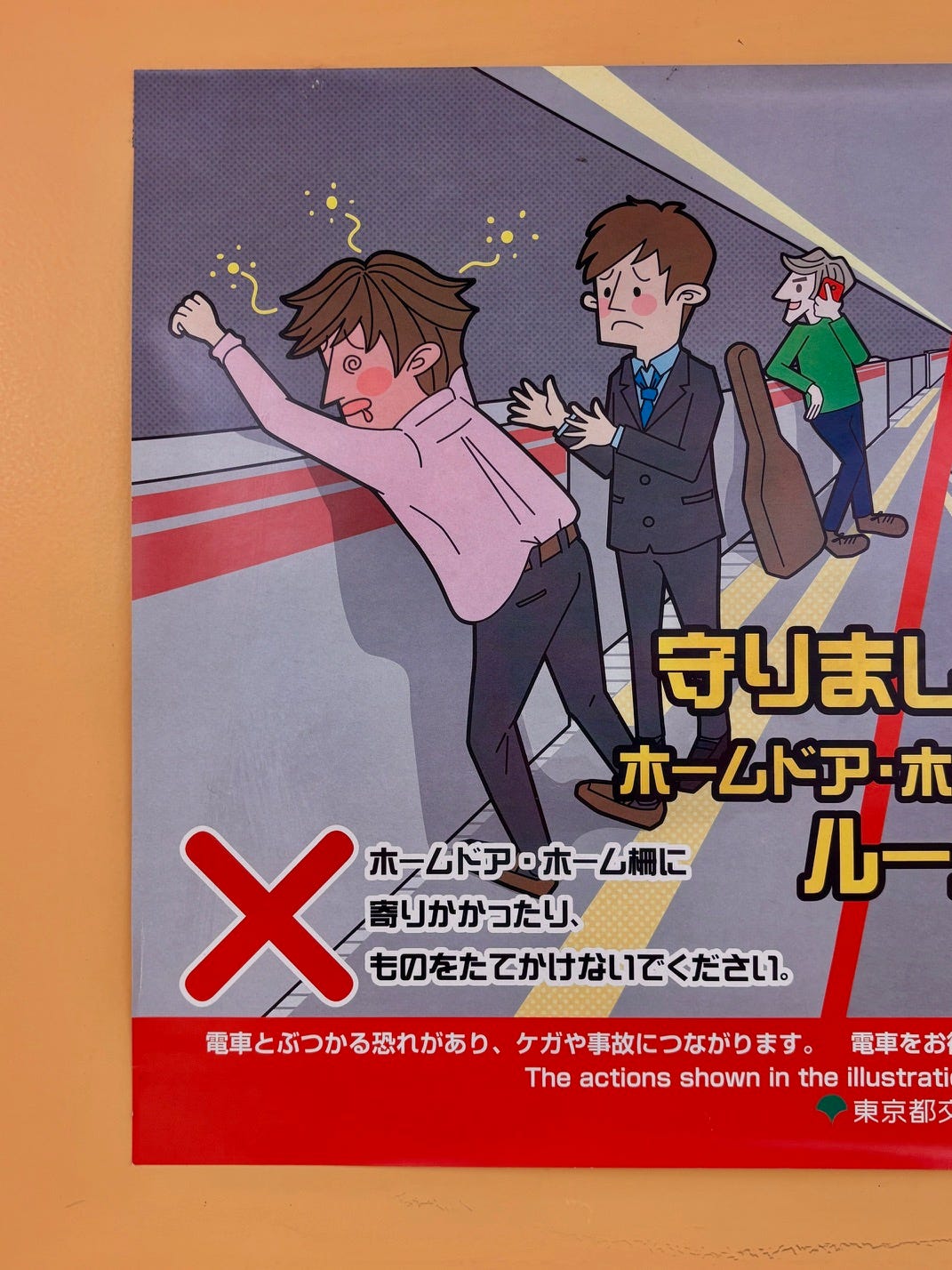
The main thing to know about visiting Japan is that manners are very important. Like anywhere, it’s good to follow the rules, which can mean not walking up and down the escalators (above), and to stay sober and not lean over the subway guards.
People are generally too polite, at least in my experience, to point out any gaffes. One time I didn’t see the line at a convenience store; I’m used to people in line standing glued to your backside in Paris, and walked right up to the register. The cashier looked a distressed and pointed out there were other people waiting. And when I turned and saw the line 10 feet away (which in Paris, is the equivalent of a mile away) the folks waiting in the line beckoned for me to go ahead... Continue reading this post for free in the Substack app
|
Thursday, December 4, 2025
Japan Travel Tips






Subscribe to:
Post Comments (Atom)
No comments:
Post a Comment