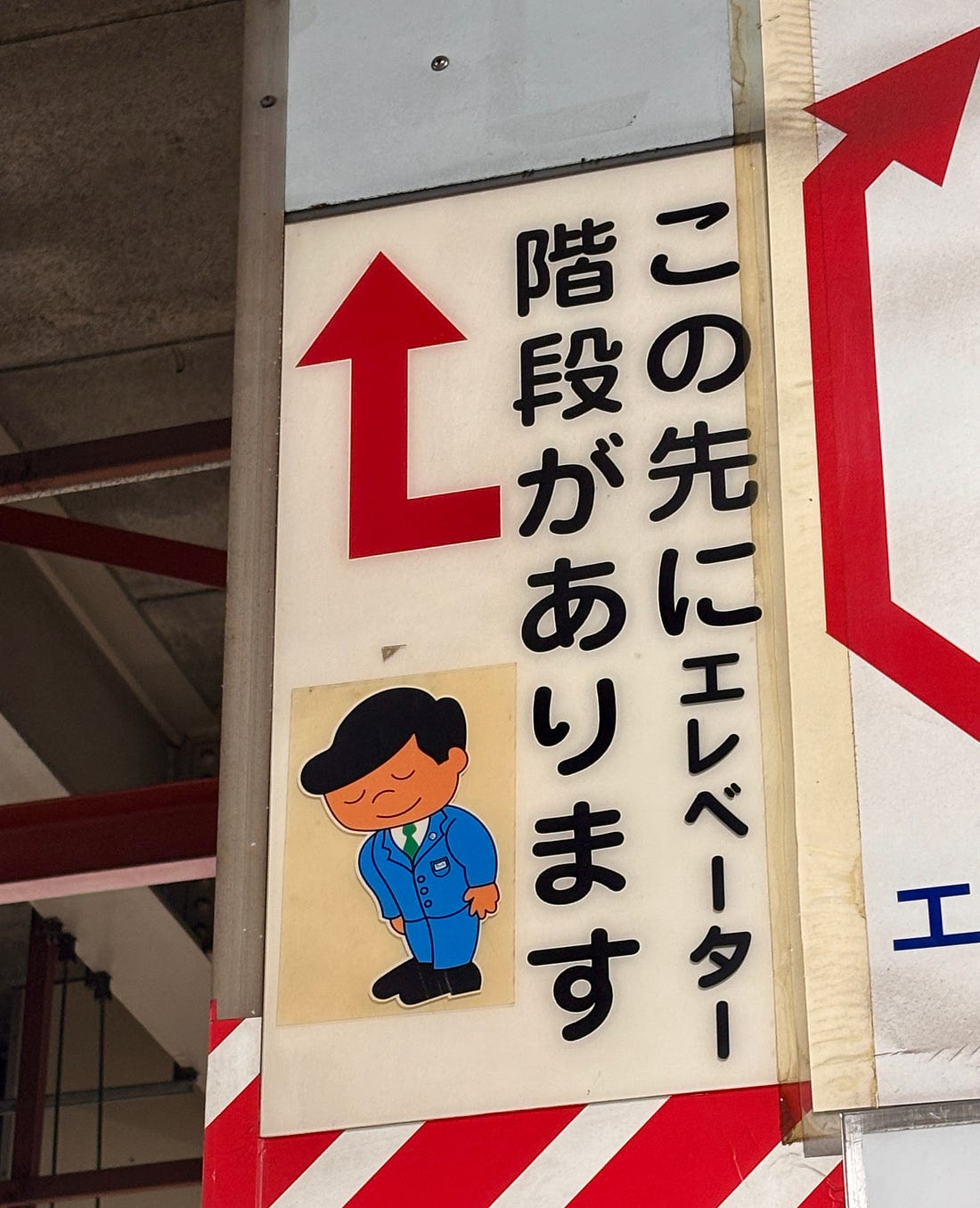
When I asked a Frenchwoman who’d moved to Japan if she liked living there, she replied, “Yes, because I love rules!” While it’s true there are rules in every culture, rules in France often apply to others. You get used to people trying to cut in line or elbowing their way to the front of everyone else at the crosswalks. (I came to Paris for the pastries and chocolate, and bread and cheese, but who knew how competitive the sidewalks are?) But I love rules, and politeness, too. Japan is a different different. At first, I was bounding up the sides of escalators while people stood calmly and patiently on the other side. I resisted the urge to elbow my way in front of others waiting to cross the street. Nobody was chomping at the bit at the edge of the sidewalk, so they’d be the first to cross when the light turned green. Even at restaurants that didn’t take reservations, there was rarely a list. Everyone — the staff and other people waiting — remembered who’d gotten there first. No one tried to take your place. Coming from somewhere where no one likes to be behind anybody else, it was a bit surreal.
Then I eased into it and found the pace a lot more relaxing. True, living somewhere is different than visiting it. But I found that I like letting people pass in front of you or having strangers ask if you need help with directions. It was an exercise in zen/patience, and it was easy to get used to. Frequent visits to onsens, warm springs that are public baths, also helped. One of the reasons I wanted to go to Japan was for the food, which also had its own set of rules, but courtesy meant that you don’t get any stares if you goof. (At least I didn’t notice any.) Slurping your noodles loudly is encouraged and a sign that you are enjoying them. And customs dictate that you’re supposed to let someone else pour your sake for you, which is a sign of respect and companionship. But those tiny cups empty fast, so you need to be on your toes to keep everyone’s glasses full. And yes, there’s even a proper way to hold the sake cup, using both hands when someone else is filling yours, which is also a sign of respect. As someone who loves rules and la politesse, I was here (or there, in Japan) for them. Respect and being considerate, I was told, existed to promote social harmony. And it was a pleasure traveling through the country to experience it. Part of the reason for going to Japan was to participate in a culinary tour organized by Rosa Jackson, where we traveled through less-visited regions and cities of Japan - such as Yamagata and Sendai. The other was to spend time with Romain in Tokyo, Kyoto, Osaka, and Hakone. 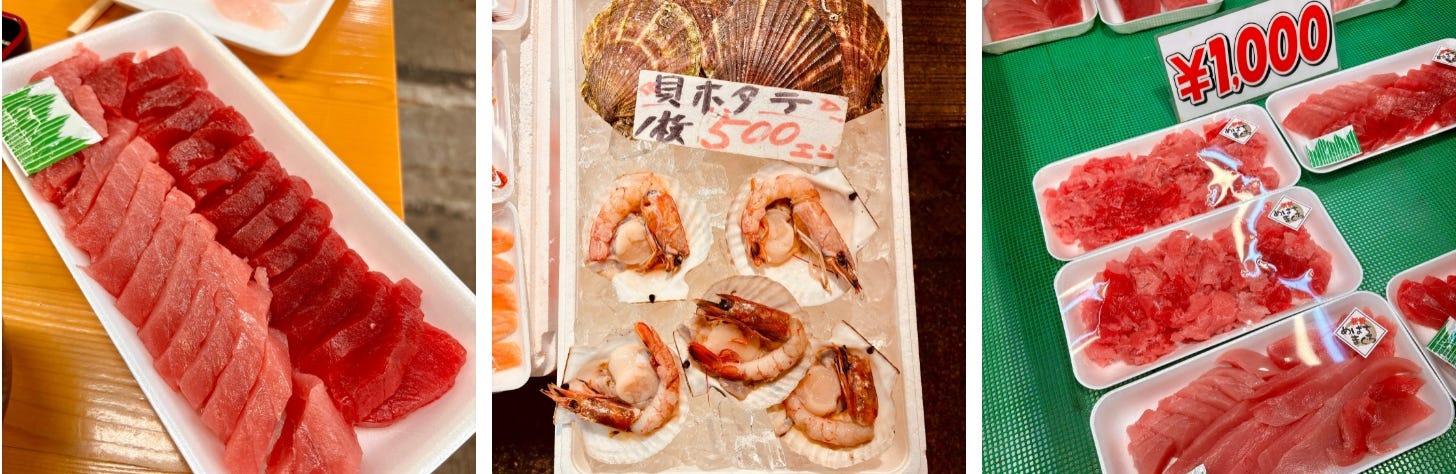 During the culinary tour, we watched miso and soy sauce being made, pulled our own wasabi roots from the soil, and later enjoyed the wasabi with soba (buckwheat noodles) we’d rolled ourselves. There was a class in preparing green tea, a visit to a pickle producer, and a seafood market (at 7am!) where you bought your own slices of raw fish (above) to enjoy for breakfast at the market with rice, pickles, and miso soup.
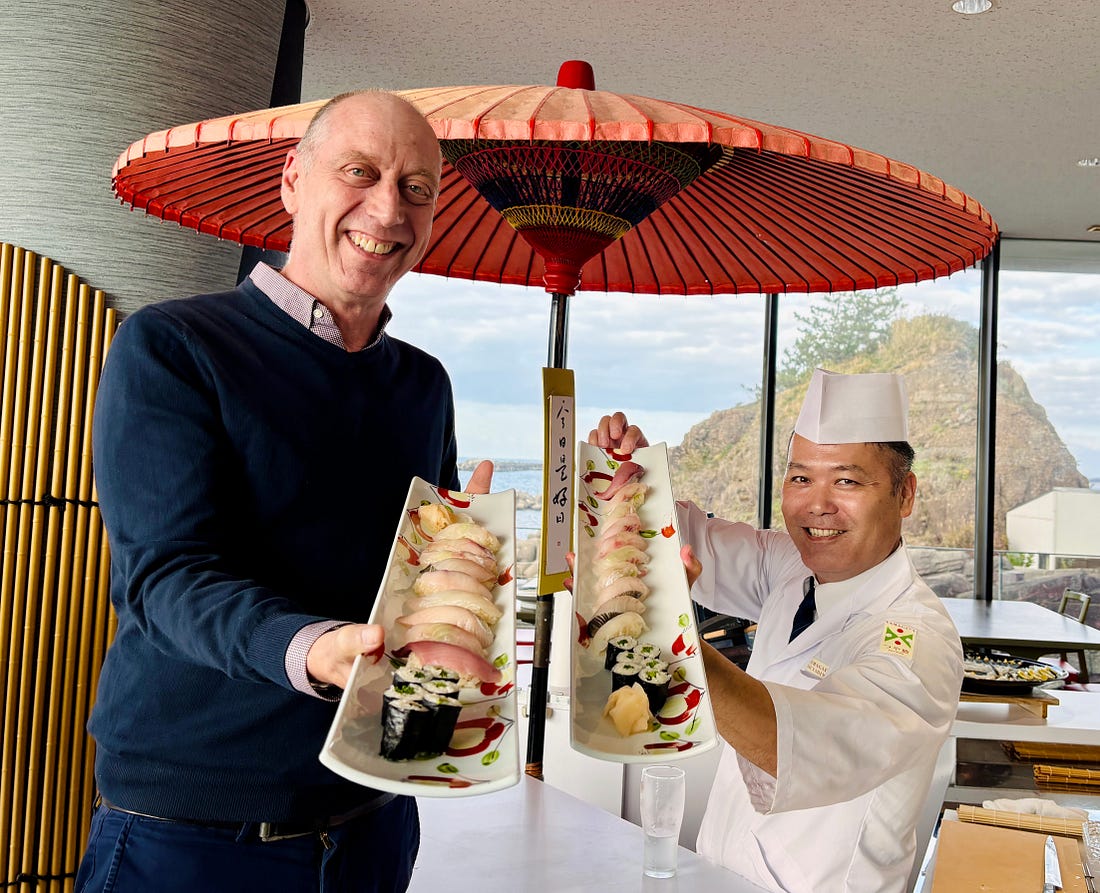
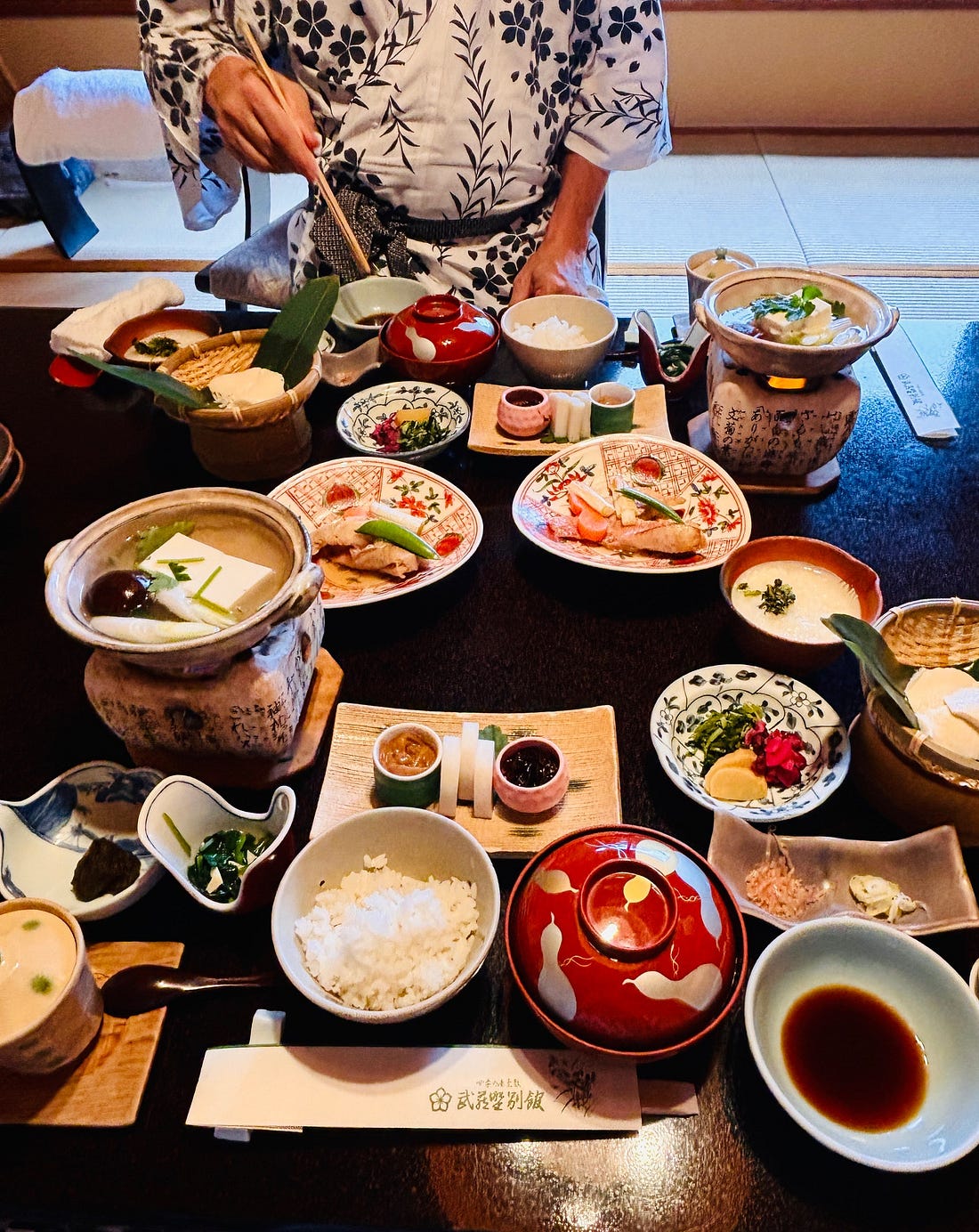
One thing I was especially eager to tackle was making sushi and was fortunate to have a class with master chef Takeshi Suda, who we let handle the fugu, or puffer fish, which is toxic if not properly prepared. He told us if you eat the toxic parts, within 30 minutes you’ll suffocate to death. So I was happy to leave that fish for him to work his magic on…and stick to tamer species. I also wanted to cross “staying at a ryokan” off my bucket list. For years I’d dreamed about staying in a rustic mountain inn, enjoying the simplicity of sitting on tatami mats, tucking myself under a down comforter, and falling asleep on a sturdy futon, sipping tea in a yukata (which is like a kimono but made of cotton rather than silk), fastened with a stiff obi, a wide belt, and soaking any troubles away in naturally hot spring water. It was nice not to think about anything, including meals, which are brought to your room, and you can eat in your yukata. Our ryokan gave us light-colored ones to wear during the day and darker ones to wear in the evening. A constantly cackling, elderly Japanese woman who spoke no English seemed to delight in telling us what to do (and squeezing the obis around us, helping us to get dressed), even though we could barely understand what she was saying. What no one tells you, also, is that the meals are huge.
After spending ten days on a culinary tour, where lunches sometimes ended at 2pm and dinner would start at 5:30pm, I’m pretty up for anything, anytime, when it comes to eating. But I finally met my limit at the ryokan. Breakfasts in hotels are very, very generous, and it’s a lot of food. Dinner too. There’s nowhere really to hang out during the day as your room is cleared; the futon is folded and put in a closet, and there are no chairs to relax in. So while I was glad to finally stay in a ryokan, I was okay getting back to city life.
Before the trip, I made reservations at a few places, but rather than trying to get into “the” restaurant, in her helpful post of Japan travel tips, I decided to go with Emiko Davies’ advice and not to get too worked up on trying to go to the restaurant. I was keen on eating at Monk, but all the reservations for the fourteen places are grabbed within seconds of being available online, so that didn’t happen. And while a friend recommended Marumo, I didn’t think I’d want pizza in Japan. Until, after a few weeks of fish, rice, and seaweed, a slice of pizza sounded good. But the place was already booked. So that didn’t happen, but we coped. Here are a few highlights of what we ate:
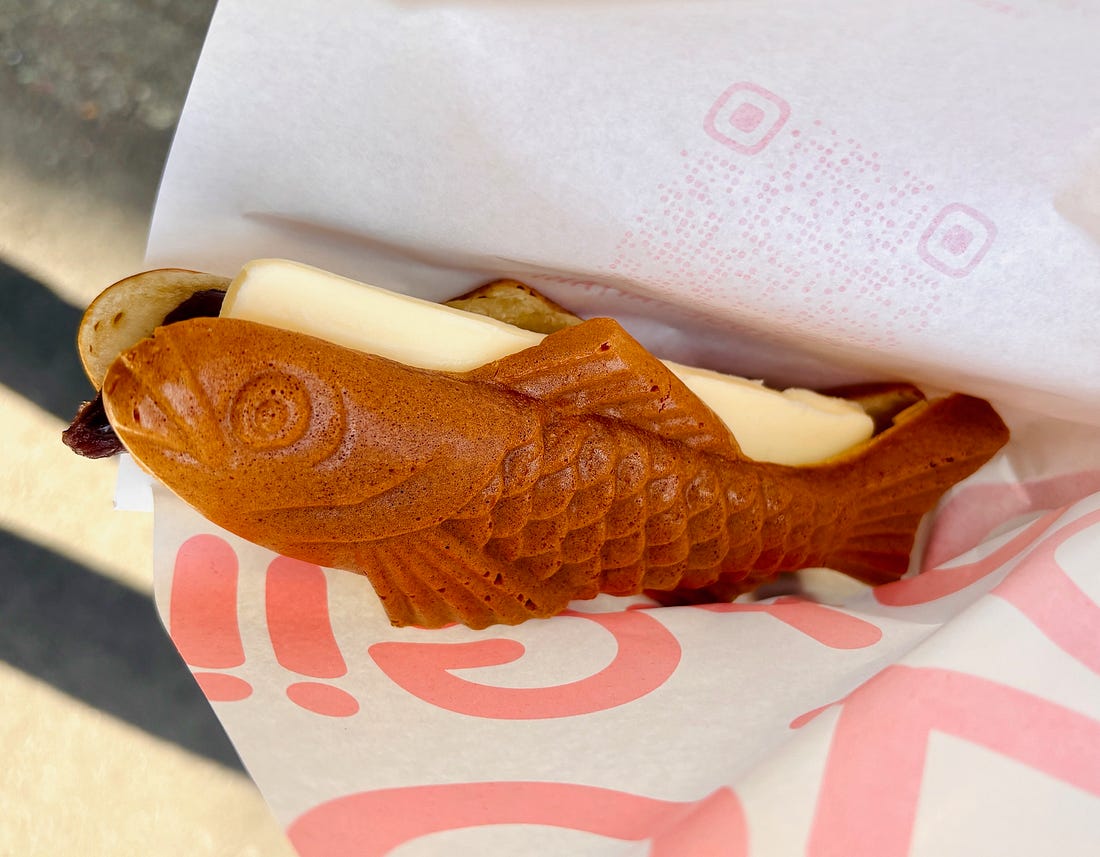
This taiyaki at Oyoge in Tokyo filled with red bean paste, sandwiched with a slice from a stick of butter, was wonderful and one of the best pastries I had on the trip. 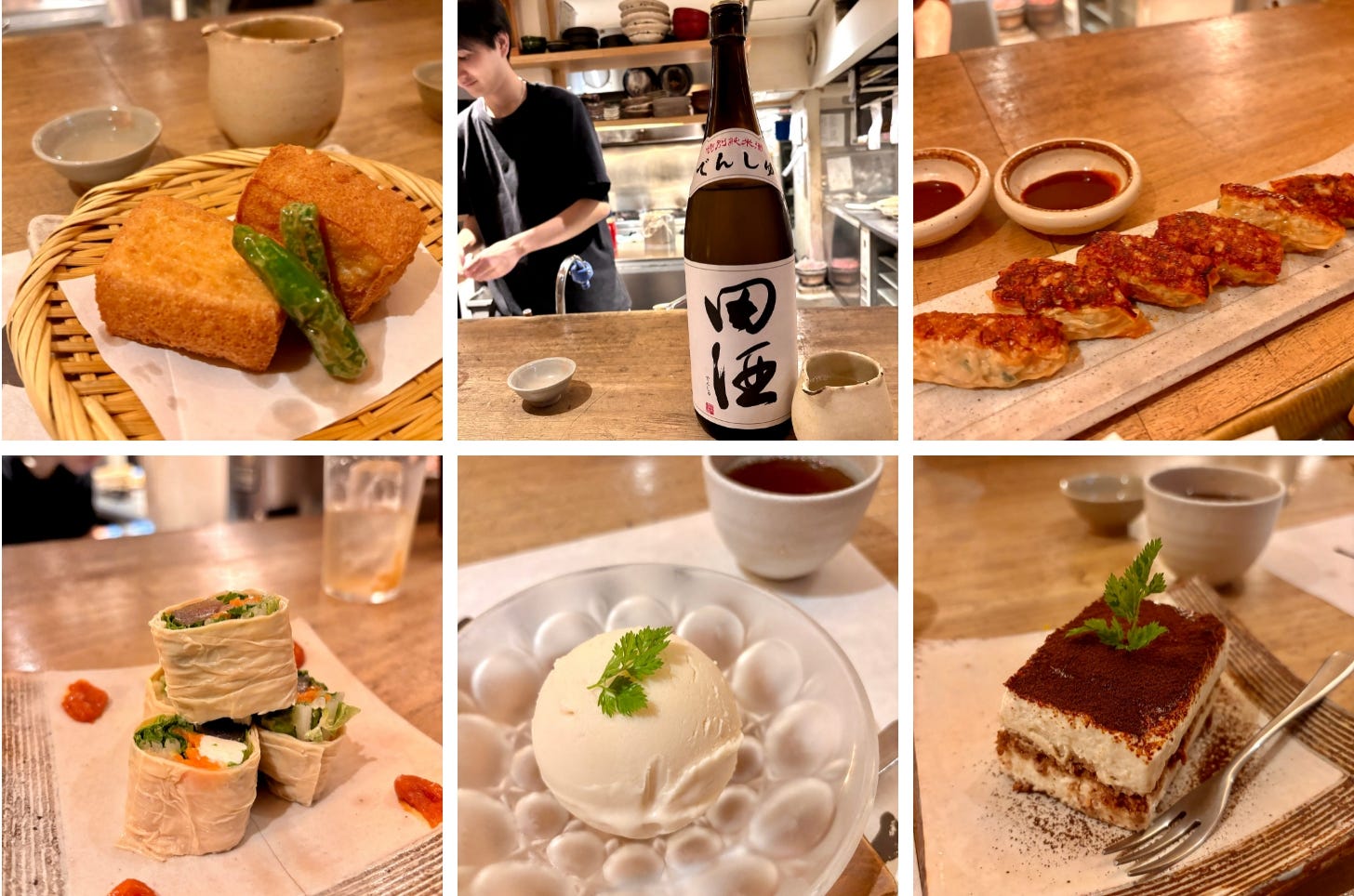 My favorite meal of the trip was at Sorano Minami Senba tofu restaurant in Osaka. Tofu and yuba, tofu skin (shown wrapped around the rolls, in the lower left photo), are specialties of Osaka, and we had a nearly perfect meal there. The deep-fried soft tofu (upper left) was a dream, as were the tofu skin-wrapped dumplings. When you reserve, try to get a seat at the counter and watch the staff work, meticulously.
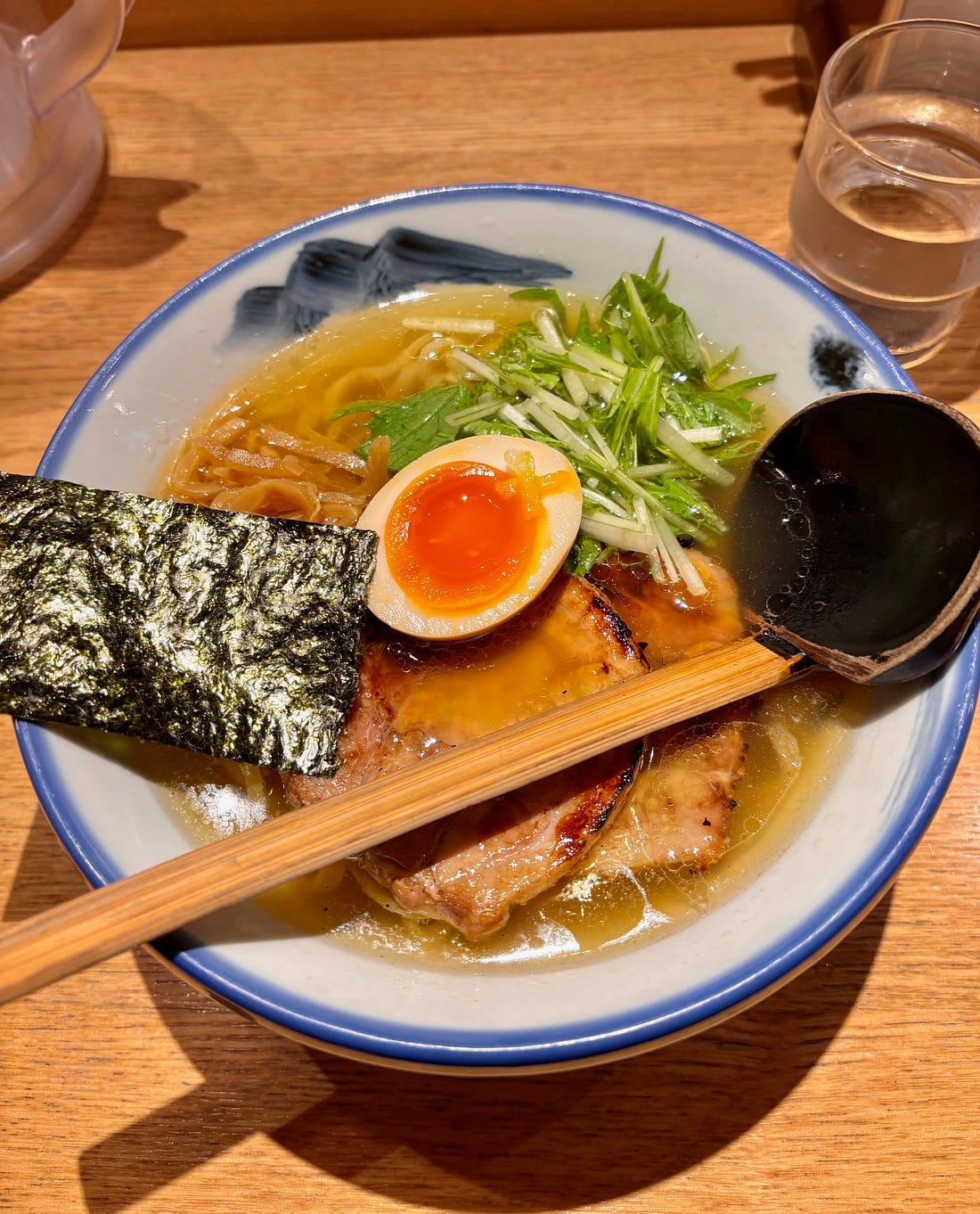
There’s a lot of ramen in Japan, but the most memorable one I had was the yuzu-scented ramen at Afuri in Tokyo. Until I looked at their website, I didn’t realize they had outposts in the U.S. Still, the ramen was really good - not too rich, with nicely browned slices of roast pork and an egg, with the citrus accent tying it all together. 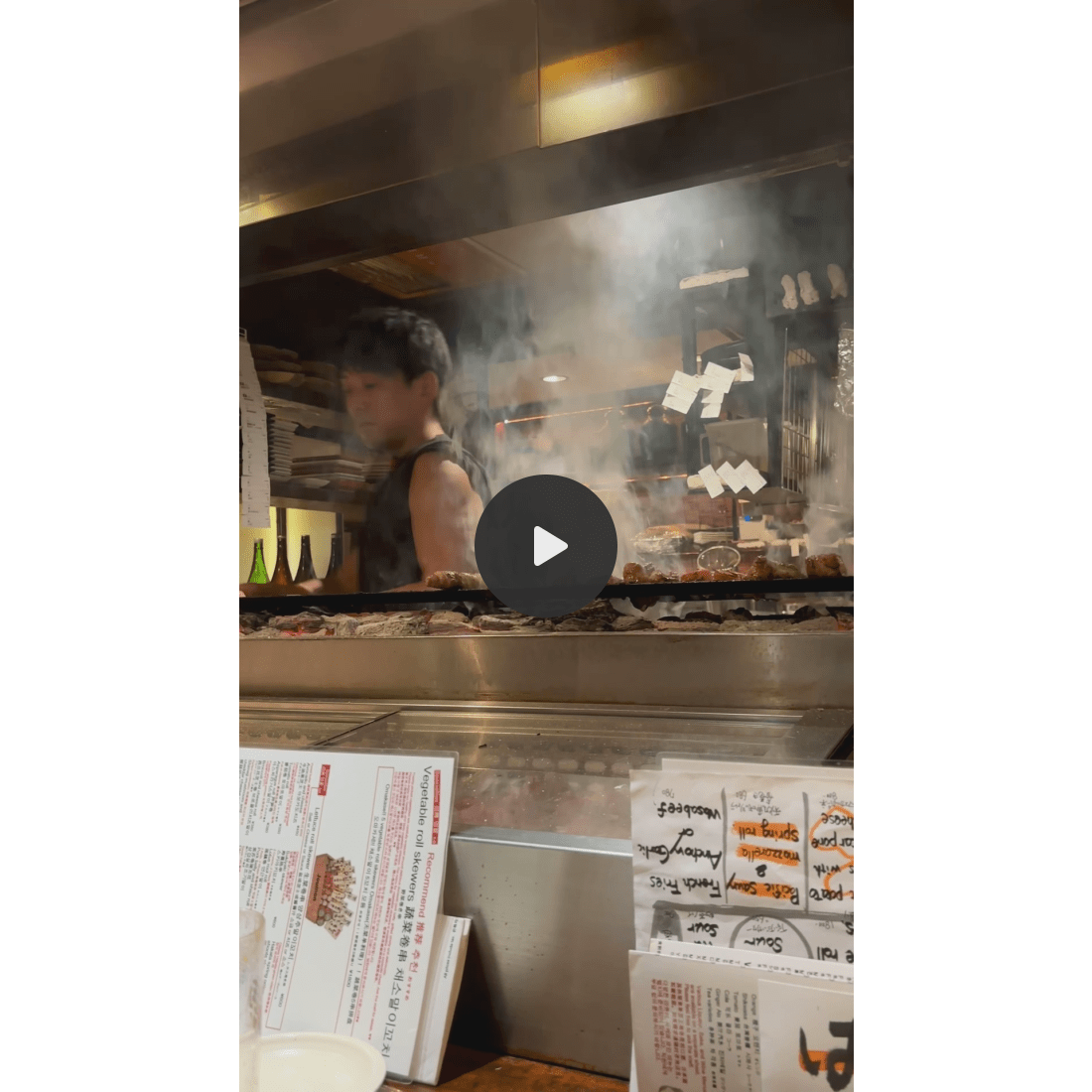 My chef friend Rita in Paris, who lived in Tokyo for over a decade, sent me to Jomon Shibuya, which specializes in yakitori, food on skewers. 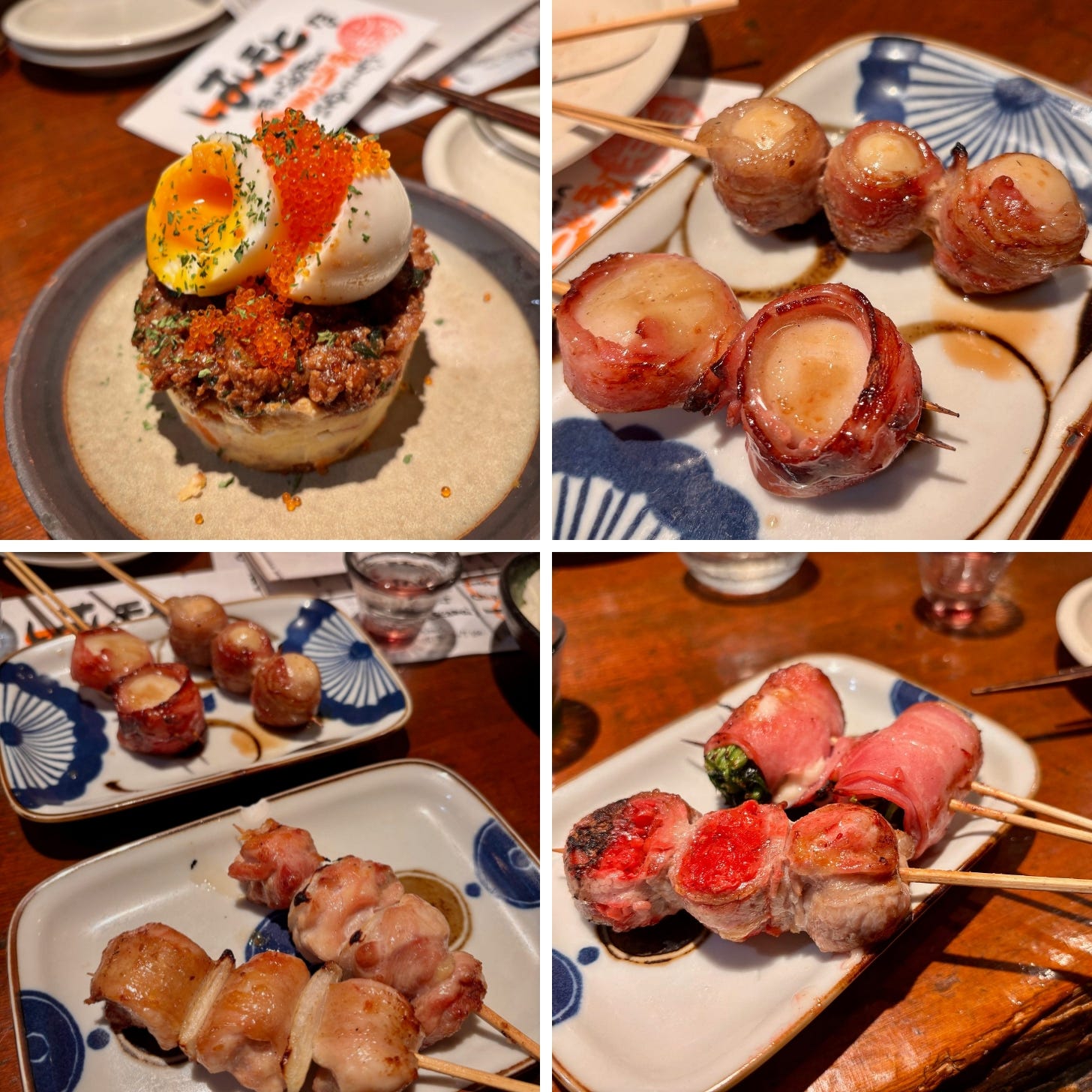 Like the tofu restaurant in Osaka, if you go, try to get a seat at the bar. For both places, have a Japanese friend or someone at your hotel call for you. Avoid reserving on websites like TableCheck, which force you to choose a set/fixed menu, especially here. You want to be able to pick and choose what you want. There’s a lot of friendly shouting and greeting customers here, and we had a terrific time. Standouts were the potato salad with flying fish roe and egg, grilled quail eggs wrapped in bacon, grilled chicken thighs and neck, and a few other things we ordered during our sake-fueled dinner. They have other locations but if you go to the one in Shibuya, where we went, we had to use Google Images to find the front door ; )
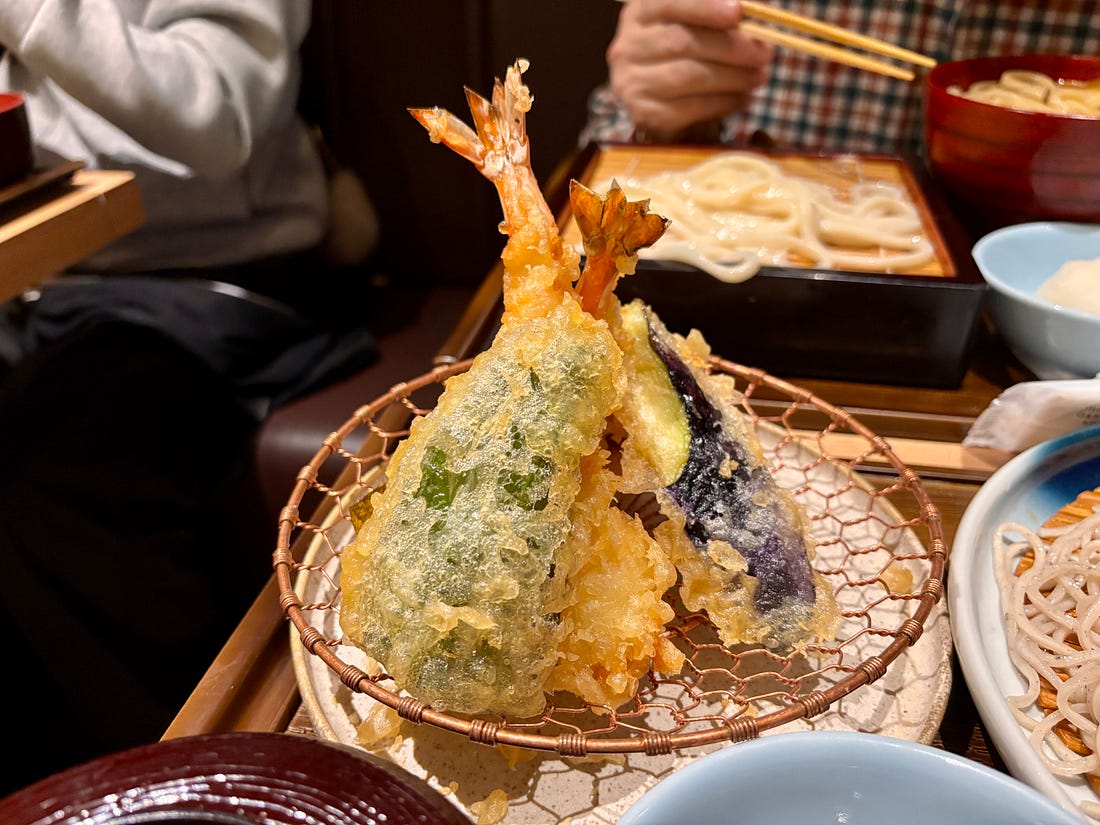
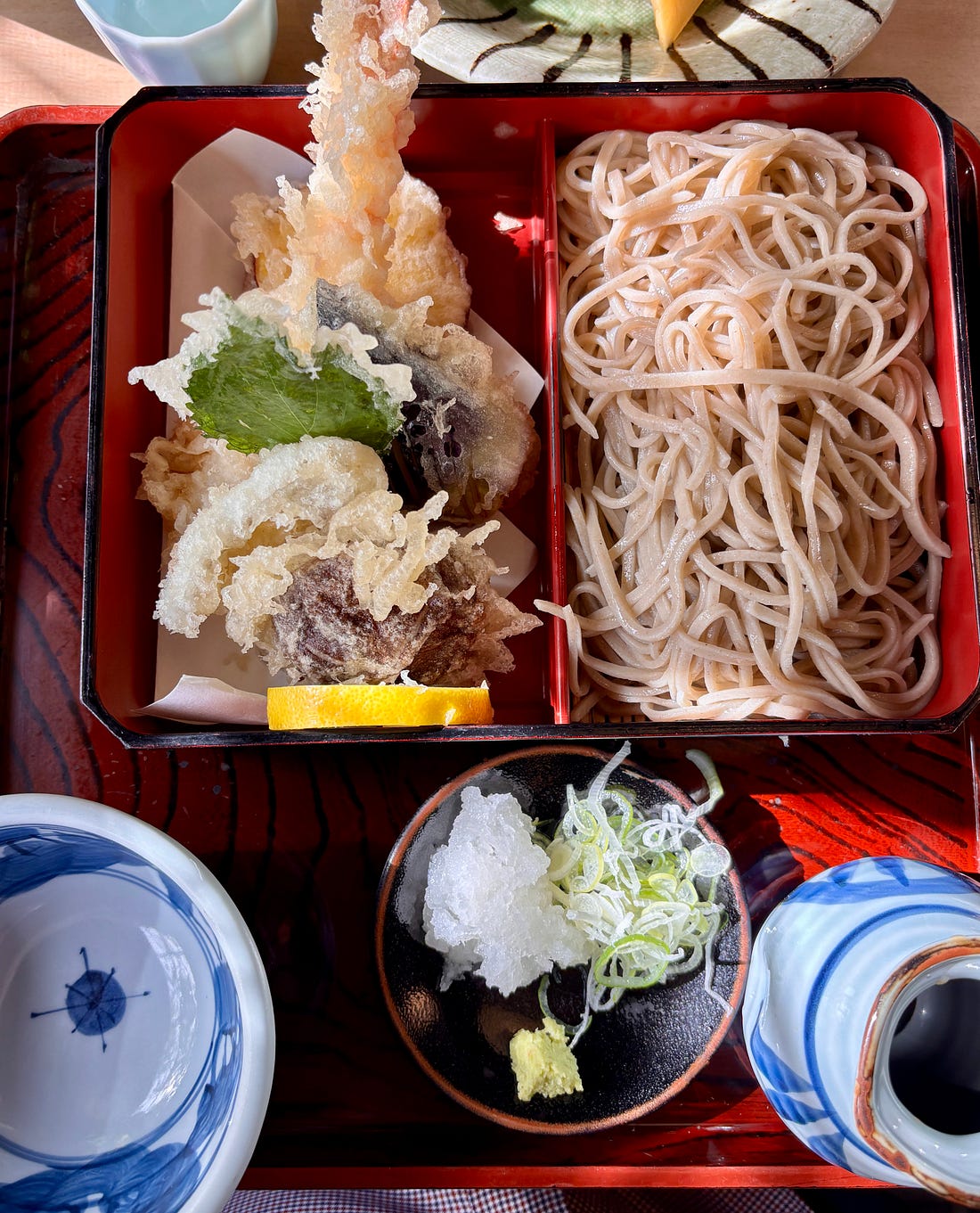
I decided my favorite “set” meal in Japan is cold soba and tempura. You can find it in a lot of places, but the version I liked best was the one at Shojiya in Yamagata. Beautifully presented, the tempura was crisp and light. To eat the soba, you put the scallions and radish in the dipping sauce, then use chopsticks to pick up a dab of wasabi and then some noodles, which you dunk in the sauce, and eat. (You’ll often get offered a bib to protect your shirt.) When you’re done, they’ll bring out a teapot of the noodle cooking water to fill the dipping sauce cup with, which you drink like tea.
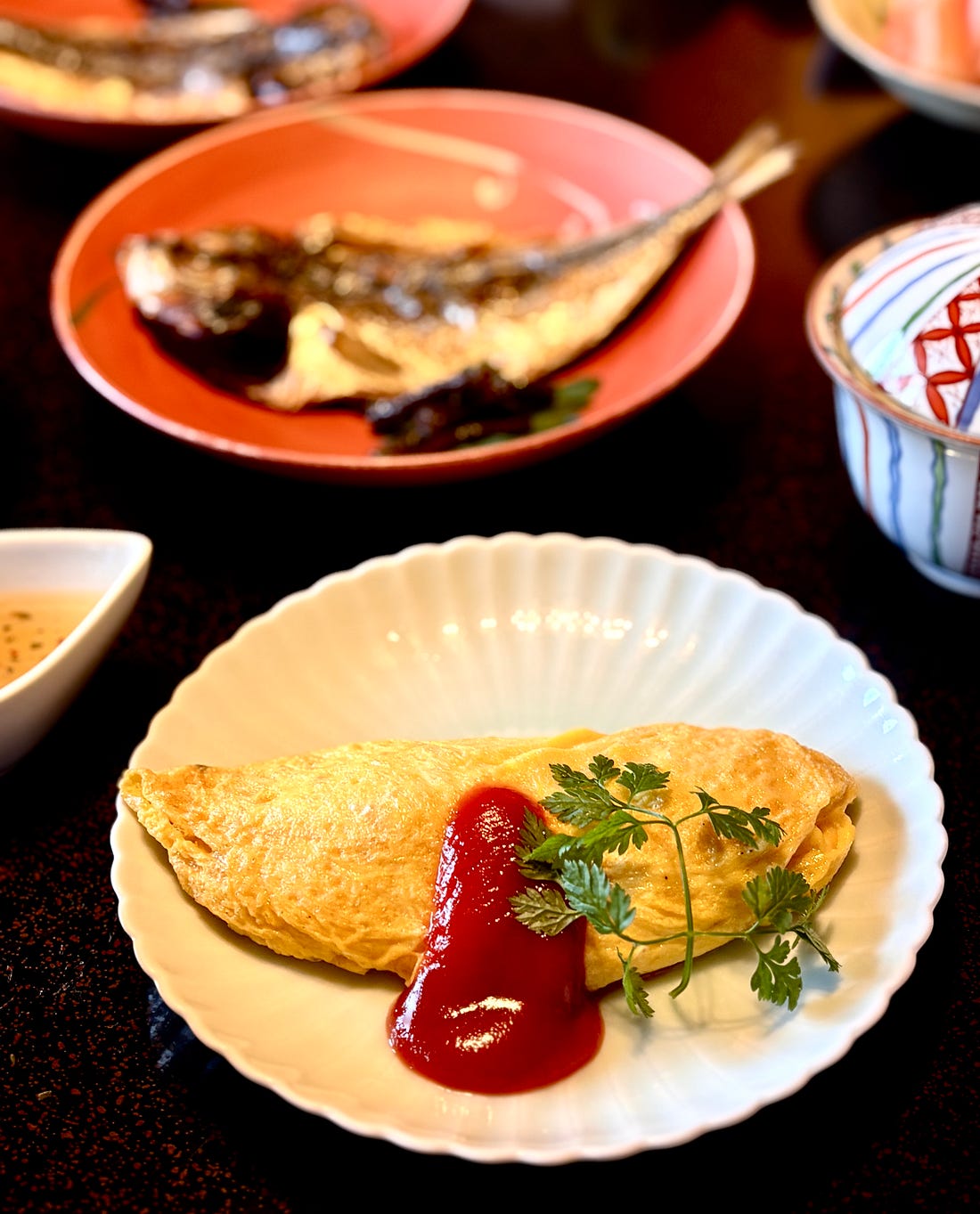
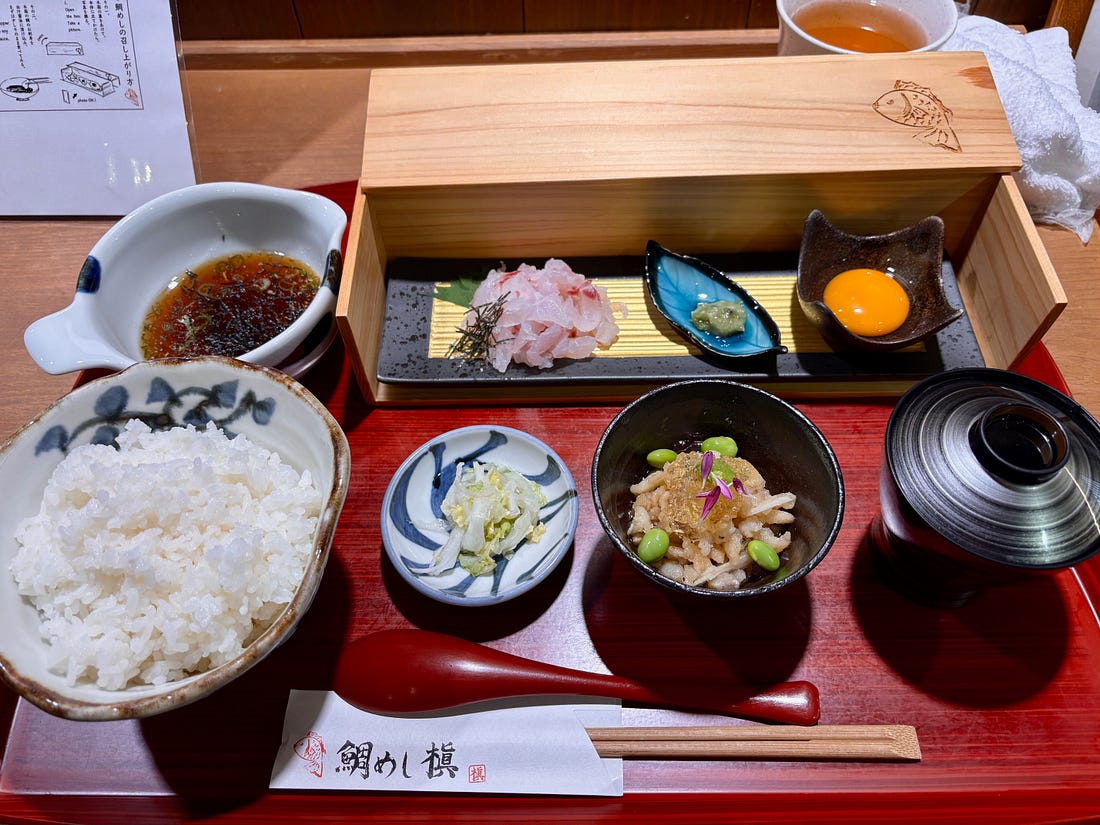
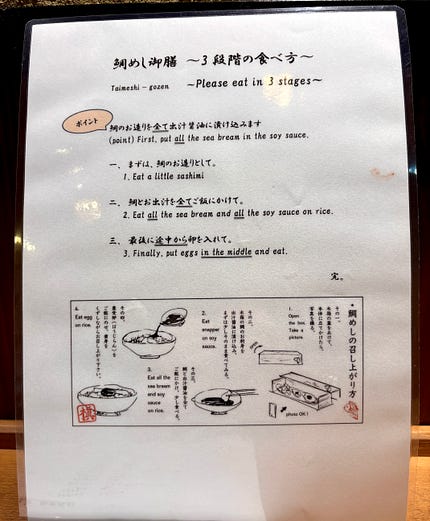
One of my favorite ways to find restaurants is not to ask, “Where should we eat?” but instead ask, “Where would you go?” That steers people away from suggesting where they think you might like to go and tells you where they would go. When I was buying a pair of pants in Kyoto, I asked the clerk who was helping me where to go and he sent me to this cozy restaurant. (This seems to be their website.) The dish to get here is the tai-meshi gozen, a “set” consisting of rice, raw sea bream, and an egg yolk. The presentation is exquisite, and they provide instructions on how to eat it.
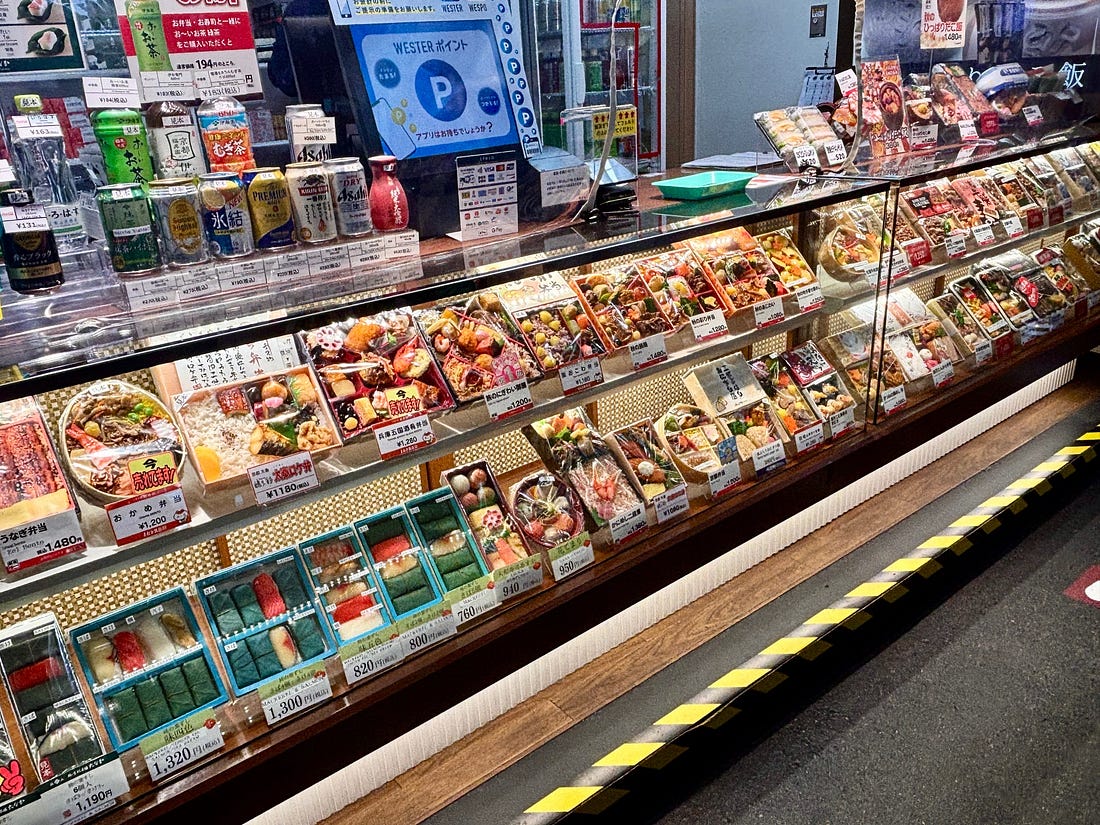
In the middle of such a beautiful repast, I accidentally tipped over the miso soup bowl that, admittedly, was taller and narrower than the usual soup bowls in Japan. They handled my gaffe with grace and cleaned everything up. We also liked Soba-no-mi-yoshimura in Kyoto, which makes their own soba noodles. There were quite a few French people eating there, and we found out from a neighboring table that it’s listed in the Guide du Routard, the French “bible” of travel. When traveling in Japan, in spite of the fact that eating and drinking on the streets is frowned upon, eating on the trains is welcome. So much so that many train stations have extensive selections of ekiben, bento boxes meant to be picked up at the train station and eaten on the train.
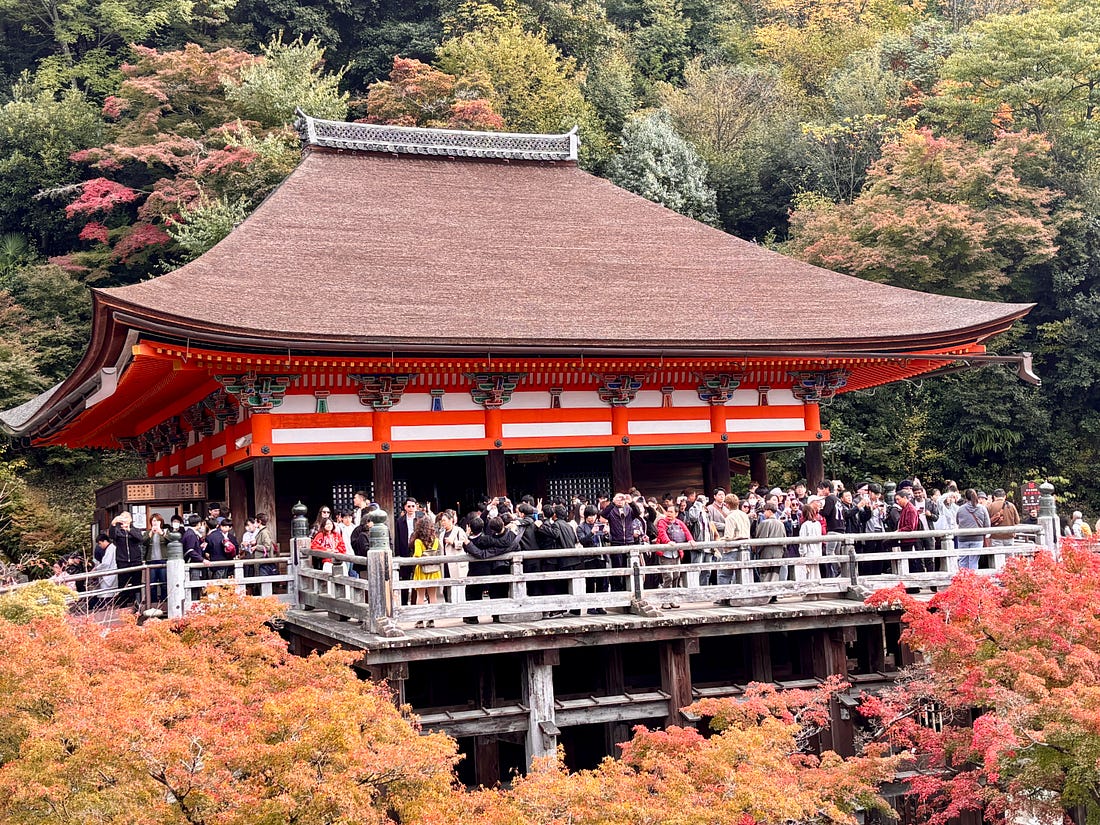
The downside of traveling to Japan is that some places are suffering from overtourism. We visited a temple and shrine site in Kyoto that was packed with people.
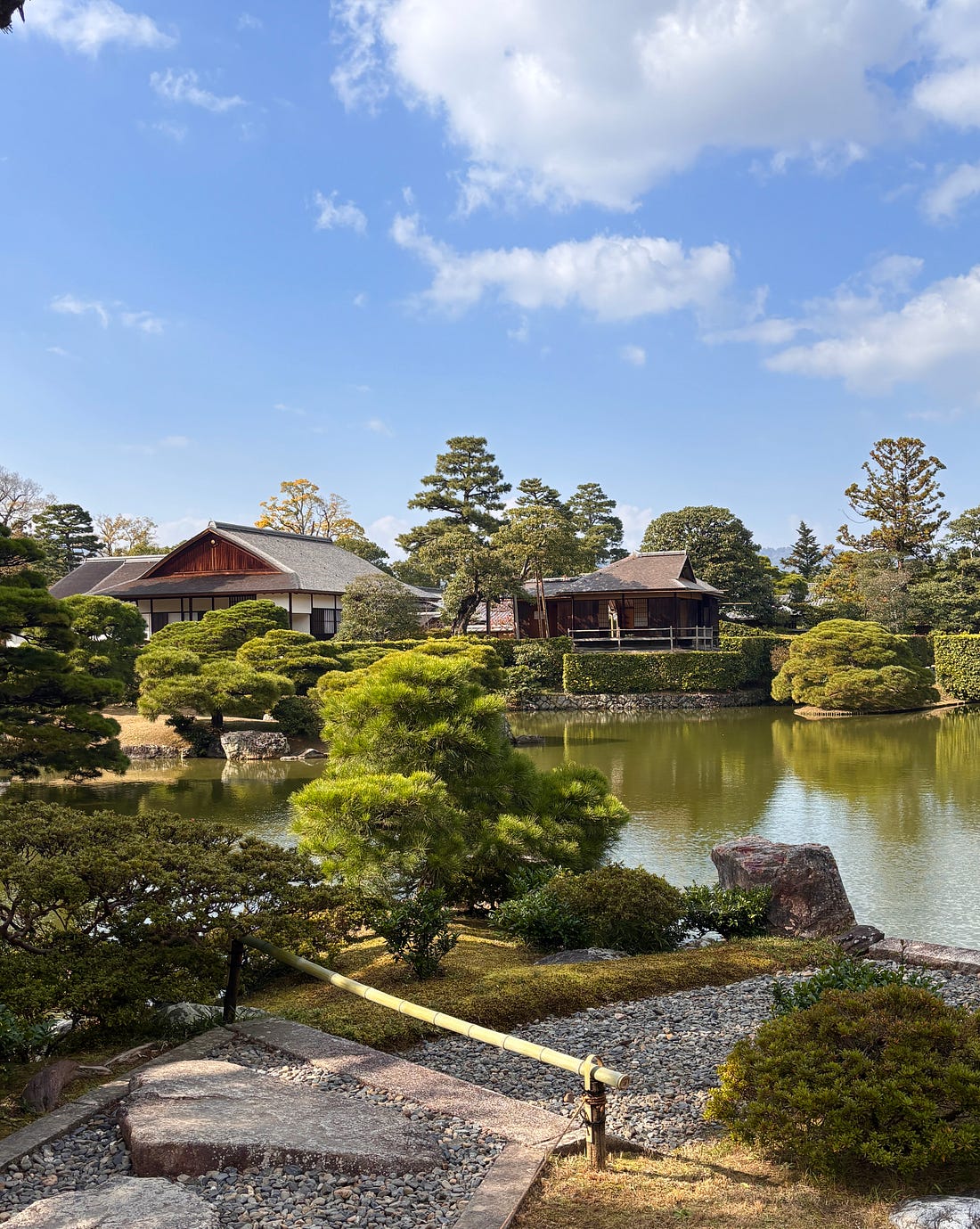
On the other hand, we visited the Katsura Imperial Villa and Garden (below), which is by reservation only, and they take just twenty people at a time. It was the definition of serenity and tranquility.
Unfortunately, we skipped going to the Fushimi Inari Taisha shrine with its stunning passage lined with red gates, and Sanjūsangen-dō, a temple with 1000 statues of Kannon, the goddess of mercy, since I don’t do well in crowds. But I’ve learned from traveling that you don’t need to see and do everything. I’m happy just walking around a town or city and making discoveries on my own. When I booked the trip, the travel agent in Paris said it would be a choque to return to, and she was right. While Japanese people get Paris Syndrome, I spent a few days readjusting to a different pace of life.
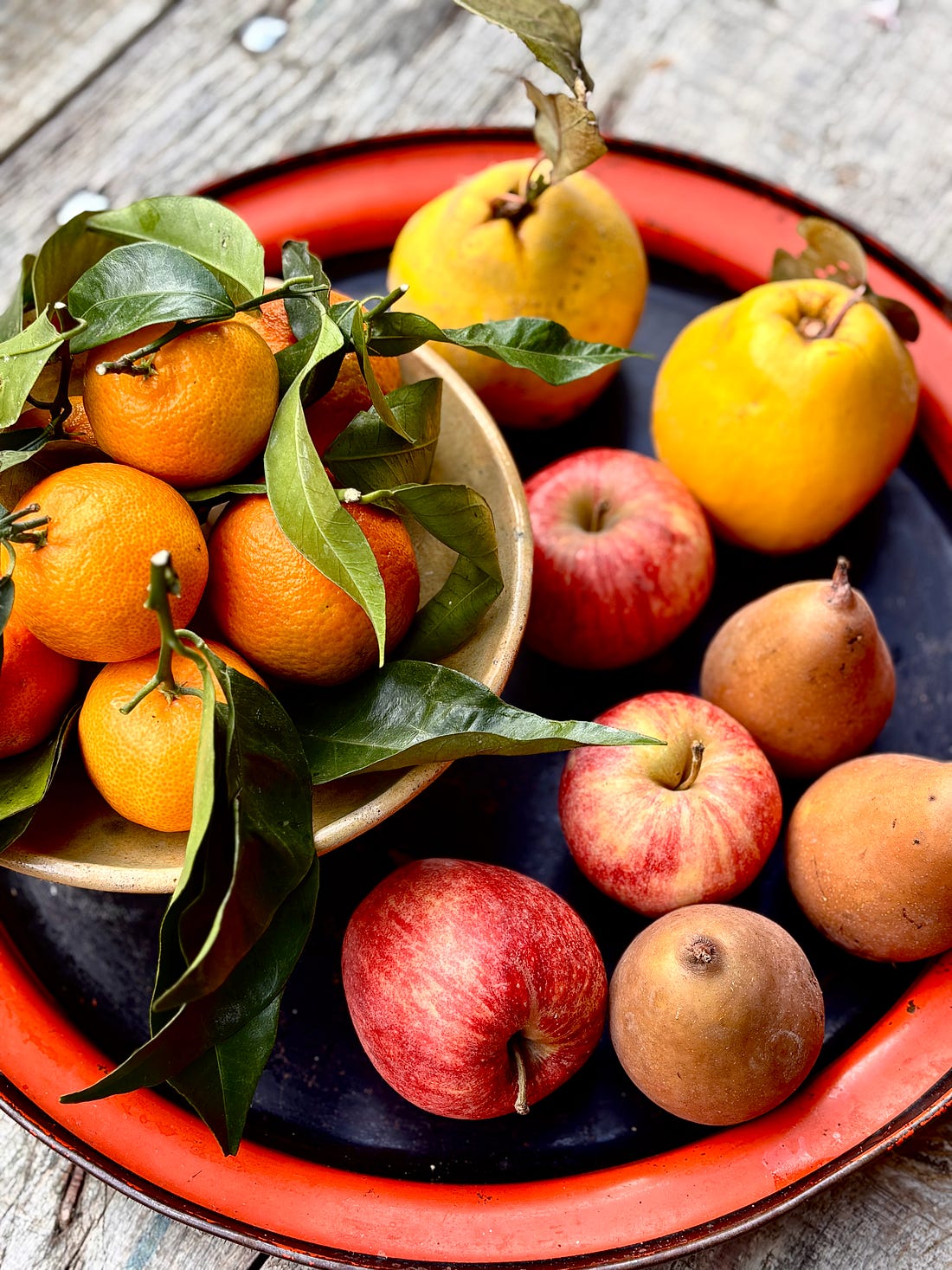
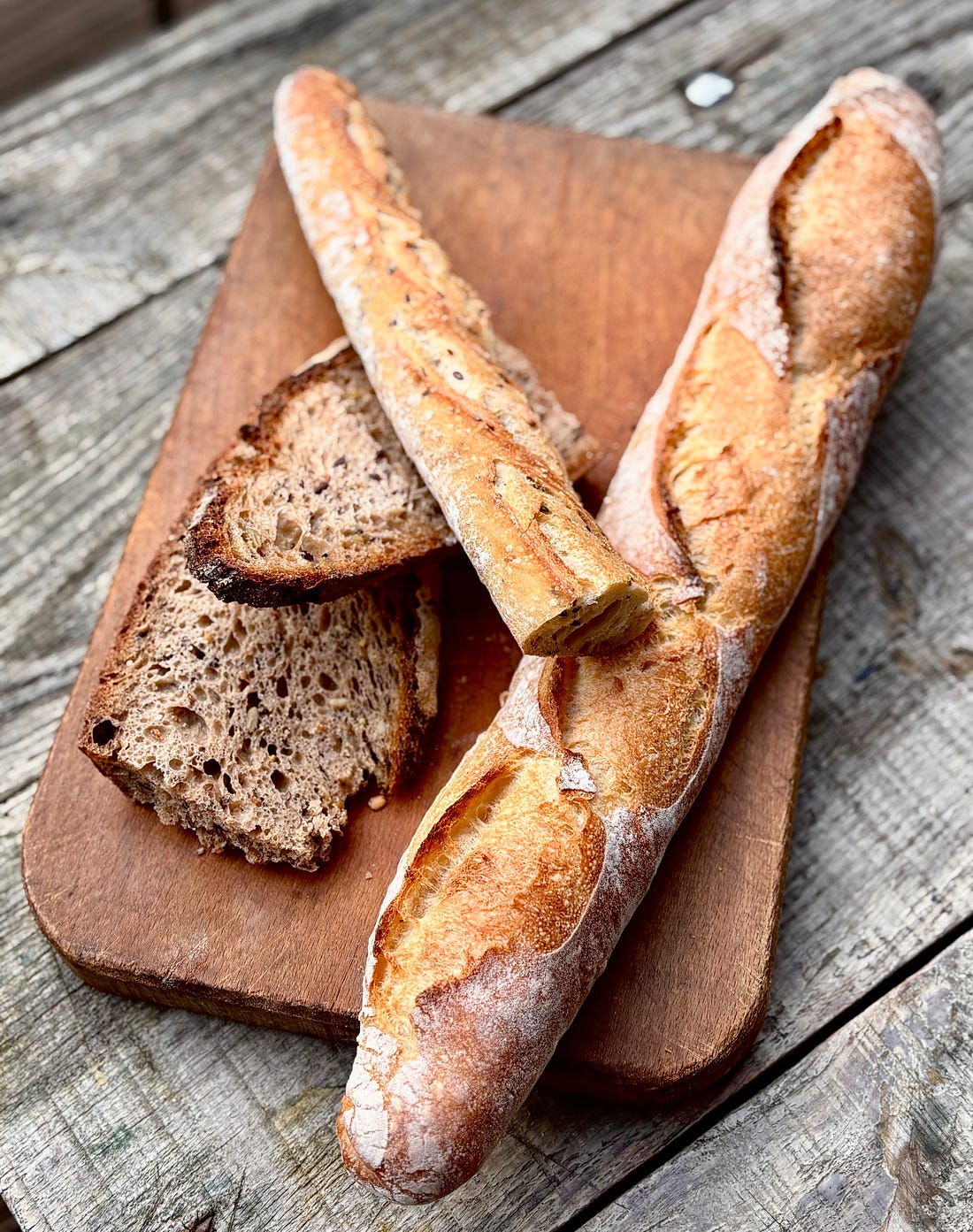
Instead of soba and soy sauce, I’m back to baguettes and butter. As much as I love rice, fish, pickles, and seaweed, there is a limit and it’s nice to return to fresh fruits that are in season: kiwifruits, persimmons, clementines, and quince.
Now that I’m back in Paris, I’m mostly caught up on everything that I missed while I was away. I’ve got a post coming up with Japan travel tips and things I learned during my journey, as well as a few chocolate recipes for the holidays. -David
I’m in The New York Times! …and elsewhere.
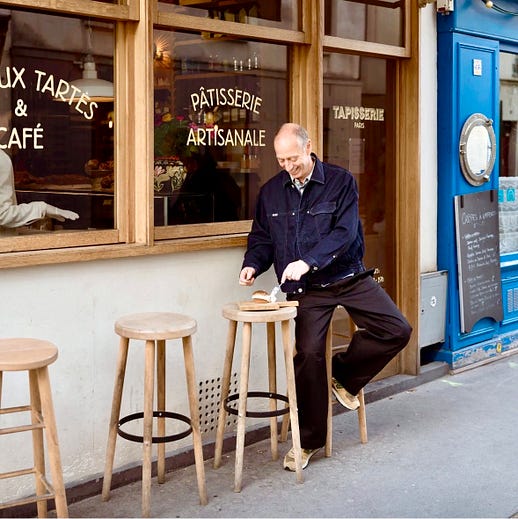
Was thrilled to be profiled in the New York Times: How to Make That Restaurant Dessert at Home? Ask This Guy. (NYT/article unlocked) It was fun talking to Julia Moskin about how I got here, to baking between the two cultures. [For the photo shoot, I got to dive into the famous Maple Tart at Tapisserie, a recipe that I included in my book Ready for Dessert, so you can enjoy it at home.] I spent the morning at one of my favorite markets in Paris with KCRW’s KCRW's Good Food. Was interviewed by food writer and editor Dianne Jacob on writing cookbooks and sharing recipes.
Happy to be included in this well-written guide to the Best Holiday Gift Books which include other celebrated baking books from Kat Lieu and Dorie Greenspan . (WSJ/possible paywall)
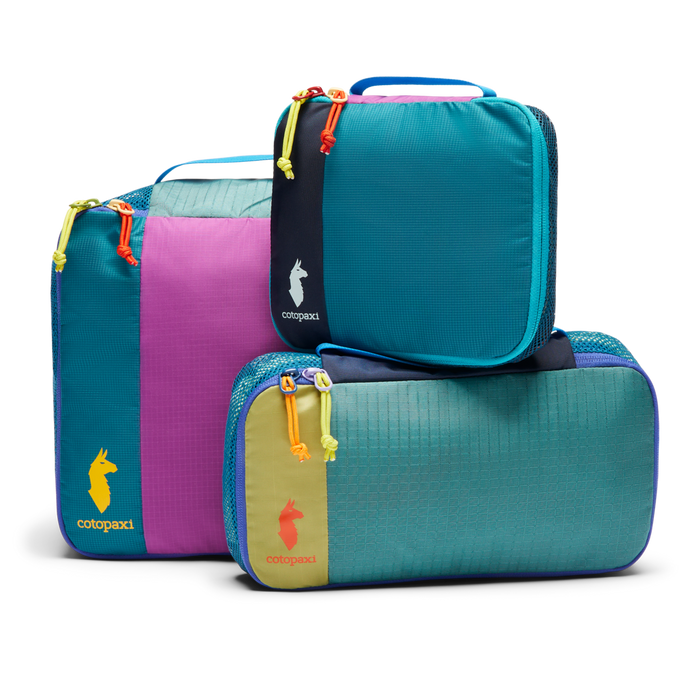
Things I LikeAfter hearing raves about packing cubes, a few years ago I invested in a set. I’m not sure what happened to them. I never used them so I possibly gave them away. But I kept hearing about how they were game-changers, and since I was going on a monthlong trip to Japan and trying to pack light, I bought a set from Cotopaxi to help keep things organized.
I’d bought a toiletry kit from them; it was light and had just the right amount of compartments for all my stuff. But I also liked the colors of the utility kit, which made it easy to find while in the frenzy of traveling. So I complemented it with the 3-pack bundle, as well as a few other pieces, plus a sling bag. (One thing to note is that Cotopaxi has frequent sales, so it’s worth checking their website occasionally to see when they are running them.) I liked the weight of the sling bag since I don’t like carrying heavy bags around. Because pickpocketing and crime are pretty rare in Japan, I didn’t have to worry about anything getting pilfered while wearing something behind me. However, if you’re wearing a backpack on the subway in Japan, it’s common courtesy to turn your bag around and wear it on the front so it doesn’t bother others. The packing cubes are made from deadstock fabric, which is leftover or recycled. But best of all, due to their vibrant colors, you can see them in dimly lit hotel rooms. So rather than unpack individual pieces of clothing at each stop, I just unpacked the cubes. The packing cubes made traveling a lot easier and now I’m hooked on them, too.
Lastly…need a feel-good boost? Check out this heartwarming story and interview with Dick Van Dyke: How to Live to Be 100, where he shares how he keeps himself happy and in shape - both physically and mentally. (NYT/article unlocked)
You're currently a free subscriber to David Lebovitz Newsletter. For the full experience, upgrade your subscription.
|
Monday, December 1, 2025
December Newsletter














Subscribe to:
Post Comments (Atom)
No comments:
Post a Comment